 By admin
 INTRODUCTION:
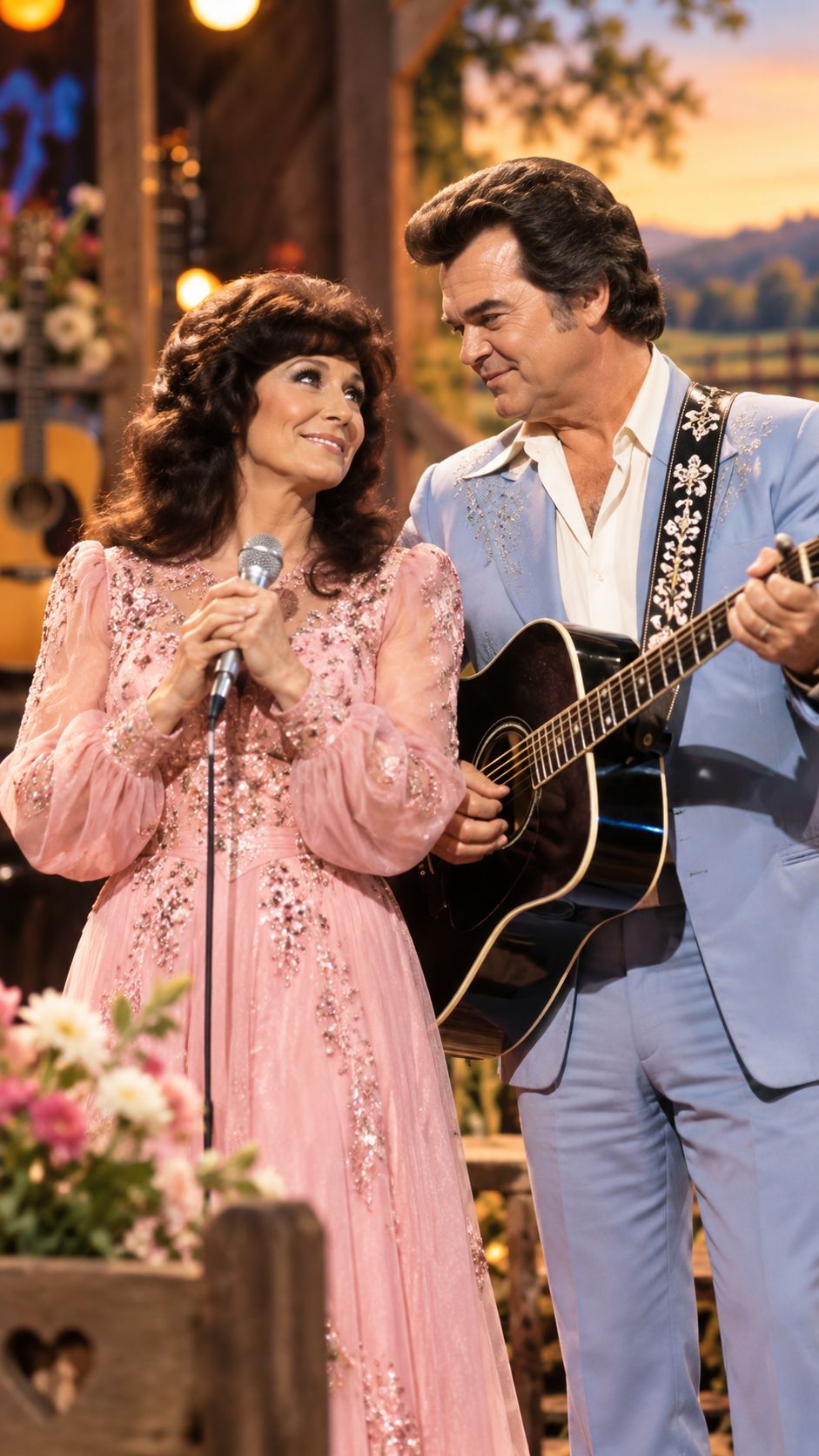
There are country music duets that sound good.
And then there are duets that sound too real.
When Conway Twitty and Loretta Lynn sang together, something happened that was difficult to explain. Their voices didn’t simply blend. They seemed to answer one another, almost as if the songs were private conversations accidentally caught on a microphone.
That chemistry became one of the most celebrated partnerships in country music history. Their first major duet, “After the Fire Is Gone,” reached No. 1 in 1971, and the pair went on to win the CMA Vocal Duo of the Year award four consecutive times from 1972 through 1975. They also earned a Grammy and recorded enduring songs including “Lead Me On,” “Louisiana Woman, Mississippi Man,” and “Feelin’s.”
Yet decades later, their story still carries an ache.
And the reason may not be the one people expect.
The voices that made people believe the impossible
Listen to Conway Twitty and Loretta Lynn together, and it is easy to understand why audiences wondered whether there was something more between them.
Their songs were often filled with longing, temptation, regret, distance, and forbidden emotion. Twitty’s deep, intimate delivery could make even a simple lyric sound like a confession. Lynn answered him with a voice that could be tender one moment and defiant the next.
The illusion was powerful.
Maybe too powerful.
PBS’s American Masters notes that the chemistry and lyrics made the nature of their relationship a puzzle to audiences. But Lynn herself rejected the romantic speculation.
“Everybody thought me and Conway had a thing going.”
Then she made her position clear: she said that was far from the truth and described Twitty as a friend she loved. She also recalled that her husband, Oliver “Doolittle” Lynn, liked Conway and trusted him.
That revelation changes the story.
Because the heartbreak wasn’t necessarily about a secret romance.
It was about two people who created a musical illusion so convincing that generations of listeners wanted it to be real.
They didn’t need a romance to create something unforgettable
This is where their story becomes more interesting.
Loretta Lynn was already a major star when she began recording with Twitty. She had established herself as one of country music’s most fearless female voices, writing songs about marriage, infidelity, independence, and the complicated realities of women’s lives.
Twitty was coming from a completely different direction.
Born Harold Lloyd Jenkins, he had first found major success as a rockabilly and pop performer before reinventing himself as a country artist. By the time his partnership with Lynn developed, he had become one of country’s biggest stars, eventually accumulating 40 No. 1 Billboard country hits.
Put them together and the contrast was extraordinary.
His voice sounded like temptation.
Hers sounded like consequence.
That tension became their secret weapon.
Their music didn’t require listeners to know what happened backstage. The songs themselves created the drama.
“Louisiana Woman, Mississippi Man” became more than a song
Few recordings captured their magic better than “Louisiana Woman, Mississippi Man.”
The premise was almost cinematic: a man and woman separated by the Mississippi River, geography becoming a metaphor for everything standing between them.
But the performance made the story feel personal.
They didn’t sound like two singers simply reading lyrics.
They sounded like two characters who had been waiting all night to finally say what they were thinking.
The Country Music Hall of Fame identifies the song as one of the pair’s signature hits, alongside “After the Fire Is Gone” and “Feelin’s.”
And that’s the strange thing about great country music:
Sometimes the most painful stories are the ones that never happened.
The real heartbreak came later
Conway Twitty died suddenly on June 5, 1993, after suffering a stomach aneurysm while traveling from a show in Branson, Missouri, toward Nashville. He was only 59.
That is when listening to those old duets became different.
While Twitty was alive, there was always the possibility of another appearance, another recording, another performance.
After 1993, there wasn’t.
The door was permanently closed.
Loretta continued performing and recording for decades. She eventually released Van Lear Rose in 2004, an album that introduced her to a new generation and won the Grammy for Best Country Album.
But Conway could never walk into the studio again.
That finality changes how people hear the old records.
A playful exchange becomes a memory.
A harmony becomes an echo.
A familiar voice suddenly sounds like someone calling from another era.
And Loretta never stopped carrying those memories
Perhaps the most touching part of the story is that Loretta’s connection to Conway did not disappear when their recording years ended.
The official Loretta Lynn site later recalled how memories of Conway remained meaningful to her family and how performances of his songs could transport Loretta back to the years when the two were building their careers together.
That matters because it strips away the gossip.
What remained wasn’t scandal.
It wasn’t some hidden love affair.
It was friendship, music, memory, and loss.
And sometimes that is even more heartbreaking.
The songs became time machines
Country music has always understood something that other genres sometimes forget:
A song can preserve a relationship long after life has changed it.
Every time “After the Fire Is Gone” plays, Conway is still there.
Loretta is still there.
Their voices meet in the same musical room they occupied decades ago.
The world around them may have disappeared, but the recording doesn’t age in the same way people do.
That’s why younger listeners can discover the duo today and still feel the tension.
The technology changes.
The fashion changes.
The radio format changes.
But emotional truth doesn’t.
The surprising reason their story still hurts
Maybe the painful part isn’t that Conway Twitty and Loretta Lynn supposedly had a love story that was never revealed.
Maybe it’s the opposite.
They didn’t need one.
Their friendship and musical trust were enough to create something that sounded like love, heartbreak, jealousy, temptation, and reconciliation.
And because the performances were so convincing, listeners sometimes confused the emotion of the characters with the lives of the people singing them.
That is a remarkable compliment to both artists.
They acted through song without pretending to be something they weren’t.
Lynn could sing about a woman caught between loyalty and desire without actually living the story.
Twitty could sound like the world’s most dangerous romantic without needing to become that character offstage.
Together, they understood one of country music’s oldest truths:
The best heartbreak songs don’t necessarily come from heartbreak. They come from making someone else feel it.
And few artists were better at that than Conway Twitty and Loretta Lynn.
What remains after all these years
Conway’s death ended one of country’s most extraordinary careers, but it didn’t end the partnership.
Recordings don’t understand mortality.
They don’t know that 1993 happened.
They don’t know that decades have passed.
When the opening notes of one of those classic duets begin, Conway’s voice still arrives.
Then Loretta answers.
For a few minutes, time disappears.
That may be why their story still hurts.
Not because there was some secret romance waiting to be uncovered.
Not because history failed to reveal a scandal.
But because something beautiful existed, and then time took it away.
Their partnership gave country music some of its most unforgettable conversations between a man and a woman. Their voices created an emotional world so believable that listeners still return to it.
And perhaps the greatest tragedy is also the greatest gift:
We can never hear Conway and Loretta become older together.
We can only hear the versions of them that the recordings preserved.
Forever young.
Forever singing.
Forever answering each other across the years.
And that is why, decades later, Conway Twitty and Loretta Lynn still sound like they have something left to say.
We just wish they had been given more time to say it