 By admin
INTRODUCTION:
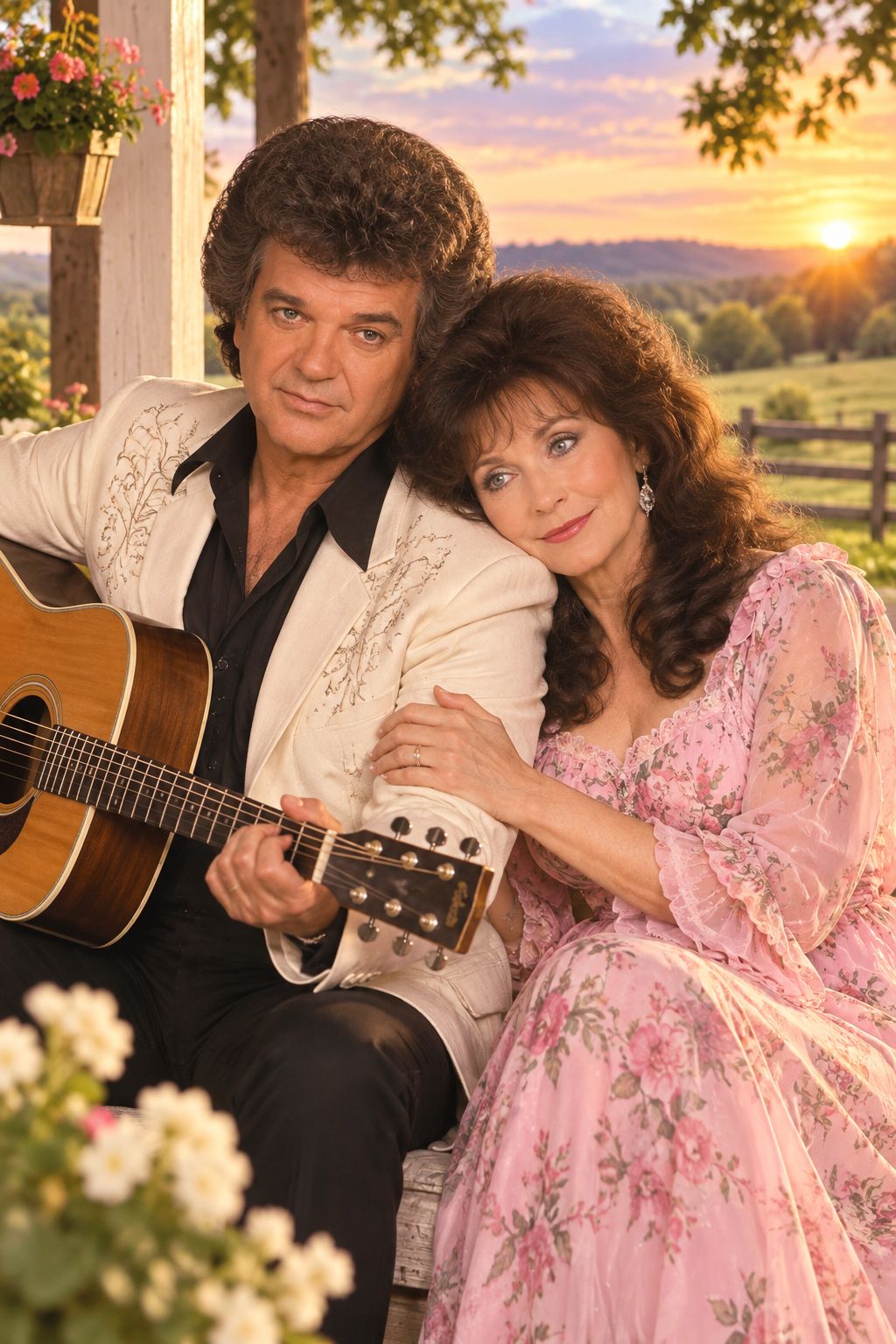
There are some relationships in country music that seem almost too perfect to be true.
Conway Twitty and Loretta Lynn had one of them.
For years, audiences watched the two stand shoulder to shoulder beneath Nashville lights, trading glances, teasing each other between verses, and singing about love, temptation, heartbreak, marriage, and desire with such breathtaking realism that millions of fans eventually wondered the same thing:
Were they secretly in love?
The rumors became so persistent that they almost turned into folklore.
But the real story is, in many ways, more powerful than the rumor.
Because what held Conway Twitty and Loretta Lynn together was not a secret marriage or a hidden romance. It was something quieter: trust, loyalty, friendship, artistic respect, and an unspoken promise to protect what they had created together.
And that bond survived for decades.
The Moment Two Country Stars Found Each Other
Their story began before the world knew them as one of country music’s greatest duos.
Twitty and Lynn first crossed paths professionally in the late 1960s. Their mutual admiration was immediate. Twitty had already been a successful recording artist, while Lynn was becoming one of country music’s defining voices.
According to an archival account, Twitty recalled that Lynn had actually been a fan of his music long before they became collaborators. Lynn, meanwhile, had admired Twitty since his earlier career. Their first meeting reportedly left both stars delighted.
What followed was almost accidental.
They began singing together, discovered that their voices fit remarkably well, and soon realized they had something that could not be manufactured in a recording studio.
Chemistry.
Not necessarily romantic chemistry.
Musical chemistry.
That distinction would become one of the most important—and most misunderstood—parts of their story.
The “Vow” Was Never About Marriage
The word vow makes the story sound like something happened in secret.
But there is no reliable evidence that Conway Twitty and Loretta Lynn secretly married each other.
In fact, Lynn herself repeatedly rejected the idea that their relationship was romantic.
“Everybody thought me and Conway had a thing going. And that’s the farthest from the truth.”
Lynn explained that she loved Conway as a friend and that her husband, Oliver “Doolittle” Lynn, also cared deeply about him.
That is the part of their story that sometimes gets lost beneath sensational headlines.
Their deepest commitment was not to become husband and wife.
It was to remain friends, partners, and musical allies.
And perhaps that was why the relationship lasted.
Their Songs Made the Rumors Inevitable
The problem was that their music sounded too real.
Their first major No. 1 duet, “After the Fire Is Gone,” was released in 1971. The song dealt with two people caught in an extramarital relationship, and Twitty and Lynn sang it with such emotional intensity that listeners could easily mistake performance for confession.
Then came songs such as “Lead Me On,” “Louisiana Woman, Mississippi Man,” “Feelins’,” and many others.
Between 1971 and 1988, they released 11 studio albums together and produced five No. 1 country singles. They also won the CMA Vocal Duo of the Year award four consecutive times, from 1972 through 1975.
They weren’t simply singing songs.
They were acting out miniature dramas.
She would challenge him.
He would answer.
She would sound wounded.
He would sound tempted.
Then, suddenly, their voices would lock together.
For an audience, it could feel intensely intimate.
As Garth Brooks later explained, there was an energy created when their voices came together that neither could produce alone.
And that energy became the source of the myth.
Even Fans Asked Them If They Were Married
The rumors were not confined to tabloids or modern social media.
They happened right in front of the singers.
An archival Billboard account describes fans approaching Lynn and Twitty after performances and asking whether they were married. One admirer even told them they were a “perfect couple.”
Imagine living with that question for years.
Every duet.
Every glance.
Every playful exchange.
Every romantic lyric.
Every time they stood together onstage.
People wanted the performance to be reality.
But Lynn understood something that perhaps the fans did not:
The fact that something feels real doesn’t mean it actually happened.
Their ability to make an audience believe in the characters they were portraying was evidence of their extraordinary talent.
The Quiet Role of Doolittle Lynn
Perhaps one of the most fascinating elements of the story is the role played by Loretta’s husband.
Instead of becoming Conway’s rival, Doolittle Lynn apparently became one of Twitty’s biggest supporters.
Lynn later recalled that her husband genuinely liked Conway. She even described Twitty as the only person in the music business that Doolittle particularly cared about.
That detail changes the entire emotional picture.
The three weren’t living inside the romantic triangle that gossip columns imagined.
They were building something much more unusual.
Trust.
Doolittle could recognize what Conway and Loretta were creating musically without assuming that intimacy onstage meant betrayal offstage.
And Conway respected that boundary.
That may have been the real “sacred vow” between them:
Never allow the fantasy created onstage to destroy the friendship that existed offstage.
They Protected Their Partnership
There was also a practical intelligence behind their collaboration.
Twitty and Lynn were already major solo stars. They reportedly made a deliberate effort not to overwhelm their individual careers with their duet partnership.
An archival account says they chose to record approximately one joint album and single a year so that their solo careers would not suffer.
That restraint was brilliant.
They didn’t give audiences everything.
They gave them enough.
Every new album felt like an event.
Every appearance carried anticipation.
And because they weren’t constantly together, the magic never had a chance to become ordinary.
That is one of the secrets behind enduring musical partnerships: knowing when to step away.
When the Partnership Changed
Their full-time touring partnership eventually came to an end in 1981, although their recorded legacy continued, with their collaborative discography extending through 1988.
For fans who had grown accustomed to seeing them together, the change must have felt like the closing of a chapter.
But it did not erase the friendship.
That distinction matters.
Some relationships end because the people involved stop caring.
Others change because life moves them in different directions.
Twitty and Lynn belonged to the second category.
The music remained.
The memories remained.
And the respect remained.
Then Came the Call No One Wanted
On June 5, 1993, Conway Twitty died at the age of 59 following complications after surgery.
The news devastated the country music community.
But Loretta Lynn’s reaction revealed more about their relationship than years of rumors ever could.
“I’ve not only lost a great singing partner but also a great friend.”
Those words were reported in the Congressional Record following Twitty’s death.
Notice what Lynn emphasized.
Not secret romance.
Not hidden passion.
Not forbidden love.
Friendship.
That was the foundation.
And perhaps the saddest truth is that the world had spent years trying to turn their friendship into something scandalous when the friendship itself was extraordinary enough.
The Legacy That Outlived Them
Conway Twitty was gone, but the partnership with Loretta Lynn never really disappeared.
Their recordings continued to introduce new generations to the strange, emotional magic of their voices.
Today, musicians still revisit their songs. Their performances remain examples of how two singers can create tension without ever needing to cross the boundaries of real life.
And Lynn’s later reflections consistently reinforced the same message:
They loved each other.
But they loved each other as friends.
That may sound less sensational than a secret marriage.
It is also far more meaningful.
Because romance can sometimes be temporary.
Friendship can survive decades.
The Real Sacred Vow
Maybe the greatest misunderstanding surrounding Conway Twitty and Loretta Lynn is that fans believed there had to be a secret behind their connection.
There wasn’t.
The secret was the connection itself.
They found two voices that fit together.
They found two personalities capable of creating unforgettable musical drama.
And, most importantly, they found a way to preserve the relationship without destroying it.
Their “vow” was never spoken before an altar.
It was written into every harmony.
Every rehearsal.
Every laugh.
Every shared stage.
Every song about love that wasn’t necessarily their own.
And when Conway died in 1993, Loretta’s grief revealed what the rumors never could.
She hadn’t lost a secret husband.
She had lost one of her dearest friends, one of her greatest musical partners, and a man whose voice had become permanently intertwined with her own.
That is why their story still resonates.
Because sometimes the most powerful love story in music isn’t about two people who secretly belonged to each other.
It’s about two people who chose to honor a bond without needing to redefine it.
And Conway Twitty and Loretta Lynn did exactly that.
For more than a decade of recording together—and through the memories that followed—they proved that two people can create something intensely intimate onstage while remaining loyal to the lives they built away from the spotlight.
The audience heard passion.
The cameras captured chemistry.
The rumors created a legend.
But behind it all was something simpler.
Respect. Trust. Friendship.
And that was the vow that truly kept Conway and Loretta together—until death finally made their duet impossible.
VIDEO: