 By admin
INTRODUCTION:
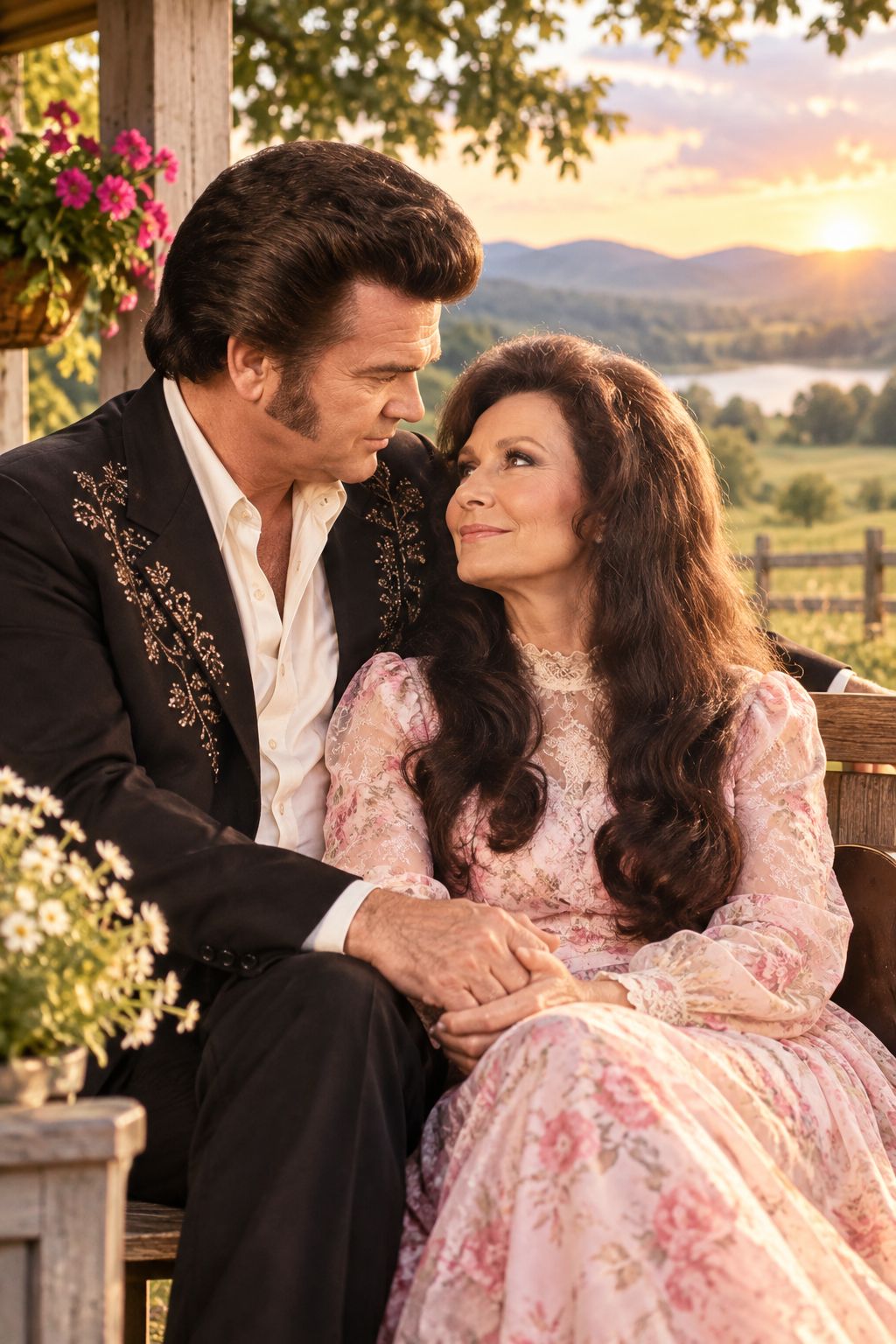
There are some country music partnerships that sound good together.
And then there are Conway Twitty and Loretta Lynn.
When their voices collided, something happened that was almost impossible to explain. It sounded intimate. Dangerous. Playful. Sometimes angry. Sometimes heartbreakingly tender. They didn’t merely sing about complicated relationships—they sounded as if they had actually lived them together.
That was the magic.
And it was also the reason generations of fans wondered about the same question:
Were Conway Twitty and Loretta Lynn secretly married—or secretly in love?
The answer, according to the documented record, is no. There is no credible evidence that they were secretly married or had a romantic relationship. In fact, Lynn herself directly rejected the idea.
But the fascinating part isn’t simply that the rumor was false.
It’s why so many people believed it for so long.
Their chemistry was so convincing that even decades later, listeners still struggle to separate the performers from the characters they created in song.
The First Spark Was Musical
Lynn and Twitty first sang together in 1969 while they were both part of a country music package touring Europe. What began as a musical experiment quickly became something much bigger.
Their first major duet hit, “After the Fire Is Gone,” reached No. 1 in 1971 and launched one of the most successful male-female partnerships in country music history. They would eventually become CMA Vocal Duo of the Year from 1972 through 1975.
They weren’t simply two singers standing beside each other.
They sounded like two people who knew exactly where the other was going.
Lynn could deliver a line with a sharp, knowing edge. Twitty answered with his smooth, conversational baritone. One would push. The other would pull back.
Then they’d meet in harmony.
That emotional push-and-pull became their trademark.
And audiences noticed.
Their Songs Sounded Almost Too Real
Think about the stories they were singing.
“After the Fire Is Gone” wasn’t a cheerful love song. It dealt with emotional loneliness and temptation.
“Louisiana Woman, Mississippi Man” sounded flirtatious, rebellious and intensely romantic.
“Feelin’s” leaned into desire and emotional vulnerability.
Their repertoire repeatedly placed two people in situations involving love, marriage, temptation, longing and regret.
Country Music Hall of Fame records that the pair earned a Grammy and four CMA awards for their classic duets.
But awards don’t explain the rumor.
The performances do.
When Lynn looked toward Twitty while singing, it didn’t feel like an actress hitting her mark.
When Twitty answered her, it didn’t sound like a man simply reading lyrics.
It sounded like a conversation between two people with history.
That’s an extraordinarily difficult illusion to create.
And they created it almost effortlessly.
“Everybody thought me and Conway had a thing going.”
— Loretta Lynn
That single sentiment captures the strange phenomenon surrounding the pair.
People weren’t merely gossiping because they were famous.
They were gossiping because the music made the fantasy believable.
Loretta Lynn Eventually Explained the Truth
Years later, Lynn addressed the speculation directly in an interview featured by PBS’s American Masters.
Her explanation was remarkably simple.
She said that the idea she and Conway had “a thing” was “the farthest from the truth.” She described him as a friend and explained that her husband, Oliver “Doolittle” Lynn, also cared about Conway.
That detail is important.
Because the rumor wasn’t merely something created after their deaths by internet storytellers.
It existed while they were alive.
Fans were watching them perform together, seeing their chemistry, hearing their romantic lyrics—and drawing their own conclusions.
But Lynn’s own words make the distinction clear:
The romance belonged to the songs. The friendship belonged to real life.
Even Conway Twitty Denied There Was Anything Romantic
Twitty reportedly described Lynn as one of his best friends in the music business.
A preserved collection of contemporary material from UNLV quotes Twitty saying:
“Loretta and I are just super-good friends.”
The same material records him explicitly denying that anything romantic had happened between them.
That is perhaps the most revealing part of the entire story.
Because Twitty understood exactly what audiences were seeing.
He knew the chemistry was powerful.
He knew the songs could make people wonder.
But he maintained that their relationship was friendship—not a secret romance.
And perhaps that’s what made the partnership so extraordinary.
They didn’t need to be lovers to sound like lovers.
They needed to be great actors through music.
The Secret Wasn’t a Marriage—It Was Trust
There is a temptation to believe every legendary musical partnership must contain some hidden personal drama.
But sometimes the truth is more beautiful.
Two artists can develop an extraordinary creative connection without crossing the boundary into romance.
Lynn and Twitty appear to have understood each other’s musical instincts exceptionally well.
They knew how much emotion to put into a line.
They knew when to pause.
They knew when to challenge one another vocally.
And, most importantly, they trusted each other.
That trust allowed them to perform songs about situations that might have felt uncomfortable with another partner.
Twitty’s official biography describes their pairing as a duet partnership with the top female vocalist of the era, producing songs including “After the Fire Is Gone,” “Lead Me On,” and “Louisiana Woman, Mississippi Man.”
Their chemistry wasn’t an accident.
It was craft.
But There Was Another Reason Fans Believed the Rumor
Country music has always blurred the line between storytelling and reality.
When an artist sings about heartbreak, listeners naturally wonder whether the story happened to them.
When two singers repeatedly perform songs about desire, jealousy, temptation and forbidden love, audiences can start imagining a relationship behind the microphone.
And Lynn and Twitty were especially vulnerable to that phenomenon.
They were both believable storytellers.
Lynn’s music frequently drew from the emotional realities of marriage, womanhood and rural life. PBS describes her songwriting as central to her groundbreaking career and notes the honesty that became part of her identity as an artist.
Twitty, meanwhile, built much of his reputation around intensely emotional songs involving complicated romantic situations. The Country Music Hall of Fame specifically notes the themes of infidelity and guilt that appeared repeatedly in his music.
Put those two artists together and something explosive happened.
The audience didn’t just hear a duet.
They heard a relationship.
The Great Irony
Perhaps the greatest irony is that the rumor actually demonstrates how successful Conway and Loretta were.
They wanted the audience to believe the emotions in the songs.
And the audience believed them.
Completely.
That’s what great country music does.
It takes three minutes and convinces you that two strangers are telling you something they’ve never told anyone else.
Lynn and Twitty took that ability to another level.
Their voices had contrasting personalities, but somehow those differences made them fit together perfectly.
His voice was smooth and confident.
Hers could be warm, teasing, wounded or defiant.
Together, they created tension.
And tension is the heart of great storytelling.
Their Legacy Became Bigger Than the Rumor
Today, their partnership remains one of the most celebrated in country music.
The Country Music Hall of Fame recognizes Lynn’s transition from earlier duet work with Ernest Tubb to her enormously successful partnership with Twitty.
And their musical legacy has continued through their families.
Tre Twitty, Conway’s grandson, and Tayla Lynn, Loretta’s granddaughter, perform together as Twitty & Lynn, explicitly carrying their grandparents’ musical story forward. Their official site describes how audiences still recognize the electrifying chemistry associated with Conway and Loretta.
That’s remarkable.
Because the original pair is gone, but the fascination remains.
People still watch old performances.
They still listen to the harmonies.
They still wonder about the looks.
They still ask whether there was something more.
And perhaps that’s because some musical partnerships become larger than the facts surrounding them.
The Love Story Was Real—Just Not the One Fans Imagined
Conway Twitty and Loretta Lynn were not secretly married.
There is no reliable evidence that they maintained a hidden romantic relationship for decades.
But something else was real.
Friendship.
Respect.
Trust.
And a musical chemistry so powerful that millions of people mistook artistic intimacy for romantic intimacy.
Maybe that’s the more extraordinary story.
Because they didn’t need a secret marriage to create the illusion of one.
They simply needed two extraordinary country singers, a great song, and the courage to make every word sound true.
And when those voices met, audiences believed.
That’s why the rumor survived.
Not because there was a hidden wedding certificate somewhere in Nashville.
But because for a few minutes inside every Conway Twitty and Loretta Lynn duet, love sounded real.
And sometimes, in country music, that’s even more powerful than the truth.
VIDEO: