 By admin
INTRODUCTION:
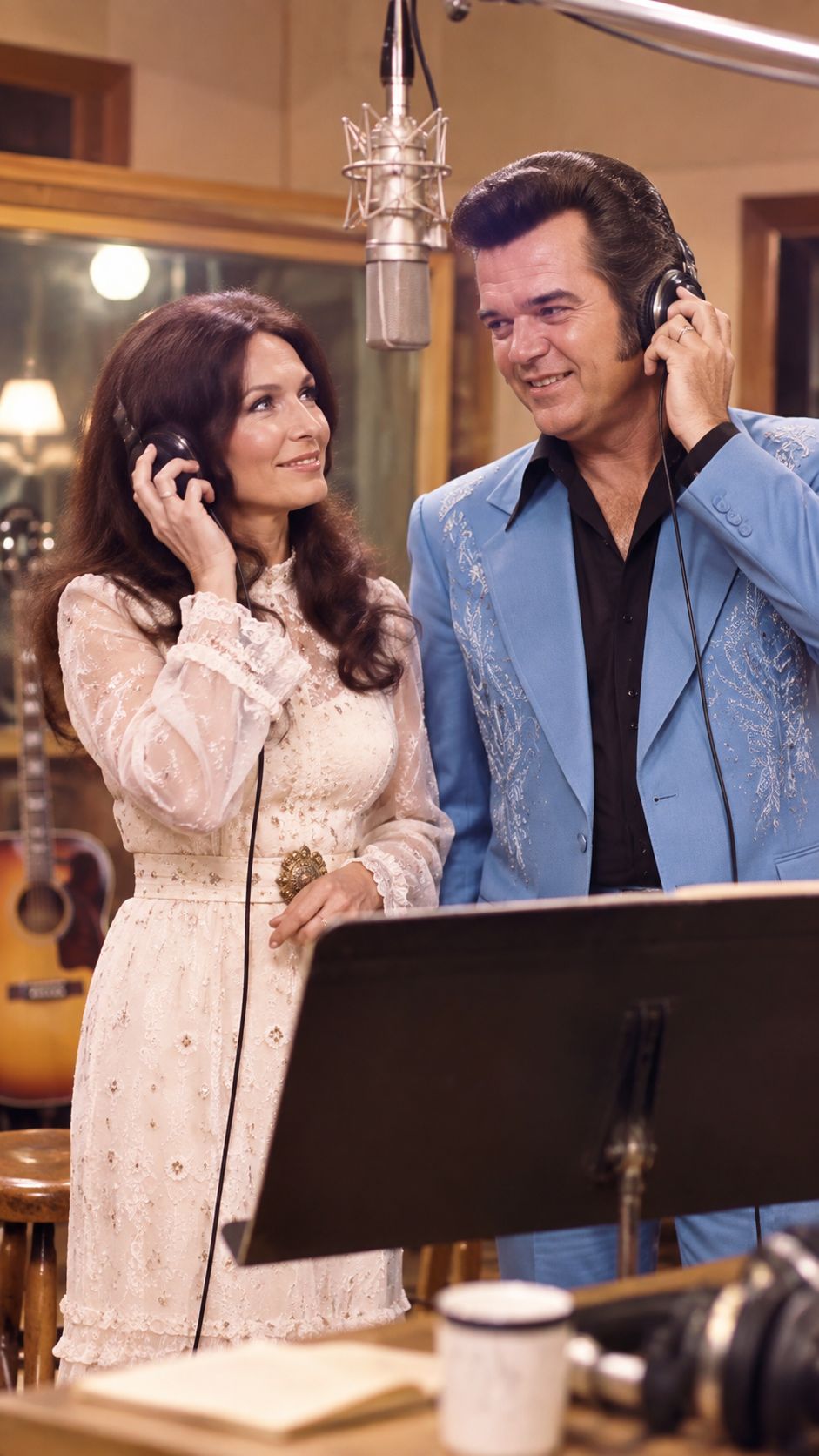
There are certain moments in country music history when two voices meet and immediately sound inevitable.
Conway Twitty had one of the most recognizable voices in country music: low, intimate, controlled, and capable of turning a single line into something that felt almost whispered directly into the listener’s ear.
Loretta Lynn possessed a completely different kind of power. Her voice could be vulnerable one moment and fiercely confident the next. She could make a lyric sound like something she had personally lived through rather than merely memorized.
Separately, they were already stars.
Together, they became something else entirely.
Their first major duet, “After the Fire Is Gone,” became the beginning of one of country music’s most celebrated partnerships. Released in January 1971, the song reached No. 1 on the U.S. country chart and ultimately became the first chart-topping country single for the pair as a duo.
But the most fascinating part of the story is that the magic apparently began long before the microphones were turned on.
“Me and Conway started singing in the dressing rooms.” — Loretta Lynn
That simple recollection helps explain why their first record sounded so natural.
It Didn’t Begin With a Record Deal
By the time Loretta Lynn and Conway Twitty began recording together, both had already established themselves as major country performers.
Lynn had become one of the defining voices of country music, while Twitty had successfully transformed himself from his earlier rock-and-roll career into a major country star. In 1970, Lynn had released “Coal Miner’s Daughter,” while Twitty was riding the enormous success of “Hello Darlin’.”
The idea of putting them together therefore carried a certain amount of risk.
Would two established solo artists actually work as a team?
Apparently, they wanted to find out themselves.
According to Lynn’s later account, she and Twitty were part of an overseas touring package. Away from the pressure of a recording studio, they began singing together casually in dressing rooms.
There was no elaborate production plan.
No carefully constructed public-relations strategy.
Just two experienced singers discovering what happened when their voices occupied the same musical space.
And something clicked.
When they returned home, Lynn said they decided to sing for producer Owen Bradley and see what he thought.
Bradley didn’t need much convincing.
He loved it.
His response was essentially: get into the studio and record.
That decision would change both artists’ careers.
The Song Wasn’t a Love Story—But It Sounded Like One
The first major song they recorded together was “After the Fire Is Gone,” written by L.E. White.
The premise was emotionally dangerous.
The song describes two people whose relationships at home have lost their warmth, leading them toward an illicit emotional connection. The lyrics are filled with loneliness, temptation, guilt, and longing.
That was precisely the kind of material that made Twitty and Lynn sound almost dangerously convincing together.
Their voices did not simply alternate.
They seemed to answer one another.
Twitty’s deep vocal tone created a sense of restraint and secrecy. Lynn’s voice brought vulnerability and emotional conflict. When they came together, the song became less about the mechanics of an affair and more about two lonely people confronting the emptiness surrounding them.
That distinction mattered.
Because listeners didn’t merely hear the story.
They felt it.
And some listeners began wondering whether the chemistry they heard on the record existed outside the studio.
Then the Rumors Started
This is where the story becomes particularly fascinating.
The emotional intensity of “After the Fire Is Gone” was so convincing that some listeners assumed the relationship between Conway Twitty and Loretta Lynn must have been more complicated than friendship.
Lynn later acknowledged those rumors herself.
During a Fresh Air interview, she explained that people believed she and Twitty had something going because of the songs they recorded. But Lynn was clear about how she characterized their relationship: they were friends, not lovers.
That distinction is important when looking back at the recordings decades later.
The chemistry was real.
The romance was part of the performance.
The emotional electricity belonged to the music.
That doesn’t make the connection less remarkable. If anything, it makes their achievement more impressive.
They were able to portray complicated romantic situations with such credibility that audiences temporarily forgot they were listening to a performance.
Inside Bradley’s Barn
The collaborative album We Only Make Believe was recorded at Bradley’s Barn in Mount Juliet, Tennessee, during sessions in November 1970. Owen Bradley produced the project, with a group of Nashville musicians contributing to the recordings.
This was the environment in which the casual dressing-room experiment became a professional recording partnership.
And the transformation is remarkable.
Imagine the atmosphere.
Two established stars walk into a studio.
They already know how to perform.
They already understand microphones, musicians, arrangements, and recording sessions.
But this time they are no longer standing alone.
Every breath matters.
Every pause matters.
Every harmony changes the emotional temperature of the song.
That is one reason the record still feels unusually intimate.
The two singers don’t overpower one another.
They create space for one another.
Twitty establishes the emotional darkness.
Lynn answers with vulnerability.
Then their voices meet.
And suddenly, the listener is inside the story.
The First Hit Became Much Bigger Than Anyone Expected
“After the Fire Is Gone” was released as the lead single from We Only Make Believe in January 1971. It climbed the country chart and reached No. 1, becoming the duo’s first chart-topping country single. It also reached No. 56 on the Billboard Hot 100.
The song eventually won the Grammy Award for Best Country Performance by a Duo or Group with Vocal.
But perhaps the greatest achievement was what happened afterward.
The partnership didn’t disappear after one successful single.
It expanded.
They recorded 11 studio albums together between 1971 and 1988 and produced numerous major hits, including “Lead Me On,” “Louisiana Woman, Mississippi Man,” and “Feelins’.” They also won the Country Music Association’s Vocal Duo of the Year award four consecutive times from 1972 through 1975.
The first recording had opened a door.
They walked through it again and again.
Why Their Voices Worked So Well
There is a temptation to describe great musical chemistry as something mysterious.
But there is also a technical explanation.
Twitty had a voice that naturally occupied the lower emotional register. His delivery could sound conversational, almost confessional.
Lynn brought contrast.
Her phrasing could be sharper. Her upper register added urgency. She could turn a lyric from an observation into a personal confrontation.
Put those characteristics together and the contrast became the attraction.
Country duets depend heavily on emotional tension.
If both singers sound identical, something can disappear.
But when their voices differ while their emotional intentions align, the listener hears a conversation.
That’s exactly what happened with Conway Twitty and Loretta Lynn.
One voice sounded like temptation. The other sounded like conscience. Together, they sounded like two people who couldn’t quite walk away.
That is why the record remains so memorable.
The Real Secret Was Simpler Than the Rumors
The enduring mystery surrounding that first hit isn’t necessarily what happened between Twitty and Lynn romantically.
According to Lynn’s own account, there wasn’t a secret affair behind the recordings.
The more interesting truth is that the chemistry people heard was created by two performers who discovered, almost accidentally, that their voices could tell a story together.
It began in dressing rooms.
It became an idea.
Owen Bradley heard the potential.
The studio captured it.
And country radio turned it into history.
Years later, Loretta Lynn would continue to make clear that the emotional relationship audiences heard in those songs was part of the performance—not evidence that she and Twitty were secretly lovers.
That makes the legacy of “After the Fire Is Gone” even more fascinating.
The song convinced millions of listeners that they were hearing something private.
What they were actually hearing was something perhaps even rarer:
Two artists who understood exactly how to make a fictional story feel painfully real.
The Night That Started a Legend
The first hit wasn’t born from scandal.
It wasn’t born from a secret romance.
It wasn’t even born from an elaborate plan.
It began with two country stars singing together backstage.
That casual discovery eventually led them into the studio, where they transformed a provocative song about fading love into one of the defining duets of the early 1970s.
And when “After the Fire Is Gone” reached No. 1 in 1971, country music gained something it didn’t know it needed: the extraordinary pairing of Conway Twitty and Loretta Lynn.
Perhaps that’s the most beautiful part of the story.
They didn’t need to cross the line their songs described.
They only needed to sing close enough to it.
And every time their voices met, listeners could feel the heat.
The romance was fictional. The chemistry was real. And the music became immortal.
VIDEO:
https://youtu.be/E78ivF85Dqo?si=c2CuGqN-pwwhDiiZ