 By admin
INTRODUCTION:
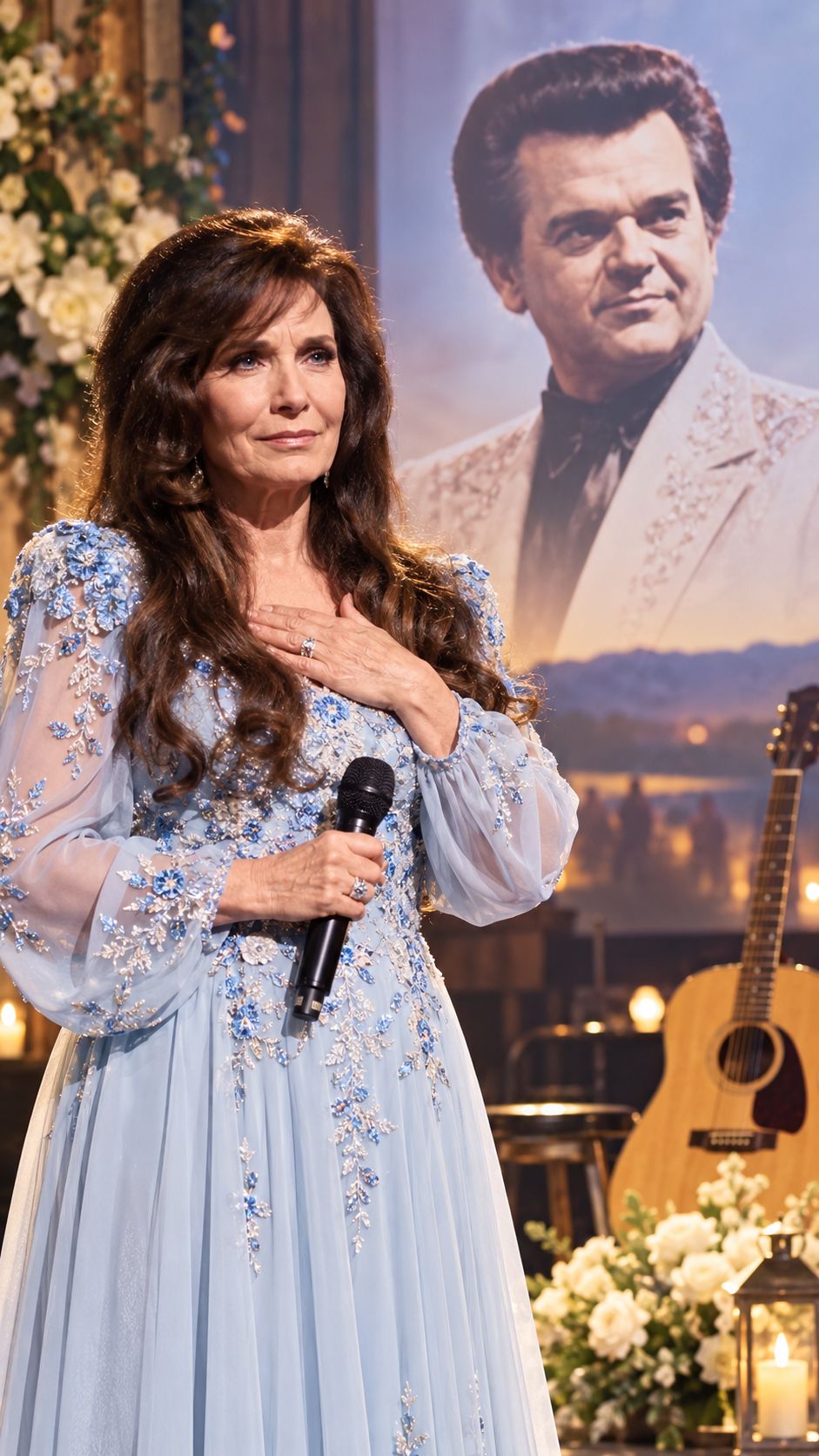
There are some songs that become bigger than the people who recorded them.
And then there are songs that become so deeply connected to two voices that hearing one without the other feels almost wrong.
That was the extraordinary legacy of Loretta Lynn and Conway Twitty.
For more than a decade, their voices created some of the most memorable male-female duets in country music. Songs such as “After the Fire Is Gone,” “Louisiana Woman, Mississippi Man,” “Lead Me On,” “As Soon as I Hang Up the Phone,” and “Feelins’” weren’t simply successful recordings. They became musical conversations—sometimes playful, sometimes heartbreaking, sometimes deliberately provocative.
Together, Loretta Lynn and Conway Twitty recorded a remarkable body of work. PBS notes that they made 11 studio albums between 1971 and 1988, produced five No. 1 songs from five different albums, and won the Country Music Association’s Vocal Duo of the Year award four consecutive times, from 1972 through 1975. Their first No. 1 duet, “After the Fire Is Gone,” also earned them a Grammy.
Then, on June 5, 1993, everything changed.
The Phone Call That Changed Country Music Forever
Conway Twitty died suddenly at just 59.
He had collapsed on his tour bus while traveling home after a performance in Branson, Missouri. He was taken to a Springfield hospital and died following complications from surgery after a blood vessel ruptured in his abdomen.
For fans, the news was shocking.
For Loretta Lynn, it was personal.
The two had spent years standing beside each other on stages, in recording studios, and inside songs that demanded an almost theatrical emotional connection.
And when Conway was suddenly gone, there was no possibility of simply calling him up for another rehearsal.
No possibility of another tour.
No possibility of another spontaneous exchange between two voices that had become inseparable in the minds of millions of country fans.
Lynn’s reaction, reported at the time, was devastatingly simple:
“I’ve not only lost a great singing partner but also a great friend.”
That sentence may explain more about their relationship than years of rumors ever could.
But Did Loretta Really Refuse to Sing Their Songs Again?
This is where the popular version of the story needs an important correction.
The dramatic claim that Loretta Lynn refused to ever sing the Conway Twitty hits again after his death is not supported by the strongest available evidence.
In fact, there is documented evidence that Lynn continued to engage with Conway’s music after his death.
That doesn’t make the grief any less real.
It makes the story more human.
One particularly revealing example came decades later. In 2013, Loretta Lynn appeared at a “Remembering Conway” tribute concert and performed “After the Fire Is Gone” with Jeff Bates. The Boot reported that Bates initially expected to sing only a couple of songs at the event, but the performance expanded, eventually leading to the duet with Lynn.
That moment matters because it contradicts the idea that Lynn completely rejected the songs she and Conway had created together.
Instead, something subtler appears to have happened.
The songs became memories.
And memories can be both painful and precious.
The Strange Power of “After the Fire Is Gone”
Consider “After the Fire Is Gone.”
When it was released in 1971, the song immediately established the chemistry that would define the Lynn-Twitty partnership. It became their first No. 1 country single and later won the Grammy for Best Country Performance by a Duo or Group with Vocal.
The song itself is about emotional emptiness inside a relationship.
That makes its later history almost haunting.
When Conway Twitty was alive, listeners heard two performers portraying complicated emotions.
After his death, the same recording inevitably carried another meaning.
Now there were two voices—but only one remained alive to tell the story.
That is the strange thing about old country music.
A song doesn’t stay frozen in the year it was recorded.
Its meaning changes as the listener changes.
And sometimes tragedy changes it forever.
The same harmony that once sounded romantic can eventually sound like goodbye.
Their Chemistry Was Never Just About Romance
Part of the mythology surrounding Loretta Lynn and Conway Twitty came from how convincingly they performed emotionally charged material.
Their voices seemed to pull against one another.
Conway’s deep, controlled delivery contrasted beautifully with Loretta’s sharper, more emotionally exposed voice.
PBS describes their musical connection as something created by the combination of their voices—an energy that did not exist in quite the same way when either artist sang alone.
That chemistry also caused audiences to speculate about the relationship between them.
But the public record does not establish a secret romance between the two.
Their performances were convincing because they were extraordinarily good at making songs feel real.
That distinction matters.
The emotional tension audiences heard was part of their artistry.
And perhaps that is precisely why Conway’s death made those recordings feel so different.
Loretta Didn’t Have to Erase Conway to Grieve Him
There’s a temptation to believe that grief must look dramatic.
We expect a singer to make a public declaration.
We expect a farewell concert.
We expect tears, speeches, and a final performance.
But grief doesn’t work according to a script.
Sometimes people continue singing.
Sometimes they stop.
Sometimes they return to an old song years later because they finally can.
And sometimes a song becomes too emotionally loaded to perform casually.
For Loretta Lynn, the evidence suggests that Conway’s music remained part of her world rather than becoming something she permanently abandoned.
Her later participation in a Conway tribute is particularly important. It shows that remembering him through music was possible, even if the experience carried a different emotional weight.
That may actually be more powerful than the myth of absolute refusal.
Because it suggests that she didn’t simply close the door on their musical history.
She carried it.
A Partnership That Ended Too Soon
The professional partnership between Loretta Lynn and Conway Twitty had already changed before his death.
The two stopped touring together full-time in 1981, although their recordings continued to be part of their shared legacy. Loretta Lynn’s official website describes their story as a musical moment that “ended far too soon,” noting that Conway died in 1993.
Their catalog, however, refused to disappear.
Years later, their songs continued to be performed by other artists.
Even members of their own families have kept that music alive. Tre Twitty and Tayla Lynn have performed songs associated with Conway and Loretta, including “After the Fire Is Gone” and “Feelins’,” bringing those compositions to new audiences.
That creates an almost poetic circle.
Conway’s voice is gone.
Loretta’s voice is gone too.
But the conversation they began continues.
Why Fans Still Feel the Loss
Maybe the real tragedy isn’t that Loretta Lynn supposedly refused to sing their songs again.
Maybe it’s that nobody could ever truly recreate what happened when the two of them stood together.
A replacement singer can learn the melody.
Another performer can reproduce the harmony.
A tribute artist can imitate Conway’s deep voice.
But the history between Conway and Loretta cannot be duplicated.
They had lived through years of country music together.
They had watched their careers change.
They had experienced success, controversy, touring, recording sessions, and the strange intimacy that comes from repeatedly telling emotional stories beside the same person.
That history is embedded in every recording.
And once Conway died, listeners could never hear those songs exactly the same way again.
The Final Truth Is More Beautiful Than the Myth
The internet loves the idea of a singer putting away a microphone forever because one particular voice is missing.
It’s cinematic.
It’s heartbreaking.
But the documented story is different.
Loretta Lynn did not simply erase her Conway Twitty songs from her life. She continued to honor his musical legacy, including participating in a performance of one of their most famous duets years after his death.
And perhaps that tells us something important about grief.
You don’t always honor someone by refusing to hear their voice.
Sometimes you honor them by letting the song play.
Sometimes you sing the first line yourself.
And sometimes, after years have passed, you stand beneath the lights one more time and allow the old harmony to return.
Because the person may be gone.
But the music remembers.
Conway Twitty left the stage in 1993. But every time Loretta’s voice met his on an old recording, their conversation continued.
That is why Loretta Lynn and Conway Twitty remain one of country music’s unforgettable partnerships.
Not because tragedy destroyed their music.
But because tragedy gave that music another layer of meaning.
Their songs were once about lovers, arguments, temptation, loneliness, reconciliation, and heartbreak.
After Conway’s death, they became something else, too.
They became history.
They became memory.
And for generations of country fans, they became a reminder that sometimes the most powerful goodbye is the one hidden inside a song.
VIDEO: