 By admin
INTRODUCTION:
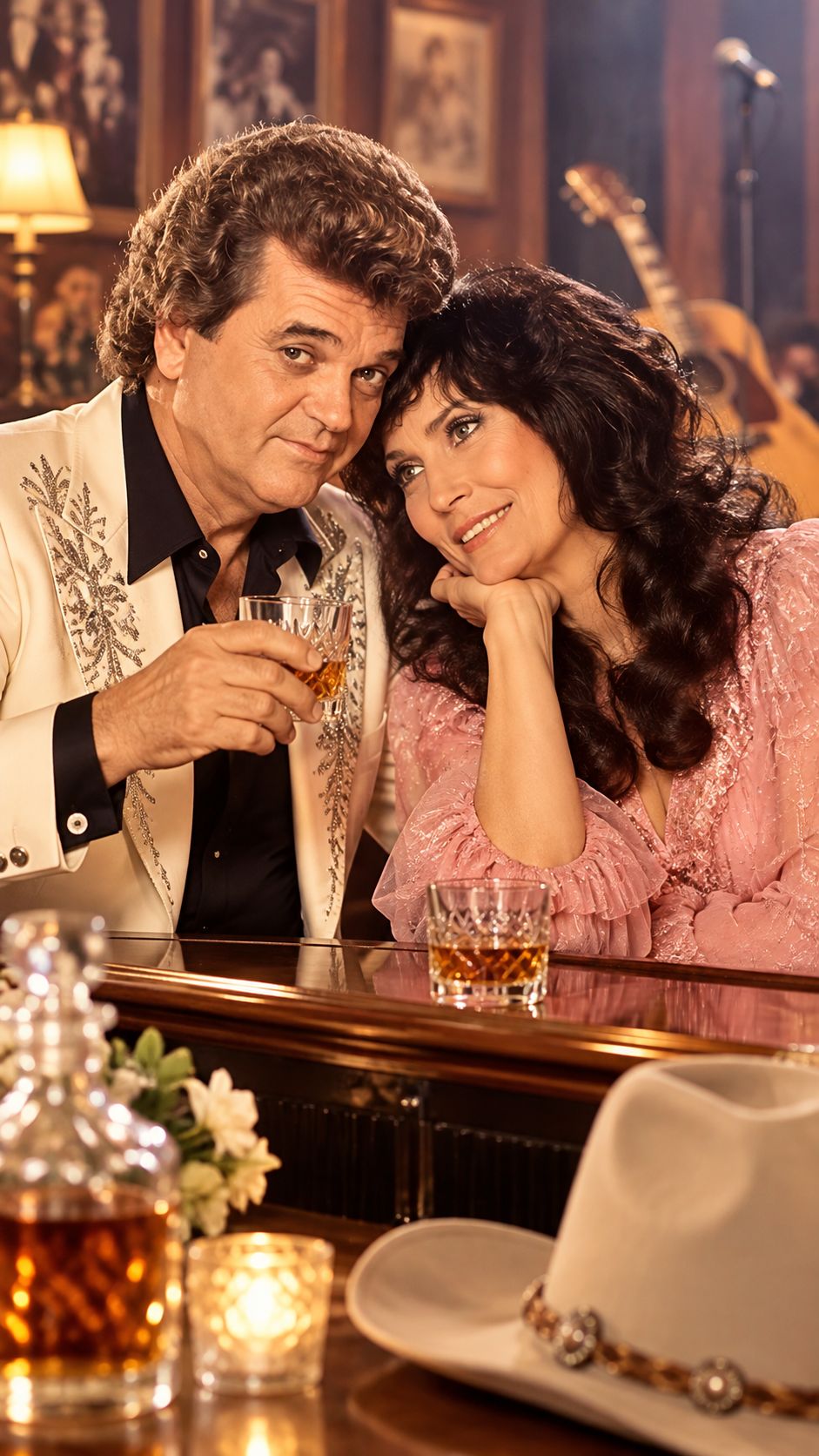
There was something dangerous about the way Conway Twitty and Loretta Lynn looked at each other onstage.
It was not simply the voices. It was not merely the songs. And it certainly was not just the polished Nashville production surrounding them.
It was the tension.
In the 1970s, country music was built on stories of marriage, betrayal, temptation, loneliness, whiskey-soaked nights, and love that sometimes arrived at exactly the wrong time. Then Conway Twitty and Loretta Lynn stepped in front of the microphone and made those stories feel almost uncomfortably real.
Their performances could sound like two people having a private conversation while thousands of strangers listened.
And that was precisely the problem.
Because when the songs became that believable, audiences began asking a question that followed the pair for years:
Was the chemistry only part of the performance—or was there something more behind it?
The answer, according to Loretta Lynn, was clear. But the whispers became part of the legend.
When a Country Duet Started Feeling Too Real
When Conway Twitty and Loretta Lynn began their recording partnership in the early 1970s, both were already major country stars.
Together, however, they created an entirely different kind of electricity.
Their first major breakthrough came with “After the Fire Is Gone” in 1971. The song was not a sweet, innocent love story. It dealt with two people trapped in relationships that had lost their emotional fire, finding comfort in one another.
That was bold material.
And it was delivered by two married country stars whose voices sounded remarkably intimate together.
The record reached No. 1 on the U.S. country chart and earned the duo a Grammy.
Suddenly, the music industry had something it couldn’t ignore.
The pair wasn’t simply successful.
They were believable.
They didn’t sound like two singers pretending to be lovers. They sounded like two people who already knew the secrets the other person was afraid to say aloud.
That illusion became one of the most powerful weapons in their music.
The “Whiskey” Atmosphere of 1970s Country
To understand why their chemistry caused such a reaction, you have to understand the culture surrounding 1970s country music.
This was the era of honky-tonks, smoky bars, neon signs, heartbreak, cigarettes, jukeboxes, and glasses raised after midnight.
Country songs weren’t afraid of messy emotions.
They could be morally complicated.
A husband could be unfaithful. A wife could be furious. A lonely stranger could walk into a bar and become somebody’s temporary escape. A marriage could survive a betrayal—or collapse because of one.
Loretta Lynn had already built much of her reputation around writing and singing about subjects that many women experienced but rarely discussed publicly. She famously described her songwriting philosophy as writing about life and things people didn’t necessarily talk about openly.
Then came Conway Twitty, with his smooth, seductive baritone.
The contrast was irresistible.
Loretta sounded earthy and emotionally direct.
Conway sounded polished, confident, and mysterious.
Put them together, and suddenly every pause sounded meaningful.
Every harmony sounded intimate.
Every exchanged line felt like a secret.
The Song That Made People Talk
If there was one song that poured gasoline on the rumors, it was “After the Fire Is Gone.”
The subject matter alone was enough to make conservative country audiences uncomfortable: two people experiencing an emotional connection outside their existing relationships.
But the real magic was in the performance.
They didn’t sing at each other.
They responded to each other.
One voice would enter.
The other would answer.
Then their voices would meet.
That conversational style made the listener feel as though they were overhearing something private.
And audiences noticed.
According to PBS’s American Masters, the easy chemistry between Lynn and Twitty led some people to wonder whether the two had a romantic relationship. Lynn herself rejected that idea, explaining that she and Conway were friends and emphasizing the relationship her husband, Oliver “Doolittle” Lynn, had with Twitty.
That distinction matters.
The rumors became part of the mythology, but there is no reliable evidence establishing a secret romantic relationship between them. The intensity audiences heard was a product of performance, songwriting, timing, and vocal chemistry—not proof of an affair.
And perhaps that makes the story even more fascinating.
Because they managed to create the illusion without needing the real-life scandal.
Then Came “Lead Me On”
Later in 1971, the pair released “Lead Me On.”
Once again, the emotional territory was dangerous.
The song placed two people inside a situation where desire and restraint collided.
It became their second No. 1 country single, following “After the Fire Is Gone.”
At that point, the formula was obvious.
The audience wanted Conway and Loretta together.
Radio wanted Conway and Loretta together.
Record companies wanted Conway and Loretta together.
And perhaps most importantly, the audience believed whatever emotional world the two created together.
That belief was commercially powerful.
But it also blurred the line between character and reality.
“Louisiana Woman, Mississippi Man” Turned Chemistry Into Celebration
In 1973, they released “Louisiana Woman, Mississippi Man.”
Unlike the darker emotional world of “After the Fire Is Gone,” this song was playful, energetic, and flirtatious.
Their third collaborative album, Louisiana Woman, Mississippi Man, reached No. 1 on the country album chart, and the title song also became a No. 1 hit.
The performance style was unmistakable.
Call and response.
Teasing.
Arguments.
Reconciliation.
Two personalities pushing against each other before finally blending together.
It was country music as theater.
And the audience loved it.
The Chemistry Became an Institution
The success didn’t stop.
The pair recorded 11 studio albums between 1971 and 1988, with five No. 1 songs coming from five different albums during their peak years. They were named CMA Vocal Duo of the Year four consecutive times, from 1972 through 1975.
Their catalog expanded with songs such as “As Soon as I Hang Up the Phone,” “Feelins’,” “The Letter,” and “I Can’t Love You Enough.”
Some songs were playful.
Some were heartbreaking.
Some were provocative.
And some sounded almost like overheard conversations.
Their 1974 hit “As Soon as I Hang Up the Phone” was particularly theatrical: Conway delivered his portions as spoken lines while Loretta sang hers.
That wasn’t merely singing.
It was acting.
And they were extraordinarily convincing actors.
Why the Rumors Refused to Die
There is an important lesson in the story of Conway Twitty and Loretta Lynn.
Sometimes the better the performers are at creating emotion, the more audiences begin confusing the character with the person.
If two actors convincingly portray lovers, nobody necessarily assumes they’re lovers in real life.
But country music is different.
Country singers often tell stories using their own names, their own voices, and their own personal histories.
The audience feels as if the singer is confessing something.
That makes the boundary between performer and character unusually thin.
And Twitty and Lynn exploited that boundary brilliantly.
They understood that a glance could sell a lyric.
A pause could suggest a secret.
A harmony could sound like surrender.
A laugh could make an entire audience believe two fictional characters had fallen in love.
The scandal was never necessarily what happened between Conway and Loretta. The scandal was how convincingly they could make millions of people believe something had happened.
Even Loretta’s Husband Understood the Magic
One of the most revealing details about their partnership is the role of Loretta’s husband, Doo.
Rather than treating Conway as a threat, Doo reportedly respected him and even played an important role in identifying material for the duo. In 1973, he found “Louisiana Woman, Mississippi Man,” helping demonstrate that the partnership was a professional collaboration supported within Loretta’s family rather than some secret romance.
That reality doesn’t make the music less exciting.
It makes it more remarkable.
Because the chemistry could exist without an actual affair.
The tension could be manufactured through artistry.
The whispers could exist without a secret confession.
The Whiskey Was Real—But the Fire Was Musical
The title “The Whispers and Whiskeys” captures something essential about the era.
1970s country music thrived on the atmosphere of the late-night bar.
A lonely table.
A half-empty glass.
A jukebox playing somewhere in the distance.
Two people talking when they shouldn’t be.
But Conway Twitty and Loretta Lynn didn’t need to live the stories they sang about.
They needed to make us believe them.
And they did.
Their voices became characters.
Their pauses became dialogue.
Their harmonies became emotional confrontations.
Their songs became miniature dramas.
That is why decades later, people still discuss their chemistry.
Not because a hidden scandal has been proven.
But because their performances were so persuasive that listeners still want to know what was real.
The Legacy of a Dangerous-Sounding Partnership
By the end of the 1970s, Conway Twitty and Loretta Lynn had transformed the country duet.
They proved that two singers didn’t have to sound perfectly matched.
They could sound different.
They could challenge each other.
They could argue.
They could flirt.
They could sound wounded.
And then, at exactly the right moment, they could blend.
Their 1970s recordings remain powerful because they captured something timeless: the complicated space between love and loneliness.
The whispers surrounding them became part of country music folklore.
The whiskey-soaked atmosphere became part of the era’s identity.
But the greatest secret was hiding in plain sight.
The chemistry that shocked country music didn’t require a scandalous romance.
It required two extraordinary performers who knew exactly how to make a microphone feel like a confession booth.
And when Conway Twitty and Loretta Lynn stepped up to that microphone, they didn’t merely sing about temptation.
They made America feel as though it had walked into the room at the worst—or perhaps most fascinating—possible moment.
That was their real magic: they could make fiction sound like memory, and make a country song feel like a secret somebody had whispered after midnight.
And perhaps that is why the whispers never completely disappeared.
VIDEO: