 By admin
INTRODUCTION:
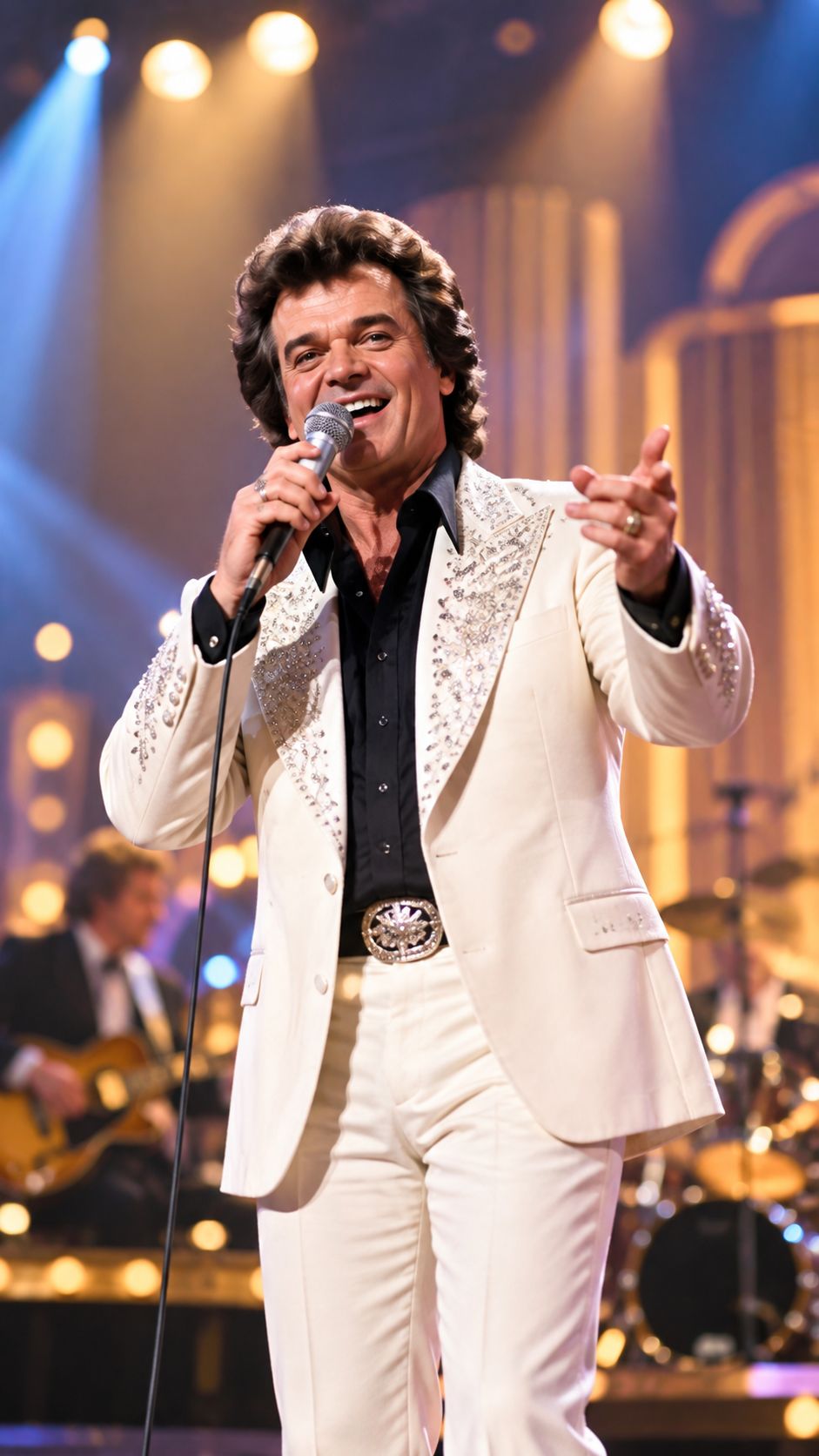
There are singers who have great voices.
There are singers who make hit records.
And then there are artists whose voices become so deeply woven into the identity of a genre that, decades after they are gone, a single phrase can bring an entire era rushing back.
Conway Twitty was that kind of artist.
Born Harold Lloyd Jenkins in Friars Point, Mississippi, in 1933, Twitty did something remarkably few performers ever accomplish: he reinvented himself, crossed musical boundaries, survived changing fashions, and ultimately built one of the most extraordinary chart careers in country music history. By the end of his career, he had accumulated 55 No. 1 country hits, a figure that made him the record-holder for most country No. 1 singles for many years.
But the number 55 only tells part of the story.
The deeper story is about a man who refused to let the music industry decide what kind of singer he was supposed to be.
From Harold Jenkins to Conway Twitty
Long before country radio embraced him, Conway Twitty was chasing a completely different dream.
As a young musician, Harold Lloyd Jenkins developed an early love for music and performed on radio in Arkansas as a teenager. He also had serious baseball ambitions and was even scouted by the Philadelphia Phillies before military service interrupted that path. Afterward, he turned toward music, eventually becoming part of the emerging rock-and-roll movement.
Then came “It’s Only Make Believe.”
Released in 1958, the song became a million-selling pop sensation and reached No. 1 on the pop chart. Suddenly, the young singer from Mississippi was a national star.
But success in rock and pop wasn’t where his heart ultimately wanted to stay.
Twitty had always been drawn toward country music. And in the mid-1960s, he made the decision that would define the rest of his life: he would leave his pop identity behind and pursue country music seriously.
It was not an easy transition.
Country radio DJs were skeptical of a former rock star trying to enter their world. The industry remembered the young man who had become a pop idol. Twitty, however, believed there was another version of himself waiting to be heard.
That belief became the foundation of one of the greatest reinventions in country music.
The Voice That Made Heartbreak Sound Personal
When Conway Twitty began establishing himself in country music, he discovered something that would become his greatest weapon: intimacy.
His voice wasn’t simply deep.
It sounded close.
It could feel as though he were singing directly to one person sitting alone in a room.
That quality transformed songs about love, regret, temptation, loneliness and complicated relationships into something intensely personal.
His first country No. 1 came with “Next in Line” in 1968. From there, the hits came with astonishing consistency.
Then came the song that would define him forever:
“Hello Darlin’.”
Released in 1970, the song became a four-week No. 1 country hit. More importantly, its opening became one of the most recognizable moments in country music history.
The extraordinary thing is that the famous opening wasn’t originally supposed to be the way listeners remember it.
Producer Owen Bradley encouraged Twitty to speak the title rather than sing it.
That small creative decision changed everything.
Suddenly, the record didn’t feel like a performance.
It felt like a conversation.
“Hello Darlin’” became more than a song title. It became an entrance into an emotional world.
For generations of country fans, those words immediately summon the sound of a particular era: smoky stages, lonely highways, jukeboxes, heartbreak and the unmistakable voice of Conway Twitty.
The 55-Hit Miracle
What makes Twitty’s achievement so remarkable is not simply that he reached No. 1 repeatedly.
It is how long he remained relevant while country music itself kept changing.
The Country Music Hall of Fame notes that his stardom endured through five decades of changing musical fashions. It also credits him with an extraordinary songwriting contribution, noting that eleven of his No. 1 country hits were songs he had written himself.
That matters because Twitty wasn’t merely a voice placed over successful songs.
He understood songs.
He understood emotion.
And, perhaps most importantly, he understood his audience.
His catalog moved through different shades of country music without losing the central quality that made listeners recognize him immediately.
Songs such as “Fifteen Years Ago,” “Linda on My Mind,” “Don’t Take It Away,” “I’d Love to Lay You Down,” and “Tight Fittin’ Jeans” demonstrated how he could evolve while retaining his signature identity.
His later career even embraced elements of rock, soul, outlaw country and contemporary pop influences. He recorded country interpretations of songs such as “Slow Hand” and “The Rose,” showing that his musical instincts were broader than a single traditional country formula.
This ability to adapt may be one of the most overlooked reasons behind his longevity.
Then Came Loretta Lynn
And just when it seemed Conway Twitty had already established a legendary solo career, another chapter began.
Loretta Lynn.
Their partnership became one of the most celebrated vocal collaborations in country music.
Their first major duet, “After the Fire Is Gone,” reached No. 1 in 1971 and won the Grammy for Best Country Performance by a Duo or Group with Vocal. Their partnership continued with songs including “Lead Me On,” “Louisiana Woman, Mississippi Man,” “As Soon as I Hang Up the Phone,” and “Feelins’.”
Together, Twitty and Lynn created something more complicated than ordinary harmony.
They sounded like two people caught inside the same story.
Sometimes they sounded romantic.
Sometimes conflicted.
Sometimes wounded.
And sometimes almost dangerously honest.
Their chemistry helped establish one of country music’s most enduring traditions: the dramatic male-female duet in which two voices don’t merely harmonize—they argue, confess, challenge and forgive.
The Country Music Hall of Fame notes that Twitty and Lynn earned a Grammy and four CMA awards for their celebrated duet work.
He Didn’t Just Sing Country Music—He Understood Its Emotional Language
Perhaps the most important part of Twitty’s legacy isn’t the chart record.
It is the emotional vocabulary he helped popularize.
His songs frequently explored complicated situations: infidelity, guilt, desire, regret, reconciliation and the fear of losing someone.
These weren’t always comfortable stories.
But country music has never depended on comfort.
It depends on truth.
And Conway Twitty understood that listeners didn’t necessarily want perfect characters.
They wanted recognizable ones.
They wanted songs that sounded like life.
He didn’t make heartbreak feel glamorous. He made it feel familiar.
That distinction helped make his records endure.
The Man Behind the Hits
Away from the microphone, Twitty’s career was also unusually ambitious.
He became involved in publishing, business ventures and the Nashville music community. He opened Twitty City in Nashville in 1981 and supported the careers of younger artists, including performers who would go on to become major country stars. The Country Music Hall of Fame describes him as a champion of songwriters and notes that he became known as “the best friend a song ever had.”
That reputation reveals something important.
Twitty understood that country music was bigger than the person standing under the spotlight.
Behind every great record were writers, musicians, producers, engineers and fans.
He respected the ecosystem that had made his own career possible.
The Final Chapter
By the early 1990s, the country landscape was changing again.
A younger generation was emerging.
New sounds were taking over radio.
But Twitty remained active and continued recording and performing.
Then, in June 1993, everything changed.
Twitty suffered an abdominal aneurysm while traveling after a performance in Branson, Missouri. He died on June 5, 1993, at the age of 59.
His death came suddenly, leaving behind a career that had crossed rock, pop and country while producing an extraordinary number of chart-topping records.
Six years later, he was inducted into the Country Music Hall of Fame.
Why His Voice Still Matters
Today, the number 55 can almost sound abstract.
Fifty-five No. 1 songs.
Fifty-five moments when millions of listeners chose the same voice.
But imagine what that actually means.
Imagine hearing a new Conway Twitty song on the radio and knowing that somewhere across America, countless people were hearing the same voice at the same time.
Imagine decades of jukeboxes, radios, concert halls, record collections and family memories built around those songs.
That’s the real achievement.
Not the statistic.
The connection.
Conway Twitty proved that an artist could reinvent himself without abandoning the emotional core that made people fall in love with his voice in the first place.
He started as Harold Jenkins.
He became a rock-and-roll star.
He walked into country music carrying the baggage of his past.
And instead of allowing that past to define him, he turned it into fuel.
The result was a career that produced 55 No. 1 country hits, legendary collaborations with Loretta Lynn, an enduring signature song in “Hello Darlin’,” and a place in the Country Music Hall of Fame.
Some singers leave behind songs. Conway Twitty left behind a sound.
And that sound still has the power to stop a listener in the middle of a sentence.
A familiar voice comes through the speakers.
A few notes pass.
Then those unforgettable words arrive.
And suddenly, decades disappear.
That is why the story of Conway Twitty is not simply the story of 55 No. 1 hits.
It is the story of how one unmistakable voice found its way through changing generations—and refused to be forgotten.
VIDEO: