 By admin
INTRODUCTION:
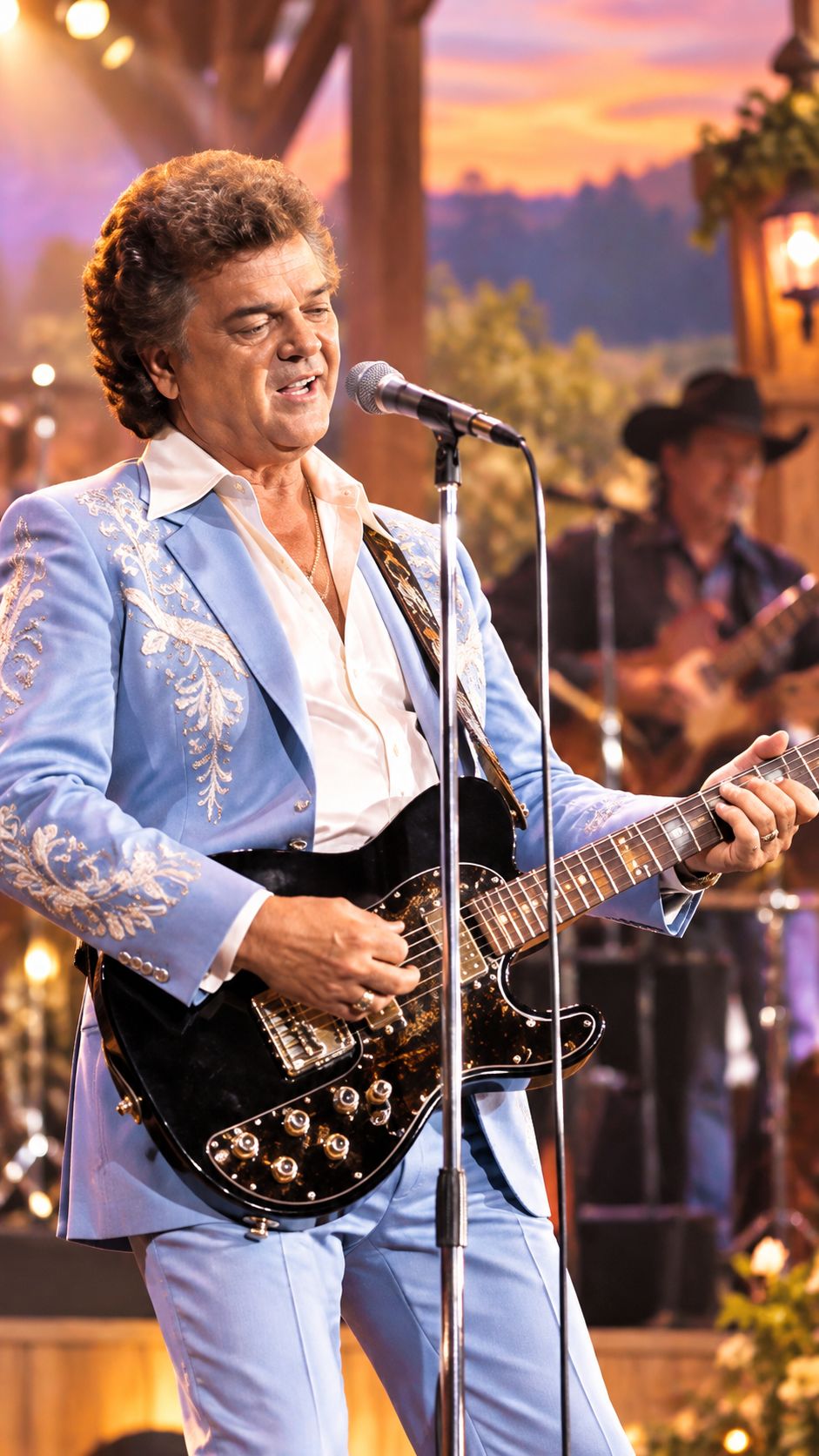
There are singers who become famous because they have great voices. There are artists who become legends because they collect awards, sell millions of records, or dominate the charts.
And then there was Conway Twitty.
He did something far more difficult: he made millions of people feel as though he were singing directly to them.
For decades, Conway Twitty stood at the center of country music’s most intimate emotional territory—love lost, love remembered, temptation, regret, loneliness, desire, reconciliation, and the complicated feelings that live somewhere between goodbye and “I still love you.” His voice could sound confident one moment and completely broken the next.
That contradiction became his magic.
The Country Music Hall of Fame notes that Twitty’s stardom endured across five decades and that he eventually accumulated 40 No. 1 Billboard country hits during his lifetime. His official biography, meanwhile, credits him with 55 No. 1 singles across his broader recording career.
But statistics alone cannot explain why Conway Twitty became one of country music’s ultimate romantic voices.
To understand that, you have to listen to the stories.
The Voice That Made Heartbreak Sound Personal
When Conway Twitty sang a love song, he rarely sounded like someone performing an abstract idea.
He sounded like a man who had lived it.
That distinction mattered.
Country music has always been built around storytelling, but Twitty possessed an unusually intimate delivery. He could take a lyric about an old relationship and make it feel like a private conversation happening across a kitchen table at midnight.
His voice carried a natural tension: strength wrapped around vulnerability.
That combination became especially powerful in songs such as “Hello Darlin’,” “Linda on My Mind,” “You’ve Never Been This Far Before,” “I’d Love to Lay You Down,” and “Goodbye Time.”
The Nashville Songwriters Hall of Fame identifies several of these recordings among Twitty’s major song catalog highlights and describes his ability to transform other writers’ words and melodies into hit records.
That was one of his greatest gifts.
He didn’t simply sing a song.
He inhabited it.
“The secret of Conway Twitty was never just the words. It was the feeling between the words.”
A lesser singer could deliver the melody.
Twitty delivered the history behind it.
“Hello Darlin’”: Four Words That Changed Everything
Few openings in country music are more recognizable than “Hello Darlin’.”
The song became one of Twitty’s signature recordings, reaching No. 1 on the country chart in 1970.
But the remarkable thing about the recording isn’t simply that it became a hit.
It is how quickly it creates a scene.
You can almost see it.
Two people who once loved each other unexpectedly meet again.
The room becomes smaller.
The past suddenly becomes present.
And the man standing there tries to pretend everything is fine.
That emotional contradiction was classic Twitty.
The official history of “Hello Darlin’” notes that producer Owen Bradley suggested speaking the opening line rather than simply singing it. That spoken delivery became part of the song’s unmistakable identity.
It was a brilliant choice.
Instead of beginning like a conventional country ballad, Twitty sounds as though he has just recognized someone he never truly stopped loving.
That tiny artistic decision helped create an enormous emotional effect.
And once listeners heard it, they knew exactly who was talking to them.
From Rock-and-Roll Teen Idol to Country’s Romantic Superstar
The story becomes even more fascinating when you remember where Conway Twitty came from.
Born Harold Lloyd Jenkins in Friars Point, Mississippi, he initially pursued rock and roll. After hearing Elvis Presley, he traveled to Memphis and eventually recorded at Sun Records. He later adopted the stage name Conway Twitty, combining the names of Conway, Arkansas, and Twitty, Texas.
In 1958, “It’s Only Make Believe” became his breakthrough hit.
It wasn’t country music yet.
It was rock and roll.
The song reached No. 1 on the Billboard pop chart, establishing Twitty as a major young star before his eventual transformation into a country icon.
That early experience mattered.
Twitty understood pop audiences.
He understood dramatic vocals.
He understood the importance of a memorable hook.
And when he moved into country music, he brought those instincts with him.
By the late 1960s and 1970s, he had developed a sound that was unmistakably his own—traditional enough for country audiences, but polished and emotionally direct enough to reach far beyond them.
The Art of Making Imperfect Love Songs Feel Real
Perhaps the most fascinating element of Twitty’s romantic catalog is that his characters were rarely perfect.
They made mistakes.
They remembered former lovers.
They struggled with temptation.
They regretted decisions.
Sometimes they wanted someone they shouldn’t want.
Sometimes they were trying desperately to save something that was already slipping away.
That emotional imperfection made his songs believable.
The Country Music Hall of Fame specifically describes many of Twitty’s major 1970s hits as combining emotional intensity with storylines involving infidelity and guilt.
That was not always comfortable territory.
But it was human territory.
And that is why listeners connected.
“Conway never needed his characters to be perfect. He only needed them to be honest.”
In “Linda on My Mind,” for example, the emotional conflict isn’t simple romance. It is divided loyalty and impossible choice.
In “You’ve Never Been This Far Before,” the intimacy is pushed into territory that was unusually provocative for its era.
In “Goodbye Time,” separation becomes almost unbearable.
And in “I’d Love to Lay You Down,” tenderness takes center stage.
Different songs.
Different situations.
Same emotional fingerprint.
Why Women Became Such Devoted Fans
There is another important part of the Twitty phenomenon that cannot be ignored: his extraordinary connection with female audiences.
The Country Music Hall of Fame describes his concerts as drawing fervent female crowds and says the atmosphere could resemble a religious revival. Jerry Clower famously gave Twitty the nickname “The High Priest of Country Music.”
That nickname says something about his cultural impact.
Twitty wasn’t merely a country singer with romantic songs.
He became a romantic symbol.
His deep voice, carefully controlled stage presence, polished appearance, and emotionally charged repertoire created a distinctive image.
But perhaps the most important ingredient was mystery.
He wasn’t constantly explaining himself.
He let the songs do the talking.
According to his official biography, Twitty once explained his quiet concert style by saying that his communication happened through his music.
That philosophy perfectly matched his persona.
He didn’t need to stand onstage and tell the audience how they should feel.
He created the emotional world.
The audience entered it.
The Chemistry With Loretta Lynn
No discussion of Conway Twitty’s romantic legacy would be complete without Loretta Lynn.
Together, they created one of country music’s most celebrated male-female partnerships.
Their recordings included “After the Fire Is Gone,” “Louisiana Woman, Mississippi Man,” “Lead Me On,” and “Feelin’s.” The Country Music Hall of Fame notes that Twitty and Lynn won a Grammy and four CMA awards for their duet work.
Their chemistry worked because they didn’t sound identical.
They sounded like two people.
Two personalities.
Two perspectives.
Sometimes affectionate.
Sometimes argumentative.
Sometimes tempted.
Sometimes wounded.
That dramatic tension gave their recordings the feeling of miniature country dramas.
And “After the Fire Is Gone” became especially important, earning them a Grammy and helping establish their partnership as one of the defining duet collaborations of the era.
The Man Behind the Heartthrob Image
Yet there was an interesting contradiction in Twitty’s public identity.
The romantic superstar image could make him appear larger than life.
But behind that image was an artist who was intensely disciplined about his craft.
The Nashville Songwriters Hall of Fame called him “the best friend a song ever had,” recognizing his extraordinary ability to turn songs into major recordings.
And he wasn’t simply dependent on outside writers.
He wrote some of his own major material, including “Hello Darlin’,” “Linda on My Mind,” and “It’s Only Make Believe.” The Country Music Hall of Fame credits him with writing 11 of his 40 No. 1 Billboard country hits.
That makes his romantic legacy even more impressive.
He understood both sides of the process.
He knew how to recognize a great song.
And he knew how to create one.
Why the Songs Still Feel Alive
More than three decades after Twitty’s death in 1993, his most emotional recordings continue to carry a strange immediacy.
Why?
Because heartbreak doesn’t become outdated.
Neither does longing.
Neither does the feeling of seeing someone from your past and suddenly remembering everything.
That is why a song like “Hello Darlin’” can still feel intimate decades after its original release.
The technology changed.
The clothes changed.
The radio changed.
Country music changed.
But human emotions didn’t.
That is the enduring advantage of Twitty’s catalog.
His best songs aren’t really about the 1970s or 1980s.
They’re about people.
The Legacy of Country Music’s Ultimate Heartthrob
When Conway Twitty died suddenly in 1993 at age 59, country music lost one of its most distinctive voices. He was later inducted into the Country Music Hall of Fame in 1999.
His legacy can be measured in chart records, awards, millions of records sold, and generations of performers who followed him.
But perhaps the most meaningful measurement is much simpler.
Someone hears that opening of “Hello Darlin’.”
Someone remembers an old relationship.
Someone thinks about a person they never quite forgot.
Someone turns the volume up.
And suddenly, Conway Twitty isn’t a distant country legend anymore.
He’s right there.
Talking to them.
That is the real secret behind the ultimate country heartthrob.
He didn’t merely sing romantic ballads.
He made listeners feel as though their own memories had been turned into music.
“The greatest love songs don’t tell you what love feels like. They remind you of the person who made you feel it.”
And that may be why Conway Twitty remains unforgettable.
Because long after the charts have changed, long after the stages have gone dark, and long after an era has passed, that voice still knows exactly where to find the heart.
VIDEO: