 By admin
INTRODUCTION:
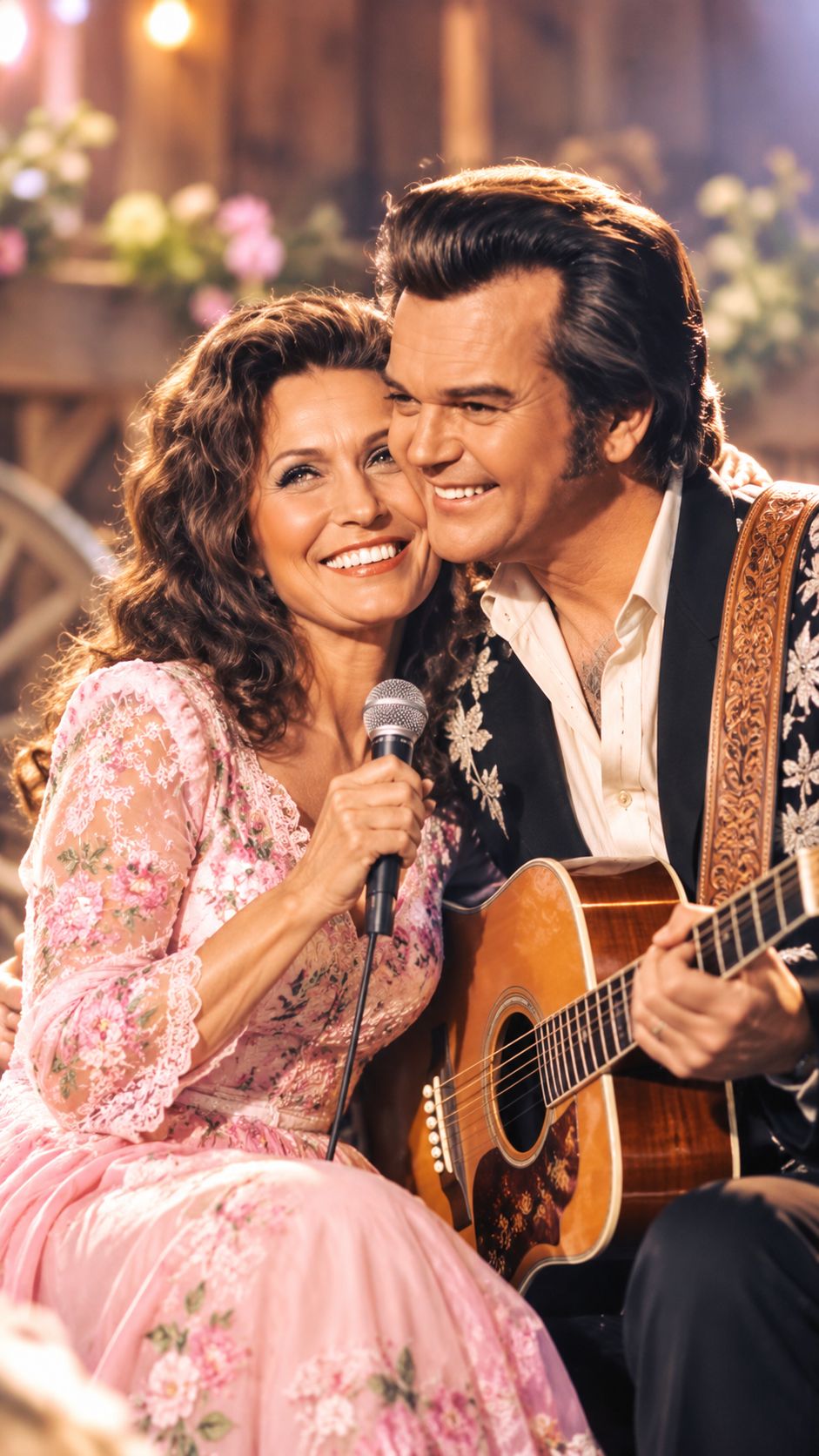
There are some partnerships in country music that feel carefully planned.
And then there are partnerships that seem to happen once in a lifetime.
When Conway Twitty and Loretta Lynn stepped behind a microphone together, something changed. Their voices did not simply complement each other—they seemed to finish each other’s sentences. A Conway Twitty verse could sound confident, wounded, seductive, or regretful, while Loretta Lynn could answer with strength, vulnerability, or defiance.
The result was so convincing that audiences spent decades wondering whether there was something more behind the music.
There wasn’t.
But there was something arguably more powerful: trust.
And that may be the real reason their partnership became so difficult to duplicate.
The Duet That Was Never Supposed to Become a Legend
The story began almost casually.
According to Loretta Lynn’s own recollection, she and Conway began singing together while overseas on tour. They would sing in dressing rooms, discovering that their voices naturally seemed to fit. When they returned home, Lynn suggested they demonstrate the combination to producer Owen Bradley.
Bradley liked what he heard.
They went into the studio.
And country music history changed.
Their first major duet, “After the Fire Is Gone,” became a No. 1 country hit in 1971 and won the Grammy for Best Country Vocal Performance by a Duo or Group.
That wasn’t merely a successful single.
It was the beginning of one of the most celebrated male-female partnerships in country music.
The Country Music Hall of Fame notes that Lynn and Twitty went on to become CMA Vocal Duo of the Year four consecutive times, from 1972 through 1975. Their catalog included “Lead Me On,” “Louisiana Woman, Mississippi Man,” and “Feelins’.”
And suddenly, the question wasn’t whether they could sing together.
It was:
How could anyone possibly replace this?
Their Chemistry Was Almost Impossible to Manufacture
Part of the magic came from contrast.
Conway Twitty had one of the most recognizable romantic voices in country music—smooth, controlled and intensely emotional. The Country Music Hall of Fame credits him with 40 No. 1 Billboard country hits and describes his singing as intensely emotional, with passion-filled lyrics.
Then there was Loretta Lynn.
Her voice carried a different kind of authority. She could sound vulnerable without sounding weak and emotional without losing her independence.
Put those two personalities together, and the songs became miniature dramas.
A man says something.
A woman responds.
The tension rises.
Neither completely wins.
And somehow, the listener becomes part of the argument.
PBS’s American Masters highlighted exactly this quality, describing the dimension created when their two voices came together as something that could not be achieved by either artist alone.
That is an important clue.
Their magic wasn’t simply about having two famous singers on the same recording.
It was about interaction.
Conway didn’t just need another singer. He needed someone who could answer him.
And Loretta could.
So Did Conway Really “Refuse” to Sing With Anyone Else?
This is where the legend needs a little separation from the documented record.
There is no solid evidence that Conway Twitty literally refused every other duet opportunity.
In fact, the historical record doesn’t support such an absolute claim.
What the evidence does show is that his partnership with Loretta became extraordinarily important and distinctive. Twitty continued to have a massive solo career, while his most famous male-female duet identity remained closely tied to Lynn. His official biography calls Lynn his duet partner and describes the two as becoming the most awarded male/female duet partnership in history.
That distinction matters.
The real story isn’t that Conway supposedly issued a rule saying, “I will never sing with another woman.”
The more fascinating story is that he had already found a musical partnership that worked exceptionally well.
And when something works at that level, there is little reason to manufacture another version of it.
The Secret Was Trust
Perhaps the biggest misunderstanding surrounding Conway and Loretta is that their chemistry came from romance.
It didn’t.
Loretta herself repeatedly rejected that interpretation.
In an interview featured by PBS, Lynn explained that audiences believed she and Conway had something romantic happening, but she said their relationship was friendship. She also emphasized Conway’s friendship with her husband, Oliver “Doolittle” Lynn.
That makes their recordings even more remarkable.
They were able to act out complicated romantic stories without living them.
They could sing about temptation without actually being tempted.
They could sound like two people whose marriage was falling apart without allowing the fictional relationship to define their real friendship.
And that separation may have been essential.
They Didn’t Need to Pretend to Be in Love
Listen to songs such as “After the Fire Is Gone.”
The emotional tension is unmistakable.
But the power doesn’t come from two lovers confessing their real feelings.
It comes from two performers understanding exactly how to tell the story.
That’s a very different skill.
Lynn brought authenticity to the female perspective.
Twitty brought his own particular brand of romantic regret and longing.
Together, they created characters.
That is why listeners believed them.
And that is why rumors followed them.
As Lynn later explained, people assumed there was a real relationship behind the songs precisely because the performances felt so convincing.
The more believable the fictional romance became, the more people forgot that they were watching two professionals at work.
The Numbers Tell the Story
Their partnership wasn’t just emotionally powerful.
It was commercially extraordinary.
The Recording Academy records multiple Grammy nominations for Conway Twitty and Loretta Lynn, including nominations for “The Letter,” “Feelins’,” “Louisiana Woman, Mississippi Man,” and “Lead Me On.” Their 1972 victory came for “After the Fire Is Gone.”
The Country Music Hall of Fame likewise notes that the pair won a Grammy and four CMA awards for their classic duet recordings.
And according to Lynn’s official biography, she ultimately recorded 10 studio duet albums with Conway Twitty.
Think about that.
One collaboration became a recording partnership.
The recording partnership became a defining chapter in both careers.
And eventually, the public began to think of Conway and Loretta almost as one musical institution.
That’s extraordinarily rare.
Why Their Voices Fit So Perfectly
There was also something technical happening beneath the emotion.
Conway often approached a song with restraint. He didn’t need to overpower a melody. His delivery could be almost conversational, allowing individual words to carry enormous weight.
Loretta’s approach could be more direct.
She sounded like she was living inside the lyric.
That difference created movement.
Conway could begin a thought.
Loretta could challenge it.
He could soften.
She could push back.
Then they could meet on the chorus.
The listener wasn’t merely hearing harmony.
The listener was hearing conversation.
That is why their duets remain so recognizable.
Their Partnership Outlived the Era That Created It
The duo’s most prolific period eventually faded as both artists focused heavily on their solo careers.
But the connection never disappeared completely.
Their professional relationship remained part of country music history, and they even reunited for a recording later in their careers.
Then came the moment that made their story feel almost unbearably poignant.
When Conway Twitty became critically ill in 1993, Loretta Lynn happened to be at the same Missouri hospital with her husband, Doolittle, who was also seriously ill. Their paths crossed there unexpectedly.
It was not a stage.
There was no spotlight.
No microphone.
No audience.
Just two old friends from one of country music’s greatest partnerships meeting again at the end of Conway’s life.
And perhaps that tells us more about their bond than any award ever could.
The Real Reason the Partnership Was “Unbreakable”
So, was Conway Twitty really refusing to sing with anyone else?
The historical evidence doesn’t justify stating that as an absolute fact.
But something deeper is true.
Conway Twitty had found a musical partner whose voice, personality, storytelling instincts and trust complemented his own in a remarkably rare way.
He didn’t need to manufacture chemistry.
He already had it.
He didn’t need to convince listeners that the relationship felt real.
They could hear it.
And he didn’t need another performer to recreate what he and Loretta had built.
Because you can duplicate a melody.
You can reproduce an arrangement.
You can even imitate a vocal style.
But you cannot easily reproduce history between two voices.
That was the secret.
Conway Twitty and Loretta Lynn weren’t unforgettable because they sounded like lovers. They were unforgettable because they sounded like two people who completely understood the story they were telling.
And perhaps that’s why decades later, when the opening notes of “After the Fire Is Gone,” “Lead Me On,” or “Louisiana Woman, Mississippi Man” begin to play, something still happens.
The listener stops.
The room seems quieter.
And for a few minutes, Conway Twitty and Loretta Lynn are back together again—trading lines, challenging each other, harmonizing, and creating that extraordinary musical tension that made country music believe in them.
Their greatest secret was never romance.
It was trust.
And in country music, trust between two voices can be harder to find than a hit song.
That is why their partnership still feels impossible to replace.
Because Conway Twitty didn’t simply find a duet partner. He found the voice that could complete his story.
VIDEO: