 By admin
INTRODUCTION:
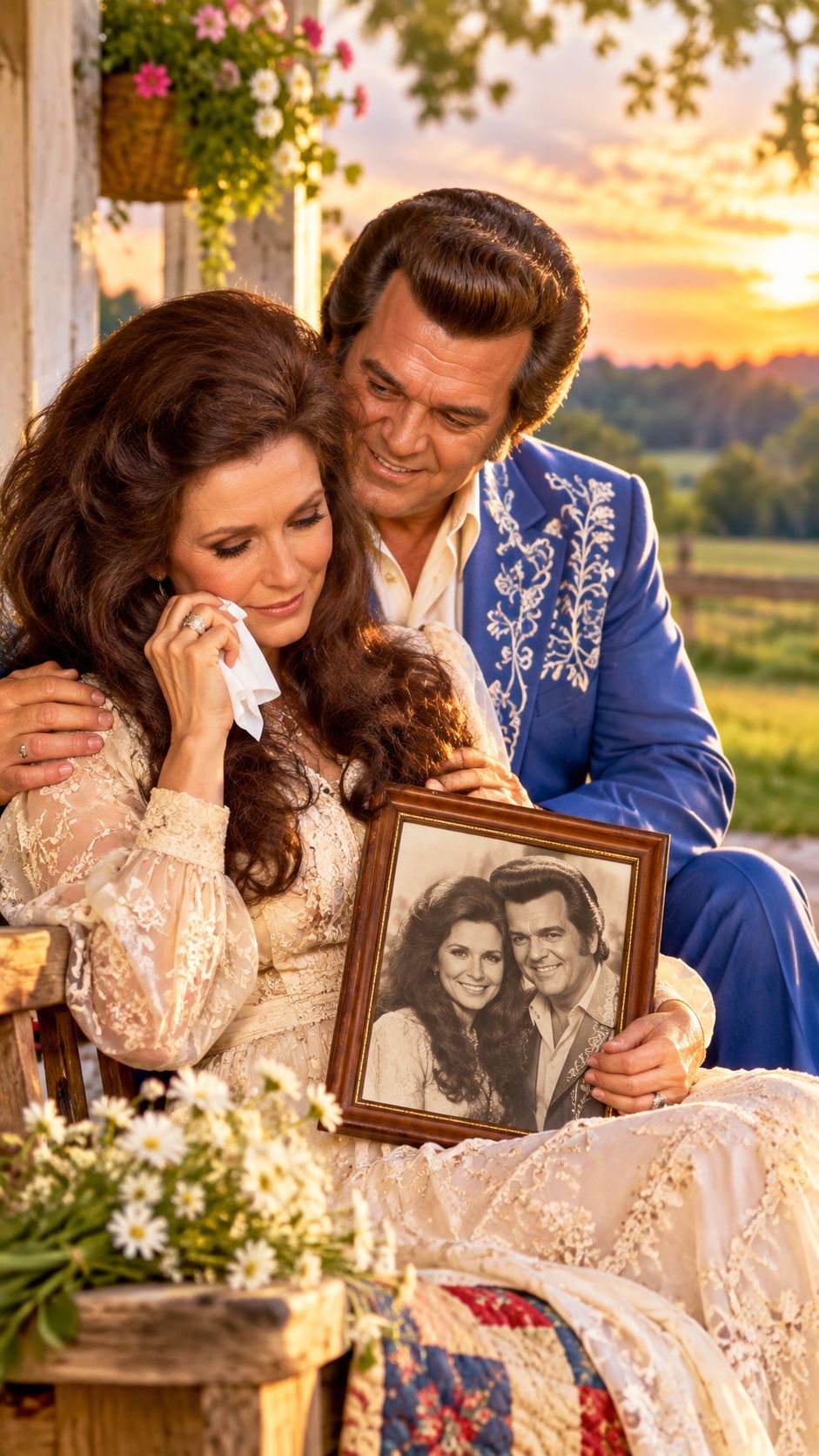
There are some friendships in country music that become larger than the songs themselves. Loretta Lynn and Conway Twitty had one of those rare bonds—a partnership built on music, laughter, trust, and a chemistry so convincing that audiences often wondered whether there was something more.
There wasn’t.
Loretta repeatedly explained that she and Conway were friends, not lovers, and that her husband, Mooney Lynn, was also deeply fond of him. PBS’s American Masters documented Loretta’s own description of their relationship, emphasizing that Conway was an exceptionally important friend to both her and Mooney.
And when that friendship was suddenly taken away in 1993, the loss hit Loretta with extraordinary force.
But there is an important distinction behind the dramatic headline “I Lost Part of My Soul.” I could not verify a reliable contemporary source showing that Loretta literally used those exact words immediately after Conway’s death. What is documented is the depth of her grief—and her words at the time were heartbreaking enough without embellishment.
The Day Everything Changed
On June 5, 1993, Conway Twitty was only 59 years old.
He had been performing in Branson, Missouri, and was traveling toward Nashville when he suddenly became seriously ill. He was suffering from an abdominal aneurysm and was taken to Cox Medical Center-South in Springfield, Missouri. Despite emergency treatment, he died from complications following surgery. The Country Music Hall of Fame records his death as June 5, 1993, describing it as sudden and occurring while he was traveling from Branson to Nashville.
For country music, it was an enormous shock.
For Loretta, it was personal.
She hadn’t simply lost one of the biggest stars in country music.
She had lost the man whose voice had become inseparable from some of the most important musical chapters of her career.
“I’ve not only lost a great singing partner but also a great friend.”
Those were Loretta Lynn’s documented words following Conway’s death, according to a contemporary account preserved by the U.S. Government Publishing Office. She also said that she and Mooney were devastated and that her heart went out to Conway’s family.
Those words reveal something that statistics never could.
More Than a Duet Partner
By the time Conway died, he and Loretta had already spent more than two decades creating musical history together.
Their partnership began around 1970 and produced some of the most recognizable male-female duets in country music.
Songs such as “After the Fire Is Gone,” “Louisiana Woman, Mississippi Man,” and “You’re Lookin’ at Country” helped define an era.
Their voices seemed to fit together naturally.
His deep, smooth delivery contrasted with her unmistakable Appalachian twang. His restrained confidence met her emotional directness. And when they sang together, something happened that neither voice could create alone.
Trisha Yearwood and Garth Brooks have discussed this phenomenon in PBS’s American Masters, describing the special energy created when Loretta and Conway performed together.
That chemistry was so convincing that fans sometimes created their own story around it.
But Loretta knew the truth.
“I loved Conway as a friend, and my husband loved him.”
That distinction matters.
Because their story wasn’t built on a secret romance.
It was built on something perhaps even more enduring: genuine friendship.
The Friendship Behind the Famous Songs
One of the most fascinating parts of the Loretta-Conway story is how comfortable they apparently were with one another away from the microphone.
Loretta recalled Conway joking with her husband, Mooney, and described Conway as the only person in the music business Mooney really cared about deeply.
That detail gives their relationship a completely different emotional dimension.
The country audience saw two glamorous stars singing about forbidden love.
Behind the scenes, Loretta remembered a friendship between families.
The romance belonged to the songs.
The friendship belonged to real life.
And that friendship made Conway’s death even harder to accept.
“After the Fire Is Gone” Suddenly Meant Something Different
There is something almost haunting about listening to “After the Fire Is Gone” after learning what happened to Conway.
When the song became a major hit, it was entertainment. It was storytelling. It was two performers inhabiting characters and emotions.
Years later, after Conway’s sudden death, those same recordings carried another meaning.
Loretta wasn’t simply listening to the voice of a famous duet partner.
She was hearing the voice of someone who was no longer there.
That is one of the strange powers of recorded music.
A photograph can preserve someone’s face.
A recording can preserve their voice.
And sometimes a voice can make the past feel frighteningly close.
Loretta and Conway’s version of “After the Fire Is Gone” reached No. 1 on the country charts, and their partnership earned major recognition, including multiple CMA Vocal Duo of the Year awards. They also won a Grammy for the song.
The music survived.
But the man behind the voice was gone.
A Final, Heartbreaking Encounter
Perhaps the most emotional part of the story is what happened before Conway’s death.
Accounts of that day describe Loretta learning that Conway was critically ill and going to see him.
One later account recounts Loretta being urged to understand that she might be seeing him for the final time. She went to Conway and spoke to him, encouraging him not to give up and reminding him of his love of singing.
Then she left to check on her husband.
Soon afterward came the news nobody wanted to hear.
Conway Twitty had died.
He was 59.
And Loretta had just seen her friend for the last time.
There is something painfully human about that sequence.
A goodbye that doesn’t feel like a goodbye.
A final conversation that only becomes a final conversation after the person is gone.
Why Loretta’s Grief Resonated With Fans
Loretta Lynn understood loss.
Her career had been built partly on songs about heartbreak, marriage, betrayal, family, survival, and the complicated emotions of ordinary people.
She knew how to turn pain into music.
But not every loss can be turned into a song.
Sometimes there is only silence.
When Loretta described Conway as both a great singing partner and a great friend, she wasn’t giving the world another performance.
She was mourning.
And decades later, that simple statement remains powerful precisely because it doesn’t need exaggeration.
Conway wasn’t merely someone Loretta Lynn sang with. He was someone she genuinely loved as a friend.
That distinction is central to understanding why his death mattered so much to her.
The Legacy They Left Behind
Conway’s career ultimately became one of the most extraordinary in country music history.
The Country Music Hall of Fame notes that he achieved more No. 1 country records than any artist had achieved at the time, while eleven of his No. 1 hits were self-written. He was inducted into the Hall of Fame in 1999.
But statistics only tell part of the story.
His legacy also lives in the recordings he made with Loretta.
Every time their voices meet on an old duet, listeners can hear the playful tension, the confidence, the humor, and the effortless musical communication that made them special.
And perhaps that is why their partnership has survived for generations.
Because it wasn’t manufactured.
It sounded human.
It sounded comfortable.
It sounded like two people who trusted each other.
The Woman Left Behind
Loretta Lynn would continue performing and recording for decades after Conway’s death.
She lived long enough to see several generations discover the music they had created.
And in 2020, years after Conway’s passing, Loretta still remembered him warmly. On the anniversary of his death, she wrote about how difficult it was to believe that 27 years had passed and described him as one of the best men she had ever known.
That is perhaps the most revealing part of all.
Grief changed with time.
But the affection didn’t disappear.
The shock eventually became memory.
The memory became legacy.
And the legacy became music.
When the Voice Was Gone
Country music has always understood heartbreak.
But the story of Loretta Lynn and Conway Twitty reminds us that sometimes the deepest heartbreak isn’t romantic at all.
Sometimes it’s friendship.
Sometimes it’s losing the person who stood beside you through years of work, laughter, touring, recording, and life.
And sometimes the most devastating words aren’t dramatic words.
They’re simple ones.
“I’ve not only lost a great singing partner but also a great friend.”
Conway Twitty’s death ended one of country music’s most celebrated partnerships.
But it could not erase what they created together.
His voice remained.
Her voice remained.
And whenever those two voices meet again on an old recording, something remarkable happens.
For a few minutes, Conway Twitty is still there.
And perhaps that is the closest thing music can offer to bringing someone home.
VIDEO: