 By admin
INTRODUCTION:
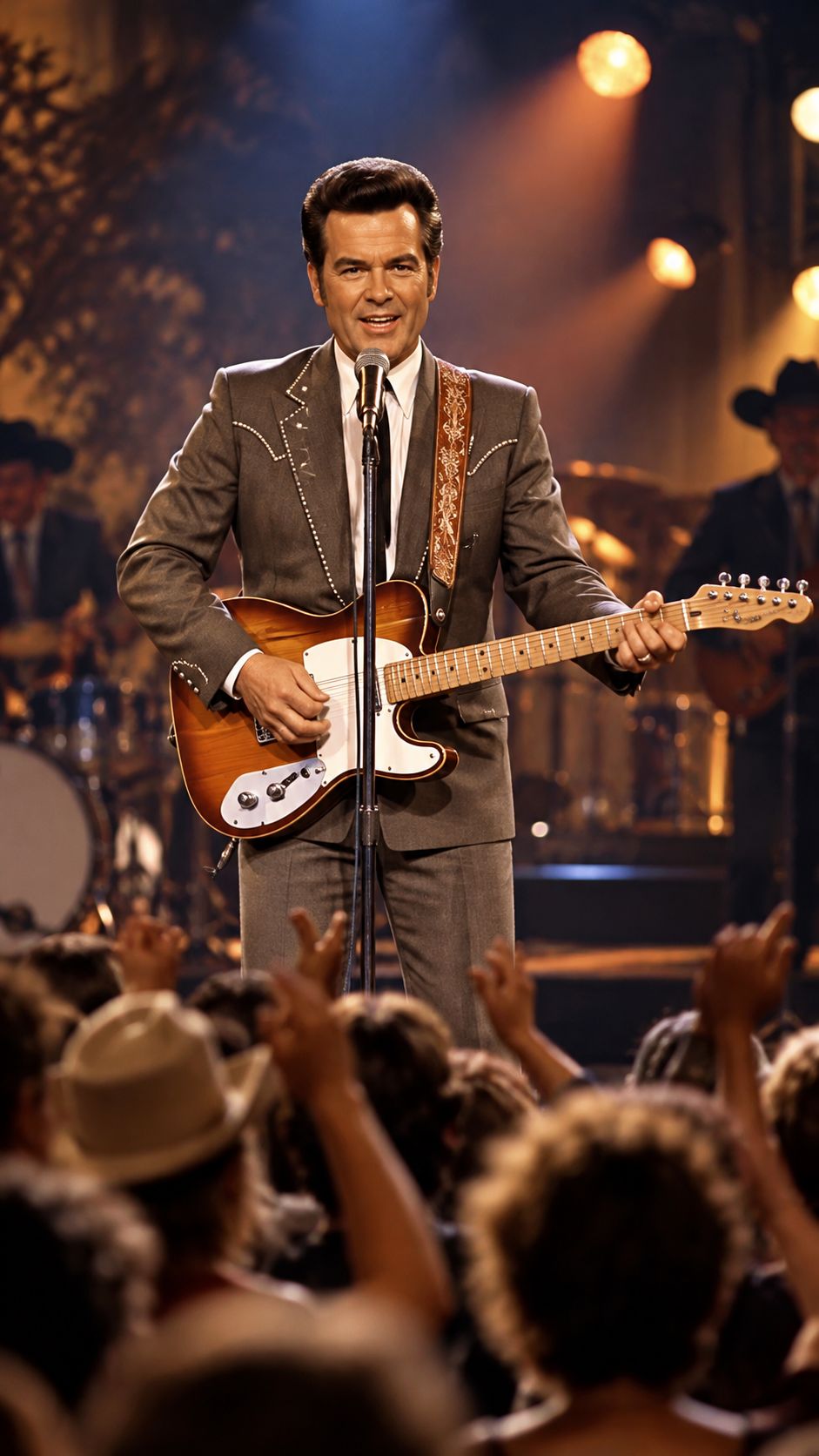
Some voices do more than sing a melody. They become part of our memories, our greatest heartaches, our happiest moments, and the stories we carry throughout our lives. For millions of country music fans, Conway Twitty possessed exactly that kind of voice. Smooth, deeply expressive, and unmistakably his own, he could transform an ordinary song into a confession of love, a quiet expression of regret, or a reminder of someone who once meant everything.
Known for his remarkable vocal control, magnetic stage presence, and extraordinary ability to communicate emotion, Conway Twitty built a legacy that continues to reach listeners across generations. His music belonged to an era when storytelling stood at the heart of country music, yet its emotional power has never been confined to a particular decade. Whether through a tender ballad, a heartbreaking love song, or one of his unforgettable duets with Loretta Lynn, Conway understood something timeless about the human heart.
Although Conway Twitty passed away on June 5, 1993, his influence remains alive wherever his records are played, his lyrics are remembered, and new listeners discover the magic of his voice. Honoring him today is not simply about looking backward at a celebrated career. It is about recognizing why his music still matters, why his performances continue to move people, and why the name Conway Twitty remains synonymous with the enduring spirit of country music.
1. The Voice That Turned Ordinary Moments Into Lasting Memories
There are singers who achieve fame, and there are singers who become woven into the emotional fabric of people’s lives. Conway Twitty belonged to the second category. His music did not merely entertain audiences; it gave listeners a way to express feelings they sometimes struggled to put into words.
Think about the power of hearing Hello Darlin’ after years away from someone you once loved. The opening melody can transport a listener to another place and time, bringing back memories of a first dance, a long drive down a country road, or a relationship that ended before the heart was ready to let go.
That emotional connection was central to Conway’s artistry. He understood that a great country song did not need an elaborate production or an extraordinary story to become unforgettable. Sometimes, all it needed was a familiar voice, a carefully delivered line, and a melody that stayed with you long after the music stopped.
What made Conway Twitty particularly remarkable was his ability to communicate intimacy to enormous audiences. His voice could sound as though he were singing directly to one person, even when thousands of fans filled the room.
His greatest gift was making a deeply personal emotion feel universal.
This quality helps explain why his recordings continue to resonate with longtime admirers and younger listeners discovering classic country music for the first time. His songs preserve emotions that do not disappear when musical fashions change.
2. From Harold Jenkins to Conway Twitty: A Remarkable Musical Transformation
Before the world knew him as Conway Twitty, he was Harold Lloyd Jenkins, born on September 1, 1933, in Friars Point, Mississippi. His journey from a small Mississippi community to the heights of popular music was anything but predictable.
Music entered his life early. He learned guitar as a child, developed an interest in performing, and eventually explored the emerging sound of rock and roll. His early experiences helped him discover the versatility that would later distinguish his country career.
In 1958, he achieved a major breakthrough with It’s Only Make Believe, a recording that became an international success and established him as a formidable popular entertainer.
Yet the story did not end with rock and roll. Although he had achieved substantial success outside country music, Conway Twitty felt a lasting connection to the genre he had loved since childhood.
His transition into country music required patience and determination. He had to demonstrate that he was more than a former rock-and-roll star attempting a new direction. Country audiences and radio programmers needed to hear that he understood the traditions, storytelling, and emotional honesty of their music.
His breakthrough in country music arrived with Next in Line, which became his first No. 1 country hit in 1968.
From that moment, his career developed into one of the most remarkable runs in country music history.
His transformation offers an important lesson about artistic longevity: a successful performer must understand not only what audiences already love, but also what the performer genuinely wants to become.
Conway Twitty did not abandon his musical past. He drew upon it, combining the confidence of a seasoned entertainer with the emotional sensitivity of a country storyteller.
That combination helped him build a career that crossed genres, generations, and changing musical tastes.
3. The Secret Behind Conway Twitty’s Unforgettable Voice
A great voice is not necessarily the loudest, highest, or most technically complicated. Sometimes, greatness comes from knowing exactly how much emotion a song requires.
Conway Twitty excelled at that kind of restraint.
His delivery often balanced warmth, confidence, tenderness, and vulnerability. He could sustain a phrase without making it feel forced, emphasize a single word without exaggeration, and give a familiar melody the feeling of a private conversation.
Consider Hello Darlin’, one of his signature recordings. Its appeal rests not simply on the song itself, but on the way Conway communicates the complicated feelings behind a reunion. There is affection, hesitation, longing, and the lingering weight of everything that has happened between two people.
Rather than treating the song as a theatrical declaration, he gives its emotions room to unfold.
That is why the recording has remained so meaningful to listeners who have experienced love, separation, regret, or the difficult process of moving forward.
His voice also adapted to different musical arrangements. Songs such as You’ve Never Been This Far Before, Linda on My Mind, and Goodbye Time reveal different shades of his artistry, from intimate romantic expression to the quiet devastation of a relationship approaching its end.
He could inhabit a song without making every performance sound identical.
This distinction matters because consistency and repetition are not the same thing. A recognizable voice gives an artist an identity, but emotional variety gives that identity depth.
Conway Twitty understood how to preserve both.
His recordings remain valuable examples of how phrasing, timing, and interpretation can transform a good composition into a performance that feels inseparable from the singer.
4. Conway Twitty and Loretta Lynn: A Partnership That Changed Country Duets

Any tribute to Conway Twitty would be incomplete without recognizing his extraordinary musical partnership with Loretta Lynn.
Together, they helped establish a standard for male-female duets in country music. Their contrasting voices created a natural dramatic tension: Conway’s smooth, measured delivery complemented Loretta’s distinctive, expressive strength.
The result was a musical conversation rather than two singers simply taking turns.
Their collaboration produced enduring recordings, including After the Fire Is Gone, Lead Me On, Louisiana Woman, Mississippi Man, and Feelin’s.
Each demonstrated a different aspect of their chemistry. Some songs explored temptation and difficult decisions; others celebrated the playful push and pull of two strong personalities. Across their recordings, the singers brought the characters and conflicts of country storytelling vividly to life.
Their partnership earned major recognition, including a Grammy Award and multiple Country Music Association honors.
But statistics alone cannot explain why listeners still return to these performances.
The magic was in the contrast.
Loretta Lynn brought a directness and emotional intensity that made her an ideal counterpart to Conway’s controlled, conversational style. When their voices met, the listener could hear tension, affection, disagreement, and understanding without needing a lengthy explanation.
The finest duets do not simply combine two voices. They create a story that neither singer could tell in quite the same way alone.
Their partnership also reflected a central strength of traditional country music: the ability to turn everyday relationship struggles into compelling musical drama.
For longtime fans, those recordings evoke an era when country duets were essential to the genre’s identity. For newer listeners, they offer an introduction to the art of vocal chemistry and character-driven songwriting.
The enduring appeal of Conway Twitty and Loretta Lynn is not dependent on rumors or imagined romance. Their recorded performances provide more than enough reason to celebrate what they accomplished together.
5. A Catalog That Captured Love, Regret, and the Complications of Life
One of the strongest reasons Conway Twitty continues to matter is the extraordinary range of human experiences represented in his music.
Love songs can easily become predictable. Heartbreak can become melodramatic. Romantic devotion can sound unrealistic when every lyric promises perfection.
Conway’s most compelling recordings often worked in the opposite direction. They acknowledged that relationships are complicated, that people make mistakes, and that the heart does not always behave according to reason.
Linda on My Mind, for example, explores the emotional confusion of being unable to escape thoughts of another person. Goodbye Time captures the painful recognition that a relationship may have reached its ending. Meanwhile, That’s My Job explores the responsibility and tenderness associated with family love.
These songs address different stages of life.
One speaks to romantic longing. Another confronts separation. Another reflects the protective instinct that can exist between a parent and a child.
Together, they demonstrate why his catalog reached beyond a single audience or emotional register.
His songwriting choices were also crucial. Conway had a reputation for recognizing the potential in material written by others, while contributing songs of his own to his repertoire.
The ability to select the right song is an often-overlooked aspect of a successful recording career. A singer must understand not only whether a song is well written, but whether its story fits the voice, personality, and emotional strengths of the performer.
Conway Twitty developed an exceptional instinct for that relationship between material and interpretation.
He also continued adapting his sound as country music evolved, incorporating different influences and embracing contemporary production without losing his recognizable vocal identity.
His career therefore offers two complementary lessons: musical traditions deserve respect, but they need not become frozen in time.
A lasting artist can preserve the emotional foundation of a genre while finding new ways to express it.
6. More Than Chart Success: The Man Behind the Music

The public often measures legendary musicians through awards, record sales, chart positions, and sold-out performances. Those achievements matter, but they cannot fully explain why an artist remains beloved.
In the case of Conway Twitty, his professional reputation extended beyond his own recordings.
He was known in Nashville for his interest in songwriters and his ability to recognize promising material. His career also intersected with that of younger performers, some of whom benefited from his encouragement and support.
His business interests reflected an entrepreneurial side that was not always visible in his performances. He approached music as a lifelong profession, continually working to refine his recordings and maintain his connection with audiences.
His concert style was distinctive, too. Rather than relying heavily on lengthy speeches between songs, he often allowed the music to carry the performance. That approach created a direct connection between the singer and the audience, with each song contributing to a carefully shaped musical experience.
There is something powerful about an entertainer who trusts the songs enough to let them speak.
His story also reminds us that a public legacy is built through years of work rather than a single extraordinary moment. Behind every familiar hit were decisions about songwriting, arrangement, performance, touring, and the difficult business of sustaining a career.
Conway Twitty maintained his presence through several generations of changing country music, demonstrating that adaptability and dedication can coexist.
His induction into the Country Music Hall of Fame in 1999 formally recognized his contribution to the genre. Yet the deeper measure of his legacy remains the continued affection of the people who listen to his music.
For many fans, he was not merely a celebrated performer. His songs became part of their family histories.
7. Why Conway Twitty Still Matters to Younger Generations
Country music has changed considerably since Conway Twitty recorded his greatest hits. Modern production, streaming platforms, social media, and new approaches to songwriting have transformed the ways audiences discover and experience music.
Yet the emotional ingredients that made Conway successful remain familiar.
People still fall in love. They still experience regret, separation, uncertainty, and reconciliation. They still search for songs that help them understand feelings they cannot easily explain.
That is where his catalog continues to find new life.
A young listener discovering Hello Darlin’ today may have no personal memory of Conway’s original chart success. The listener may know little about the radio landscape of the 1970s or the traditions of classic Nashville recordings.
But none of that is necessary to understand the emotion in the performance.
The same is true of his duets with Loretta Lynn. Their voices can introduce a new generation to a style of storytelling in which characters have conflicting desires, conversations carry emotional consequences, and a song unfolds almost like a miniature drama.
Older fans may hear these recordings and remember the people, places, and experiences that accompanied their first encounters with the music. Younger listeners may discover the songs through family playlists, old records, online videos, or recommendations from friends.
The memories differ, but the emotional connection can be remarkably similar.
This is one of the greatest strengths of classic country music: its best recordings do not require the listener to have lived through the era in which they were created.
They require only a willingness to listen.
For that reason, celebrating Conway Twitty should not mean asking younger audiences to accept his importance simply because previous generations loved him. It means giving them the opportunity to hear the recordings, discover the artistry, and decide for themselves what makes his music special.
A legacy becomes truly enduring when it can speak to people who were not yet born when the artist stood onstage.
8. Remembering a Legend Whose Music Outlived His Time
Conway Twitty died on June 5, 1993, after suffering a stomach aneurysm while traveling from a performance in Branson, Missouri, toward Nashville. His death brought a sudden end to a career that had already spanned decades of musical change.
He was 59 years old.
For fans, the loss was profound because his voice had become such a familiar presence. His songs had accompanied ordinary routines and extraordinary milestones alike, and his passing meant that the possibility of hearing him perform a new song would never again be the same.
Yet his music did not disappear with him.
The recordings remained. His collaborations remained. His influence on the sound and presentation of country music remained.
And every time someone hears the opening of Hello Darlin’, discovers Louisiana Woman, Mississippi Man, or turns to That’s My Job during a meaningful family moment, another connection is made between his work and a listener’s life.
That is how musical legacies endure: not as distant monuments to the past, but as living parts of the present.
Remembering Conway Twitty also means acknowledging the breadth of his achievements. He began as a young performer exploring rock and roll, became a major figure in country music, built an extensive catalog of hits, collaborated with some of the genre’s most celebrated artists, and earned a place among its most influential figures.
His story was not defined by one song, one partnership, or one period of popularity.
It was the result of a long commitment to music and the people who loved it.
9. The Timeless Meaning of Honoring Conway Twitty
What does it really mean to honor a legendary artist decades after his death?
It means more than replaying familiar recordings or remembering the numbers attached to a successful career. It means listening carefully enough to understand what made those recordings distinctive and sharing that understanding with the next generation.
For Conway Twitty, the answer begins with his voice, but it does not end there.
It includes his remarkable transformation from rock-and-roll star to country music icon, his instinct for choosing emotionally compelling songs, his celebrated partnership with Loretta Lynn, and his determination to keep working as musical styles evolved around him.
It also includes the listeners who continue to find something personal in his work.
Some hear a reminder of a parent who loved country music. Others remember a dance, a long journey, or a relationship that changed their lives. Still others simply appreciate the craftsmanship of a singer who knew how to make a melody and a lyric work together.
Those experiences are different, but each gives his music another reason to endure.
There is no need to pretend that every generation will listen to country music in the same way. Tastes change, new stars emerge, and familiar traditions are continually reinterpreted.
What matters is that Conway Twitty remains part of that evolving conversation.
His recordings preserve a particular kind of musical storytelling: direct, emotionally expressive, and deeply connected to the ordinary experiences that shape human lives.
That is a legacy worth celebrating.
And perhaps the most meaningful tribute is also the simplest one: play the song, listen to the voice, and share the music with someone who has never heard it before.
Because legends are remembered through history, but they remain beloved through the feelings they leave behind.
Conway Twitty may be gone, but the voice, the songs, and the memories continue to bring generations of country music fans together.
VIDEO: