 By admin
INTRODUCTION:
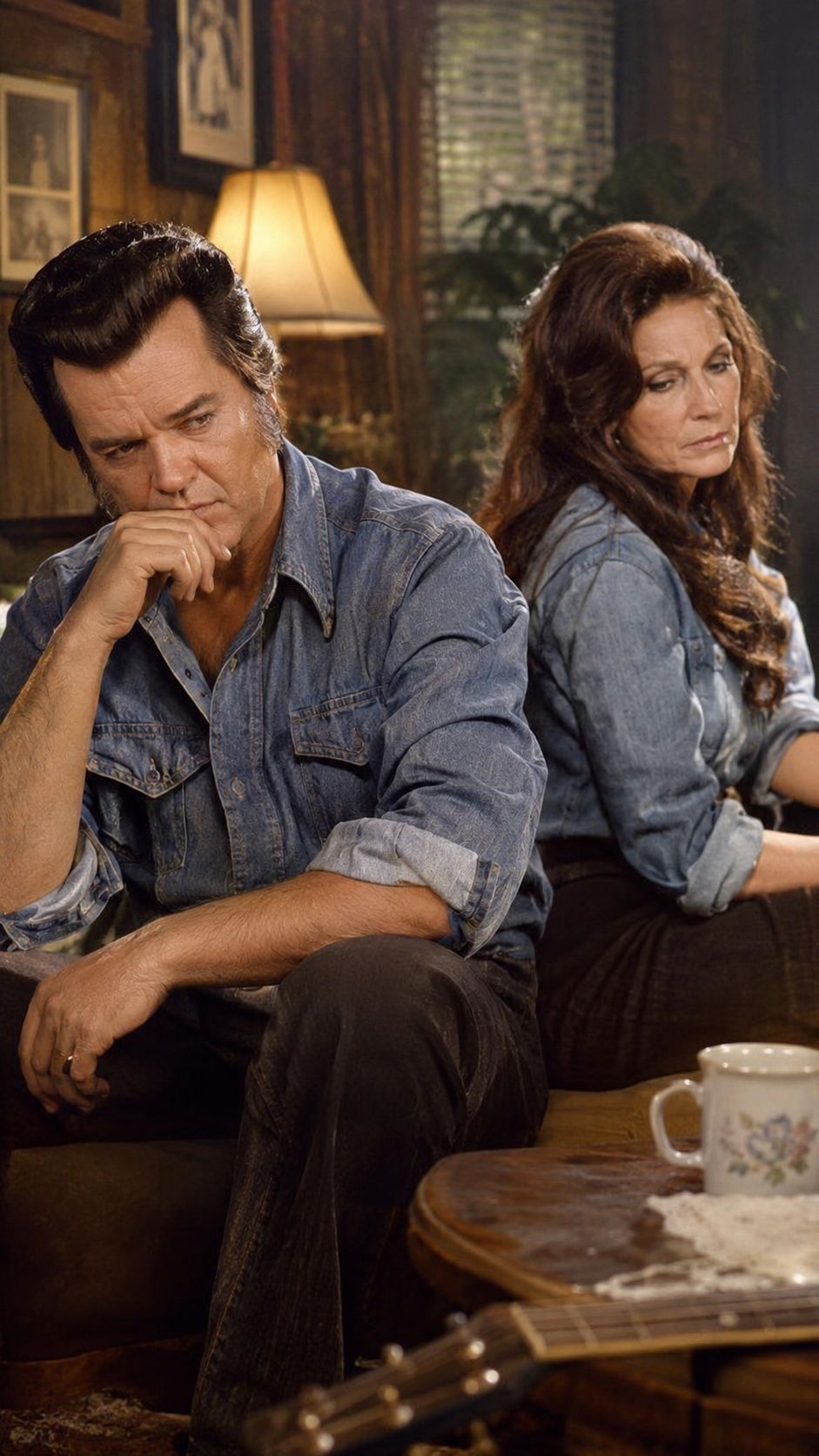
Some partnerships in country music become unforgettable because of the songs they create. Others endure because of the emotions they awaken, the questions they leave unanswered, and the mysterious connection that seems to exist between two voices long after the music stops. The extraordinary musical partnership between Conway Twitty and Loretta Lynn belonged to both worlds.
When their voices met, something remarkable happened. His smooth, intimate delivery blended with her fearless, unmistakable honesty, creating performances that felt less like rehearsed duets and more like private conversations unfolding in front of millions. Their chemistry was so convincing that listeners often wondered whether the emotions they heard in their songs reflected something deeper than professional admiration.
But what happens when the public begins to believe it understands a relationship simply because it has heard two people sing together?
Behind the magic of Conway and Loretta’s celebrated recordings lay the realities of two independent artists, demanding careers, personal responsibilities, and the complicated pressures of maintaining a successful partnership. Their music explored longing, jealousy, heartbreak, forgiveness, and the fragile boundaries between love and loss. Naturally, those themes encouraged fans to search for similar drama in the lives of the singers themselves.
Yet the most compelling story is not necessarily one of secret warfare or a dramatic falling-out. It is the story of how powerful musical chemistry can create an illusion of intimacy, how audiences can mistake artistic tension for personal conflict, and how a partnership can remain meaningful without being the romantic fairy tale people imagine.
To understand Conway Twitty and Loretta Lynn, we must separate the documented history from the mythology—and discover why their music still makes listeners wonder what existed between the lines.
1. THE BEGINNING: TWO DISTINCT VOICES, ONE EXTRAORDINARY CONNECTION
The story of Conway Twitty and Loretta Lynn began with two artists who had already established distinct identities in American popular music.
Born Harold Lloyd Jenkins, Conway Twitty first pursued success in rock and roll before becoming one of country music’s most recognizable male vocalists. His transition into country music demonstrated an unusual ability to reinvent himself without losing the emotional intensity that had defined his earlier career.
Loretta Lynn, meanwhile, built her reputation through songs that spoke directly to the experiences of ordinary women. Her direct storytelling, Appalachian roots, and willingness to address difficult subjects helped establish her as one of country music’s most influential voices.
They were not two halves of a single personality. They were accomplished individuals with different backgrounds, musical instincts, and approaches to performance.
That distinction mattered.
When they began recording together in the early 1970s, their contrasting styles became their greatest strength. Conway brought a warm, controlled vocal presence. Loretta answered with a spirited, conversational delivery that could sound playful one moment and deeply wounded the next.
Their voices seemed to challenge each other.
In songs such as After the Fire Is Gone, their performances carried the emotional weight of a relationship approaching its breaking point. Their celebrated duet won the 1972 Grammy Award for Best Country Performance by a Duo or Group with Vocal, helping establish the partnership as a major force in country music.
Listeners heard tension, attraction, disappointment, and tenderness. Those feelings were real within the performances, even when the characters and circumstances described in the lyrics were not literal accounts of the singers’ private lives.
This was the first important misunderstanding surrounding their partnership: believable emotional expression does not automatically reveal private emotional truth.
Their ability to make fictional situations feel authentic was evidence of their artistry, not proof that they were secretly fighting or romantically involved.
And yet, the more convincing their performances became, the easier it was for audiences to imagine a hidden story behind them.
2. THE PSYCHOLOGY OF CHEMISTRY: WHY THEIR DUETS FELT SO PERSONAL
There is a fascinating psychological reason why certain musical partnerships feel more intimate than others.
When two singers perform a duet, they do more than exchange lyrics. They create a miniature dramatic relationship. One voice makes a claim; the other responds. One singer expresses vulnerability; the other appears to offer reassurance, resistance, or temptation.
Conway and Loretta mastered this exchange.
Their phrasing often created the impression that each singer was listening carefully to the other. Their vocal differences gave their performances a natural sense of movement. Conway could sound measured and reassuring, while Loretta could make a line feel spontaneous, confrontational, or painfully honest.
The listener became a witness to an emotional conversation.
This effect was particularly powerful because their songs frequently dealt with subjects that audiences recognized from their own lives: marital dissatisfaction, temptation, reconciliation, regret, and the fear of losing someone who once seemed irreplaceable.
The emotional familiarity encouraged listeners to identify the performers with the characters they portrayed.
Over time, this identification could become so strong that the distinction between the song’s fictional relationship and the singers’ real relationship began to blur.
That is where the idea of psychological warfare becomes an interesting metaphor—but a misleading historical claim if taken literally.
There is no established basis for describing Conway Twitty and Loretta Lynn as secretly waging a psychological campaign against each other. Their music, however, repeatedly portrayed the emotional games people sometimes play in relationships: withholding affection, testing loyalty, concealing disappointment, and using silence to communicate pain.
The tension belonged to the stories they told.
The extraordinary achievement was making those stories sound personal enough that listeners could feel every hesitation and every unspoken word.
Perhaps the most revealing question is not whether Conway and Loretta were secretly manipulating each other, but why their performances made so many people feel as though they were witnessing something private.
The answer lies in the rare combination of vocal chemistry, dramatic storytelling, and emotional credibility.
They did not need a hidden feud to create unforgettable tension. Their artistic abilities were more than sufficient.
3. THE SUCCESSFUL YEARS: WHEN THE MUSIC BECAME BIGGER THAN THE MYTH
As their collaboration developed, Conway Twitty and Loretta Lynn became one of country music’s defining duet partnerships.
Their success was not built on one recording alone. They continued releasing music that appealed to listeners who appreciated traditional country arrangements, memorable melodies, and stories grounded in recognizable human emotions.
Louisiana Woman, Mississippi Man became another signature recording, reaching No. 1 on the Billboard Hot Country Singles chart in 1973. Its lively back-and-forth captured the playful energy that distinguished their partnership.
Their recordings demonstrated a remarkable balance. Neither singer disappeared behind the other. Conway’s smoothness did not overpower Loretta’s personality, and Loretta’s assertiveness did not diminish Conway’s presence.
Instead, each made the other more interesting.
This balance can be understood as a form of artistic trust. A successful duet requires each performer to leave room for the other to contribute something essential. Too much dominance can flatten the interaction; too little commitment can make the performance feel lifeless.
Conway and Loretta understood how to maintain that balance.
Their public success inevitably encouraged fascination with their personal dynamic. Fans wanted to know whether the playfulness they heard in their recordings continued backstage, whether their disagreements were as dramatic as their lyrics, and whether their connection extended beyond the recording studio.
But celebrity audiences often search for a simple explanation for extraordinary chemistry. A secret romance, a bitter rivalry, or a hidden betrayal offers an immediately compelling narrative.
The reality of professional collaboration is often more complicated and less sensational.
Two people can share a powerful artistic connection without sharing every aspect of their private lives. They can understand each other’s musical instincts while maintaining separate families, priorities, and personal boundaries.
That may sound less dramatic than a secret emotional battle, but it is a more meaningful way to understand what made their partnership work.
Their music did not require them to become one person. It required them to bring their differences together.
And that was precisely what made their recordings memorable.
4. DID CONWAY AND LORETTA EVER BECOME STRANGERS?
The phrase from soulmates to strangers carries enormous emotional power. It suggests a relationship that once seemed destined to last but eventually collapsed under the weight of resentment, misunderstanding, or betrayal.
It is also a phrase that should be treated cautiously when applied to Conway Twitty and Loretta Lynn.
Their musical partnership was not the same thing as a documented romantic relationship. Nor does their professional history, by itself, establish that they experienced a devastating personal falling-out.
The word soulmates can describe how listeners perceive two performers whose talents seem perfectly matched. In that sense, it captures something genuine about Conway and Loretta’s artistic compatibility. It should not, however, be confused with proof that they were romantic partners or that their relationship later disintegrated.
There is a crucial difference between the end of a collaboration and the end of a personal bond.
Artists change. Touring schedules become difficult. Record labels shift their priorities. Family obligations, health, age, and changing musical markets influence which projects remain practical. A partnership can become less visible without becoming hostile.
For audiences, the absence of new music can feel like an unanswered question. When two performers have spent years singing about love and heartbreak, listeners may interpret professional distance through the emotional language of their songs.
Silence becomes suspicious. Separate careers become evidence of conflict. The lack of a dramatic public explanation becomes an invitation to invent one.
Yet an absence of information is not proof of an undisclosed tragedy.
A responsible account of Conway and Loretta’s relationship must acknowledge the limits of what is established. Their celebrated recordings document an exceptional creative partnership. They do not establish a secret campaign of emotional manipulation or a definitive transition from intimate companions to personal enemies.
The more useful question is what their story teaches us about the way people interpret relationships from the outside.
We often believe that a connection must either intensify or collapse. We imagine that if two people are not visibly close, something must have gone wrong.
But real relationships rarely follow such simple rules.
Sometimes people share a particular chapter of life, create something meaningful together, and continue along different paths. The value of what they created does not disappear simply because the chapter changes.
That possibility deserves as much attention as the more sensational story.
5. THE UNSEEN PRESSURE: FAME, EXPECTATIONS, AND EMOTIONAL PROJECTION
Although a secret psychological war between Conway Twitty and Loretta Lynn is not established history, the pressures surrounding a famous musical partnership offer a compelling subject for analysis.
Fame transforms relationships into public property in the eyes of some audiences.
When performers display warmth, people want more of it. When they disagree, people want to know who was responsible. When they stop appearing together, fans may search for a dramatic explanation rather than accept that circumstances have changed.
This creates a difficult environment for artists whose work depends on emotional honesty.
Consider the expectations surrounding a successful duet. The audience wants the performers to recreate the chemistry of their favorite recordings. Promoters want recognizable names and familiar songs. Record companies want commercial success. Journalists seek stories that explain why the partnership works.
The artists themselves must continue making music while managing the ordinary responsibilities of their lives.
In that environment, a successful partnership can become burdened by expectations that go beyond the music.
There is also the phenomenon of emotional projection. Listeners bring their own experiences of love, jealousy, abandonment, and reconciliation to the songs they hear. A lyric that reminds one listener of a painful marriage may remind another of a secret crush or an old friendship.
When the performance is especially convincing, the audience may unconsciously transfer those feelings onto the performers.
Conway and Loretta were particularly effective at encouraging this response because their duets rarely sounded emotionally distant. Their voices created the impression of two people with something important to say to each other.
That impression was part of their artistic achievement.
It was also the reason their relationship became such fertile ground for speculation.
The distinction matters because speculation can gradually harden into supposed fact. A dramatic headline may begin with a question, suggest a possibility, and eventually present an invented conflict as an established event.
The result is a distorted understanding of the very people whose work inspired the fascination.
The deeper lesson is that emotional intensity in art deserves to be appreciated without automatically becoming evidence about the artist’s private life.
We can acknowledge the tension in a performance without claiming a real argument occurred. We can admire the intimacy of a duet without insisting that a romance existed behind it.
And we can recognize the pressures of celebrity without inventing a personal tragedy to explain them.
6. THE SONGS THAT MADE THEIR PARTNERSHIP FEEL LIKE A LOVE STORY
To understand why the mythology surrounding Conway Twitty and Loretta Lynn remains so persistent, it helps to return to their music.
Their most memorable duets often placed two characters in situations where affection collided with responsibility. Their songs were rarely simple declarations of happiness. Instead, they explored the messy territory where desire, loyalty, temptation, and regret overlap.
After the Fire Is Gone captured the pain of a relationship in which passion had faded and emotional distance had taken its place. The recording’s dramatic power came from the sense that both voices understood the consequences of what they were singing.
Louisiana Woman, Mississippi Man, by contrast, offered a more playful kind of romantic tension. Its spirited exchange transformed regional identity and stubborn affection into a musical contest, with each singer pushing the other forward.
These recordings revealed two different sides of their artistry: the ability to portray emotional damage and the ability to make attraction sound joyful.
Together, the songs created a remarkably complete portrait of romantic experience.
Listeners could hear the beginning of a relationship, the frustrations that threaten it, and the complicated emotions that remain when love becomes difficult.
That breadth made their partnership feel larger than a collection of successful singles.
It also encouraged audiences to imagine a continuous narrative connecting every song. If the characters sounded jealous in one recording and devoted in another, perhaps fans assumed the performers were revealing successive chapters of a private relationship.
But a singer’s ability to portray different emotional states is comparable to an actor’s ability to inhabit different characters. The performance may feel authentic without being autobiographical.
This does not make the music less moving.
In fact, it makes the achievement more impressive. Conway and Loretta could communicate emotions they did not necessarily need to experience together in their private lives. Their understanding of phrasing, timing, and character allowed them to make a fictional exchange feel immediate.
Their songs became mirrors in which listeners could recognize their own experiences.
That may be the real reason their musical connection continues to fascinate new generations. People are not simply listening to two legendary voices. They are hearing their own memories, disappointments, hopes, and unfinished conversations reflected in the music.
And those feelings can be powerful enough to make a song seem like a confession.
7. 1993: THE LOSS THAT CHANGED THE STORY FOREVER
On June 5, 1993, Conway Twitty died at the age of 59 after becoming ill while on tour. His death marked the end of a remarkable career and brought his musical partnership with Loretta Lynn into a new historical context.
When a performer dies, the meaning of earlier recordings can change for the people who remain. Songs that once felt like ordinary parts of a living career become pieces of an irreplaceable past.
The possibility of future collaborations disappears. Familiar performances become reminders of time that cannot be recovered. Even songs recorded decades earlier can suddenly carry a new emotional weight.
For listeners who loved Conway and Loretta’s duets, Conway’s death meant that their particular musical partnership could never return in its original form.
That reality should not be confused with evidence of a secret reconciliation, a final argument, or a tragic personal separation. The historical fact is that one of country music’s major voices was gone, leaving behind a body of work that continued to speak to audiences.
For Loretta Lynn, Conway’s death also became part of the larger history of an era in country music. Their partnership had helped define a particular sound and style, one that depended on two distinctive voices meeting at exactly the right moment.
With Conway gone, those recordings became permanent records of their collaboration.
There is something deeply moving about that permanence. A duet allows two people to occupy the same musical space even when the recording is decades old. One voice begins a line; the other answers. Their timing remains intact. Their musical relationship survives the circumstances that made it possible.
The result can feel almost like a conversation across time.
Perhaps that is why listeners continue searching for a deeper story behind their performances. The music preserves an interaction that can never be repeated in quite the same way.
Yet the most respectful tribute is not to invent a tragedy to make the recordings seem more important. It is to recognize the genuine artistry, professional achievement, and emotional power already present in them.
Conway’s death ended the possibility of new duets between the two. It did not diminish the significance of the music they had already made.
8. WHY THE STORY STILL RESONATES: THE HUMAN NEED FOR AN EXPLANATION
The fascination with Conway Twitty and Loretta Lynn reveals something larger about the relationship between celebrity, music, and memory.
People are drawn to stories that seem to contain a hidden truth. A partnership that sounds almost impossibly natural invites questions. A career that changes direction creates opportunities for speculation. A death that permanently closes a chapter encourages people to revisit what came before.
The phrase psychological warfare adds another layer because it promises that an ordinary-looking relationship contained a secret struggle beneath the surface.
But a compelling phrase is not the same as a reliable explanation.
There is no need to claim that Conway and Loretta secretly fought for control, manipulated each other’s emotions, or became bitter strangers in order to appreciate the complexity of their musical relationship.
Their partnership was already fascinating: two independent performers with contrasting styles, creating recordings that conveyed a remarkable range of human emotion.
Their story also reminds us that public perception is often built from incomplete information. We hear a song, imagine the circumstances behind it, and begin to treat our interpretation as a window into someone else’s life.
The process is understandable. Music is intimate. It accompanies weddings, funerals, breakups, reunions, long drives, and quiet moments when people struggle to explain what they feel.
A song can become part of a person’s life story. Its performers may consequently seem like people the listener knows personally.
But emotional familiarity is not the same as personal knowledge.
Recognizing that distinction allows us to celebrate Conway and Loretta without reducing them to characters in an invented drama.
It also allows their music to remain open to interpretation. Listeners can debate what a lyric means, identify with its characters, and find new emotional significance in an old recording without claiming certainty about the singers’ private experiences.
The mystery, then, is not necessarily what Conway and Loretta hid from one another.
It is how two voices could create such a convincing emotional world that millions of listeners continue to search for the story behind it.
9. FROM SOULMATES TO STRANGERS: A MORE HONEST WAY TO UNDERSTAND THEIR LEGACY
The idea that Conway Twitty and Loretta Lynn traveled from soulmates to strangers is a powerful narrative, but it should not be presented as a documented timeline of romantic love, psychological manipulation, and personal betrayal.
Their established legacy is more substantial than that.
They were two major country music artists who found extraordinary creative compatibility. Their voices complemented each other, their interpretations brought songs to life, and their recordings became enduring parts of country music history.
They also remained individuals with separate identities, careers, and personal lives.
That distinction is important because it challenges the assumption that a meaningful partnership must be explained through romance or conflict. Artistic intimacy can exist without a romantic relationship. Professional respect can survive changes in circumstance. A collaboration can end without becoming a story of enemies.
The title From Soulmates to Strangers may capture the sadness listeners feel when revisiting music from a vanished era. It may describe the way time separates us from the people and experiences attached to our favorite songs.
But the feeling belongs to the listener unless the historical record establishes something more specific.
And perhaps that is where the most personal part of this story begins.
Many of us have known relationships that felt effortless at one moment and distant at another. We have wondered whether a friendship could have lasted longer, whether a conversation might have changed an outcome, or whether someone who once understood us still remembers what we shared.
When we hear Conway Twitty and Loretta Lynn, we may bring those questions into the music.
Their performances give us a place to explore them.
That is a remarkable gift, and it does not depend on a secret scandal. Their artistry allows listeners to experience the tension between closeness and distance, affection and disappointment, without requiring the performers to have lived every story they sang.
Their legacy is not weakened by separating documented history from dramatic speculation. It becomes clearer.
They gave country music something lasting: a partnership in which two distinctive voices could meet, challenge each other, and create a musical world that felt larger than either voice alone.
That achievement deserves to be remembered on its own terms.
CONCLUSION: THE TRUTH BEHIND THE CHEMISTRY
The story of Conway Twitty and Loretta Lynn is often tempting to frame as a hidden emotional battle, a mysterious love story, or a painful journey from soulmates to strangers. Such descriptions may attract attention, but the established history does not justify presenting a secret psychological war or a dramatic personal falling-out as fact.
What we can say with confidence is that their musical chemistry was exceptional.
From the emotional weight of After the Fire Is Gone to the playful energy of Louisiana Woman, Mississippi Man, they demonstrated how two artists could transform a song into an intimate exchange. Their voices gave familiar human emotions a distinctive shape, allowing listeners to find their own experiences inside the music.
Conway’s death in 1993 closed the door on future collaborations, but their recordings continued to preserve the partnership they had created.
Perhaps the most important lesson is that not every powerful connection hides a scandal. Sometimes the mystery is simply the art itself: the way a voice can make a stranger feel understood, the way a duet can sound like a confession, and the way an old song can bring back emotions we thought time had taken away.
Conway Twitty and Loretta Lynn did not need a documented secret war to become unforgettable.
Their music had already done something extraordinary.
And decades later, when those familiar voices meet again through a recording, the conversation still feels alive.
What do you think made Conway and Loretta’s duets so unforgettable—their natural musical chemistry, their emotional storytelling, or the mystery listeners have always sensed between the lines?
VIDEO: