 By admin
INTRODUCTION:
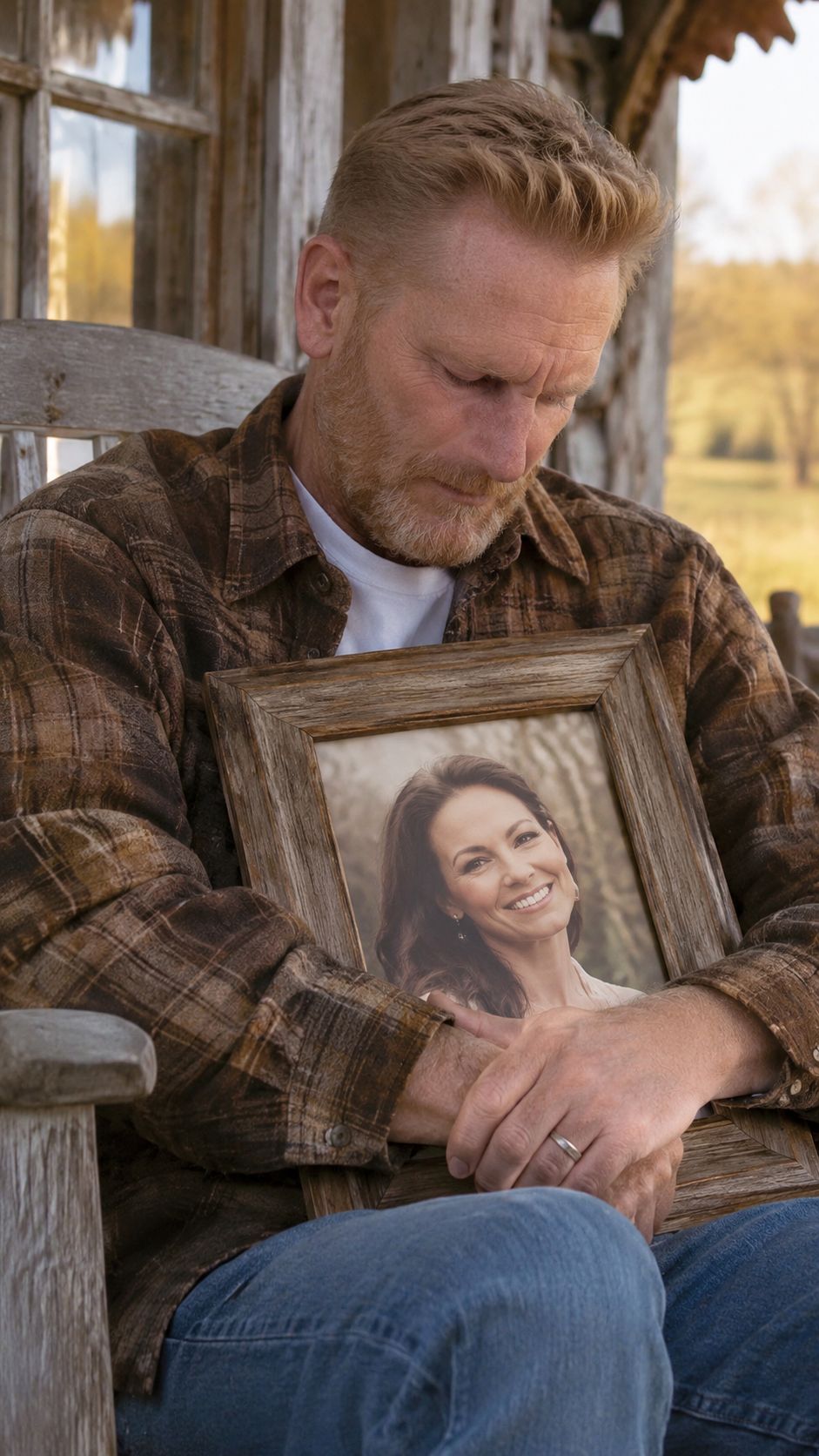
Some love stories are so deeply woven into a person’s life that even death cannot bring them to an end. For Rory Feek, the loss of his beloved wife, Joey Feek, was not simply the end of a marriage. It was the shattering of a shared world, a future filled with unfinished dreams, and a daily life built around the woman who had become his closest companion, musical partner, and greatest source of comfort.
When Joey Feek died on March 4, 2016, after a courageous battle with cervical cancer, the country music community mourned a remarkable singer. But for Rory, the grief was far more personal than anything an audience could fully understand. Behind the songs, the photographs, and the tender memories was a husband learning how to live in a home where his wife’s voice could no longer be heard.
Their story had never depended on fame alone. As the country duo Joey + Rory, they had built a devoted following through honest songwriting, traditional country sounds, and a sincerity that made listeners feel as though they were being welcomed into the family’s living room. Their relationship seemed to embody a quieter kind of success: love, faith, family, and the courage to embrace life’s simplest blessings.
Yet when Joey was gone, Rory faced a question that no song could easily answer: How does a person continue living when the person who made life feel complete is no longer there?
His journey through grief would become a deeply moving chapter of their story—one shaped by painful memories, fatherhood, music, faith, and the difficult discovery that moving forward does not have to mean leaving love behind.
1. When the World Fell Silent: The Loss Behind the Music
To understand Rory’s grief, it is important to understand what Joey represented in his life. She was not merely the other half of a successful musical partnership. She was the woman with whom he had built a family, shared ordinary routines, pursued creative dreams, and imagined the years still waiting ahead of them.
Their professional identity as Joey + Rory reflected a personal partnership that audiences found deeply appealing. Their music celebrated familiar country themes—home, devotion, family, hardship, and hope—but those themes carried a particular weight because listeners could see the sincerity behind them.
The couple’s journey changed dramatically when Joey was diagnosed with cervical cancer in 2014. What followed was a devastating period in which private family life became intertwined with public concern. Fans watched as the couple confronted difficult medical decisions, cherished time together, and attempted to preserve meaningful moments amid uncertainty.
For Rory, the approaching loss was not a single event. It was a painful process of understanding that the future he had imagined with Joey might never arrive. Each day carried the possibility of another treasured memory and the fear that there might be fewer opportunities to make new ones.
When Joey died in March 2016, that long season of uncertainty gave way to a different kind of suffering: the permanence of absence.
Grief often becomes most visible during funerals and public tributes, but its deepest effects can emerge afterward. The visitors eventually leave. The phone stops ringing as often. The world returns to its familiar rhythm, while the bereaved person must learn to navigate ordinary moments that suddenly feel extraordinary in their emptiness.
For Rory, even familiar surroundings could hold painful reminders. A room, a photograph, a song, or a family routine could bring Joey’s presence vividly to mind—and then make her absence feel fresh all over again.
The hardest part of losing someone you love is not only remembering the life you shared. It is learning how to live through all the moments you once expected to share together.
Rory’s experience illustrates an important truth about bereavement: there is no single moment when a person simply finishes grieving. Love does not disappear when a life ends, and the emotional consequences of that love can remain long after the public mourning has passed.
2. Joey’s Final Chapter: Finding Meaning in an Unimaginably Difficult Goodbye
The final months of Joey’s life became an extraordinary period for the family and the people who followed their story. As her illness progressed, the couple faced circumstances that no amount of faith, devotion, or determination could make easy.
Yet their response was not defined solely by despair. They continued to value time together, their daughter Indiana, their family, and the small moments that could still bring comfort.
The story of Joey Feek resonated with country music fans because it revealed the human reality behind a public career. Instead of presenting love as a permanent escape from hardship, their experience showed how love can become even more meaningful when the future is uncertain.
For Rory, caring for Joey through her illness meant confronting the limits of what a husband could do. He could offer companionship, make difficult decisions alongside her, protect moments of family closeness, and tell her how deeply she was loved. But he could not guarantee the outcome either of them wanted.
That helplessness is one of the cruelest aspects of watching someone you love approach the end of life. The instinct to protect the person remains powerful, even when the situation is beyond your control.
After Joey’s death, memories of that final chapter could carry conflicting emotions. They could provide comfort because they recalled intimacy, courage, and devotion. They could also reopen the wound because they reminded Rory of everything the family had lost.
The meaning of those memories was not fixed. Over time, a moment that initially felt unbearable might become a source of gratitude. Another memory might remain painful. Healing does not require every recollection to become peaceful.
The couple’s story also challenged the assumption that a meaningful life must be measured by its length. Joey’s life was tragically cut short, but the love she gave, the music she created, and the relationships she nurtured continued to matter.
For Rory, preserving that meaning became part of the work of living after loss. He could not change the ending, but he could continue honoring the life that came before it.
3. A Father Facing Grief While Raising Indiana
One of the most significant responsibilities Rory faced after Joey’s death was caring for their young daughter, Indiana Feek.
Losing a spouse is devastating in its own right. Experiencing that loss while parenting a child introduces another layer of complexity. A grieving parent must manage personal sorrow while providing reassurance, structure, affection, and stability for someone who is also confronting a profound change.
Indiana had lost her mother. Rory had lost his wife. They were experiencing different forms of grief, but their lives were now connected by a shared absence.
For a parent, this can create an especially difficult emotional tension. There may be days when sadness feels overwhelming, yet everyday responsibilities remain. Meals must be prepared. Routines must continue. Questions must be answered. A child may need comfort at the very moment the parent desperately needs comfort too.
Rory’s role as Indiana’s father became central to his life after Joey’s passing. The family had to find a way to preserve Joey’s place in their story while continuing to create new memories without her physically present.
That distinction matters. Children do not need a lost parent to become a forbidden subject or a memory surrounded only by sadness. They need opportunities to remember, ask questions, express emotions, and understand that love for someone who has died can remain a natural part of family life.
The process is rarely straightforward. A child may respond differently at different ages, and a parent’s own emotions can change from day to day. There is no perfect script for navigating these moments.
Rory’s experience as a widowed father therefore represents more than a private family challenge. It reflects the difficult work of maintaining connection across generations of grief.
Joey’s influence could continue through stories, photographs, music, and the values she had shared with her family. None of these things could replace her presence, but they could help keep her memory woven into Indiana’s understanding of her own life.
For Rory, fatherhood also meant accepting that grief and joy could coexist. Caring for Indiana did not erase his sadness, and his sadness did not mean he was failing to be a loving father.
Sometimes, continuing forward begins with the simplest responsibility: showing up for the person who still needs you, even when your own heart feels broken.
4. Faith, Silence, and the Search for a New Normal
Faith has been an important part of the public story surrounding Rory Feek and Joey Feek. Their Christian beliefs influenced how they spoke about life, family, suffering, and death.
For many people, faith offers a language for confronting questions that otherwise seem impossible to answer. It can provide a sense of continuity, a community of support, and the hope that death does not represent the complete destruction of a relationship.
But faith does not make grief painless.
A person can believe deeply in an afterlife and still ache for an ordinary conversation. Someone can trust in a larger purpose and still struggle to understand why a loved one died so young. Hope and heartbreak can occupy the same heart without canceling each other out.
That complexity is essential to understanding Rory’s journey. It would be too simple to describe his recovery as a matter of praying, accepting the loss, and moving on. Bereavement is not a problem that can be solved through a single belief or a determined attitude.
The reality of grief is often much quieter. It may involve learning to tolerate silence, adjusting to an unfamiliar routine, or discovering that a seemingly ordinary day can suddenly bring back the intensity of loss.
A new normal does not mean that life returns to the way it was before. It means that a person gradually develops a different way of living, one that acknowledges what has happened while making room for what remains.
For Rory, the work of building that life involved family, faith, music, and the responsibilities of daily living. These elements could offer grounding without demanding that he forget Joey or pretend that the loss no longer hurt.
There is a valuable lesson here for anyone supporting a grieving person. Comfort does not always come from offering explanations. Sometimes it comes from listening, allowing sadness to exist without judgment, and understanding that healing cannot be forced to follow a convenient schedule.
The story of Rory and Joey reminds us that faith can be a source of strength without functioning as a shield against sorrow. The deepest forms of hope often emerge not because pain disappears, but because life remains meaningful even when pain continues.
5. Music as a Bridge Between Memory and the Present
Music had always been central to Rory and Joey’s relationship. As Joey + Rory, they built their identity around songs that emphasized sincerity over spectacle and emotional connection over elaborate presentation.
After Joey’s death, music naturally took on an additional significance. A song can preserve the sound of a voice, capture a feeling that words alone cannot express, and connect a listener to a particular time in life.
For a grieving musician, however, music can be both comforting and difficult. The very act that once brought joy may also summon memories of a missing partner. A familiar melody can feel like an invitation to return to the past, only for the listener to realize that the past cannot be recovered exactly as it was.
This tension helps explain why music can play such a complicated role in bereavement. It does not simply distract someone from grief. It can provide a way to encounter grief, give it form, and share it with others.
Rory’s musical identity was inseparable from the years he had spent working alongside Joey. Their recordings and performances remained a record of their partnership, preserving a creative relationship that death could not erase from history.
Listeners, too, became part of that continuing connection. When fans revisited a Joey + Rory song, they were not merely listening to an old recording. They were remembering what the music had meant in their own lives and reflecting on the story behind the voices.
This is one reason the couple’s legacy has continued to resonate with audiences who value traditional country music. Their work connected musical simplicity with emotional honesty, allowing listeners to recognize their own experiences of love, uncertainty, family, and loss.
Music cannot bring Joey back, and it would be unfair to suggest that songwriting automatically heals a broken heart. But it can preserve something important: evidence that a relationship existed, that two people made something meaningful together, and that their shared work continues to reach people.
In that sense, the music became more than a reminder of what Rory had lost. It also remained a record of what he and Joey had built.
6. Choosing to Live Without Choosing to Forget
One of the most misunderstood aspects of grief is the belief that moving forward requires leaving the past behind.
For someone who has lost a spouse, the idea of a future can initially feel like a betrayal of the life that came before. Making new plans, experiencing happiness, or finding purpose may create complicated emotions because the person who once shared those experiences is no longer physically present.
Yet love and forward movement are not opposites.
A person can preserve a deep attachment to a deceased spouse while continuing to participate in the world. They can treasure shared memories without requiring every day to revolve around sadness. They can recognize the importance of the past while accepting that life continues to change.
Rory’s life after Joey illustrates why this distinction matters. The years they shared did not become less meaningful simply because he had to learn to live without her. Nor did the significance of their marriage depend on whether the remainder of his life looked exactly as they had once imagined.
Their relationship remained part of his history, his family, and his artistic identity.
It is also important not to treat grief as a competition or assume that outsiders can determine whether someone has mourned for the right amount of time. People process loss differently. Some speak openly about their emotions; others seek privacy. Some find comfort in returning to familiar places, while others need distance before they can face particular memories.
There is no single timetable that defines genuine love.
What matters is the ability to build a life that acknowledges the loss rather than denying it. For some people, that means continuing familiar traditions. For others, it means discovering new sources of purpose. Often, it involves a mixture of both.
Rory’s story carries a particularly moving reminder: the end of a person’s physical presence does not have to mean the end of their influence.
Joey’s voice remains in their music. Her memory remains connected to their daughter and family. The story of their partnership continues to reach listeners who find comfort in the honesty of their songs.
None of these things reverses death. They demonstrate something more modest, but still powerful: a life can continue to shape other lives long after it has ended.
7. Why Rory and Joey’s Story Still Touches Country Music Fans
The lasting appeal of Rory Feek and Joey Feek cannot be explained by tragedy alone. Their story resonates because it brings together several experiences that audiences recognize as fundamental to being human: falling in love, building a family, confronting uncertainty, facing loss, and trying to discover what comes next.
Country music has long explored these themes. Its most enduring songs often focus on ordinary people confronting extraordinary emotions. A kitchen table, an empty chair, a familiar road, or a photograph can become the center of a story about love and memory.
Rory and Joey embodied that tradition through both their music and their public journey. Their story reminded listeners that devotion is not defined by a life free from hardship. Sometimes it becomes most visible when hardship cannot be avoided.
Their experience also encouraged a more compassionate understanding of grief. The bereaved are not required to transform their pain into an inspiring message. They do not have to appear strong every day, and they do not owe the public a complete account of their private emotions.
What audiences can learn from their story is not that every tragedy has a beautiful explanation. It is that love can remain meaningful even when the ending is unbearably painful.
For fans who followed Joey + Rory, their music may now carry an additional emotional layer. Songs once heard as expressions of devotion can also serve as reminders of the fragility of time and the importance of cherishing people while they are here.
That connection is part of the enduring power of country music. A song created by one family can become a source of reflection for thousands of others, allowing listeners to recognize their own memories in someone else’s experience.
The Feeks’ story continues to invite that kind of recognition—not because their suffering should be romanticized, but because their love and creative work remain meaningful.
CONCLUSION: A Love Story That Did Not End With Goodbye
The loss of Joey Feek changed the course of Rory Feek’s life in a way that no public tribute or musical achievement could fully explain. He had to face the absence of his wife, care for their daughter, preserve the meaning of their shared years, and discover how to imagine a future that looked different from the one they had planned.
There is no need to pretend that such a journey can be reduced to a simple lesson about strength. Losing a spouse is profoundly painful, and the process of adapting to that loss can remain complicated long after the first wave of mourning has passed.
But Rory and Joey’s story offers a gentle reminder about the nature of love. The relationships that shape us do not become meaningless when circumstances change. They remain present in our memories, our choices, our families, and the things we create together.
Joey’s life was more than the illness that took her away. She was a singer, a wife, a mother, and a person whose voice became part of a musical partnership cherished by countless listeners. Rory’s life after her death has been shaped by the challenge of carrying that history forward while continuing to live in the present.
Perhaps the most heartbreaking part of their story is also the most human: Rory could not keep the woman he loved beside him forever, but he did not have to stop loving her.
And perhaps that is why their story still matters. It reminds us that grief is not proof that love has failed. Sometimes, it is the enduring echo of a bond that mattered so much that its absence changes everything.
Joey Feek may be gone, but the music she made, the family she helped build, and the memories she left behind remain part of a story that continues to touch hearts.
Some goodbyes change a life forever. They do not necessarily erase the love that made that life beautiful in the first place.
VIDEO: