 By admin
INTRODUCTION:
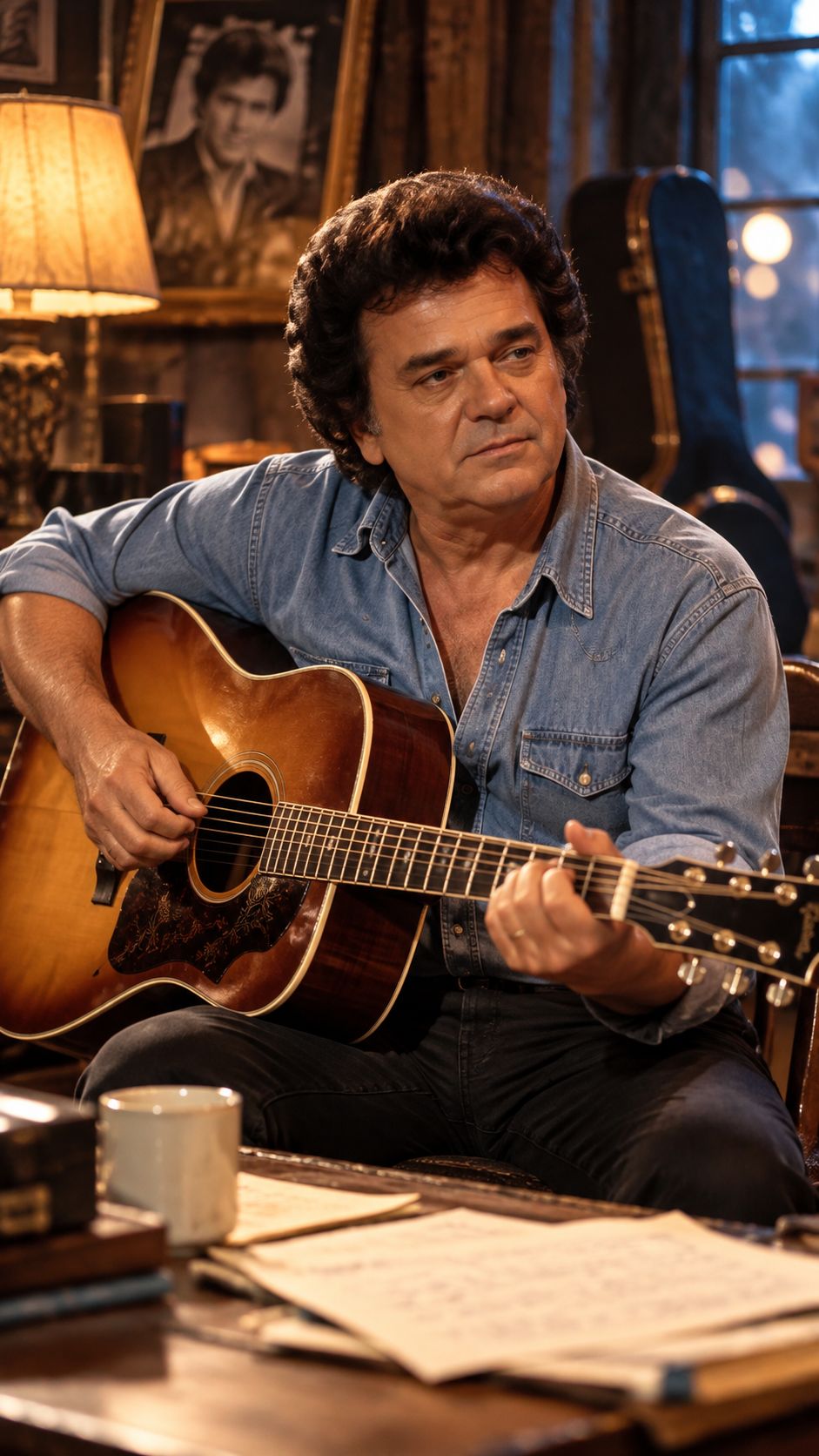
There are singers who entertain us for a moment, and then there are singers who seem to understand the parts of our hearts we struggle to explain. Conway Twitty belonged to the second group. With his unmistakable voice, remarkable emotional control, and extraordinary ability to make a simple lyric feel like a personal confession, he became one of the most enduring storytellers in country music history. His songs were never merely melodies drifting through the radio. They were conversations about love, regret, loneliness, desire, forgiveness, and the difficult choices that shape a lifetime.
For millions of listeners, Conway Twitty provided the soundtrack to first romances, broken promises, long marriages, and quiet nights when memories felt impossible to escape. His greatest recordings possessed a rare quality: they could make listeners feel as though he knew their private struggles, even when he was singing a story that belonged to someone else.
But what was he really trying to tell us?
Behind the tenderness of his love songs and the ache of his heartbreak ballads lies a deeper understanding of human nature. His music often explored the distance between what people feel and what they dare to say, between the lives they build and the dreams they secretly carry.
To understand Conway Twitty’s greatest songs is to look beyond the familiar melodies and discover the emotional truths that continue to connect generations. His legacy is not simply a collection of chart-topping records. It is a reminder that love can be complicated, that mistakes can leave lasting scars, and that sometimes a song says what the human heart cannot.
1. The Power of Vulnerability: Why Conway Twitty Made Heartbreak Feel So Real
One of the defining qualities of Conway Twitty was his ability to communicate vulnerability without making it feel exaggerated. In a musical tradition that often celebrated independence, resilience, and the ability to carry on, he made room for another kind of strength: the willingness to admit that love can hurt.
His voice could sound confident and commanding one moment, then turn intimate and uncertain the next. That contrast gave his performances their emotional depth. He did not need to shout to communicate pain. Often, a restrained phrase or a slight change in vocal emphasis could make a lyric feel devastatingly personal.
Consider the emotional world of “Hello Darlin’.” The song opens with a simple greeting, but the words carry the weight of a relationship that has already become part of the past. The narrator encounters someone he once loved and attempts to bridge the distance between them through ordinary conversation.
What makes the song so powerful is what remains unsaid. A greeting cannot erase old wounds. A polite exchange cannot restore lost time. Beneath the surface, the listener senses the memories, unanswered questions, and lingering affection that neither person may be prepared to discuss.
The song illustrates one of the central themes in Conway Twitty’s music: people frequently hide their deepest feelings behind everyday words.
Sometimes the most heartbreaking conversations are the ones in which nobody says what they truly mean.
That insight helps explain why his music remains so relatable. Many people have experienced the strange feeling of meeting someone who once meant everything and discovering that, despite the years that have passed, a small part of the heart still remembers.
Twitty understood that heartbreak does not always arrive with dramatic confrontations. Sometimes it appears in a familiar voice, an unexpected encounter, or a simple question that brings an entire chapter of life rushing back.
2. “It’s Only Make Believe”: The Dangerous Distance Between Dreams and Reality
Before becoming one of country music’s most recognizable voices, Conway Twitty achieved an enormous early success with “It’s Only Make Believe,” a recording that revealed his ability to inhabit the emotional contradictions of a character.
The song explores the painful distance between what a person wishes were true and what reality actually allows. Its narrator longs for a love that appears genuine in his imagination but remains uncertain or unfulfilled in the real world.
That tension gives the recording a timeless quality.
Almost everyone has experienced a moment when hope begins to resemble reality so closely that it becomes difficult to distinguish the two. A glance becomes a promise. A friendly conversation becomes a possible romance. A dream about the future becomes an emotional refuge from the present.
Yet the difference between wanting something and possessing it can be enormous.
“It’s Only Make Believe” captures the vulnerability of someone who has invested emotionally in a possibility that may never become real. The narrator is not simply disappointed by another person. He is confronting the gap between the life he imagined and the life he actually has.
This is an important distinction because disappointment often involves losing two things at once: the relationship itself and the future that was built around it.
The song also demonstrates how Twitty’s early pop-oriented success helped establish the expressive style he would carry into country music. He could communicate romantic longing with theatrical intensity while preserving a recognizable human vulnerability.
Its deeper message is not that dreaming is foolish. Rather, it suggests that dreams become painful when we mistake our hopes for promises made by someone else.
That lesson remains relevant in every generation. Love requires imagination, but lasting relationships also require honesty, mutual understanding, and the courage to see another person as they truly are.
3. “You’ve Never Been This Far Before”: When Love Crosses an Emotional Boundary
Few songs illustrate the complicated emotional landscape of adult relationships more clearly than “You’ve Never Been This Far Before.”
The recording became one of Conway Twitty’s signature country hits, but its lasting impact comes from more than its romantic atmosphere. It explores the uncertainty that accompanies a relationship moving into unfamiliar territory.
The central idea is a threshold: a moment when two people recognize that something has changed between them. What once felt familiar now carries new emotional significance. Their next decision may alter the relationship in ways neither person can completely predict.
Twitty’s delivery is essential to the song’s effect. Rather than treating the moment as a simple celebration, he gives it a sense of anticipation and uncertainty. The performance suggests that intimacy involves not only attraction but also awareness of consequences.
The song’s suggestive subject matter also reflects the cultural tensions surrounding country music in the 1970s. Some listeners embraced its frank treatment of romantic intimacy, while others questioned its boundaries. That debate helped make the recording especially memorable.
Yet the deeper question beneath the controversy is broader than physical attraction.
What happens when a relationship reaches a point where familiar rules no longer seem sufficient? What do two people owe each other when emotions become more serious? How do desire, trust, responsibility, and personal boundaries interact?
These questions extend far beyond one song.
The strongest interpretation of “You’ve Never Been This Far Before” recognizes that moments of intimacy can be both exciting and vulnerable. Moving closer to another person means accepting uncertainty and recognizing that choices have emotional consequences.
Twitty did not need to provide a moral lecture. He presented a situation and allowed the listener to confront its tension.
That was part of his artistry: he understood that the most memorable songs often begin where easy answers end.
4. “Linda on My Mind”: The Cost of Loving Someone While Living Another Life
In “Linda on My Mind,” Conway Twitty explored one of the most difficult situations in romantic storytelling: loving someone in your thoughts while remaining tied to a different reality.
The song’s emotional tension comes from the conflict between outward circumstances and inward desire. The narrator cannot simply separate his feelings from the life he is living. His thoughts repeatedly return to another woman, creating a painful division between what exists and what he wishes could exist.
This is where the song becomes more complicated than a straightforward love ballad.
It raises questions about responsibility, honesty, and the difference between a feeling and a decision. A person may not always choose the emotions that arise, but the choices made in response to those emotions can affect many lives.
The title itself is revealing. Linda occupies the narrator’s mind, even when she is not physically present. She represents a competing emotional reality that cannot easily be dismissed.
This is a familiar experience in human relationships. Sometimes people discover that their private feelings have changed before they have found the courage to acknowledge those changes publicly. They may continue performing familiar routines while privately questioning whether their lives still reflect what they want.
Twitty’s performance makes that conflict compelling because he does not reduce it to a simple victory of passion over duty. The emotional situation remains uncomfortable precisely because desire does not automatically resolve questions of loyalty or consequence.
The song therefore offers an important lesson about the limits of romantic idealism.
Feelings can reveal something significant about our lives, but they do not absolve us of responsibility for what we do next. Love becomes more meaningful when it is accompanied by honesty and consideration for the people who may be affected.
“Linda on My Mind” endures because it recognizes that the human heart is not always tidy. People can feel competing loyalties, experience regret, and struggle to reconcile their private desires with their public commitments.
That complexity is what makes the song memorable.
5. “Tight Fittin’ Jeans”: The Beauty of Unexpected Connection
Not every meaningful Conway Twitty song revolves around heartbreak or regret. “Tight Fittin’ Jeans” reveals another side of his storytelling: the excitement of encountering someone who briefly changes the rhythm of an ordinary night.
The song builds its appeal around an unexpected social encounter. A narrator notices a woman whose presence captures his attention, and an everyday setting becomes charged with possibility.
There is a playful quality to the story, but beneath that playfulness lies a familiar human experience: the sudden feeling that an ordinary evening might become memorable.
Country music has always excelled at turning everyday scenes into emotional narratives. A dance floor, a roadside bar, a quiet kitchen, or a passing conversation can become the setting for a story about attraction, loneliness, or the possibility of change.
Twitty understood the importance of such details. His characters did not need to inhabit extraordinary circumstances to become interesting. They needed recognizable desires and believable reactions.
The song also demonstrates his ability to shift between emotional registers. The same artist who could make listeners reflect on loss and regret could deliver a lively, confident performance that celebrated flirtation and spontaneous connection.
This range helped distinguish him from singers who became identified with a single emotional mood.
The deeper meaning of “Tight Fittin’ Jeans” is not that every encounter leads to lasting love. Instead, it celebrates the unpredictable moments that interrupt routine and remind people that life still contains surprises.
Sometimes a conversation changes the direction of an evening. Sometimes a stranger makes a difficult week feel lighter. Sometimes a fleeting encounter becomes a memory that survives long after the moment itself has passed.
Twitty’s storytelling leaves room for that possibility.
His music understood that human life contains both profound emotional struggles and small, joyful interruptions. A great country singer must be able to tell both kinds of stories convincingly.
6. “After the Fire Is Gone”: When a Relationship Survives but the Passion Does Not
One of the most revealing recordings associated with Conway Twitty and Loretta Lynn is “After the Fire Is Gone.” Their musical partnership gave voice to complicated relationships, and this duet remains a striking example of how two singers can turn a difficult subject into an emotionally persuasive conversation.
The song explores a relationship in which passion has faded, leaving the characters to confront the emptiness that can exist beneath the appearance of stability.
Its central image is powerful because fire suggests warmth, energy, and life. When that fire disappears, the people involved must decide what remains.
The song does not treat the situation as an abstract problem. Through the interplay of Twitty’s and Lynn’s voices, the relationship feels like a conversation between two people who recognize the seriousness of their circumstances but are caught in conflicting emotional needs.
Their vocal chemistry strengthens the storytelling. Each singer brings a distinct character to the narrative, creating the impression that two perspectives are meeting rather than a single narrator explaining everything.
That distinction matters.
Relationships rarely consist of one person’s feelings alone. Even when two people occupy the same room, they may experience the same situation differently. One may be searching for comfort, another for excitement. One may be thinking about the future, while the other is struggling with the present.
“After the Fire Is Gone” captures the difficult reality that a relationship can continue outwardly even after its emotional foundations have changed.
The song invites listeners to consider a question that has no easy answer: what should people do when the life they have built no longer matches what they feel?
Its significance lies in that unresolved tension. The recording does not need to turn the characters into perfect people or offer a simple solution. Its power comes from allowing the audience to recognize the emotional consequences of their choices.
Through this duet, Conway Twitty and Loretta Lynn demonstrated why their partnership became such an important part of country music history. They could transform a complicated adult situation into a story that felt immediate, intimate, and unmistakably human.
7. “Louisiana Woman, Mississippi Man”: Love as a Force That Refuses to Stay Quiet
Where “After the Fire Is Gone” explores emotional difficulty, “Louisiana Woman, Mississippi Man” celebrates the force of attraction and the determination of two people drawn toward one another.
The duet between Conway Twitty and Loretta Lynn is lively, spirited, and built around the idea that geography and obstacles cannot easily extinguish a powerful connection.
Its appeal comes partly from the way the two singers interact. They do not sound like two performers simply taking turns delivering lines. Their voices create a playful contest, each character asserting a point of view while revealing how strongly the other matters.
This exchange gives the song its momentum.
The regional identities in the title also make the story vivid. Louisiana and Mississippi become more than locations; they establish a playful distance that the characters must overcome. The geographical divide becomes a symbol of the practical complications that often accompany romance.
Yet the song’s emotional core is universal.
People have always found reasons that love might be difficult: distance, family expectations, conflicting schedules, different backgrounds, or circumstances beyond their control. Sometimes those barriers are serious. At other times, they become part of the excitement of pursuing someone who feels worth the effort.
The song celebrates the determination that can emerge when two people recognize a strong connection.
Its message is not that love automatically solves every problem. Instead, it suggests that mutual attraction can give people the motivation to challenge obstacles and make an effort.
That sense of movement distinguishes the song from Twitty’s more reflective ballads. Rather than looking backward at a lost relationship, the characters look toward a possibility they are determined to pursue.
The duet also demonstrates the importance of musical contrast. Twitty’s smooth, measured delivery and Lynn’s assertive presence create a lively dialogue that neither voice could achieve in quite the same way alone.
Their success came from more than the popularity of their individual careers. Together, they created musical characters whose disagreements, affection, and playful confidence made the stories feel alive.
8. “Don’t Take It Away”: The Fear of Losing What Matters Most
With “Don’t Take It Away,” Conway Twitty returned to one of the most enduring themes in his catalog: the fear that a relationship may disappear just when its emotional importance becomes impossible to ignore.
The song’s appeal lies in its vulnerability. Its narrator is not presenting himself as someone who has everything under control. Instead, he recognizes how deeply his emotional life depends on a connection that may be slipping away.
That admission is central to the song’s power.
Love can make people feel stronger, but it can also reveal how much they stand to lose. When a relationship becomes part of someone’s daily existence, its possible absence can feel like the loss of an entire world.
Twitty’s performance communicates that fear without needing to turn it into theatrical desperation. The emotional force comes from the sincerity of the plea and the recognition that the narrator cannot simply replace what he is afraid of losing.
There is a deeper lesson here about the way people value relationships.
Sometimes familiarity makes affection easy to take for granted. The routines of a shared life can conceal the importance of the person who makes those routines meaningful. Only when the relationship becomes uncertain do people fully recognize how much it has shaped their identity.
The song captures that moment of recognition.
It also illustrates why vulnerability is so essential to romantic storytelling. A character who admits that someone matters deeply is giving the audience access to something personal. The confession makes the emotional stakes clear.
But the song’s lasting resonance goes beyond romantic pleading. It reflects a broader human fear of losing people, places, and experiences that have become part of who we are.
That is why listeners can connect with its emotional atmosphere even when their circumstances differ from the narrator’s.
At its heart, “Don’t Take It Away” is about recognizing the value of a connection before its absence becomes permanent. It reminds us that love is not made meaningful by control or certainty, but by the importance we give to another person and the effort we make to preserve what matters.
9. “That’s My Job”: The Quiet Meaning of Love, Sacrifice, and Parenthood
Among the most emotionally affecting songs associated with Conway Twitty is “That’s My Job,” a recording that moves beyond romantic love to explore the bond between a parent and a child.
The song presents a father’s role through a series of moments in which a child encounters fear, uncertainty, and the challenges of growing up. The father responds with reassurance, positioning his love and support as an essential part of his responsibility.
What makes the song so powerful is its understanding that parental love is often expressed through ordinary acts of care.
A parent cannot prevent every disappointment. No father or mother can guarantee that a child will never experience fear, make mistakes, or encounter hardship. But a loving parent can offer guidance, encouragement, and a dependable source of support.
The song’s emotional development gives that responsibility a deeper meaning. As the relationship unfolds, the listener is invited to recognize how the meaning of protection changes over time. What begins as a parent’s promise to help a child becomes a reflection on the enduring influence of that promise.
The title is particularly effective because it expresses devotion in simple language. There is no need for elaborate philosophy. The father’s commitment is presented as something fundamental to who he is.
That simplicity reflects one of Twitty’s greatest strengths as a storyteller. He understood that an ordinary phrase can carry extraordinary emotional weight when it is placed in the right context.
For many listeners, “That’s My Job” evokes memories of parents who worked long hours, offered quiet encouragement, or tried to provide stability without always knowing how to express their feelings.
The song can also resonate with parents who recognize the mixture of pride and worry that accompanies watching a child grow more independent.
Its message is ultimately about love as an ongoing responsibility rather than a passing emotion.
The deepest promises are often the ones people keep through years of ordinary, uncelebrated acts of care.
That is why the song occupies such a special place in Twitty’s legacy. It reveals that his emotional range extended far beyond romance. He could also explore the sacrifices, obligations, and quiet devotion that give family life its meaning.
10. The Voice Behind the Stories: Why Conway Twitty Could Make a Song Feel Personal
The meaning of Conway Twitty’s greatest songs cannot be separated from the way he sang them.
His voice possessed a smooth, recognizable quality, but its real strength was its adaptability. He could sound tender without becoming sentimental, confident without losing warmth, and wounded without making every emotion feel overwhelming.
This balance helped him connect with listeners across different musical eras.
Twitty began his recording career in rock and roll before establishing himself as a major country star. That background contributed to a style that could combine melodic accessibility with the emotional directness associated with country storytelling.
He understood the importance of phrasing. The way a singer approaches a word, stretches a note, or allows a line to settle can change the emotional meaning of an entire song.
In his performances, the voice often seems to contain more than the lyrics explicitly state. A sentence may sound reassuring on paper but carry uncertainty when delivered with hesitation. A declaration of love may sound joyful in one performance and desperate in another.
That interpretive flexibility made his recordings feel personal.
Listeners could bring their own memories to the songs without feeling that the singer was dictating precisely how they should respond. One person might hear “Hello Darlin'” and remember a former partner. Another might think about a friendship that ended years earlier. Someone else might simply recognize the strange sadness of encountering a person from a different chapter of life.
The song remains open to those different experiences because its emotional foundation is recognizable.
Twitty’s artistry was also strengthened by his ability to choose material that explored a wide range of relationships. His catalog included passionate declarations, difficult moral situations, playful encounters, and reflections on family responsibility.
That variety prevented his musical identity from becoming one-dimensional.
He was not simply a singer of heartbreak. He was a storyteller interested in the many ways people attempt to love one another, misunderstand one another, disappoint one another, and sometimes find their way back to understanding.
His voice made those stories believable.
11. What Conway Twitty Was Really Trying to Tell Us
It would be too simple to suggest that every Conway Twitty song was written to communicate one universal lesson. Different songs emerged from different writers, characters, musical traditions, and emotional situations. A song’s narrator should not automatically be treated as a direct statement of the singer’s personal beliefs or experiences.
Nevertheless, recurring themes throughout Twitty’s best-known recordings reveal why his music continues to resonate.
First, love is rarely as simple as people want it to be. His songs acknowledge desire, loyalty, uncertainty, and the possibility of loss. They show that affection can coexist with confusion and that strong feelings do not automatically produce easy decisions.
Second, people often conceal their deepest emotions. The restrained conversation in “Hello Darlin'” illustrates how much can remain unspoken between two people with a shared history. The feelings are present, but the characters must navigate the distance between private emotion and public expression.
Third, ordinary life contains extraordinary emotional moments. A greeting, a dance, a family conversation, or a father’s reassurance can become the foundation of a memorable story. Twitty’s songs remind listeners that meaning does not require spectacular events. It can emerge from the moments people experience every day.
Fourth, relationships require responsibility. Songs such as “Linda on My Mind” and “After the Fire Is Gone” invite listeners to consider the consequences of desire and the complexity of relationships that no longer fit neatly into familiar categories.
Finally, love extends beyond romance. “That’s My Job” demonstrates how the same storytelling ability can explore parental devotion, protection, and the emotional responsibilities that endure across generations.
These themes help explain why his music has remained meaningful long after its original release.
Listeners change as they grow older. A song that once seemed to describe an exciting romance may later evoke the sadness of a lost relationship. A lyric about family responsibility may carry little significance to a young listener but become deeply moving after years of parenthood.
The recording stays the same, but the person listening to it changes.
That is one of the remarkable qualities of enduring music: it can accompany different stages of life without losing its ability to speak directly to the listener.
CONCLUSION: A Legacy Written in the Language of the Human Heart
Conway Twitty’s greatest songs endure because they recognize something fundamental about being human. People fall in love without knowing what will happen next. They make decisions they later question. They struggle to express feelings that seem too complicated for ordinary conversation. They build families, carry memories, experience disappointment, and continue searching for moments of connection.
His music gave those experiences a voice.
From the wistful recognition of “Hello Darlin'” to the complicated emotional landscape of “Linda on My Mind,” from the lively chemistry of “Louisiana Woman, Mississippi Man” to the parental devotion expressed in “That’s My Job,” his catalog presents a wide-ranging portrait of love and responsibility.
The songs do not all offer the same answer. Some celebrate connection, others expose its fragility, and still others reveal the consequences of choices made in moments of emotional uncertainty. Their strength comes from allowing listeners to recognize themselves in the characters and situations.
Perhaps that is the most important truth behind Conway Twitty’s legacy: a great country song does not need to solve the mysteries of the human heart. It needs to make those mysteries feel understood.
Decades after many of his best-known recordings first reached audiences, listeners still return to his music because the emotions remain familiar. The voices may belong to another era, but the longing, affection, regret, and hope are timeless.
Conway Twitty did more than sing about love. Through his extraordinary catalog, he helped listeners recognize the complicated stories unfolding in their own lives.
And sometimes, when the right song begins to play, we discover that the words we thought belonged to a stranger have been describing our own hearts all along.