 By admin
INTRODUCTION:
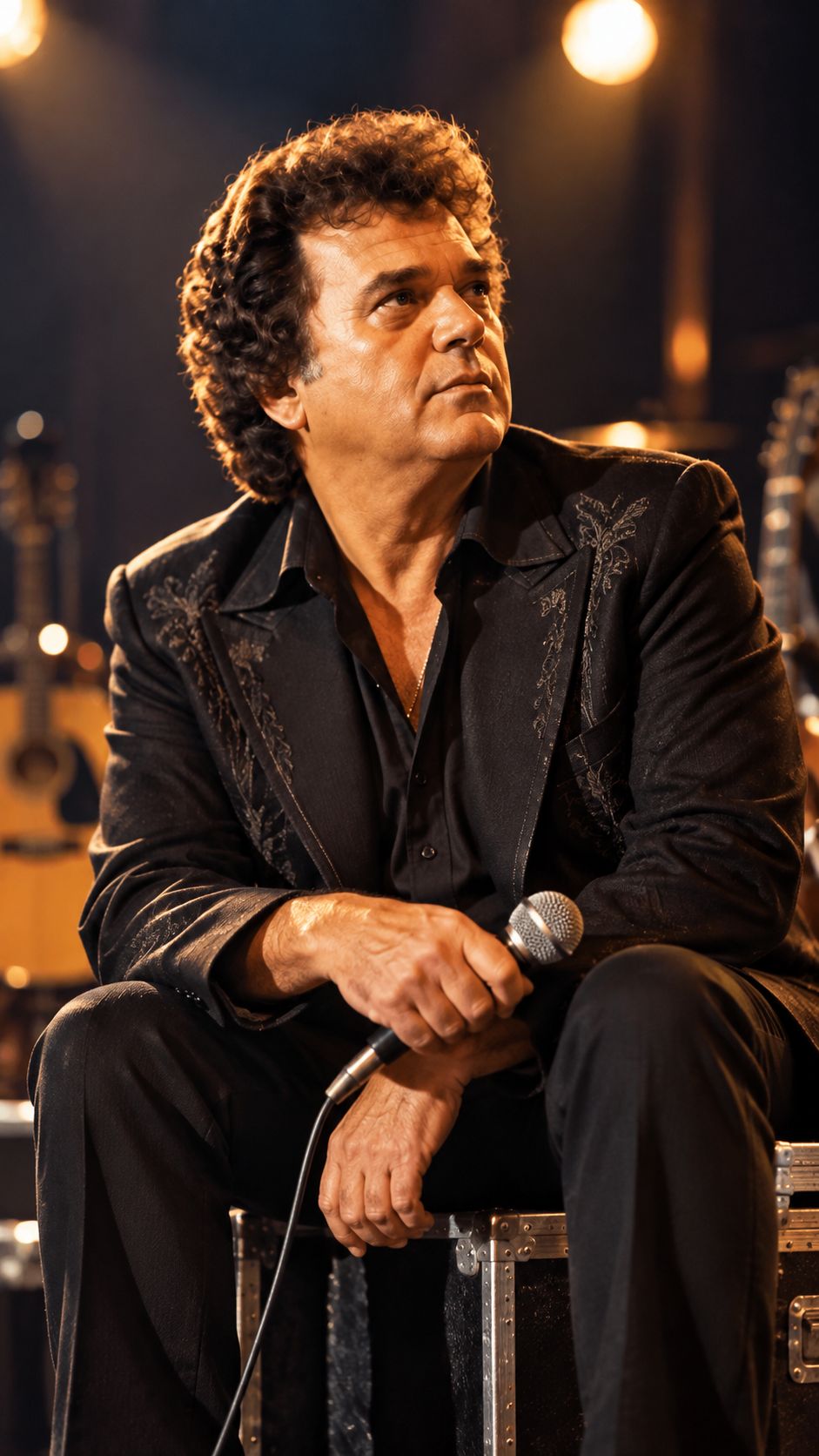
There are voices that entertain us, and then there are voices that seem to understand the deepest corners of our hearts. Conway Twitty possessed that rare gift. When he sang about love, heartbreak, regret, and the painful distance between two people who once meant everything to each other, his music felt less like a performance and more like a private conversation with someone who had lived through the same storms.
For millions of country music fans, Conway Twitty was never simply a singer with an extraordinary voice. He was a storyteller who understood that behind every smile might be a broken promise, behind every goodbye might be a lifetime of memories, and behind every love song might be a truth that people were too afraid to say aloud.
His remarkable career produced 55 No. 1 country hits, a milestone that reflects not only commercial success but also an extraordinary connection with audiences across generations. Yet numbers alone cannot explain why his music continues to resonate long after his passing.
The real story lies in the emotions woven through his songs, the determination that carried him through changing musical landscapes, and the vulnerability hidden beneath his polished stage presence.
From his early ambitions in rock and roll to his reign as one of country music’s most recognizable voices, Conway Twitty built a legacy that reached far beyond the charts. His journey reminds us that sometimes the songs that break our hearts are the very ones that help us understand ourselves.
1. Before the Legend: The Boy Behind the Voice
To understand Conway Twitty, we must return to Harold Lloyd Jenkins, the boy born on September 1, 1933, in Friars Point, Mississippi. Long before audiences recognized his distinctive stage name, he was a young musician discovering how melodies could express feelings that ordinary conversations sometimes failed to capture.
Music entered his life early. He learned guitar as a child, developed his musical instincts through local performances, and began broadcasting on the radio while still young. Growing up in the American South exposed him to different musical traditions, including country, blues, gospel, and the emerging sounds of rock and roll.
These influences would eventually become essential ingredients in his distinctive style.
But his journey was not a straightforward march toward country music greatness. Like many ambitious young performers, Twitty initially looked toward the exciting world of rock and roll. He admired the energy of the new sound and recognized that a powerful voice could reach audiences far beyond the small communities where he had begun performing.
His breakthrough arrived in 1958 with “It’s Only Make Believe.” The song became a major international success, reaching No. 1 on the American pop chart and establishing him as a recognizable recording artist.
Yet the success created an interesting challenge. The world had discovered him as a rock-and-roll performer, but his deepest artistic ambitions were drawing him toward country music.
He wanted to tell stories about ordinary people, complicated relationships, and the emotional consequences of human decisions. He wanted to sing songs that sounded as though they had been written by someone who understood the cost of loving another person.
That decision would change his career forever.
His transition also demonstrated an important truth about artistic success: sometimes, the path that brings someone fame is not the path that ultimately defines their legacy.
Twitty could have continued building his identity around his early pop success. Instead, he embraced the uncertainty of reinventing himself, choosing a genre that offered him greater room to explore the emotional storytelling that would become his signature.
2. The Risky Reinvention That Changed Country Music
When Conway Twitty began pursuing country music more seriously during the 1960s, he faced a difficult challenge. Country audiences had their established favorites, and some industry figures questioned whether a former rock-and-roll star could truly belong in Nashville.
He had to prove that his success was more than a product of his earlier popularity.
In 1965, he signed with Decca Records and began working with the influential Nashville producer Owen Bradley. His early country recordings helped establish his new direction, and the breakthrough arrived in 1968 when “Next in Line” reached the top of the country chart.
That moment represented more than another successful single. It marked the beginning of an extraordinary run that would establish Twitty as one of country music’s most consistent hitmakers.
What made his reinvention so effective was his ability to combine different musical traditions without losing the emotional heart of country music.
His recordings could be polished without sounding cold, romantic without becoming sentimental, and sophisticated without abandoning the everyday experiences that made country songs relatable.
His voice was central to this achievement.
Rather than relying on overwhelming vocal power, Twitty often used restraint. He could soften a phrase, stretch a word, or allow a brief pause to communicate uncertainty. His delivery suggested that the singer was weighing his words carefully, as though the next sentence might change the course of a relationship.
This was especially effective in songs about love that had become complicated.
The characters in his music were rarely living perfect lives. They made mistakes, struggled with temptation, regretted their choices, and sometimes recognized the truth only after it was too late.
Listeners could disagree with their decisions while still understanding their emotions.
That distinction helped make his music so compelling. He did not need every character to be admirable. He needed them to feel human.
3. Why 55 No. 1 Hits Tell Only Part of the Story
The figure of 55 No. 1 hits has become one of the defining statistics associated with Conway Twitty’s career. His official legacy celebrates that remarkable total, alongside record sales exceeding 50 million and a career that stretched across five decades.
There is an important distinction, however: his widely documented tally on Billboard’s country chart is 40 No. 1 singles. The larger figure of 55 reflects a broader accounting of chart-topping records across different industry chart measures.
Either way, the achievement is extraordinary.
The deeper question is not simply how many times he reached the top. It is why audiences continued returning to his music through changing tastes, new generations, and major shifts in the country music industry.
One answer lies in his remarkable consistency.
Throughout the 1970s and 1980s, Twitty built a catalog that explored different aspects of romantic life. He sang about reconciliation, desire, separation, regret, family, and the difficult choices people make when their hearts pull them in conflicting directions.
His best-known recordings became emotional landmarks.
-
“Hello Darlin’” captured the delicate tension between a familiar greeting and the feelings that remain after a relationship has changed.
-
“Linda on My Mind” explored the painful presence of one person in another person’s thoughts, even when circumstances make those feelings difficult to reconcile.
-
“Goodbye Time” transformed the end of a relationship into a quiet reflection on the pain of letting go.
-
“That’s My Job” offered a different kind of tenderness, celebrating the responsibilities and sacrifices associated with a father’s love.
-
“I’d Love to Lay You Down” demonstrated his ability to deliver a mature romantic song with warmth, confidence, and intimacy.
Together, these songs reveal an artist who understood that love is not a single emotion.
It can be comforting and frightening. It can make people generous or selfish. It can bring two people closer while exposing the very differences that eventually separate them.
Twitty made these contradictions central to his music.
His greatest achievement was not merely finding songs that audiences wanted to hear. It was finding songs that audiences could recognize themselves in.
4. The Emotional Power of Hello Darlin’
Few recordings demonstrate Conway Twitty’s interpretive gifts more clearly than “Hello Darlin’,” released in 1970.
The song begins with a simple greeting, but its emotional significance grows as the listener considers the history implied by those words.
A greeting between strangers carries little weight. A greeting between two people who once shared a life can contain an entire history of affection, disappointment, and unfinished conversations.
That is the emotional territory Twitty understood so well.
He did not need to explain every detail of the relationship. The listener could imagine the years that had passed, the decisions that had been made, and the feelings that had survived despite the separation.
His delivery made the encounter feel personal rather than theatrical.
There is a particular kind of sadness in meeting someone who once knew everything about you and realizing that you must now approach them almost as a stranger. You remember the private jokes, the familiar habits, and the dreams you once shared, but you no longer know whether you have the right to speak about them.
“Hello Darlin’” captures that emotional uncertainty with remarkable economy.
Its power also demonstrates why Twitty became such a compelling interpreter of country songs. He understood that the most memorable performances often leave room for the listener to participate.
A singer can tell us what happened, but a truly gifted storyteller allows us to feel what might have happened.
For some listeners, the song recalls a first love. For others, it brings back someone they lost touch with, a relationship they wish they had handled differently, or a conversation they never found the courage to begin.
The recording remains powerful because its emotional meaning can change as listeners grow older.
A person hearing it at twenty may focus on longing. Someone hearing it decades later may recognize the sadness of time itself.
That is the difference between a successful record and an enduring classic.
5. Conway Twitty and Loretta Lynn: A Partnership Built on Musical Chemistry
If Conway Twitty’s solo recordings revealed the private thoughts of complicated individuals, his celebrated partnership with Loretta Lynn showed what happened when two distinct musical personalities met in the same emotional landscape.
Their voices worked together because they did not sound identical. Twitty brought a smooth, controlled delivery, while Lynn contributed a direct, expressive style shaped by her own experiences and musical identity.
The contrast created dramatic tension.
Their duets often sounded like conversations between two people who loved each other but did not necessarily agree about what love required. One voice might express frustration while the other offered reassurance. A moment of tenderness could quickly become an argument, and an argument could reveal the affection underneath.
Among their most celebrated recordings were “After the Fire Is Gone,” “Lead Me On,” “Louisiana Woman, Mississippi Man,” and “Feelins’.”
Each offered a different perspective on relationships, demonstrating how two performers could inhabit a shared story without sacrificing their individual personalities.
“After the Fire Is Gone” explored the emotional emptiness that can emerge when passion fades and people search for warmth elsewhere. “Louisiana Woman, Mississippi Man” celebrated attraction across differences, using lively musical exchanges to create a sense of playful romantic competition.
The partnership earned a Grammy Award and multiple Country Music Association honors, cementing its place in country music history.
But the larger achievement was artistic.
Their performances made relationship conflict entertaining without reducing it to a simple contest between right and wrong. Both singers brought conviction to their parts, allowing listeners to understand the emotional logic of each character.
Their onstage chemistry also generated fascination among fans, but the enduring significance of their partnership rests on the music itself. Their performances created the impression of a relationship unfolding in real time, with each voice responding to the other.
That quality made their duets feel immediate, even decades after they were recorded.
Twitty and Lynn helped establish a lasting model for country duets: two distinct voices, a compelling story, and enough emotional tension to make the audience want to hear the final verse.
6. The Man Who Let His Songs Do the Talking
One of the most distinctive elements of Conway Twitty’s stage presence was his restraint.
In an era when many entertainers built their performances around jokes, extended introductions, and personal anecdotes, Twitty became known for keeping stage banter to a minimum. He preferred to move through his songs with a carefully constructed sense of pace and drama.
For audiences, that approach created an unusual intimacy.
He did not need to explain the meaning of every lyric before singing it. The songs themselves provided the narrative, and his voice supplied the emotional detail.
This quiet confidence became part of his identity. His concerts were built around the music, allowing familiar melodies to carry the evening from one emotional moment to another.
His reputation as “The High Priest of Country Music” reflected the intensity of the devotion he inspired among fans.
But the title also points toward something important about live performance. A great concert is not simply a collection of songs. It is an experience in which thousands of people can feel connected through the same memories, words, and melodies.
When Twitty sang a familiar heartbreak ballad, individual listeners brought their own histories to the performance. One person remembered a lost relationship. Another thought of a spouse who had passed away. Someone else simply appreciated the beauty of a voice that seemed to understand what they were feeling.
The singer did not need to know any of these stories.
He only needed to deliver the song honestly enough for listeners to find their own meanings within it.
That was one of his greatest strengths.
His performances also reflected a professional discipline that is sometimes overlooked when discussing legendary artists. Behind the smooth delivery was a musician who worked consistently, selected material carefully, and understood the importance of giving audiences the songs they had come to hear.
The mystery surrounding his stage persona made him memorable, but the substance beneath it kept people listening.
7. Reinvention: How He Stayed Relevant Through Changing Decades
The country music industry changed dramatically during Conway Twitty’s career. Production styles evolved, new performers emerged, and audiences developed different expectations of what a country star should sound like.
Twitty survived these changes because he was willing to evolve without abandoning his core identity.
During the late 1970s and 1980s, he experimented with musical arrangements and contemporary influences. His recordings embraced elements of pop, rock, and soul while maintaining the narrative focus that had made his earlier country hits successful.
Songs such as “Slow Hand” and “The Rose” demonstrated his ability to reinterpret material associated with other musical styles and make it feel natural within his own repertoire.
Meanwhile, recordings such as “Tight Fittin’ Jeans” showed a more playful, contemporary side of his personality.
These changes mattered because they prevented his catalog from becoming trapped in a single era.
Yet he did not reinvent himself simply for novelty. His most successful musical experiments retained the qualities audiences recognized: a distinctive voice, a memorable melody, and an emotionally understandable story.
His career also extended beyond performing. Twitty supported songwriters, selected material with care, and developed a reputation in Nashville as an artist who respected the craft behind the songs.
That reputation was especially meaningful in an industry where a great composition could become the foundation of an entire career.
His support for songwriters and his willingness to recognize promising material helped reinforce his position as more than a performer. He was a knowledgeable participant in the creative process, someone who understood that a recording’s success often began long before the singer entered the studio.
His legacy, therefore, includes both the songs he performed and the professional standards he helped establish.
8. That’s My Job: A Different Kind of Heartbreak
Among the many emotions explored in Conway Twitty’s catalog, romantic heartbreak often receives the most attention. But “That’s My Job” reveals a different dimension of his artistry.
Released in 1987, the song centers on the relationship between a father and his child. Rather than exploring romantic uncertainty, it focuses on responsibility, reassurance, and the quiet sacrifices associated with parenthood.
Its emotional power comes from the idea that love is not always expressed through dramatic declarations.
Sometimes love means providing for someone. Sometimes it means answering a difficult question, offering protection, or remaining dependable when life becomes frightening.
A parent’s commitment can be so familiar that a child may not fully understand its significance until much later.
That is what gives the song its enduring tenderness.
Twitty’s delivery is especially effective because it does not require an elaborate performance. He approaches the material with warmth and sincerity, allowing the story to unfold naturally.
The song also expands our understanding of the emotional world he represented.
His greatest recordings were not exclusively about desire, betrayal, or lost romance. They were about the human need to be loved, protected, understood, and remembered.
For listeners who associate his music with their own parents, children, or family histories, “That’s My Job” can carry a deeply personal meaning.
It reminds us that the people who shape our lives are not always the ones who make grand speeches. Often, they are the ones who quietly show up, day after day, doing what needs to be done.
In that sense, the song belongs to the same emotional tradition as his greatest heartbreak ballads. Both recognize that love becomes meaningful through actions, choices, and sacrifices.
The difference is that one explores what happens when love breaks down, while the other celebrates the responsibilities that help love endure.
9. June 1993: The Goodbye No One Was Ready For
On June 5, 1993, Conway Twitty died suddenly at the age of 59 after suffering an abdominal aortic aneurysm while traveling following a performance in Branson, Missouri.
His death shocked the country music community.
He had spent decades building a career defined by consistency, and his music remained part of the everyday lives of listeners across America. His passing felt especially painful because he had not simply disappeared from public life. He was still performing, recording, and contributing to the musical world he had helped shape.
There was no long public farewell that could prepare fans for the loss.
Instead, listeners were left with the extraordinary body of work he had created.
In the years that followed, his place in country music history remained secure. He was inducted into the Country Music Hall of Fame in 1999, recognizing a career that had crossed musical boundaries and helped define the sound of country music for generations.
Yet the most personal tributes to Twitty rarely concern awards or industry rankings.
They come from listeners who still remember where they were when they first heard “Hello Darlin’.” They come from couples who danced to his songs, families who played his records at home, and fans who discovered his music through parents or grandparents.
These memories reveal the difference between being famous and becoming part of people’s lives.
Fame can disappear when the public moves on to the next sensation. Emotional connection is harder to erase.
A song can survive because it becomes attached to a particular moment, person, or period in someone’s life. When the recording plays again, the memory returns with it.
That is how artists remain present long after their voices have fallen silent.
10. Why Conway Twitty’s Legacy Still Matters Today
The enduring appeal of Conway Twitty lies in his ability to make familiar human experiences feel newly understood.
Modern country music continues to explore heartbreak, desire, family, regret, and the complicated decisions people make in relationships. The production may change, the instrumentation may become more contemporary, and the methods of discovering music may look completely different, but the underlying emotions remain recognizable.
Twitty understood those emotions long before streaming platforms and social media transformed the music business.
His recordings remind listeners that emotional honesty does not require elaborate language. A simple sentence, delivered with the right combination of tenderness and restraint, can sometimes express more than an entire speech.
He also demonstrated that artistic reinvention does not have to mean abandoning one’s identity. His transition from rock and roll to country music could have become a footnote in a brief career. Instead, it became one of the most remarkable transformations in popular music.
His partnership with Loretta Lynn showed the dramatic possibilities of musical collaboration. His solo ballads revealed the power of subtle interpretation. His family-centered songs demonstrated that his emotional range extended far beyond romantic relationships.
And his remarkable record of chart-topping success reflected the trust he built with audiences over many years.
The number 55 captures the scale of his achievement, while his 40 No. 1 singles on Billboard’s country chart provide another measure of his extraordinary consistency. But neither figure fully explains the affection listeners continue to feel for him.
The real measure of Conway Twitty’s legacy is the way his songs continue to accompany people through different stages of life.
A song that once sounded romantic may later sound bittersweet. A lyric that seemed ordinary in youth may become deeply moving after a loss. A familiar melody may suddenly remind someone of a parent, a spouse, or a moment they thought they had forgotten.
His music makes room for those changing interpretations.
That is why his recordings remain more than artifacts from country music’s past. They are living pieces of emotional history, passed from one generation to another.
Conclusion: The Voice That Turned Heartbreak Into Something Beautiful
Conway Twitty built an extraordinary career by understanding something fundamental about music: people do not always need a song to solve their problems. Sometimes, they simply need a song that makes them feel less alone.
His journey from “It’s Only Make Believe” to the country music classics that defined his later career demonstrates the power of persistence, reinvention, and artistic conviction. He crossed genres, adapted to changing audiences, collaborated with remarkable performers, and created a catalog that continues to speak to listeners decades after his death.
His 55 celebrated No. 1 hits represent a remarkable achievement, but his true legacy cannot be measured by chart positions alone.
It lives in the quiet moments when “Hello Darlin’” brings an old memory back to life. It lives in the tenderness of “That’s My Job,” the romantic storytelling of “Linda on My Mind,” and the emotional honesty that made his performances so distinctive.
Perhaps that is the most beautiful part of his story.
Conway Twitty did not need to be perfect to become unforgettable. He needed to understand the imperfections of love, the pain of regret, and the extraordinary importance of the people who shape our lives.
And through his music, he gave millions of listeners a way to recognize those feelings in themselves.
Long after the final note fades, the stories remain.
And as long as someone hears one of his songs and thinks of a person they loved, lost, or never quite forgot, Conway Twitty’s voice will never truly be silent.