 By admin
INTRODUCTION:
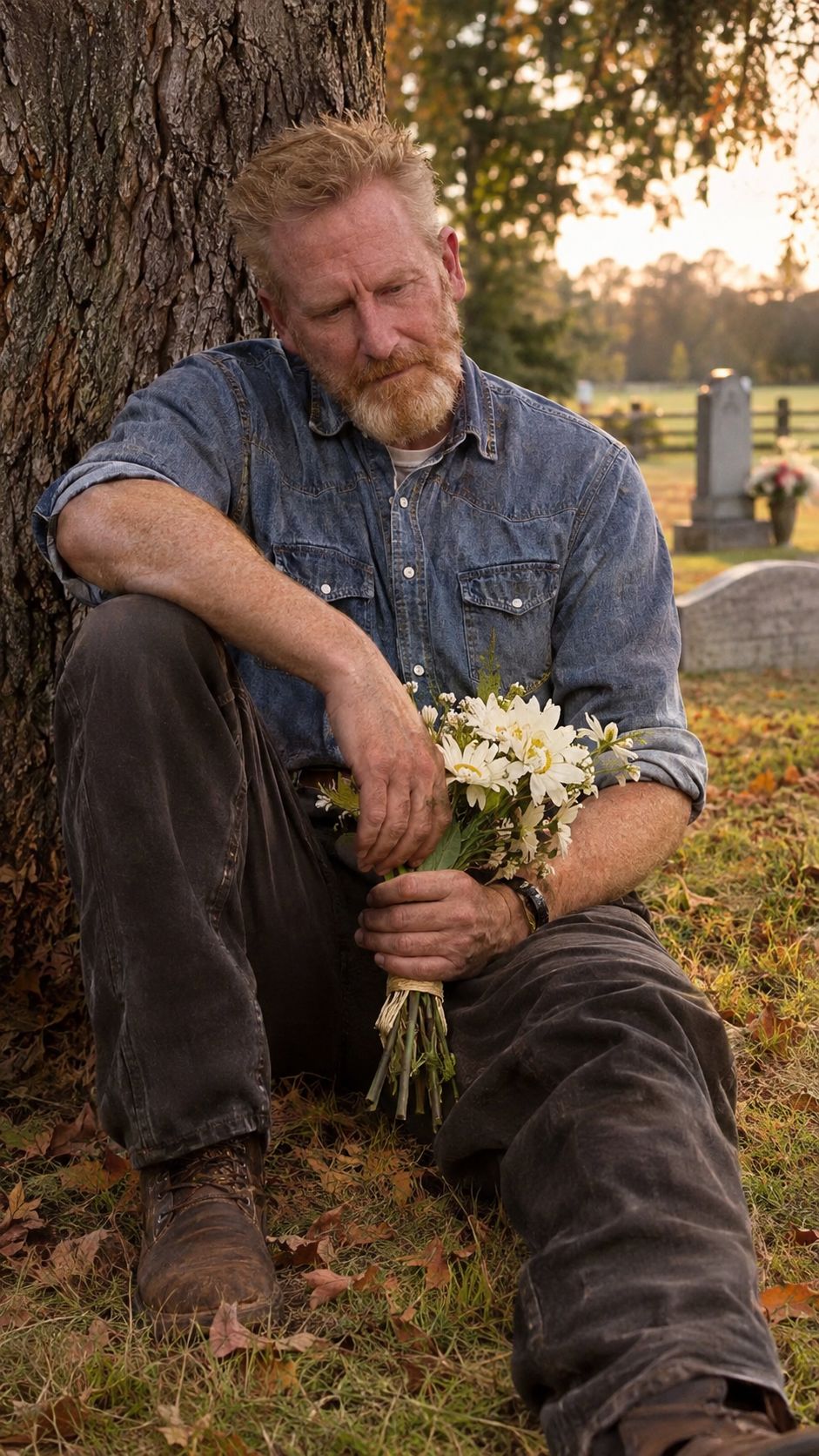
Some stories in country music are written in melodies, while others are written through tears, sacrifice, and the kind of love that refuses to disappear even after someone is gone. For Rory Feek, life has been a journey filled with extraordinary blessings, devastating losses, and unexpected new beginnings. Behind the quiet smile of the country singer lies a man whose personal experiences have often been more powerful than anything he could put into a song.
The death of his beloved wife and musical partner, Joey Feek, on March 4, 2016, changed his world forever. Their love story had touched millions, and the memories they created together became an enduring part of country music history. Years later, Rory found love again and married Rebecca in July 2024, opening his heart to a different kind of happiness.
Yet rebuilding a family after profound loss is never simple. Old memories remain, new responsibilities emerge, and difficult family circumstances can test even the strongest relationships.
What does the future hold for Rory? How does a man carry the memory of one great love while building another life? And what happens when the promises made in the past continue to shape the present?
These questions reveal a deeply human story about grief, forgiveness, resilience, and the complicated meaning of love.
THE LOSS THAT CHANGED EVERYTHING: THE FINAL CHAPTER OF JOEY AND RORY’S LOVE STORY
To understand the emotional world of Rory Feek, one must first return to the extraordinary relationship he shared with Joey Feek.
Their story was never simply about two country singers performing together. It was about two people who discovered that their voices, personalities, dreams, and beliefs could become something much greater when brought together.
As members of Joey + Rory, they built a musical partnership that celebrated traditional country sounds, heartfelt storytelling, and the beauty of ordinary life.
Their performances carried an authenticity that audiences could recognize immediately. Joey’s warm, expressive voice blended naturally with Rory’s understated musical style. Together, they created songs that felt less like commercial recordings and more like conversations between people who understood the meaning of love.
But their greatest challenge came away from the stage.
In 2014, Joey was diagnosed with cervical cancer. What initially seemed like a medical battle gradually became an overwhelming struggle that tested their marriage, their faith, and their understanding of the future.
Rory became more than a husband and musical partner. He became a caregiver, a source of strength, and the person who stood beside Joey through some of the most painful moments of her life.
When Joey’s cancer returned as stage IV disease, the family’s hopes for recovery became increasingly uncertain.
On March 4, 2016, Joey passed away at just 40 years old.
For Rory, the loss was not simply the end of a marriage. It was the disappearance of the person with whom he had built his dreams, shared his greatest accomplishments, and imagined growing old.
Their daughter, Indiana Feek, was only two years old.
Suddenly, Rory faced the responsibility of raising a young daughter while carrying the emotional weight of losing his wife.
The world remembered Joey as a remarkable singer. Rory remembered her as the woman whose presence had made their house a home.
And that distinction explains why grief can remain so powerful long after the public has moved on.
THE PROMISE THAT NEVER LEFT HIM: JOEY’S WISH FOR RORY TO LOVE AGAIN
One of the most emotional elements of Rory and Joey’s story involves a conversation they reportedly shared during Joey’s final months.
According to Rory’s recollections, Joey encouraged him to find love again if she did not survive.
It was an extraordinary request from a woman who understood that her husband would have to continue living after she was gone.
For many people, the idea of loving someone new after losing a spouse can feel almost impossible. Memories create emotional attachments that do not disappear simply because another person enters one’s life.
Yet Joey understood something that Rory would need years to fully accept: losing a person does not mean losing the ability to love.
That message became an important part of Rory’s personal journey.
He did not immediately rush into another relationship. He spent years raising Indiana, continuing his creative work, and learning how to navigate a life that no longer resembled the one he had imagined.
His experience illustrates an important truth about grief.
Moving forward does not mean forgetting.
A new relationship cannot replace the history, memories, or experiences shared with someone who has died. Instead, it creates another chapter alongside the one that will always remain part of the person’s identity.
For Rory, that distinction would eventually become especially important.
REBECCA ENTERED HIS LIFE WHEN HE LEAST EXPECTED IT
Years after Joey’s passing, another chapter began.
Rebecca had already been part of the family’s world through her connection to Indiana’s school. Over time, their friendship developed into something deeper.
Rory gradually recognized that Rebecca brought qualities that mattered enormously to him.
She understood the importance of family. She had a connection with Indiana, and she represented the possibility of building a loving household again.
In February 2024, Rory publicly shared that he had found love again. Later that year, on July 14, he and Rebecca married in Montana.
The wedding represented much more than a romantic celebration.
It was a symbolic moment in a life that had once seemed permanently defined by tragedy.
For Rory, marrying Rebecca did not erase Joey’s memory. Nor did it mean that the emotional significance of his first marriage had somehow diminished.
Instead, it demonstrated that life could still offer unexpected happiness after devastating loss.
Their marriage also brought new responsibilities and expectations.
Rebecca was not simply entering a relationship with a man who had experienced heartbreak. She was becoming part of a family with a complicated history, a daughter who had lost her mother, and memories that would always remain important.
Building a future together would require patience, understanding, and emotional maturity.
And that is where the deeper story begins.
THE CHALLENGE OF BUILDING A NEW FAMILY WHILE CARRYING OLD MEMORIES
There is a difference between finding love again and creating a stable family after loss.
The first can begin with affection, companionship, and shared dreams.
The second requires something much more demanding: learning how to bring different histories, expectations, and emotional experiences together.
For Rory Feek, this challenge is particularly significant because of the importance of Indiana in his life.
Joey’s death left a tremendous absence in their daughter’s childhood. Although Indiana was very young when her mother passed away, Joey’s memory remains part of the family’s story.
Rebecca’s relationship with Indiana therefore carries an important emotional dimension.
She cannot become Joey, and she does not need to.
A healthy family does not require one person to replace another. It requires everyone to find a place where they can feel respected, accepted, and loved.
Rory has often presented family, faith, and home as central themes in his life.
His music and personal writing reflect an appreciation for simple moments: meals together, time outdoors, family traditions, and the quiet beauty of everyday experiences.
But real life is rarely as simple as the stories told in songs.
A family can experience love while also facing disagreements, misunderstandings, and painful changes.
The challenge is not pretending those difficulties do not exist.
It is finding a way to move through them without allowing the past to destroy the possibilities of the future.
THE FAMILY STRUGGLES THAT HAVE ADDED ANOTHER LAYER OF EMOTIONAL PRESSURE
Beyond the memories of Joey and the responsibilities of his marriage to Rebecca, Rory has also faced difficult circumstances involving his older daughters, Heidi Feek and Hopie Feek.
Public disagreements within the family have attracted considerable attention, particularly concerning Indiana’s well-being and the relationships between the siblings.
The situation became even more complicated when Hopie publicly discussed discovering through genetic testing that Rory was not her biological father.
These developments have raised difficult questions about family identity, communication, and the emotional consequences of private disagreements becoming public conversations.
It is important to recognize that the people involved have their own perspectives, and not every private detail is available to the public.
Nevertheless, the situation illustrates how complicated family relationships can become when years of history, unresolved feelings, and different expectations intersect.
For a man whose music has frequently celebrated the importance of family, such circumstances carry an especially emotional dimension.
The public may see a country songwriter, a father, and a husband.
But behind those identities is a person navigating relationships that cannot always be repaired through a song, a public statement, or a heartfelt promise.
Perhaps the most difficult part of these situations is that reconciliation cannot be achieved by one person alone.
It requires communication, accountability, patience, and a willingness to listen.
And sometimes, even when people genuinely want a better relationship, the road toward understanding can be painfully long.
THE FEAR OF LOSING HAPPINESS AGAIN
When someone has experienced profound loss, happiness can sometimes arrive with an unexpected companion: fear.
For people who have lost a spouse, a parent, or someone central to their lives, the possibility of experiencing another devastating loss can remain emotionally significant.
This does not mean that every new relationship is overshadowed by anxiety.
But the memory of tragedy can change how a person understands love.
For Rory, the experience of watching Joey fight cancer and eventually losing her was a life-altering event.
He knows what it means to build a future with someone and then discover that the future will never happen in the way originally imagined.
He also knows that life can continue in unexpected directions.
His marriage to Rebecca represents a new opportunity, not a repetition of his previous relationship.
There is no verified basis for claiming that Rebecca has died or that Rory is currently facing another bereavement involving her.
However, the broader emotional question remains compelling: How does someone who has already endured such profound heartbreak learn to embrace happiness without constantly fearing its loss?
The answer may lie in accepting that love is never a guarantee against suffering.
It is a decision to share life despite uncertainty.
That may be one of the most meaningful lessons in Rory’s personal journey.
MUSIC BECOMES A PLACE WHERE MEMORIES NEVER DISAPPEAR
For Rory Feek, music has always been more than a profession.
It has been a language through which he can express emotions that ordinary conversation sometimes cannot capture.
The songs of Joey + Rory remain meaningful because they preserve something that cannot be recreated: the sound of two people whose lives and artistic identities became intertwined.
When audiences revisit their performances, they are not simply listening to familiar country melodies.
They are remembering a particular period in the lives of two artists.
They are remembering Joey’s voice, Rory’s songwriting, and the remarkable connection that made their partnership so memorable.
There is something especially powerful about listening to old recordings after learning what happened behind the scenes.
Lyrics that once sounded like ordinary love songs can suddenly carry a different emotional meaning.
A familiar melody becomes a reminder of time, mortality, and the importance of appreciating people while they are still beside us.
For Rory, continuing to create music also represents an opportunity to move forward without abandoning the past.
He can honor Joey’s legacy while continuing to develop his own artistic identity.
He can acknowledge the importance of Rebecca without asking the public to forget the woman who came before her.
Both chapters can exist.
And perhaps that is what makes his story resonate so deeply with country music audiences.
WHAT THE FUTURE MAY HOLD FOR RORY FEEK
At this stage of his journey, Rory’s future cannot be reduced to a single dramatic headline.
He is a musician, a husband, a father, and a man whose personal experiences have become part of a much larger public story.
His marriage to Rebecca represents a new beginning, while Joey’s memory remains an enduring part of his life.
His relationships with his older daughters also remain an important and sensitive part of his family story.
There are no simple solutions to these challenges.
Time may create opportunities for understanding, but meaningful reconciliation requires more than time alone.
It requires honest conversations and a willingness to acknowledge the feelings of everyone involved.
For Indiana, the most important thing is a childhood filled with stability, affection, and the opportunity to build meaningful relationships with the people who love her.
For Rory and Rebecca, the challenge is continuing to create a household where the past is respected without preventing the future from developing.
And for Rory as an artist, there may always be another story to tell.
Perhaps his most meaningful work will continue to emerge from the experiences that have shaped him: love, loss, fatherhood, faith, and the difficult process of beginning again.
THE MOST IMPORTANT PROMISE IS NOT TO FORGET, BUT TO KEEP LIVING
There is a reason audiences remain fascinated by the personal stories behind country music legends.
Country music has always understood that the most powerful songs often come from experiences that cannot be easily explained.
Heartbreak, devotion, loneliness, forgiveness, and hope are not merely themes in a songwriter’s notebook. They are experiences that shape ordinary lives.
Rory Feek’s story contains all these elements.
He experienced the extraordinary love of Joey, endured the devastating reality of her death, spent years raising their daughter, and eventually found the courage to build another marriage with Rebecca.
His journey has not been perfect, and it has not been free from family challenges.
But perhaps its greatest significance lies in the reminder that a person’s life is never defined by only one chapter.
Joey will always be part of Rory’s history. Rebecca represents the life he is building now. Indiana represents a future that deserves love, protection, and possibility.
And somewhere between the memories of yesterday and the responsibilities of tomorrow, Rory continues to navigate the complicated meaning of family.
The deepest promise in his story may not be that happiness will last forever.
It may simply be the determination to keep loving, keep learning, and keep living, even when life becomes far more difficult than anyone could have imagined.
Because sometimes, the greatest act of courage is not surviving the moment that breaks your heart.
It is finding a reason to open it again.
VIDEO: