 By admin
 INTRODUCTION:
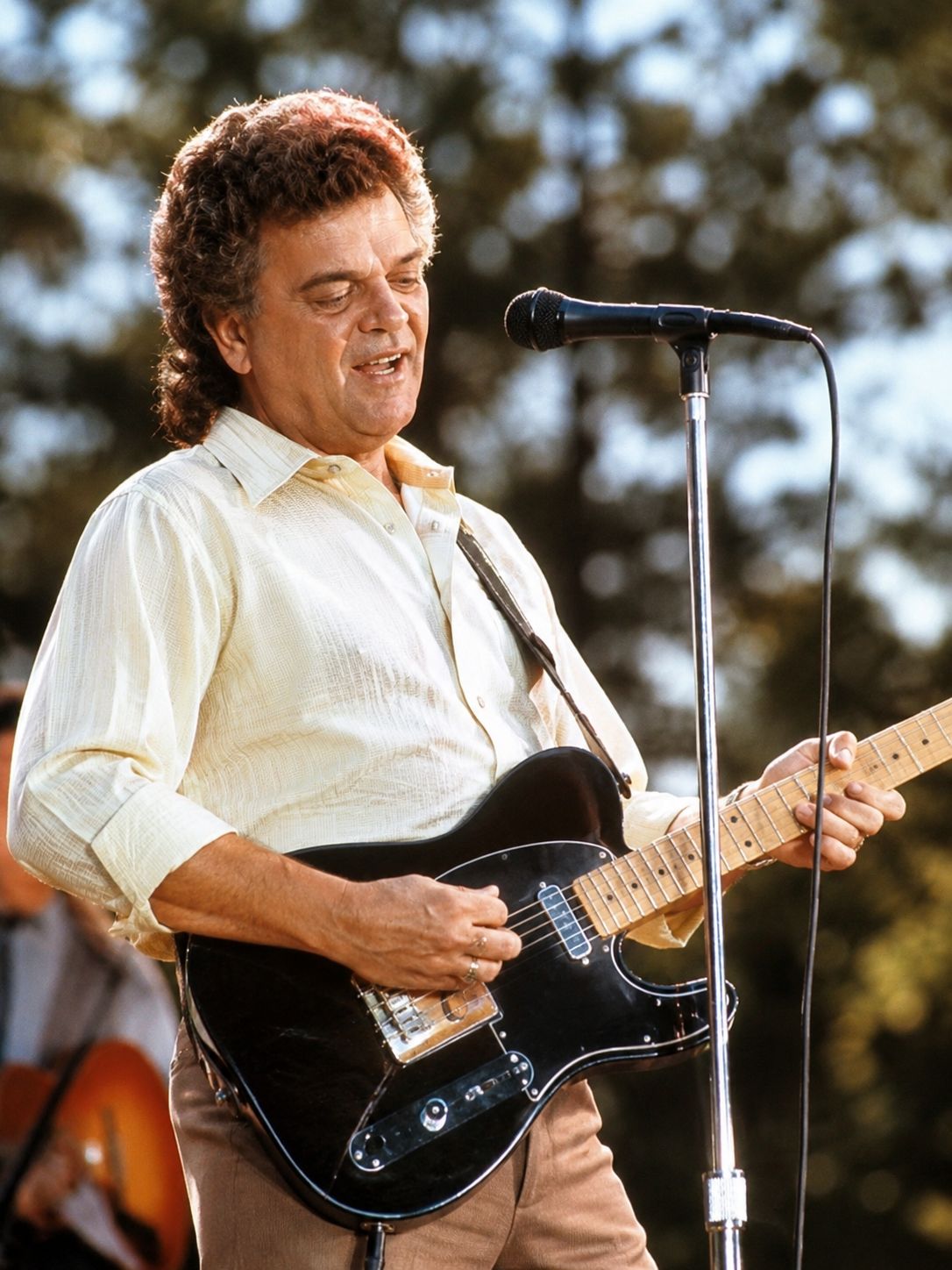
Long before the name Conway Twitty became synonymous with heartbreak, desire, devotion, and some of the most unforgettable songs in country music, there was another man entirely.
His name was Harold Lloyd Jenkins.
He was not born into Nashville royalty. He did not grow up knowing that country music would one day make him one of the most successful recording artists in American history. In fact, the young man who would eventually become a Country Music Hall of Famer once had an entirely different dream.
He wanted to play baseball.
And for a while, it looked as though baseball—not music—might become his destiny.
That is what makes Conway Twitty’s story so fascinating. Before he became the voice behind “Hello Darlin’,” “You’ve Never Been This Far Before,” and dozens of other country classics, he was a Mississippi boy shaped by the river, blues, gospel, country radio, baseball, the military, and eventually the explosive birth of rock and roll.
His journey was not a straight road to Nashville.
It was a series of reinventions.
And each one brought him closer to the artist he was ultimately meant to become.
The Boy Behind the Name
Harold Jenkins was born on September 1, 1933, in Friars Point, Mississippi, a small community along the Mississippi River. His father worked as a riverboat pilot, and music surrounded the boy from an early age. His grandfather helped teach him guitar, while the sounds of blues and gospel became part of the musical vocabulary that would quietly shape his future.
After the family moved to Helena, Arkansas, Harold’s musical abilities became impossible to ignore.
He formed a band while still young and performed on local radio.
But music wasn’t the only thing he loved.
Baseball was his other obsession.
Harold was talented enough to attract attention from the Philadelphia Phillies organization. For a young man from the Mississippi Delta, the possibility of becoming a professional baseball player must have seemed almost unbelievable.
Then fate intervened.
He was drafted into the U.S. Army during the Korean War.
The baseball dream was interrupted.
The music dream, however, was only beginning.
Then Elvis Presley Changed Everything
After leaving the Army, Harold Jenkins returned home at precisely the moment American popular music was undergoing a revolution.
A young singer named Elvis Presley was changing everything.
Harold heard Elvis and recognized something immediately.
Not simply the sound.
The possibility.
Country music had always been close to his heart, but he had been intimidated by the giants of the genre. He didn’t believe he could stand beside the country singers he admired.
Rock and roll seemed different.
It felt dangerous.
It felt young.
And perhaps most importantly, it felt achievable.
As Twitty later explained, he believed he could sing in Elvis’ style even if he didn’t think he could compete with his country idols.
So Harold Jenkins made one of the biggest decisions of his life.
He picked up the guitar.
And he stepped into rock and roll.
Harold Jenkins Disappears—and Conway Twitty Appears
A great star needs a name people remember.
Harold Jenkins didn’t quite have that quality.
So he created one.
The name Conway Twitty was constructed from the names of Conway, Arkansas, and Twitty, Texas. It sounded mysterious, modern, and unmistakable.
And then came the song that changed everything.
“It’s Only Make Believe.”
Released in 1958, the song exploded.
It reached No. 1 on the pop charts and transformed Twitty into an international rock-and-roll star. His recordings during this period sold millions, and he toured extensively, appearing on major television programs and even starring in movies.
For a moment, the country singer who had not yet become a country singer was one of the hottest young stars in America.
That sounds like the perfect ending.
It wasn’t.
Because Conway Twitty wasn’t comfortable living inside the image he’d created.
The Strange Life of a Teen Idol
This is the part of Twitty’s story that often gets forgotten.
Before he was a country legend, he was a rock-and-roll teen idol.
He had the hair.
He had the hits.
He had screaming fans.
He appeared in films such as Platinum High School and College Confidential. The character Conrad Birdie in Bye Bye Birdie was even reportedly created with Twitty’s teen-idol image in mind.
On paper, he had everything.
But something inside him remained unsettled.
The fame was real.
The identity wasn’t.
He had never stopped loving country music.
And eventually, the difference between the star everyone wanted him to be and the musician he wanted to become became impossible to ignore.
The rock-and-roll star had achieved the dream—but the country singer was still waiting inside him.
That tension would define the next chapter of his life.
The Decision That Changed Country Music
After years of performing for young rock-and-roll audiences, Twitty reached a crossroads.
He had a wife.
He had children.
And he was beginning to question whether spending his life performing for teenagers was really what he wanted.
According to the official Conway Twitty biography, one night while performing in New Jersey, he looked out at the crowd and realized something profound: his priorities had changed. He had a family at home, and he no longer wanted to spend his life simply providing background music for young audiences.
That realization required courage.
He was already successful.
He could have stayed where the money was.
Instead, he walked away from the identity that had made him famous.
And he went after the music he actually loved.
In 1965, Twitty signed with Decca under producer Owen Bradley and began the difficult process of convincing Nashville that a former rock-and-roll idol belonged in country music.
The reaction wasn’t immediately welcoming.
Country radio DJs were skeptical.
Why should they trust a rock star?
Why should the man who once had teenage fans screaming now be accepted alongside the traditional country singers he had admired as a boy?
Twitty had to prove himself all over again.
The Second Beginning
This is where the Conway Twitty legend truly begins.
Not in 1958.
Not with “It’s Only Make Believe.”
But in the late 1960s, when he essentially started over.
His breakthrough country success came with “The Image of Me,” followed by “Next in Line,” which became his first Billboard country No. 1.
And then the hits kept coming.
“Hello Darlin’.”
“Fifteen Years Ago.”
“Linda on My Mind.”
“You’ve Never Been This Far Before.”
“I’d Love to Lay You Down.”
The man who had once been dismissed as a former pop idol became one of the defining voices in country music.
The transformation was extraordinary.
But it wasn’t accidental.
Twitty understood something many artists never learn:
You can reinvent yourself without abandoning who you were.
His rock-and-roll experience gave him confidence.
His childhood gave him country roots.
The blues and gospel he heard growing up gave his voice emotional depth.
And his years of performing gave him an almost instinctive understanding of an audience.
All those versions of Conway Twitty eventually became one.
The Voice That Could Say What Others Couldn’t
Twitty’s greatest gift wasn’t simply his voice.
It was his ability to make complicated emotions sound personal.
His songs often lived in uncomfortable territory—infidelity, longing, temptation, guilt, loneliness, desire, regret.
He didn’t always sing about perfect people.
He sang about people who were struggling.
People who wanted something they shouldn’t want.
People who had made mistakes.
People who were trying to live with the consequences.
That emotional honesty became one of the foundations of his country career. The Country Music Hall of Fame notes that many of his signature songs combined passion, guilt, romantic conflict, and deeply emotional storytelling.
And perhaps that is why his transformation from rock star to country legend feels so much bigger than a genre change.
He wasn’t simply changing musical styles.
He was discovering his emotional language.
He Didn’t Become a Legend by Accident
By the height of his career, Twitty had accomplished something almost unimaginable.
The Country Music Hall of Fame credits him with 40 Billboard country No. 1 hits, including 11 that he wrote himself. He also became a major songwriter, producer, businessman, and mentor to younger artists.
His influence extended beyond his own records.
He helped give opportunities to artists including Vince Gill, Reba McEntire, Naomi Judd, and others who would eventually become major names themselves.
And his partnership with Loretta Lynn produced some of country music’s most beloved duets.
Yet beneath the statistics was something much simpler.
Work.
Discipline.
Persistence.
Twitty once summarized his philosophy with a line that reveals more about him than any chart record ever could:
“I’ll just start over.”
That was Conway Twitty.
When something didn’t work, he didn’t surrender.
He reinvented.
When rock and roll no longer felt right, he started over.
When country music questioned him, he proved himself.
When musical trends changed, he adapted.
When the industry moved forward, he moved with it.
The Real Untold Story
Perhaps the most surprising thing about Conway Twitty is that the “different kind of star” wasn’t an entirely different person.
Harold Jenkins was always there.
The little boy who learned guitar.
The teenager who played country music on local radio.
The baseball player who dreamed of a professional career.
The young soldier who kept performing.
The ambitious rock-and-roll singer.
The reluctant movie star.
The husband and father who eventually realized he wanted a different life.
The country singer who refused to stop evolving.
They were all Conway Twitty.
His greatest achievement wasn’t becoming famous twice.
It was understanding that fame and fulfillment were not necessarily the same thing.
The first time he became a star, America told him what he should be.
The second time, he decided for himself.
And that difference may be the most important chapter of his legacy.
Before Conway Twitty became a legend, he had to become brave enough to stop being the star everyone else expected him to be.
He died suddenly in 1993 at age 59, but by then his musical journey had stretched across nearly four decades and multiple generations of American music. He was inducted into the Country Music Hall of Fame in 1999.
Today, it is tempting to remember Conway Twitty only as the smooth-voiced country giant behind the greatest heartbreak songs.
But that misses the real story.
Before the rhinestone era, before the country No. 1s, before the legendary duets, before the title of Country Music Hall of Famer, there was Harold Jenkins—a young Mississippi boy standing between two dreams.
One involved a baseball bat.
The other involved a guitar.
He never became the baseball star he once imagined.
Instead, he became something far more complicated.
A rock star who wanted to be country.
A country singer who never forgot rock and roll.
A performer who reinvented himself when most artists would have stayed comfortable.
And ultimately, a legend who proved that sometimes the most important career move isn’t reaching the top.
It’s having the courage to start over when you’ve already reached it.
VIDEO: