 By admin
 INTRODUCTION:
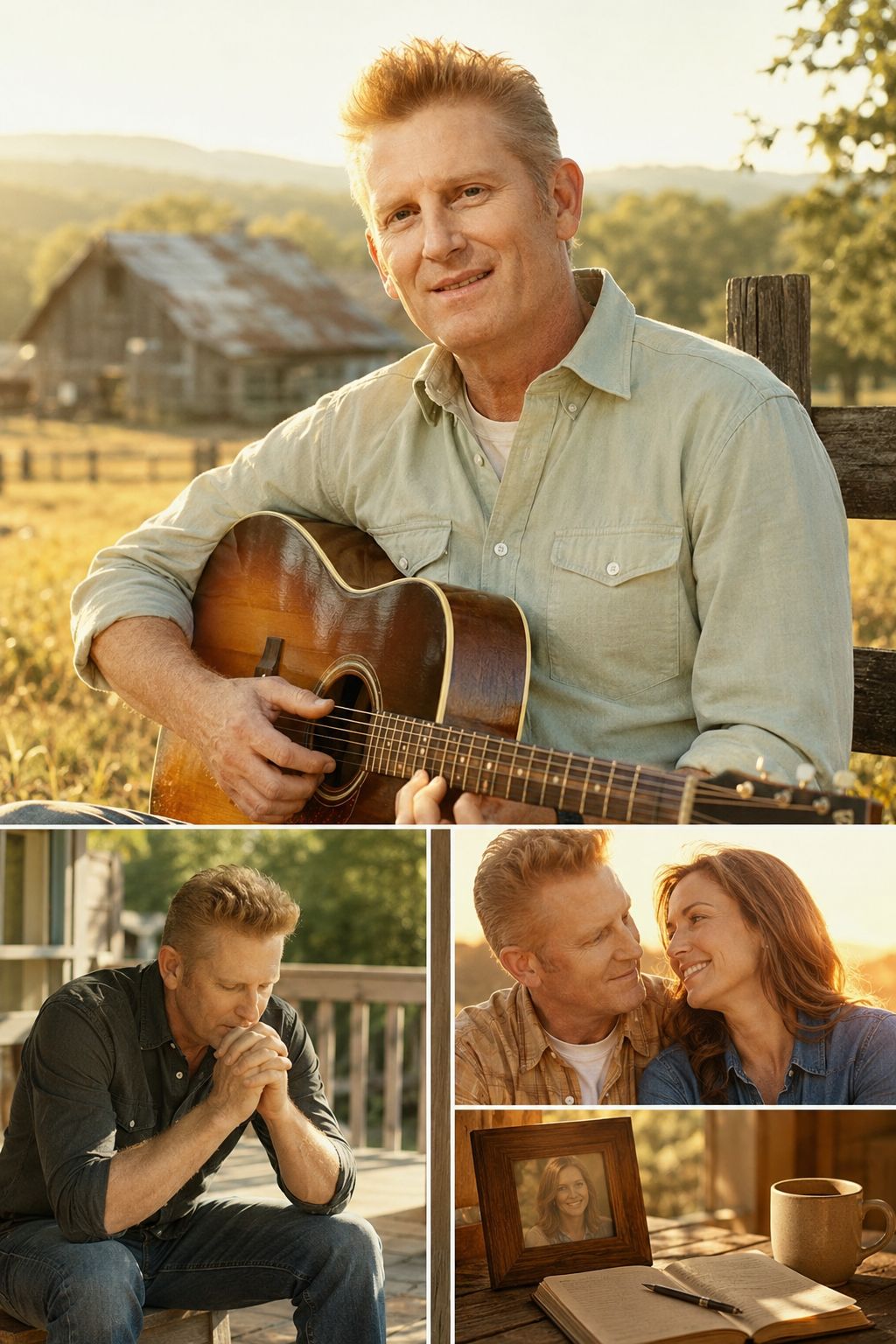
There are country music stories built on chart-topping singles, sold-out arenas, and awards displayed under bright lights.
And then there are stories that become something much bigger than music.
Rory Feek’s story belongs in the second category.
For years, audiences knew Rory as the songwriter behind major country hits and as one half of the beloved duo Joey + Rory. But beneath the songs, the television appearances, the farmhouse photographs, and the stories shared with millions of readers was a man trying to answer a question no songwriter ever wants to face:
What do you do when the love of your life is taken away—and the music suddenly isn’t enough to explain what you’re feeling?
In 2016, Rory’s wife and musical partner, Joey Feek, died at 40 after battling cervical cancer. Their story had already touched country music fans because of the couple’s openness about their marriage, faith, family, and Joey’s illness.
But the years that followed transformed Rory’s relationship with music, grief, fatherhood, and faith.
Today, in 2026, Rory describes himself less as someone trying to return to the country music business and more as a storyteller whose music, writing, videos, and ministry have become different ways of sharing what he believes God has taught him.
And that may be the most unexpected chapter of his story.
Before the Heartbreak, There Was a Love Story
Long before millions of people followed Rory and Joey’s journey, there was simply a man and a woman who loved music—and eventually discovered they loved each other.
Rory and Joey married in 2002. Their musical partnership became Joey + Rory, a duo celebrated for its old-fashioned country sound, warm harmonies, humor, and deeply personal storytelling.
Their appeal wasn’t based on glamour.
It was intimacy.
They looked and sounded like two people who genuinely enjoyed standing beside each other.
Their songs could be playful one moment and devastatingly tender the next. But perhaps the greatest song they ever created wasn’t a song at all.
It was the life they built together.
By 2014, Rory and Joey were preparing for the birth of their daughter, Indiana. They decided to step away from the relentless demands of music for a season and spend time at their Tennessee farm.
Rory began documenting that quieter life through his blog, This Life I Live.
What began as an attempt to capture ordinary family moments would eventually become something extraordinary.
Then everything changed.
When the Song Became Real Life
Joey’s cancer returned, and the family’s story moved from the world of country music into something much more personal.
Rory began writing about the experience with an openness that was difficult to look away from.
He wasn’t simply reporting what happened.
He was trying to understand it.
The blog became a place where grief, fear, fatherhood, faith, marriage, and hope could exist together.
That honesty resonated with people far beyond the country music audience.
Millions followed.
And perhaps what made the story so powerful was that Rory never pretended heartbreak was beautiful while it was happening.
It hurt.
There were questions.
There were moments when faith did not eliminate fear—it simply gave him somewhere to put it.
In 2016, Joey died.
She was only 40.
The music world lost a remarkable singer, but Rory lost his wife, his creative partner, and the mother of their young daughter.
For a while, there was no obvious next chapter.
There was only grief.
“Love doesn’t die when our hearts stop beating. It lives on in the ones we poured love into.”
That idea has become central to how Rory has spoken about Joey’s legacy in the years since her death. In 2025, while remembering what would have been Joey’s 50th birthday, Rory reflected on how her love continued through Indiana, through him, and through others she had touched.
The Farm Became More Than a Setting
One of the most fascinating aspects of Rory’s story is the role of the farm.
To outsiders, it might have looked like a picturesque backdrop for photographs and videos.
For Rory, it became something much deeper.
It was home.
It was where he raised Indiana.
It was where memories of Joey remained woven into ordinary routines.
And it became the physical setting for a story about learning how to live after loss.
Rory’s writing repeatedly returned to the small details of life: family meals, seasons changing, children growing, work around the property, and the quiet moments when memories suddenly appear.
That is part of why his storytelling became so powerful.
He didn’t turn grief into a spectacle.
He placed it beside everyday life.
A flower blooming.
A child growing older.
A song playing in the background.
A memory that arrives unexpectedly.
And somehow, those small things became more emotional than any grand speech could have been.
Faith Was Never Just a Theme
For Rory, faith has never been merely something added to the story after the tragedy.
It has increasingly become the framework through which he understands the entire story.
In a recent 2026 reflection, Rory wrote that the years of writing had helped him process what he was thinking and feeling while trying to understand what larger purpose God might have in his experiences.
That perspective also explains why his career has gradually changed.
The country music industry once provided the center of his professional life.
Songs did.
Concerts did.
Records did.
But Rory now says his heart is no longer primarily in music.
His focus has shifted toward ministry.
“My heart isn’t in music anymore. It’s in ministry.”
That doesn’t mean music has disappeared.
Quite the opposite.
Songs, stories, videos, books, and personal reflections have become different tools for the same purpose.
The message comes first.
The medium comes second.
And that is a remarkable evolution for a songwriter.
Turning Heartbreak Into a Legacy
There is a temptation when discussing celebrity grief to describe someone as having “moved on.”
But Rory’s story suggests something different.
He didn’t simply move on from Joey.
He moved forward with what she left behind.
That distinction matters.
Joey’s influence remains part of the way Rory talks about love, family, faith, and courage.
Her memory remains connected to Indiana’s childhood.
Her music remains available to listeners.
And her story continues to inspire people who never met her.
In that sense, Rory’s greatest act of remembrance hasn’t been keeping the past frozen.
It has been allowing the love they shared to keep producing something new.
That is perhaps the hardest lesson of grief:
You cannot bring someone back.
But you can decide what their love will become inside you.
A New Kind of Chapter
Rory’s life has continued to evolve.
In 2024, he remarried Rebecca, and he has described their family life as another chapter rather than a replacement for the one that came before. His own account describes Rebecca as a gift and emphasizes the importance of family, faith, and raising Indiana together.
That evolution has naturally brought scrutiny, difficult conversations, and complicated family circumstances.
But Rory’s public writing has continued to return to the same underlying idea: faith is not supposed to disappear when life becomes difficult.
In a recent reflection about his family’s struggles, he acknowledged how painful the circumstances have been while expressing hope for reconciliation and restoration.
That doesn’t make the pain disappear.
It simply gives the pain a direction.
The Legacy Was Never Just the Music
Country music is full of songs about heartbreak.
But Rory Feek’s life demonstrates something that songs alone sometimes cannot communicate:
Heartbreak can become a language for hope.
His greatest legacy may not ultimately be a particular hit song, award, television episode, or book.
It may be the community of people who discovered through his story that grief and gratitude can coexist.
That faith can survive unanswered questions.
That remembering someone doesn’t require refusing to live again.
And that love can continue creating new chapters even after the person who inspired it is gone.
Rory began writing This Life I Live more than a decade ago to document an ordinary family life.
Instead, the writing became a record of extraordinary joy and devastating loss—and eventually, a testimony about rebuilding.
Perhaps that is why his story continues to resonate.
Because underneath the country songs, there is something universal.
We all lose things.
We all face chapters we didn’t choose.
We all wonder whether the best parts of our lives are behind us.
Rory’s answer seems to be that they don’t have to be.
Sometimes the deepest legacy begins after the applause fades.
Sometimes the most meaningful song is the life that follows the silence.
And sometimes, the greatest love story isn’t about holding on to yesterday.
It’s about carrying yesterday’s love into tomorrow.
For Rory Feek, that journey continues.
The music may sound different now.
The stage may look different.
The story may have taken turns he never imagined.
But the heart of it remains remarkably simple:
Love mattered. Faith mattered. And the heartbreak did not get the final word.
VIDEO: