 By admin
 INTRODUCTION:
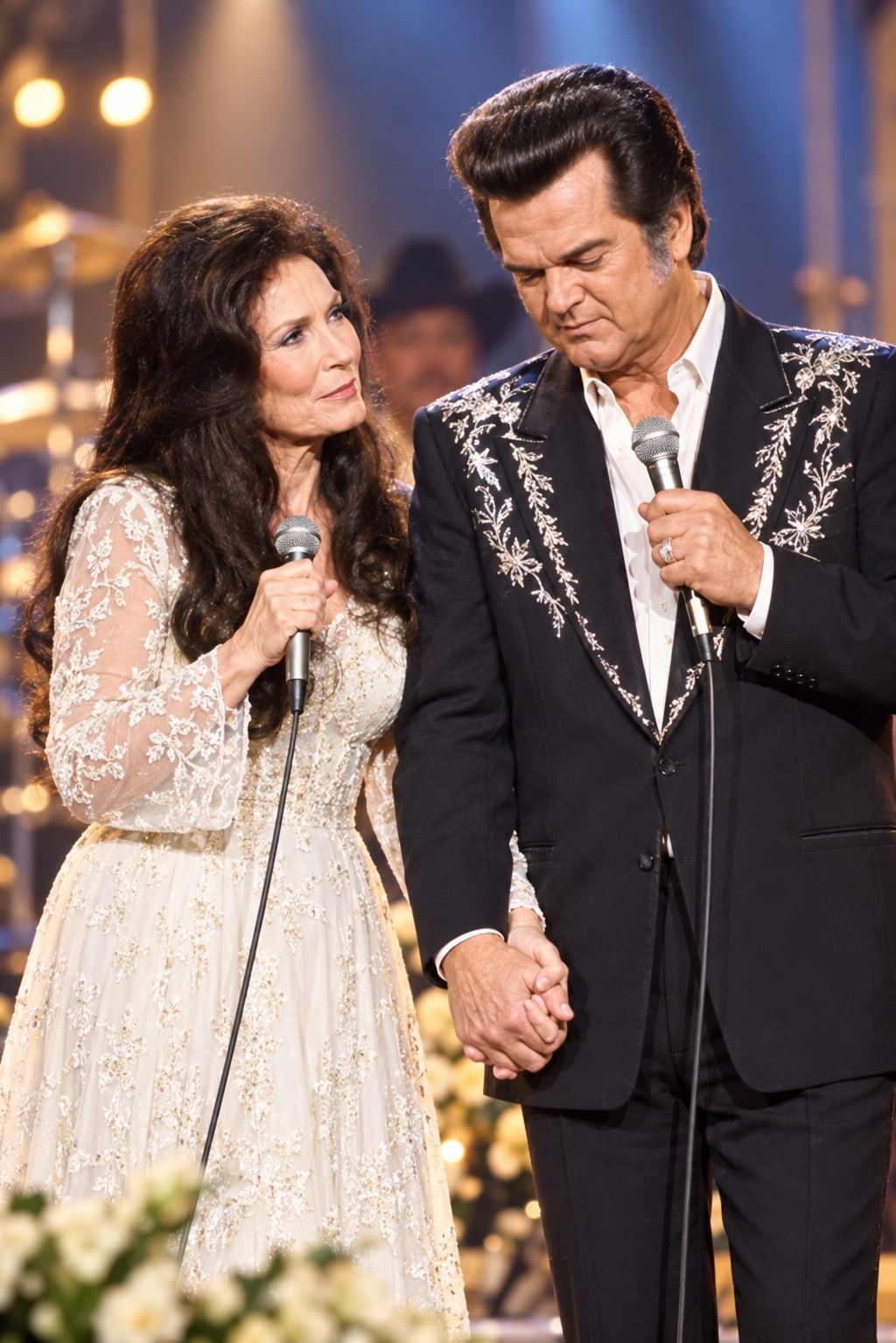
There was no farewell speech.
No final announcement.
No moment when Conway Twitty looked into the audience and told them this would be his last night onstage.
Instead, on June 4, 1993, he walked onto a stage in Branson, Missouri, and did what he had done for decades: he sang.
The audience at the Jim Stafford Theatre came to hear a country music legend. They heard “Hello Darlin’,” “Tight Fittin’ Jeans,” “Goodbye Time,” “That’s My Job,” “You’ve Never Been This Far Before,” and “It’s Only Make Believe.” The show followed the familiar rhythm of a Conway Twitty performance—one hit after another, delivered by a singer whose voice could make thousands of people feel as if he were singing directly to them.
Nobody in that room knew they were watching history.
Nobody knew that Conway Twitty would never walk onto another stage.
And perhaps that is what makes the story so painful.
The Night That Was Never Supposed to Be Goodbye
By 1993, Twitty was already a giant of country music.
He had transformed himself from a 1950s rock-and-roll star into one of country music’s most enduring hitmakers. Songs such as “Hello Darlin’,” “Linda on My Mind,” “Tight Fittin’ Jeans,” and “That’s My Job” had made his voice instantly recognizable.
His career was also inseparable from another legendary voice: Loretta Lynn.
Together, Conway and Loretta became one of the most celebrated partnerships in country music history. They won the CMA Vocal Duo of the Year award four consecutive times and earned a Grammy for “After the Fire Is Gone.”
But by the time of Twitty’s final concert, their famous touring partnership belonged to the past.
That made what happened afterward even more heartbreaking.
Twitty finished his Branson performance and boarded his tour bus to begin the journey toward Nashville. He was expected to continue his busy schedule, including appearances connected to Fan Fair in Nashville.
Instead, his life suddenly changed.
According to contemporary reports, Twitty collapsed on the bus during a rest stop in southwest Missouri. Doctors eventually discovered that he had suffered a ruptured abdominal aortic aneurysm. He was rushed to a Springfield hospital and underwent emergency surgery.
He was only 59.
And the woman who had shared so much musical history with him was about to receive one of the most devastating shocks of her life.
Loretta Lynn Was Already at the Hospital
This is where the story takes an almost unbelievable turn.
Loretta Lynn’s husband, Mooney “Doo” Lynn, was recovering from heart surgery at the same Springfield hospital.
Loretta was there because of her husband.
Then she saw Conway.
Years later, Lynn described the moment in an interview with Dan Rather.
She recalled seeing Conway arrive and initially assumed he had come to visit her husband. She went downstairs to make sure he knew where to go.
But instead of seeing her old singing partner walk in under ordinary circumstances, she saw him being brought into the hospital in critical condition.
The memory clearly remained traumatic for her.
“I looked up and seen Conway come off the exit at the hospital.”
Then came the sentence that makes the entire story feel almost impossible to comprehend:
“I never thought anything was wrong with him.”
Lynn said she ran downstairs to help—and then saw Conway being rushed in.
“Here they come draggin’ Conway in.”
She had no idea that the man she knew as her longtime singing partner and friend was fighting for his life.
She would soon learn that he had died.
“I Thought He Was Goin’ Too”
Perhaps the most heartbreaking part of Loretta Lynn’s recollection was what happened next.
Her husband was already seriously ill.
Conway had just arrived in a medical emergency.
And then the news came that Conway Twitty was gone.
Lynn explained that when her husband was told Conway had died, she feared the shock might take him too.
“I thought he was goin’ too.”
That sentence reveals something the statistics never could.
For Loretta, Conway wasn’t merely another country star.
He wasn’t simply the man standing beside her on album covers or singing duets with her on television.
He was her singing partner.
Her friend.
A person whose voice had been intertwined with hers for years.
In a 1993 statement following Twitty’s death, Lynn expressed that loss even more directly:
“I’ve not only lost a great singing partner but also a great friend.”
She added that her heart went out to Conway’s family and that everyone would miss him.
Those words became part of the emotional aftermath of one of country music’s most shocking deaths.
The Final Concert Suddenly Sounds Different
There is something haunting about looking back at the setlist of that final Branson show.
“Hello Darlin’.”
“Goodbye Time.”
“That’s My Job.”
“The Rose.”
“You’ve Never Been This Far Before.”
“It’s Only Make Believe.”
At the time, they were simply Conway Twitty songs.
After his death, some of them seemed almost unbearably symbolic.
Especially “Goodbye Time.”
Especially the closing moments of a show that nobody knew was a goodbye.
But there is an important distinction.
There is no reliable evidence that Conway intentionally chose those songs because he knew he was dying, nor is there strong evidence that Loretta Lynn witnessed the final stage performance itself.
In fact, the documented story is even more powerful because of how ordinary that night initially seemed.
He performed.
He left the theater.
He boarded the bus.
Then everything changed.
Contemporary reporting confirms that Twitty had collapsed after the Branson performance and died the following day after complications from emergency surgery.
That ordinary sequence is what makes the memory so painful.
A final performance doesn’t always announce itself.
Sometimes history only recognizes it afterward.
The Voice That Never Got to Say Goodbye
Conway Twitty had always been known for letting the music speak for him.
His official biography notes his famous philosophy:
“The communication is through my music.”
That philosophy makes the ending of his career strangely fitting.
There was no dramatic farewell from the stage.
No final speech.
No planned goodbye to his fans.
There was simply the music.
For decades, Twitty had built a career around songs about longing, separation, regret, desire and love. He understood how to make heartbreak sound personal.
Then, suddenly, his own life ended in a way that seemed to belong in one of those songs.
The difference was that there would be no next verse.
Why Loretta’s Words Still Hurt
Loretta Lynn’s reaction matters because she understood Conway from a place few others could.
They had spent years recording together.
They had shared stages.
They had created songs that became part of the permanent soundtrack of country music.
Their partnership had produced a chemistry that audiences could hear even when the two weren’t saying much.
So when Lynn later remembered seeing Conway brought into the hospital, the tragedy became more than the death of a superstar.
It became the loss of someone she had known.
Someone whose voice had been part of her own musical story.
And perhaps that is why her simplest words remain the most powerful:
“A great singing partner but also a great friend.”
More than three decades later, those words still carry extraordinary weight.
Because fans may remember Conway Twitty for the records.
They may remember the awards.
They may remember “Hello Darlin’.”
They may remember the unmistakable voice and the perfectly controlled performances.
But Loretta remembered the man.
And on the night his career unexpectedly came to an end, she was not standing beside him under stage lights.
She was in a hospital, already there for her husband, when fate brought Conway through the doors one final time.
That may be the most heartbreaking twist of all.
Conway Twitty’s final performance wasn’t meant to be a goodbye.
Loretta Lynn didn’t know it was their final chapter.
The audience didn’t know.
Conway himself had no chance to tell them.
But sometimes the most unforgettable goodbyes are the ones nobody realizes are happening.
The curtain falls.
The lights go out.
The crowd goes home.
And only later do we understand that we were watching the end of an era.
VIDEO: