 By admin
INTRODUCTION:
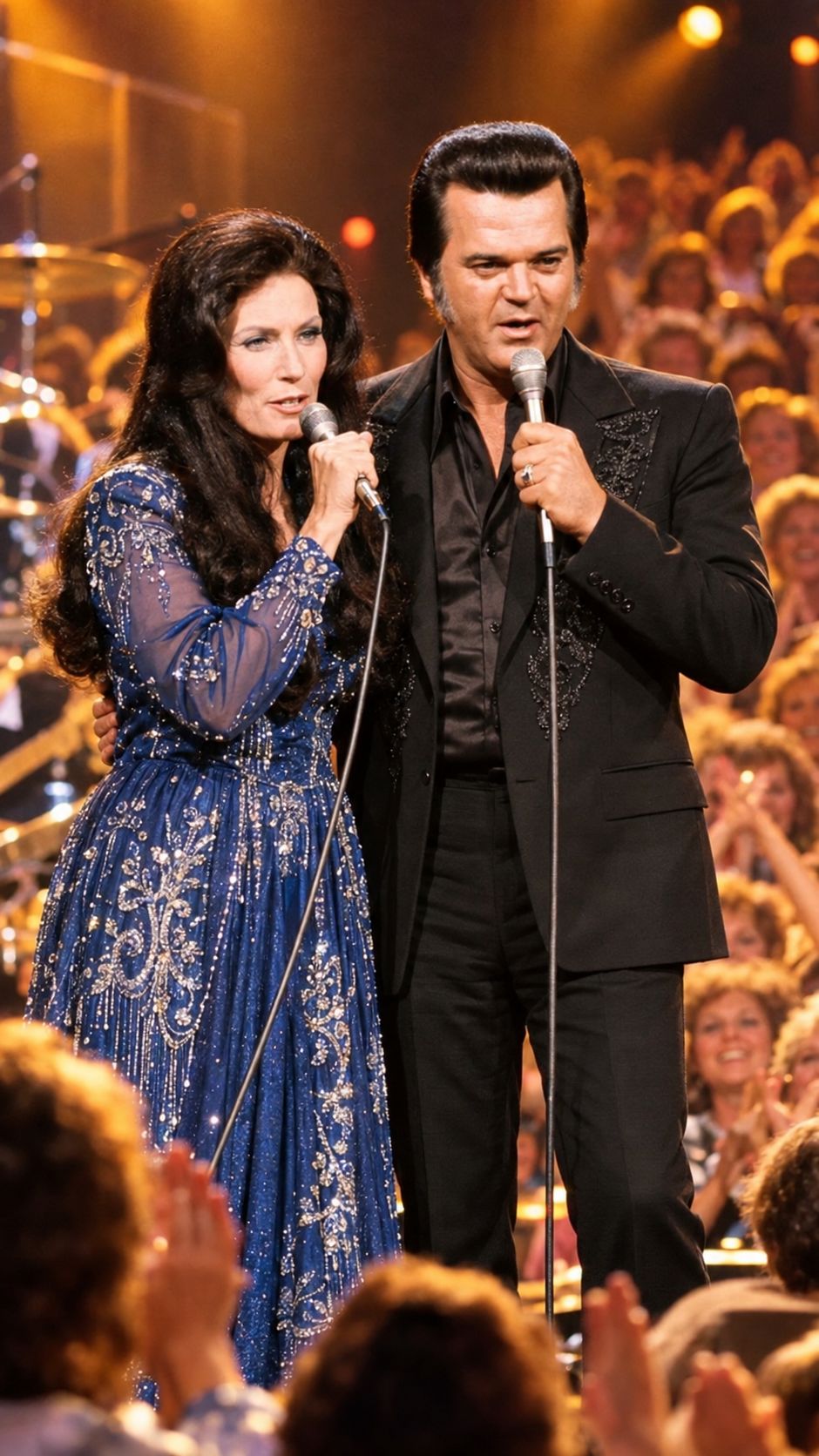
Some voices do more than entertain. They become part of our memories, accompany us through heartbreak, and remind us of people and moments we thought we had forgotten. In the rich history of country music, few musical partnerships have left a more enduring impression than that of Conway Twitty and Loretta Lynn. Together, they created something remarkably special: a sound filled with tenderness, emotional honesty, playful chemistry, and the unmistakable warmth of traditional country storytelling.
For generations of listeners, their music has represented far more than a collection of unforgettable duets. It has captured the complicated emotions of love, the ache of separation, the excitement of reconciliation, and the beautiful imperfections that make human relationships meaningful. Every harmony seemed to tell a story, while every exchange between their voices invited audiences into a world that felt both intimate and familiar.
Although Conway Twitty passed away in 1993, and Loretta Lynn died in 2022, the musical legacy they created together continues to live in the hearts of country music fans. Their recordings still bring longtime listeners back to cherished memories while introducing younger audiences to the emotional power of classic country.
Their story remains worth celebrating because genuine musical connection never truly disappears. It simply finds new listeners, new meanings, and new ways to touch the human heart.
1. Conway Twitty and Loretta Lynn: A Partnership That Became Country Music History


The story of Conway Twitty and Loretta Lynn occupies a distinctive place in country music history. Both artists had already established remarkable identities before their partnership reached its full potential. Yet when their voices came together, they discovered a musical balance that neither could have created alone.
Conway Twitty, born Harold Lloyd Jenkins, possessed a smooth, expressive voice capable of conveying vulnerability, longing, and romantic confidence. His musical journey had taken him from early rock-and-roll success into country music, where he became one of the genre’s most recognizable performers.
Loretta Lynn, meanwhile, had built her reputation through her direct songwriting, unmistakable Kentucky accent, and fearless willingness to address subjects that mattered to ordinary people. Her songs reflected the experiences of working families, wives, mothers, and women navigating difficult relationships. She sang with a combination of strength and sensitivity that made her an extraordinary storyteller.
Their individual strengths became even more compelling when combined.
Twitty’s polished vocal delivery complemented Lynn’s earthy, conversational style. He could sound like a man trying to explain his feelings, while she could respond with the conviction of someone who had heard every excuse before. Their musical exchanges felt spontaneous, even though the recordings were carefully constructed performances.
That contrast became one of their greatest advantages.
Listeners were not simply hearing two famous singers share a microphone. They were hearing two distinct personalities inhabit the same emotional landscape. The result was a partnership that felt convincing, memorable, and deeply human.
2. The Secret Behind Their Unforgettable Musical Chemistry
What made Conway Twitty and Loretta Lynn so compelling as a duo?
The answer begins with the way they understood the emotional possibilities of a song.
Many duets depend primarily on beautiful harmonies. Twitty and Lynn certainly delivered those, but their greatest strength was their ability to make a song feel like a conversation between two people with something important at stake.
Their voices carried different emotional colors. Twitty often brought a controlled, almost effortless smoothness, while Lynn delivered lines with a directness that could make even a simple phrase sound full of meaning.
Together, they created tension and release.
One singer might sound hopeful while the other sounded skeptical. A playful exchange could suddenly become tender. A seemingly ordinary lyric could reveal disappointment, devotion, or an unexpected willingness to forgive.
These changes gave their recordings a dramatic quality without requiring elaborate production.
Their chemistry also benefited from their contrasting public personas. Twitty’s romantic image and Lynn’s straightforward, independent spirit created an engaging dynamic that audiences could recognize immediately. The performances invited listeners to imagine the people behind the lyrics.
Importantly, their onstage rapport should not be mistaken for proof of a secret romance. Their artistic connection was compelling in its own right, and their enduring partnership can be celebrated without turning speculation about their private lives into established fact.
What audiences heard was a powerful musical relationship built on timing, complementary voices, and an instinctive understanding of how to make a story come alive.
That is a rare gift, and it remains one of the defining features of their legacy.
3. The Songs That Turned Their Partnership Into a Lasting Treasure


The legacy of Conway Twitty and Loretta Lynn is inseparable from the recordings that helped define their partnership.
Among their most celebrated duets is After the Fire Is Gone, a song that became a landmark in their shared career. Released in 1971, it earned them a Grammy Award for Best Country Performance by a Duo or Group with Vocal. Its emotional power came from its exploration of a relationship in which passion and commitment had become complicated.
The song did not present love as a perfect, uncomplicated experience. Instead, it confronted uncomfortable feelings and difficult choices. That honesty was central to its impact.
Another defining recording was Lead Me On, which demonstrated their ability to create emotional tension through restrained performances and carefully balanced vocals. Rather than overwhelming the listener with theatrical gestures, they allowed the story to unfold through the words, melodies, and subtle differences in their delivery.
Then there was Louisiana Woman, Mississippi Man, a lively duet that showcased a different side of their partnership. Its energetic back-and-forth and playful sense of competition gave audiences a joyful alternative to their more emotionally complicated recordings.
These songs reveal an important truth about the duo: their success did not depend on repeating one formula.
They could explore heartbreak, longing, romantic excitement, and humor without losing the qualities that made their partnership distinctive.
For longtime fans, these recordings often carry personal associations. A song might recall a road trip, a parent’s favorite record, a dance at a family gathering, or a quiet evening when the radio seemed to understand exactly what someone was feeling.
For younger listeners, the same recordings offer an introduction to a period when storytelling stood at the center of country music.
The arrangements may reflect another era, but the emotions remain recognizable.
That is why these songs continue to matter.
4. Why Their Music Still Speaks to Modern Audiences
Country music has changed considerably since the height of Twitty and Lynn’s partnership. Contemporary production often incorporates pop influences, electronic textures, and a broader range of musical styles.
Yet the recordings of Conway Twitty and Loretta Lynn continue to offer something that transcends changing trends: emotional clarity.
Their music understands that relationships are rarely as simple as people want them to be.
Love can coexist with frustration. Affection can survive disagreements. Two people can share a deep connection while struggling to express what they need from each other.
These contradictions are not confined to one generation.
A listener who first heard their music in the 1970s might appreciate the nostalgia of familiar melodies. Someone discovering the songs today might instead be drawn to their conversational lyrics, distinctive vocal personalities, or the authenticity of their performances.
Both responses are meaningful.
The music also offers a reminder that storytelling does not need to be complicated to be powerful. A memorable melody, a carefully chosen phrase, and two singers who understand the emotional heart of a song can create something that lasts for decades.
In a digital world filled with rapidly changing trends, their recordings invite people to slow down and listen.
They reward attention to the details: the slight hesitation before a line, the difference between a confident statement and a vulnerable confession, or the way two voices meet at precisely the right moment.
Those details make their performances feel alive.
Their continued appeal is not simply a matter of nostalgia. It reflects the enduring value of musical storytelling that treats listeners as people with their own experiences, disappointments, hopes, and memories.
5. Beyond the Stage: Two Individual Legends With Distinct Stories


Although their partnership deserves celebration, understanding Conway Twitty and Loretta Lynn also means recognizing the extraordinary careers each artist built independently.
Twitty’s journey was remarkable because of his ability to reinvent himself. His transition from rock and roll to country music demonstrated a willingness to follow his artistic instincts rather than remain confined to one musical identity. Over time, he became known for a long series of country hits and a performance style that connected with audiences across different eras.
His voice became associated with romantic ballads, emotional vulnerability, and the kind of polished delivery that could make an intimate song feel personal even in a large concert venue.
Loretta Lynn’s legacy followed a different but equally influential path.
Raised in Kentucky, she drew heavily on her background and lived experiences when writing and performing. Her songs frequently addressed marriage, family responsibilities, economic hardship, and women’s independence at a time when such subjects could provoke controversy.
Her success helped demonstrate that country music could give voice to experiences that were often overlooked or treated as uncomfortable.
Lynn’s influence extended beyond her recordings. She helped expand expectations for women in country music, showing that a female artist could be commercially successful while maintaining her own perspective and refusing to soften every difficult truth.
Their partnership brought these two artistic identities together, but it never erased their individuality.
That distinction matters because their story is not simply about a famous man and a famous woman making music together. It is about two accomplished artists whose separate strengths created an exceptional shared chapter.
Their recordings continue to benefit from that balance.
6. The Human Connection Behind Their Enduring Appeal
There is another reason the music of Conway Twitty and Loretta Lynn remains so beloved: it makes listeners feel included.
Their performances rarely seem distant or inaccessible. Instead, they create the impression that the audience is sitting nearby, listening to two people work through a difficult conversation or celebrate an unexpected moment of happiness.
That sense of closeness is particularly important in country music, a genre built on the relationship between personal experience and shared emotion.
A listener does not need to have lived through the exact circumstances described in a song to recognize its emotional truth.
Someone who has experienced heartbreak can understand a song about separation. A person who has stayed in a difficult relationship may recognize the complicated feelings behind a lyric about commitment. Someone who has enjoyed a lasting marriage might simply appreciate the warmth and humor in a playful duet.
The songs leave room for different interpretations because the emotions they explore are universal.
Their performances also remind us that great musical partnerships require more than individual talent. They require listening, responsiveness, and an ability to leave room for another person’s voice.
Twitty and Lynn understood how to share a song without diminishing either performer. Each could lead a moment, respond to the other, and contribute to the emotional shape of the recording.
That balance is part of what makes their music feel generous.
Rather than demanding attention for themselves alone, they created performances in which the relationship between the voices became the central attraction.
For fans, that connection can feel almost like visiting old friends.
The recordings remain familiar, but they can sound different depending on the listener’s stage of life. A lyric that once seemed merely entertaining may acquire new significance after years of marriage, parenthood, loss, or personal change.
This is one of the most meaningful qualities of enduring art: it grows alongside the people who love it.
7. Honoring Their Legacy Without Forgetting the People Behind the Music
Celebrating Conway Twitty and Loretta Lynn means acknowledging both the achievements and the humanity behind their public images.
Their partnership was a professional collaboration, shaped by the demands of recording, touring, performing, and maintaining successful careers. Its magic did not require every story about them to be dramatic, nor did it depend on speculation about what might have happened away from the stage.
The documented musical achievements are remarkable enough.
Their recordings earned industry recognition, their performances attracted devoted audiences, and their partnership became one of the memorable collaborations in country music history.
Their individual contributions also helped shape the broader genre. Twitty demonstrated the power of reinvention and expressive vocal performance. Lynn expanded the possibilities of country songwriting by bringing personal experiences and difficult subjects into the mainstream.
Together, they showed how contrasting artistic identities could create something greater than the sum of their parts.
Honoring them also means preserving the historical context of their music.
Classic country recordings reflect the sounds, values, conflicts, and aspirations of the periods in which they were made. Listening carefully can reveal not only the artistry of the performers but also the ways popular music documents changing attitudes toward love, family, identity, and responsibility.
For younger generations, discovering these recordings offers an opportunity to understand country music’s roots without treating its history as something frozen in time.
The music can be enjoyed, questioned, reinterpreted, and passed along.
And for longtime fans, revisiting the songs can be a way of honoring people and experiences that remain important.
Their legacy is strongest when the music itself remains at the center of the conversation.
8. A Legacy That Belongs to Every Generation

Perhaps the most beautiful thing about the story of Conway Twitty and Loretta Lynn is that it does not belong exclusively to the past.
Their lives have ended, but their work continues to create new experiences for people who were not yet born when their greatest duets first reached the radio.
A grandparent can introduce a grandchild to After the Fire Is Gone. A classic-country enthusiast can share Louisiana Woman, Mississippi Man with a friend who has never explored the genre. A listener searching for the emotional honesty of traditional country music can discover a recording that feels surprisingly contemporary.
Every act of listening gives the music another opportunity to live.
This is how cultural legacies endure. They survive not only through awards, biographies, and historical retrospectives, but through ordinary moments when someone presses play and finds a song that speaks to them.
The partnership of Twitty and Lynn offers a powerful example of what happens when musical ability meets emotional understanding.
Their voices were distinctive. Their styles were complementary. Their songs explored the complications of human relationships without losing their sense of melody, humor, or warmth.
Those qualities remain valuable in every era.
Their story also reminds us that the greatest musical achievements are not always the loudest or most elaborate. Sometimes they emerge from two voices, a compelling melody, and a shared understanding of the story being told.
That is the enduring magic of Conway Twitty and Loretta Lynn.
Their music continues to bridge generations because it speaks a language that never grows old: the language of the human heart.
CONCLUSION: Two Voices, One Timeless Place in Country Music
The legacy of Conway Twitty and Loretta Lynn is more than a chapter in the history of country music. It is a reminder of the extraordinary power of collaboration, the lasting importance of honest storytelling, and the way music can connect people across decades.
Their individual careers were remarkable, but their partnership created a special musical world where contrasting voices could express the many dimensions of love, heartbreak, humor, and reconciliation.
They gave listeners songs that could be enjoyed in the moment and remembered for a lifetime.
Today, their recordings continue to reach audiences who value traditional country music and those who are discovering it for the first time. Their voices preserve a sound from another era while expressing emotions that remain deeply relevant.
Perhaps that is the greatest tribute to their achievement: their music does not need to be explained by nostalgia alone. It continues to speak for itself.
And as long as people seek songs that understand their joys, their disappointments, and their most cherished memories, the music of Conway Twitty and Loretta Lynn will have a place in their hearts.
Because legends may leave the stage, but the songs they give the world never truly say goodbye.
VIDEO: