 By admin
INTRODUCTION:
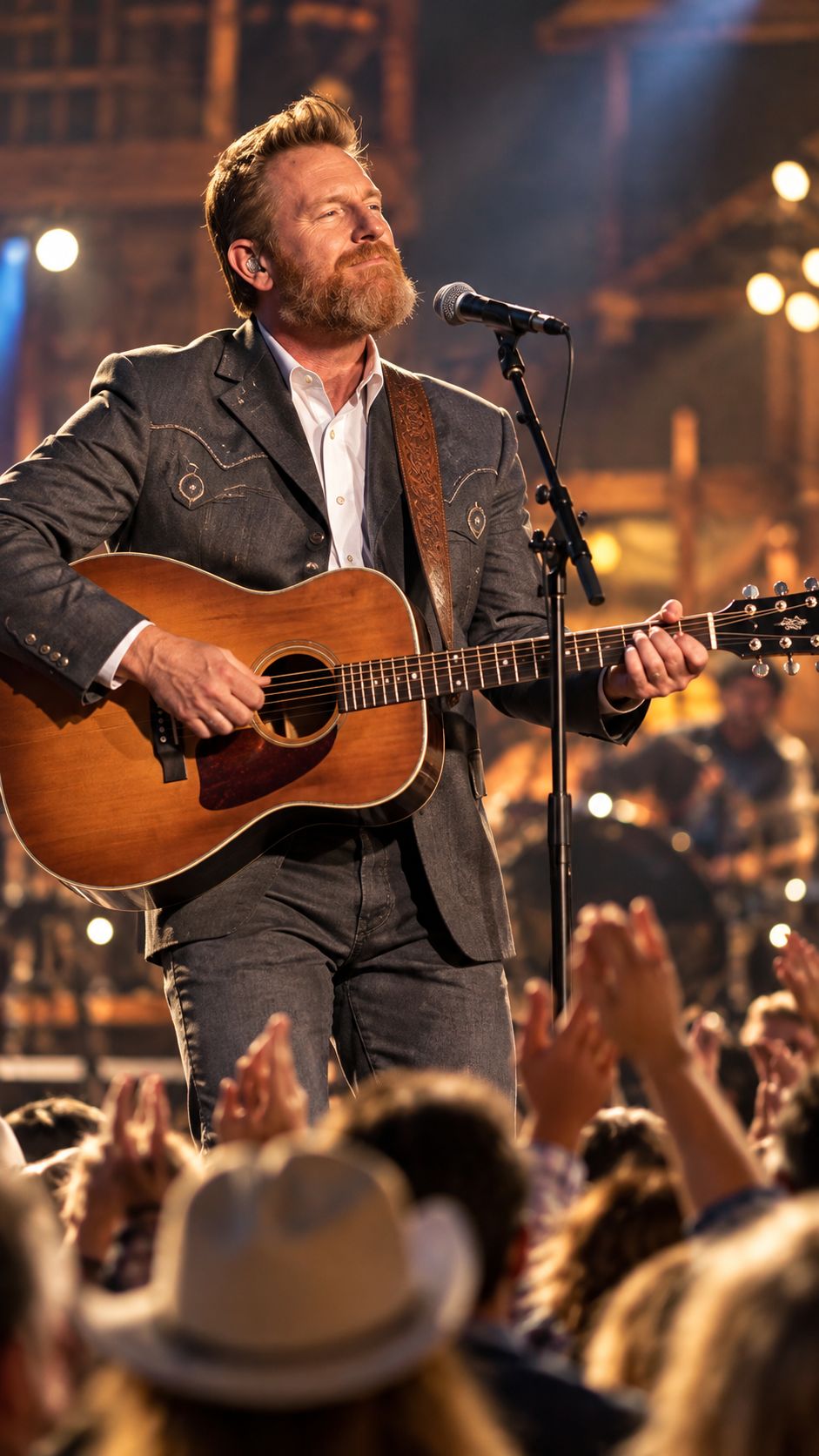
Some artists leave behind a collection of songs. Others leave behind something far more powerful: a story that continues to live in the hearts of the people who listen. Rory Feek belongs to a special tradition of country storytellers whose music reaches beyond melodies and lyrics, finding its way into the quiet corners of everyday life, where love is tested, grief is endured, and hope becomes something worth holding on to.
For many fans, Rory has never been simply a songwriter, performer, or one half of a beloved country music partnership. His journey represents a deeply human connection between music and the experiences that shape us. Through the songs he helped bring to life with Joey Feek, through the heartbreak of losing his wife, and through the chapters of fatherhood that followed, his story has reminded listeners that the most meaningful moments are often the ones that cannot be measured by fame, awards, or applause.
What makes Rory’s journey so compelling is not the suggestion that his life has been perfect or that every difficult chapter has an easy explanation. It is the way his public story has invited people to reflect on their own relationships, their own losses, and the promises they make to the people they love.
In an entertainment world that often rewards spectacle, Rory Feek’s enduring appeal rests on something quieter: sincerity, vulnerability, family, and the belief that ordinary lives can carry extraordinary meaning. That is why his story continues to resonate with generations of country music fans.
THE SONGWRITER BEHIND THE STORY: A LEGACY BUILT ONE SONG AT A TIME
To understand why Rory Feek continues to hold such a meaningful place in country music, it is important to look beyond the emotional chapters that brought his family into the public eye. Before audiences followed his personal journey, Rory had already spent years building a career through songwriting, patience, and a deep appreciation for the traditions that shaped American country music.
Born in Atchison, Kansas, Rory developed an early interest in music and storytelling. His path eventually led him to Nashville, where he worked to establish himself as a songwriter in an industry filled with talented artists competing for recognition. Success did not arrive overnight. Like many writers who work behind the scenes, he learned that a powerful song often requires years of observation, countless revisions, and the ability to express feelings that other people struggle to put into words.
His songwriting career eventually brought him significant success. He co-wrote Blake Shelton’s hit Some Beach, which reached the top of the country charts, and contributed songs recorded by other established country performers.
Yet songwriting success is not always accompanied by public recognition. The people who create the stories behind the music often remain invisible while singers receive the applause. Rory’s career changed when he began sharing the stage with his wife, Joey Feek.
Their partnership introduced audiences to a different kind of country music experience, one built around complementary voices, traditional arrangements, and the natural chemistry of two people whose lives were intertwined beyond the recording studio.
The important distinction is that Rory Feek’s legacy was never created by tragedy alone. It was built through years of creative work, artistic discipline, and a commitment to telling stories that sounded familiar to ordinary people.
That foundation helps explain why his music continues to matter. Fans who discover his work today are not simply encountering a heartbreaking biography. They are discovering a songwriter who understands the emotional weight of home, marriage, memory, and the decisions that define a life.
JOEY + RORY: WHEN TWO VOICES BECAME ONE UNFORGETTABLE STORY
A partnership that brought traditional country storytelling back into the spotlight.
The story of Joey + Rory occupies a central place in the history of Rory’s career. Their musical journey gained national attention in 2008 when they competed on the country music television program Can You Duet? Although they finished third, the experience helped introduce their distinctive sound to a wider audience.
Their appeal came partly from what they represented at a time when country music was becoming increasingly diverse in its production and presentation. Joey and Rory offered listeners a sound rooted in traditional country, bluegrass, gospel, and the familiar storytelling style that had shaped the genre for generations.
Songs such as Cheater, Cheater demonstrated their ability to deliver lively, memorable country music, while their gentler material revealed the emotional intimacy that would become one of their defining characteristics.
Their albums, including The Life of a Song, His and Hers, and Inspired: Songs of Faith & Family, reflected different aspects of their musical identity. They could be playful, romantic, reflective, and deeply spiritual without abandoning the straightforward storytelling that connected them to their audience.
But what truly distinguished the duo was the relationship audiences perceived between the performers.
When Joey sang, listeners heard a distinctive voice filled with warmth and character. When Rory accompanied her, his understated presence created space for the song to breathe. Neither performer needed to dominate the stage. Their music often felt like a conversation between two people who understood one another.
That quality is difficult to manufacture.
Audiences can appreciate technical brilliance, impressive production, and spectacular performances. Yet the artists who remain closest to their hearts are often those who make listeners feel as though they have been invited into something personal.
Joey + Rory accomplished precisely that.
Their music also demonstrated that traditional country did not need to compete with every changing trend to remain relevant. Honest lyrics, recognizable emotions, and genuine musical partnership could still create a powerful connection with listeners of different ages.
For longtime country fans, their sound offered a reminder of the music they grew up loving. For younger listeners, it provided an opportunity to discover the emotional richness of a more traditional approach.
And for Rory, the partnership became much more than a successful chapter in his professional life. It became inseparable from the love story that would shape the rest of his public journey.
THE COURAGE TO KEEP SINGING AFTER LOSING THE LOVE OF HIS LIFE
There are moments in an artist’s life when the meaning of a song changes forever. For Rory Feek, the illness and death of Joey Feek transformed the way audiences understood the music they had created together.
Joey was diagnosed with cervical cancer in 2014. After the disease returned and progressed, the couple faced an extraordinarily difficult period that unfolded partly in public through Rory’s writing, photographs, and personal reflections.
Joey died on March 4, 2016, at the age of 40.
Her death was a devastating loss for Rory, their daughter Indiana, their extended family, and the many people who had followed their journey.
What made this chapter especially moving for audiences was the contrast between the permanence of love and the fragility of life. A marriage that had produced music, memories, and a family was suddenly confronting a future that neither partner had wanted.
There is no need to romanticize that kind of suffering to understand why people were moved by it.
Grief is complicated. It does not follow a convenient schedule, and it rarely produces simple lessons. Some days bring acceptance; others bring memories that make an ordinary moment feel overwhelming. For people who have lost a spouse, a parent, or someone who shaped their identity, Rory’s story offered a recognizable emotional landscape.
His reflections also gave fans a different way to understand the songs they had heard before.
A lyric about devotion could take on new significance. A quiet harmony could evoke memories of a couple’s life together. A familiar performance could become a reminder that the people we love are never merely characters in our personal histories; they are part of the people we become.
The album Hymns That Are Important to Us, released by Joey + Rory in 2016, became particularly meaningful in this context. Its gospel-centered material reflected the couple’s faith and their long-standing connection to traditional spiritual music.
For listeners who shared that faith, the songs offered comfort through familiar beliefs. For others, the emotional sincerity of the performances remained powerful regardless of their own religious convictions.
The deeper lesson is not that music eliminates grief. It does not.
Rather, music gives people a way to sit with difficult emotions without having to explain everything they feel.
That may be one of the most enduring gifts of the Joey + Rory story. Their recordings continue to provide a place where listeners can remember loved ones, reflect on their own relationships, and recognize the value of time spent together.
Rory’s willingness to share parts of his journey helped make that connection possible. His story became meaningful not because every listener experienced the same tragedy, but because nearly everyone understands the fear of losing someone important.
THIS LIFE I LIVE: THE POWER OF SHARING AN ORDINARY LIFE
One of the most significant elements of Rory Feek’s public identity is his work as a writer beyond the recording studio.
Through his personal storytelling project, This Life I Live, Rory developed a way to communicate with readers that was different from the polished presentation often associated with celebrity culture.
Instead of concentrating exclusively on professional accomplishments, he wrote about family, faith, uncertainty, everyday experiences, and the personal questions that arise when life takes an unexpected turn.
That approach helped establish a relationship with readers who wanted more than entertainment news. They wanted stories that reflected the realities of being human.
Rory’s writing also demonstrated an important truth about country music itself: storytelling does not have to end when the song ends.
A songwriter may spend three minutes describing a heartbreak, a childhood memory, or a moment of unexpected joy. A written reflection can explore the same experience at greater length, allowing readers to consider its complexities and implications.
In this sense, Rory Feek has carried the storytelling traditions of country music into another medium.
His memoir, This Life I Live: One Man’s Extraordinary, Ordinary Life and the Woman Who Changed It Forever, expanded that personal narrative into a book. His work as an author and filmmaker further demonstrated that his interests extended beyond performing music.
The word ordinary is particularly important when considering his appeal.
Many people live lives that will never attract national attention. They raise children, care for aging relatives, maintain marriages, endure disappointments, and try to make good decisions when circumstances become difficult. They experience moments of happiness that seem small to outsiders but feel enormous to the people living them.
Rory’s storytelling often brings attention to precisely these experiences.
The message is not that an ordinary life must become famous to matter. It is that an ordinary life already contains stories worth telling.
That perspective helps explain why his audience extends beyond traditional country music listeners. Readers who have never attended a country concert can still connect with a reflection on grief. Parents can relate to the uncertainty of raising a child. Couples can recognize the importance of small gestures that gradually build a lasting relationship.
His work invites people to look again at the lives they are already living.
And that is a powerful form of connection.
FATHERHOOD, FAMILY, AND THE RESPONSIBILITY OF A NEW CHAPTER
For many followers, Rory’s journey as a father is one of the most emotionally significant parts of his story.
After Joey’s death, Rory continued raising their daughter, Indiana, while navigating his own grief and the practical responsibilities of family life. His older daughters, Heidi and Hopie, are also part of his family story.
Fatherhood is a subject that resonates across generations because it involves more than providing for a child. It requires patience, consistency, humility, and the willingness to keep learning as circumstances change.
The loss of a spouse can make those responsibilities feel especially complicated. A surviving parent must manage personal grief while remaining attentive to a child’s needs, questions, and emotional development.
There is no universal formula for doing this well. Families differ, children respond differently to loss, and the process of building a new routine takes time.
Rory’s public reflections on family have encouraged many people to consider these challenges more thoughtfully.
At the same time, it is important to recognize that real families are complicated, and public narratives rarely capture every private experience. Respecting a family’s humanity means avoiding assumptions that outsiders cannot verify and remembering that children deserve privacy as they grow.
What can be said with confidence is that fatherhood has remained an important theme in Rory’s storytelling. It connects his personal life to the broader values that have always been central to country music: responsibility, belonging, sacrifice, and the desire to leave something meaningful for the next generation.
His family story has also continued to evolve. Rory married Rebecca in 2024, beginning another chapter in his personal life.
For audiences who had followed his grief after Joey’s passing, that development raised an enduring question: how does a person honor a great love while allowing life to continue?
The answer is not that one relationship replaces another or that moving forward erases the past. Love and remembrance can coexist with change. A person can cherish a former chapter while accepting new responsibilities, relationships, and possibilities.
That is a deeply human question, and it deserves more nuance than a simple headline can provide.
For Rory’s audience, the most meaningful aspect of this chapter may be the reminder that life does not always follow the narrative we imagined for ourselves. Sometimes the future arrives differently, asking us to make difficult choices while carrying memories that remain precious.
For parents, widows and widowers, and anyone rebuilding after a major loss, that idea can feel especially relevant.
WHY HIS MUSIC STILL SPEAKS TO DIFFERENT GENERATIONS
The endurance of Rory Feek’s appeal cannot be explained by a single song, a single performance, or one chapter of his personal life.
It comes from the way several elements reinforce one another.
First, his work is rooted in traditional country storytelling. The songs he writes and performs frequently draw on recognizable experiences rather than abstract ideas. Listeners can find themselves in stories about relationships, mistakes, family obligations, and the longing for a simpler kind of happiness.
Second, his musical identity is connected to Joey Feek. Their recordings preserve the sound of a partnership that audiences came to appreciate for its warmth and authenticity. Every time listeners return to that music, they have an opportunity to experience the artistry independently of the circumstances surrounding it.
Third, his writing creates a connection that extends beyond performance. Readers can engage with his reflections at their own pace, returning to a passage when it speaks to something they are experiencing.
Finally, his story addresses questions that never disappear with changing musical trends.
How do we love someone well? What happens when we lose them? How do we care for our children when we are struggling ourselves? Can faith help us navigate uncertainty? What does it mean to begin again without forgetting where we have been?
These questions matter to older audiences who have experienced decades of relationships and responsibilities. They also matter to younger listeners who are only beginning to understand how complicated love and adulthood can become.
A teenager discovering Joey + Rory today may hear a beautiful country harmony. A parent may hear a reflection of family life. Someone who has lost a spouse may hear a reminder of a person they still carry in their heart.
The recording remains the same, but the listener’s relationship with it changes.
That is one of music’s remarkable qualities: a song can meet people at different stages of their lives and offer something new each time.
Rory Feek’s enduring significance lies partly in that ability to create work that continues to acquire meaning long after its original release.
His story also reminds audiences that an artist’s value cannot be reduced to chart positions or awards. Professional recognition matters, but the private meaning a song acquires in a listener’s life can be just as profound.
A song played at a wedding, remembered during a difficult season, or shared between generations becomes part of a family’s own history.
When music achieves that kind of connection, it has moved beyond entertainment.
It has become a companion.
A LIVING LEGACY THAT CONTINUES TO EVOLVE
Calling Rory Feek a living legend is not simply a tribute to his past accomplishments. It also recognizes that his story is still developing.
His career has included songwriting success, a celebrated musical partnership, books, filmmaking, and years of personal storytelling. Yet his current priorities have also evolved.
In a 2026 reflection on his life and work, Rory described a shift away from pursuing music as his central occupation and toward writing, faith, and ministry. He also wrote about leaving the farm where his family had spent many years and beginning a new season in Texas.
That change offers an important perspective on what a lasting legacy can mean.
A legacy does not require an artist to repeat the same achievements indefinitely. Nor does it demand that a person remain permanently attached to the identity that first made them famous.
Sometimes the next chapter involves stepping away from the spotlight, reassessing priorities, and choosing a different way to contribute.
For Rory, storytelling has been a thread connecting many different stages of life. Music gave him one way to tell stories. Books and personal essays offered another. His reflections on faith and family have provided yet another way to communicate what he believes matters most.
This evolution may surprise some fans who primarily associate him with country music. But it also illustrates the freedom that comes with a life lived over many decades.
Artists are people, not monuments. They change, reconsider, discover new interests, and sometimes move toward purposes that look very different from their earlier ambitions.
Recognizing that reality makes the idea of a living legend more meaningful, not less.
It acknowledges both what Rory has contributed and his right to continue becoming someone new.
For his audience, the invitation is to appreciate the complete creative journey without expecting every future chapter to resemble the past.
The songs will remain. The memories associated with Joey + Rory will remain. The books, films, and reflections will continue to offer points of connection for people discovering them for the first time.
And the story itself will continue to change.
CONCLUSION: THE LEGEND IS NOT ONLY IN THE SONGS, BUT IN THE STORY THEY LEAVE BEHIND
The enduring appeal of Rory Feek comes from the intersection of music, memory, family, and the deeply human desire to find meaning in life’s most difficult moments.
His professional achievements established him as a respected songwriter and performer. His partnership with Joey Feek created a musical legacy that continues to move listeners. His writing opened a window into the experiences that shaped his life, giving audiences another way to connect with the person behind the songs.
But perhaps the most important reason his story continues to resonate is that it never belonged exclusively to the entertainment industry.
It belongs, in a different way, to everyone who has ever loved someone deeply, lost someone they could not imagine living without, or tried to discover what comes next after life changes forever.
Rory’s journey does not provide a perfect answer to those experiences. No artist could. Instead, it offers stories, songs, and reflections through which people can examine their own lives.
That is what makes his legacy so personal.
A great country song tells us that we are not alone in what we feel. A great storyteller helps us understand why those feelings matter.
For generations of fans, Rory Feek has offered both.
And while his future chapters may look different from the music career that first brought him into the public eye, the heart of his work remains recognizable: a belief in storytelling, a respect for life’s meaningful moments, and a desire to share something that might help another person along the way.
Perhaps that is the most fitting way to honor a living legend.
Not by pretending his life has been without complications, or by reducing his journey to its most heartbreaking moments, but by recognizing the creativity, love, uncertainty, and continued growth that make his story human.
The music remains. The memories endure. And for listeners who have found comfort, recognition, or hope in his work, the connection continues—one song, one story, and one generation at a time.
VIDEO: