 By admin
 INTRODUCTION:
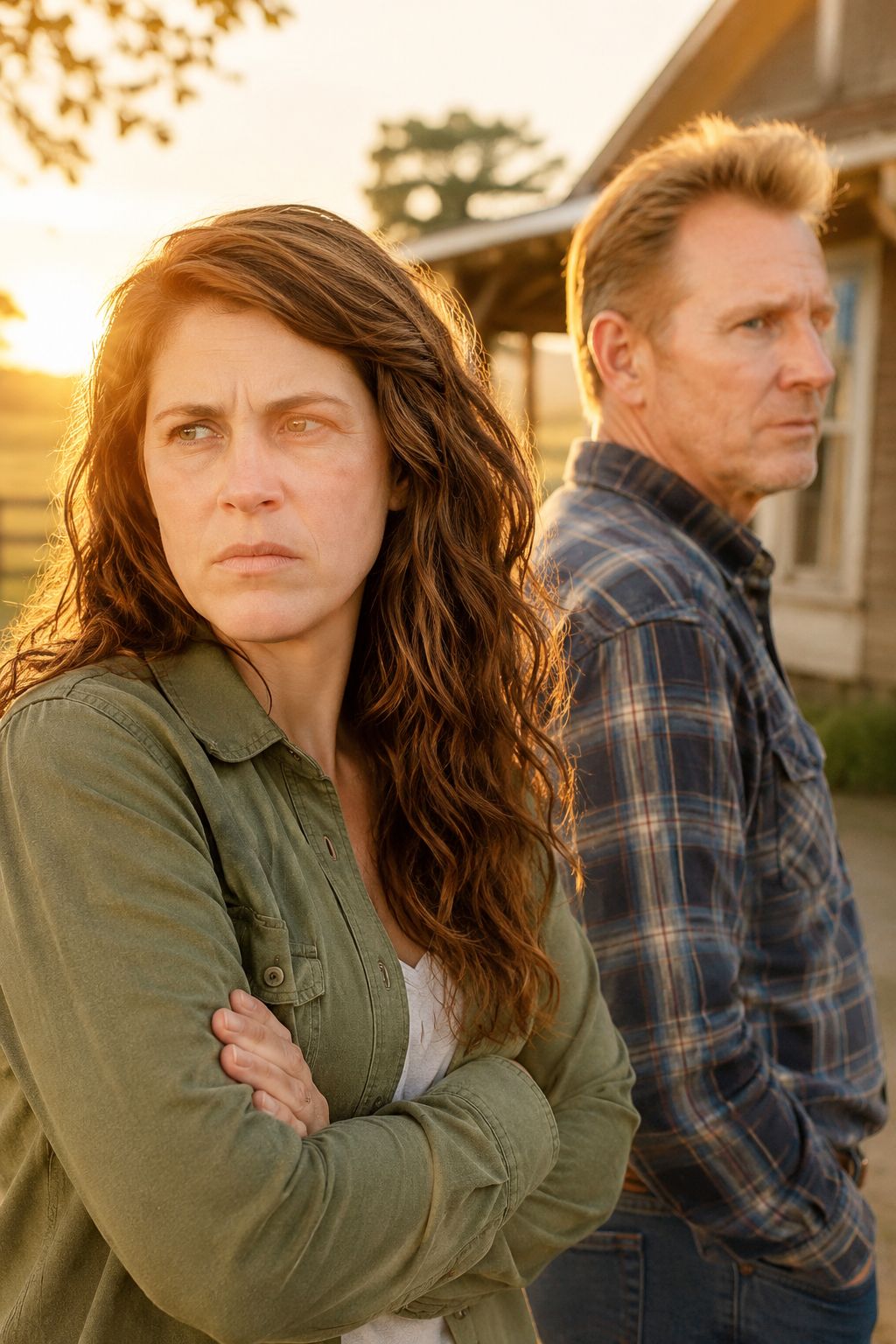
For decades, Rory Feek and Hopie Feek shared what many believed was a familiar father-daughter story. It was built on years of memories, milestones, heartbreak, and love. Then, a DNA test changed the biological facts—but not necessarily the emotional complexity.
What followed wasn’t simply another celebrity headline. It became a deeply personal conversation about identity, privacy, family, and what happens when intensely private moments unfold in front of millions.
“Sometimes the hardest truth isn’t discovering who your biological family is—it’s figuring out who gets to tell your story.”
That is the emotional center of this remarkable chapter.
A Discovery That Changed Everything
When Hopie Feek publicly revealed that Rory Feek is not her biological father, the announcement immediately captured the attention of country music fans and entertainment media alike.
According to Hopie, the discovery came through a 23andMe DNA test, confirming questions she had carried for years. She later shared that meeting her biological father opened an entirely new chapter in her life and helped answer lifelong questions about her identity.
For many families, discoveries like these happen quietly.
This one unfolded in public.
And that changed everything.
Rory’s Public Response
Shortly after Hopie’s announcement, Rory Feek published a blog describing how he learned the news.
Rather than rejecting Hopie, Rory emphasized that the DNA results did not change his feelings toward the daughter he had raised.
He wrote that he had long suspected the possibility and told Hopie:
“I love you as my daughter and I always will.”
Those words resonated with many readers.
To some, they reflected unconditional love.
To others, however, another part of the blog raised difficult questions.
Why Hopie Felt Hurt
Hopie soon responded publicly, explaining that her disappointment wasn’t centered on Rory acknowledging the DNA results.
Instead, she said she had specifically asked him to avoid discussing private details involving her mother.
In an emotional statement, she wrote:
“My private life becomes content for his fans.”
Those words quickly spread across social media.
For Hopie, the issue wasn’t simply biology.
It was ownership.
Who owns a family story?
The parent?
The child?
Or both?
The Modern Dilemma of Public Families
Country music has always celebrated storytelling.
Songs are built on family struggles.
Broken hearts become timeless lyrics.
Faith and forgiveness become albums.
Rory Feek has spent much of his career inviting audiences into his life—from his marriage with Joey Feek to their daughter’s journey, grief, faith, and healing.
His openness has inspired countless fans.
Yet openness also creates tension.
When one family member chooses privacy while another chooses transparency, those values can collide.
That appears to be exactly what happened here.
Beyond DNA
Perhaps the most striking part of this story is that biology isn’t actually its central theme.
Hopie never suggested that Rory didn’t matter.
Rory never suggested Hopie wasn’t family.
Instead, the disagreement centered on something much more human:
How should painful family history be shared?
Publicly?
Privately?
Or not at all?
Those questions don’t have easy answers.
Identity Isn’t Written Only in Blood
One reason this story resonated so deeply is because many people have experienced similar discoveries through modern DNA testing.
Millions have uncovered unexpected relatives.
Others have learned hidden family secrets.
Some found healing.
Others found heartbreak.
Hopie herself noted that connecting with support groups helped her realize she was far from alone.
That perspective transformed her story from celebrity news into something universally relatable.
Because identity is complicated.
Blood explains biology.
Love explains family.
Sometimes they overlap.
Sometimes they don’t.
The Emotional Cost of Public Attention
Hopie also described another challenge that many observers often overlook:
Internet reactions.
She said that after speaking publicly, she faced significant online criticism and explained that she never intended to hurt anyone with her disclosure.
This highlights a reality that extends well beyond country music.
When family disagreements become headlines, strangers often become judges.
Social media rewards certainty.
Real families rarely have it.
A Relationship Already Under Strain
The DNA revelation also arrived during an already difficult period for the Feek family.
Previous public disagreements involving Rory, Hopie, and her sister Heidi regarding their younger sister Indiana had already attracted widespread attention.
Both sides have expressed deeply different perspectives regarding family relationships and communication.
Against that backdrop, the DNA story carried even greater emotional weight.
It wasn’t occurring in isolation.
It became another chapter in an already complicated family narrative.
Country Music Has Always Told Stories Like This
Country music has never shied away from uncomfortable truths.
Its greatest songs speak honestly about:
- Broken homes
- Forgiveness
- Regret
- Parents and children
- Secrets kept too long
- Love that survives despite pain
Perhaps that’s why this story struck such a chord.
It feels less like celebrity gossip and more like a country song unfolding in real life.
One verse reveals hope.
The next reveals loss.
Then comes forgiveness—or perhaps simply understanding.
Two Truths Can Exist Together
One lesson from this story is that conflicting emotions can both be genuine.
Rory may sincerely believe sharing his perspective was an act of honesty and love.
Hopie may sincerely feel that deeply personal parts of her life should have remained hers to tell.
Those ideas don’t necessarily cancel each other out.
They simply reveal how differently two people can experience the same event.
Looking Beyond the Headlines
It is easy to reduce this story to a dramatic headline.
A DNA test.
A public disagreement.
Family conflict.
But doing so misses what makes it meaningful.
At its heart, this is a story about identity.
About trust.
About privacy.
About parenthood.
About the complicated space where public lives intersect with deeply private emotions.
Those are themes that resonate far beyond country music.
Final Thoughts
The Feek family’s story reminds us that the most difficult conversations often happen long after the biggest discoveries.
Learning the truth may only be the beginning.
Living with it is another journey entirely.
Whether readers empathize more with Hopie’s desire for privacy or Rory’s instinct to openly share his experience, one thing is difficult to dispute:
Family stories rarely fit into simple headlines.
Sometimes love survives revelations.
Sometimes relationships must be rebuilt one conversation at a time.
And sometimes the greatest lesson isn’t about DNA at all.
It’s about remembering that behind every viral story are real people navigating emotions that no headline can fully capture.
“Every family carries hidden chapters. The challenge isn’t discovering them—it’s deciding how they’re told, and making room for compassion when different people remember the same story in different ways.”
VIDEO:
https://youtu.be/uv9EQVMe6Ow?si=2qb7Lp8pJvnfXLfe