 By admin
 INTRODUCTION:
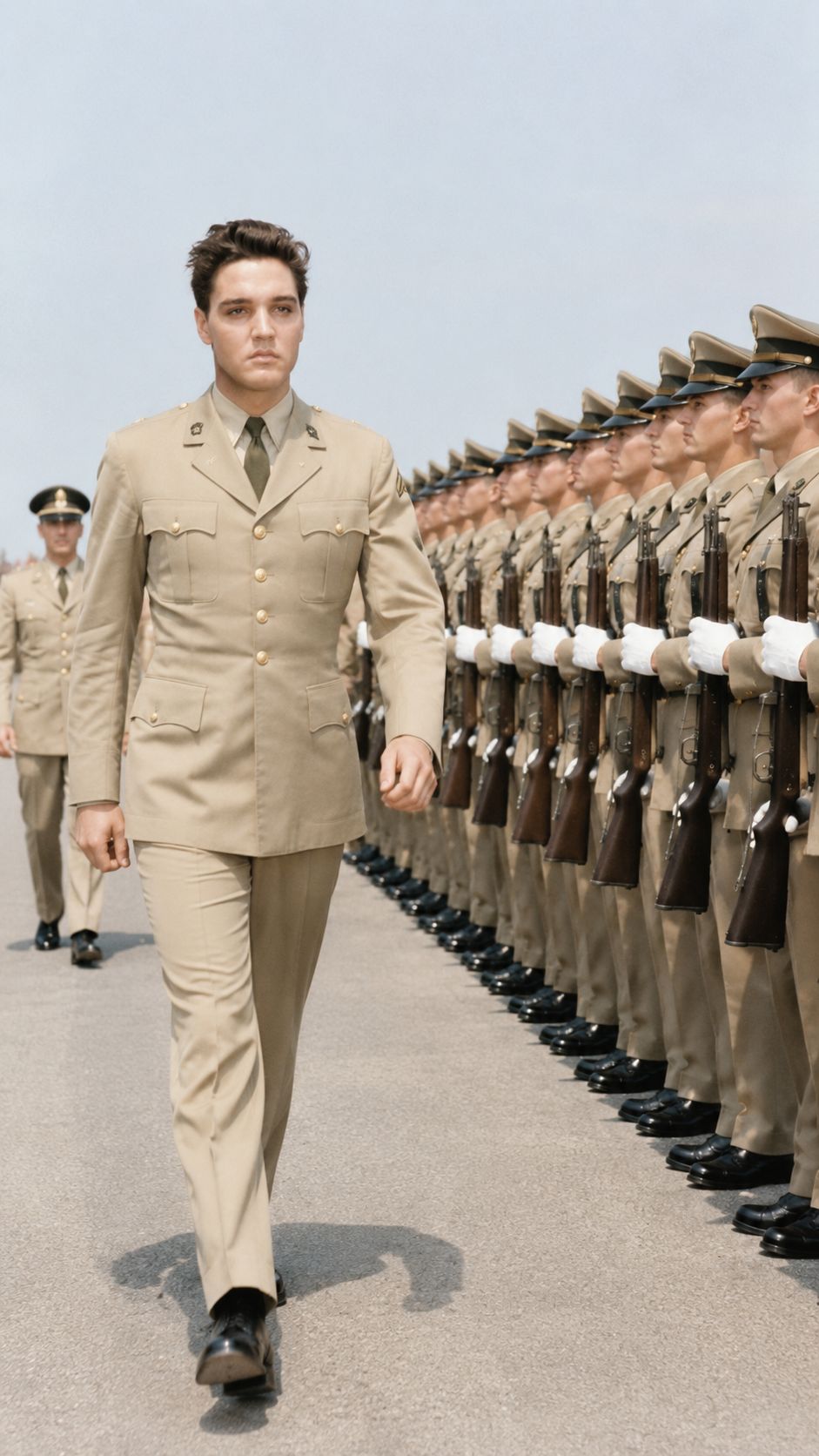
History rarely changes in a single moment. More often, it turns quietly, through decisions that seem ordinary at the time. For Elvis Presley, the defining turning point of his life and career did not happen on a concert stage, inside a recording studio, or beneath the bright lights of Hollywood. It happened when he exchanged fame for duty.
By 1958, Elvis Presley was already the most controversial and influential figure in popular music. To millions of young fans, he represented freedom, rebellion, and a new cultural revolution. To critics, he symbolized everything that was changing too quickly in America. His explosive blend of Rock and Roll, Country Music, Blues, and gospel had shattered traditional boundaries and created a phenomenon unlike anything the world had ever seen.
Then came the unexpected twist.
Instead of seeking special treatment, the biggest star in America entered the U.S. Army as an ordinary soldier. What followed between 1958 and 1960 became one of the most remarkable image transformations in entertainment history. The man once condemned as a dangerous rebel emerged as a respected national figure. His military service did more than reshape public opinion—it elevated him into an enduring symbol of American character, responsibility, and patriotism.
The years between 1958 and 1960 became far more than a pause in a music career. They became the chapter that transformed a cultural lightning rod into a national hero.
The Rebel America Could Not Ignore
Before entering military service, Elvis Presley stood at the center of a cultural earthquake.
The rise of Rock and Roll in the mid-1950s frightened many traditional observers. Television commentators criticized his performances. Religious leaders condemned his stage movements. Parents worried that his music represented a challenge to established values.
Yet the criticism only fueled his popularity.
Songs like Heartbreak Hotel, Hound Dog, Don’t Be Cruel, and Love Me Tender made him the defining voice of a generation. His roots in Country Music gave authenticity to his sound, while his embrace of rhythm and blues created a revolutionary fusion that changed American music forever.
By 1957, Elvis Presley was no longer simply an entertainer. He had become a symbol of youth rebellion.
Many believed his fame would place him above ordinary expectations.
They were wrong.
The nation expected a superstar to avoid military service. Instead, America watched a superstar walk directly toward it.
The Draft That Changed Everything
In March 1958, Elvis Presley was inducted into the U.S. Army.
The event instantly became international news.
At the height of his popularity, he could have pursued alternatives often available to celebrities. Instead, he chose to serve as a regular soldier. This decision shocked both supporters and critics.
For years, opponents had portrayed him as irresponsible, rebellious, and morally questionable. Military service challenged that narrative overnight.
Newspaper headlines suddenly focused less on controversy and more on character.
The public saw a young man willing to place national duty above personal convenience. That image resonated deeply during an era when military service carried enormous cultural significance.
For many Americans, this was the first glimpse of a different Elvis Presley—not the rebellious performer, but the disciplined citizen.
Personal Loss and Emotional Maturity
The military chapter was also marked by profound personal tragedy.
Just before beginning active service, Elvis Presley experienced the devastating loss of his beloved mother, Gladys Presley, in August 1958.
The emotional impact was immense.
Friends and associates later described this period as one of the most transformative experiences of his life. The grief forced him into a deeper emotional maturity that would later influence both his music and public image.
Military service arrived at a moment when he needed structure and purpose.
The combination of personal loss and military responsibility accelerated his transition from youthful superstar to adult public figure.
Behind the uniform was a grieving son learning how to carry fame, loss, and responsibility all at once.
Germany: The Unexpected Transformation
Much of Elvis Presley’s military service took place in West Germany.
Ironically, the distance from America helped strengthen his connection to it.
While stationed overseas, he was no longer surrounded by screaming fans every day. He experienced a version of life that resembled normalcy. He trained, worked, and lived alongside fellow soldiers.
Stories from fellow servicemen consistently emphasized his humility.
Despite being one of the most recognizable faces in the world, he reportedly avoided demanding special treatment. This behavior generated respect both within military circles and among the broader public.
The German years also introduced major developments in his personal life, including meeting Priscilla Beaulieu, who would later become Priscilla Presley.
More importantly, those years reshaped public perception.
The rebellious icon was becoming something far larger—a national symbol of discipline and responsibility.
The Impact on Country Music and American Culture
From a Country Music perspective, the military years hold special significance.
Unlike some rock stars who embraced anti-establishment identities, Elvis Presley demonstrated a connection to traditional American values deeply rooted within Country Music culture.
Country audiences often respected patriotism, faith, family, and duty. Military service reinforced these qualities in the public imagination.
As a result, resistance toward Elvis Presley softened across many conservative communities that had previously viewed him with suspicion.
His military service created a bridge between generations.
Older Americans who had once criticized Rock and Roll began to recognize admirable qualities beneath the controversy. Younger fans saw proof that fame did not exempt someone from responsibility.
This rare unifying effect strengthened his position across multiple audiences.
The result was not merely increased popularity—it was expanded legitimacy.
Returning Home a Different Man
When Elvis Presley returned to America in 1960, he encountered a dramatically different public landscape.
The rebellious newcomer of 1956 had become a respected national figure.
His first major post-Army recordings reflected a new level of sophistication. Songs such as It’s Now or Never showcased artistic growth and emotional depth. The raw energy of early Rock and Roll remained, but it was now accompanied by maturity and confidence.
The transformation was undeniable.
Critics who once dismissed him struggled to maintain the same arguments. Media coverage became noticeably more respectful. Mainstream America embraced him more completely than ever before.
His military service had accomplished something extraordinary.
Instead of damaging his career, it strengthened it.
Instead of diminishing his influence, it expanded it.
Instead of ending the phenomenon, it elevated him into legend.
The Legacy of the Military Turning Point
Looking back, the years from 1958 to 1960 represent one of the most important chapters in American music history.
Without military service, Elvis Presley would still have been a revolutionary artist. He would still have changed Rock and Roll and influenced Country Music forever.
But the Army years gave him something even more valuable: credibility beyond entertainment.
They transformed public perception.
They converted critics into admirers.
They turned controversy into respect.
Most importantly, they helped establish the enduring image of Elvis Presley as more than a performer. He became a cultural symbol capable of representing both innovation and tradition, rebellion and responsibility, stardom and service.
Few artists have ever experienced such a dramatic transformation. Fewer still have emerged stronger because of it.
The military turning point remains one of the defining examples of how character can reshape a legacy. Between 1958 and 1960, Elvis Presley did not simply serve his country. He rewrote his own story.
The rebel became a hero.
And the hero became immortal.