 By admin
 INTRODUCTION:
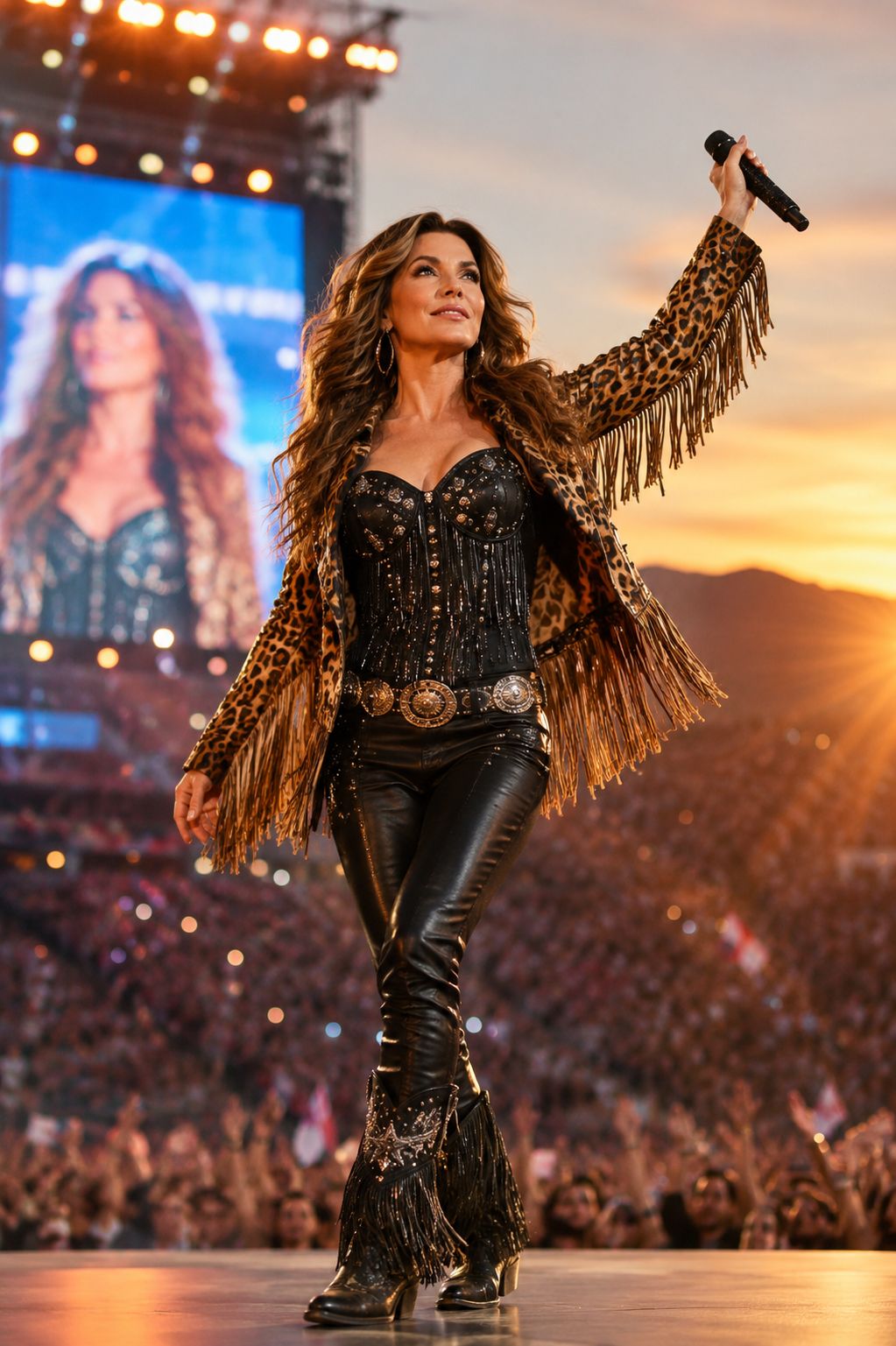
For every generation of country music fans, there is one artist who changes the conversation forever. Some do it with quiet elegance. Others do it by staying firmly within tradition.
Shania Twain did neither.
She walked into Nashville wearing leopard print instead of fringe, embraced pop hooks when many country purists demanded steel guitars, starred in glamorous music videos when others preferred simple performances, and dared to believe country music could belong on the world’s biggest stages.
The backlash was immediate.
Critics called her “too pop.”
Traditionalists questioned whether she even belonged in country music.
Radio programmers debated whether her records fit the format.
Yet while many argued about what country music should be, millions of listeners around the world had already made their decision.
They simply pressed play.
“Sometimes the biggest revolution isn’t loud. It’s a woman refusing to become who everyone else expects.”
A Childhood That Taught Her to Fight
Long before she became an international superstar, Shania Twain understood hardship better than fame.
Growing up in Timmins, Ontario, life was anything but glamorous. Financial struggles shaped her childhood, and music wasn’t merely entertainment—it became survival.
She performed in local clubs while still a child, often staying awake long past midnight because every performance helped support her family.
While other children dreamed about becoming stars, Shania learned responsibility.
That difficult upbringing quietly forged the determination that would later define her career.
When tragedy struck and both of her parents died in a devastating car accident, she suddenly found herself caring for her younger siblings instead of chasing record deals.
Many careers would have ended before they even started.
Hers was only beginning.
Nashville Wanted Another Country Singer
When Shania eventually arrived in Nashville, the expectations were simple.
Be traditional.
Dress conservatively.
Sing heartbreak songs.
Follow the formula.
The early 1990s country scene rewarded artists who stayed comfortably within familiar boundaries.
Then Shania met legendary producer and songwriter Robert John “Mutt” Lange.
Together, they imagined something few believed possible.
What if country music could sound bigger?
What if electric guitars met infectious pop melodies?
What if country songs could dominate not only Nashville—but London, Paris, Sydney, Tokyo, and New York?
To many insiders, the idea sounded ridiculous.
To Shania, it sounded exciting.
Breaking Rules One Song at a Time
Everything changed with The Woman in Me.
Instead of quietly fitting into country radio, Shania exploded onto it.
Hits like “Any Man of Mine”, “Whose Bed Have Your Boots Been Under?”, and “(If You’re Not in It for Love) I’m Outta Here!” carried unmistakable country roots—but they also featured irresistible pop energy.
Listeners couldn’t stop singing them.
Traditional critics couldn’t stop complaining.
Some insisted the production was too polished.
Others argued that country music was losing its identity.
Ironically, those same songs were introducing millions of completely new listeners to country music.
The audience wasn’t shrinking.
It was expanding.
Then Came Come On Over
If her previous success surprised Nashville, Come On Over completely shattered expectations.
Nobody—not even the industry’s biggest executives—could have predicted what happened next.
The album became a worldwide phenomenon.
It crossed genres.
It crossed generations.
It crossed borders.
Today, it remains one of the best-selling albums by any female artist in history and the best-selling country album ever released.
Songs like:
- “You’re Still the One”
- “From This Moment On”
- “That Don’t Impress Me Much”
- “Man! I Feel Like a Woman!”
became cultural landmarks.
People who had never listened to country music suddenly knew every lyric.
“She didn’t abandon country music. She introduced country music to people who never imagined they’d love it.”
The Fashion That Shocked Traditionalists
Music wasn’t the only thing creating controversy.
Shania’s image challenged long-held expectations.
She wore bold outfits.
She embraced glamour.
She performed with confidence rarely seen among female country stars of that era.
Some critics dismissed her appearance as overly commercial.
Others argued she relied too much on style.
Yet many fans—especially young women—saw something completely different.
Confidence.
Freedom.
Fearlessness.
For countless female artists who followed, Shania proved they didn’t have to choose between authenticity and femininity.
They could embrace both.
The Backlash Grew Louder
Success often attracts criticism.
Extraordinary success attracts even more.
Every chart-topping single seemed to reignite the same debate.
Was she really country?
Was she becoming pop?
Had Nashville lost its identity?
The conversations became endless.
Ironically, many of today’s biggest country artists blend rock, pop, R&B, and electronic influences without generating nearly the same level of controversy.
In many ways, Shania absorbed the criticism first.
She became the lightning rod that made future crossover success easier for others.
The Price of Global Fame
Behind the dazzling concerts and platinum records, another story unfolded.
Years later, Shania faced one of the most painful chapters of her life.
The collapse of her marriage shocked fans around the world.
Then came a devastating battle with Lyme disease and vocal complications that threatened the very instrument responsible for her success.
For someone whose identity centered on singing, losing confidence in her own voice became deeply personal.
She openly admitted fearing she might never perform again.
Many artists would have quietly disappeared.
Instead, Shania chose rehabilitation.
Patience.
Persistence.
Every note became a victory.
Reinvention Became Her Greatest Talent
Few performers successfully reinvent themselves across multiple decades.
Shania managed exactly that.
She returned to the stage.
Launched successful tours.
Headlined Las Vegas.
Released new music.
Connected with younger audiences discovering her classics through streaming platforms and social media.
Songs that once played on CDs now became viral soundtracks for entirely new generations.
Teenagers who weren’t even born during Come On Over suddenly danced to “Man! I Feel Like a Woman!”
That kind of longevity cannot be manufactured.
It must be earned.
Her Influence Is Everywhere
Listen closely to today’s country landscape.
You can hear traces of Shania almost everywhere.
Female artists confidently mixing genres.
Country songs with massive pop choruses.
Global arena tours.
Fashion-forward performances.
International marketing.
Crossover collaborations.
Many of today’s stars entered an industry already transformed by the doors she opened.
Even artists who sound nothing like Shania often benefit from opportunities she helped create.
The definition of country music became wider because she refused to stay inside a narrow one.
More Than Album Sales
Statistics only tell part of the story.
Yes, she sold tens of millions of albums.
Yes, she won Grammy Awards.
Yes, she became one of the most recognizable faces in music.
But perhaps her greatest achievement cannot be measured.
She changed what young women believed was possible.
She demonstrated that commercial success didn’t require abandoning personal ambition.
She proved vulnerability and confidence could exist together.
Most importantly, she showed that criticism doesn’t necessarily mean you’re making the wrong choices.
Sometimes it means you’re changing the game.
Why the Debate Never Truly Ends
Even today, discussions continue.
Was Shania more country?
More pop?
Something entirely different?
Perhaps that’s the wrong question.
Genres evolve.
Artists evolve.
Audiences evolve.
Country music has always changed—from the days of Hank Williams to Dolly Parton, from Garth Brooks to modern crossover stars.
Shania simply accelerated that evolution.
The resistance she encountered wasn’t unusual.
History often treats pioneers this way.
First they’re criticized.
Later they’re celebrated.
Eventually they’re recognized as indispensable.
The Legacy That Outlived the Controversy
Years after the loudest critics questioned her direction, one truth remains impossible to ignore.
The songs endure.
The concerts still sell.
The influence continues.
Millions who once discovered country music through Shania have since explored generations of artists before and after her.
Instead of weakening country music, she helped introduce it to audiences across continents.
That achievement extends far beyond awards or record sales.
It represents cultural transformation.
“Legends aren’t remembered because they followed the rules. They’re remembered because they changed them forever.”
When history tells the story of country music’s greatest innovators, Shania Twain will occupy a unique place.
She challenged expectations.
She endured relentless criticism.
She survived personal heartbreak.
She fought to reclaim her voice.
And through every triumph and setback, she remained unmistakably herself.
In the end, perhaps that is the most extraordinary lesson of all.
Shania Twain didn’t become a global icon by asking permission.
She became one by daring to rewrite the rules—and proving that sometimes the future of country music belongs to the artist bold enough to imagine it differently.
VIDEO: