 By admin
INTRODUCTION:
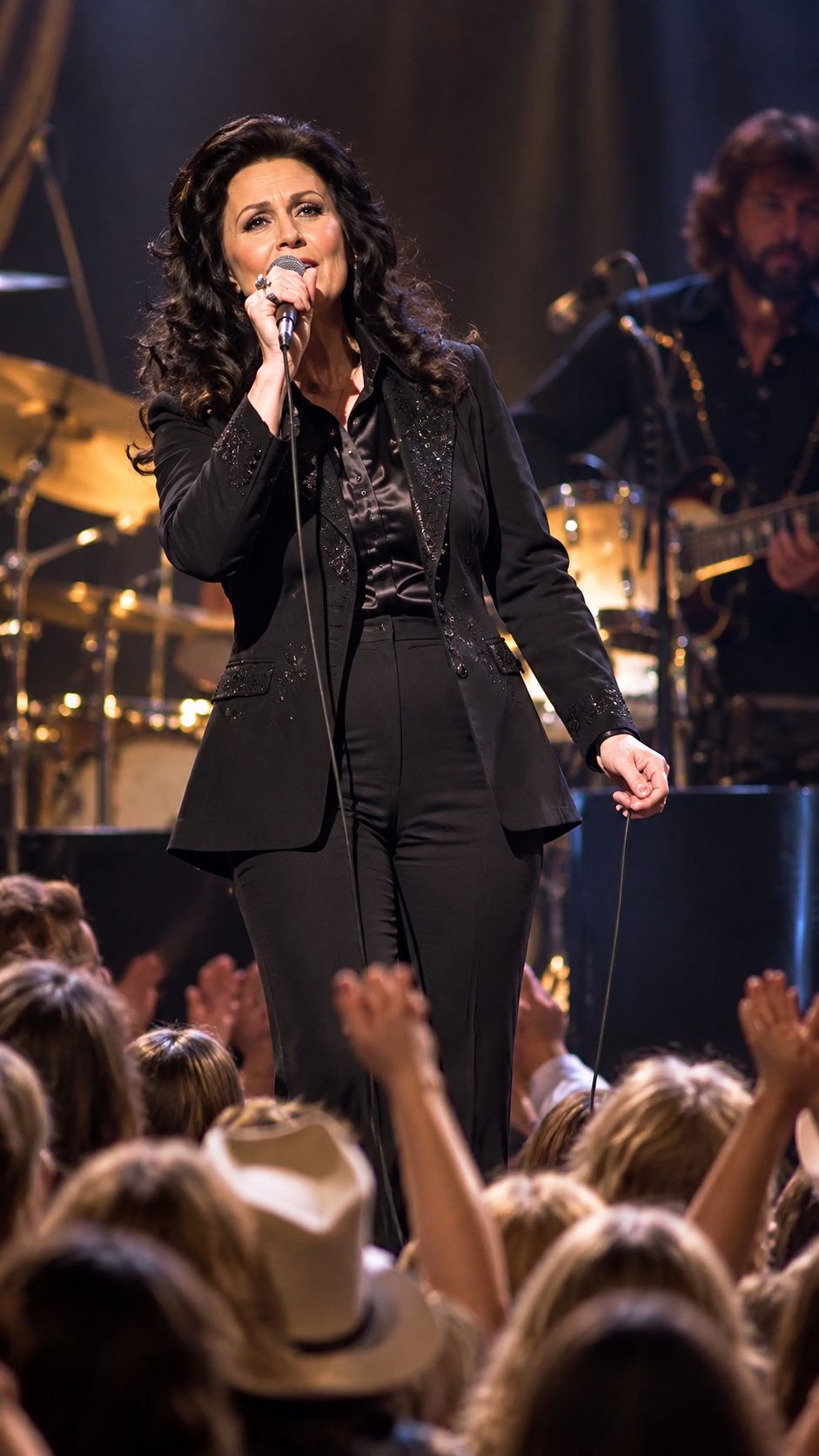
Before Loretta Lynn became one of country music’s most recognizable voices, she was a Kentucky girl raised in a world where family, work, faith, and perseverance were not abstract ideals—they were necessities. Born into a large family in the coal-mining community of Butcher Hollow, she grew up surrounded by people who understood hardship intimately and learned to find dignity in ordinary days. Those early experiences would quietly follow her throughout her remarkable life.
To millions of fans, Loretta Lynn was the fearless woman who sang about marriage, motherhood, heartbreak, ambition, and the complicated realities of being a woman. Yet behind the stage lights was another Loretta: a daughter who remembered where she came from, a mother who carried family responsibilities into the center of her career, and a storyteller who never completely separated success from the humble world that shaped her.
Her family values were not built in glamorous rooms or on television sets. They were formed around kitchen tables, difficult decisions, long days, close relationships, and lessons passed from one generation to another.
That quiet foundation became one of the most powerful forces behind her music—and perhaps one of the biggest reasons her stories still feel so deeply human.
The Mountain Childhood That Became Her Moral Compass
The story of Loretta Lynn begins far away from the polished stages of Nashville.
She was born Loretta Webb in 1932 in Butcher Hollow, Kentucky, one of eight children in a family whose life was shaped by coal mining and modest circumstances. Her father, Ted Webb, worked as a coal miner, while her mother, Clara Marie Webb, cared for a large household.
Growing up in such an environment meant learning early that nothing should be taken for granted.
There was little room for extravagance. What mattered was having enough food, having people around you when life became difficult, and understanding that every member of a family had responsibilities.
Those lessons became deeply embedded in Loretta’s personality.
Her definition of wealth was never simply about money. It was about having people you could count on when life became hard.
That perspective later became visible in the way she talked about home and family. Even after fame transformed her circumstances, the emotional language of her childhood remained remarkably consistent.
She could become a country superstar without pretending she had forgotten the girl from Kentucky.
Family Was Never Separate From Her Music
One of the most fascinating aspects of Loretta Lynn’s career is how frequently family life appeared in her artistic world.
She did not treat motherhood, marriage, poverty, conflict, or domestic responsibility as subjects beneath serious music. Instead, she turned them into stories.
That approach helped distinguish her from many performers of her generation.
Songs such as Coal Miner’s Daughter were powerful because they did more than describe where she came from. They transformed personal memory into cultural history.
The song became a portrait of a family, but also a portrait of an entire way of life.
The coal mine, the hardworking father, the mother holding a household together, children growing up with limited resources—these details gave listeners something recognizable. Even people who had never seen Butcher Hollow could understand the emotional world she described.
And that is where Loretta Lynn’s family values became part of her artistic identity.
She understood that ordinary people had extraordinary stories.
Her Mother’s Influence Stayed With Her
For Loretta, family lessons were not learned only from hardship. They were also learned from watching her mother.
Clara Webb had the enormous responsibility of raising eight children. That kind of household required patience, endurance, organization, and emotional strength.
Loretta later carried many of those qualities into her own life.
She became a mother while still very young, and motherhood became one of the defining experiences of her adulthood. Her life was anything but simple, but the importance of children and family remained central to her identity.
This is an important part of understanding her legacy.
Loretta Lynn did not become famous first and then discover the importance of family. She entered fame already carrying a powerful family-centered worldview.
The spotlight did not create those values.
Her childhood did.
A Complicated Life Made Her More Protective of Home
Loretta’s adult life was complicated. Her marriage to Oliver “Doolittle” Lynn was marked by both love and serious difficulties, and she often transformed those contradictions into songs.
That honesty was one reason audiences trusted her.
She did not present family life as perfect.
Instead, she showed that love and frustration could exist in the same household, that marriage could contain tenderness and pain, and that mothers could feel exhausted while still loving their children fiercely.
This made her work especially meaningful to women who rarely heard their private experiences represented so directly in popular music.
The family values she inherited were therefore not simplistic.
They were resilient.
They were about staying connected even when life was messy.
They were about remembering where you came from while trying to build something better.
Motherhood Became Part of Her Legacy
As Loretta Lynn’s career expanded, she became the mother of six children, including Patsy Lynn Russell, Peggy Lynn, Clara “Cissie” Lynn, Ernest Ray Lynn, Jack Benny Lynn, and Betty Sue Lynn.
Balancing motherhood with an extraordinary recording and touring career was never easy.
Yet her children remained deeply connected to the story of her life.
That family connection also helped reinforce something important about Loretta’s worldview: success was meaningful, but it was not the only measure of a life.
There was something beyond applause.
There was home.
There were children.
There were memories.
There were responsibilities that existed before the audience arrived and remained after the audience went home.
For someone raised in a large Kentucky family, that distinction mattered.
She Never Needed to Pretend Her Past Was Perfect
Another reason Loretta Lynn remains so compelling is that she never needed to turn her childhood into a fairy tale.
Her upbringing was difficult.
Her family struggled financially.
Life in a coal-mining community could be unforgiving.
Yet she spoke about that past with pride because hardship had given her something that fame could not manufacture: perspective.
Her childhood taught her how to recognize the value of small things.
A family meal.
A familiar voice.
A hardworking parent.
A child coming home.
A house filled with people.
These details may sound ordinary, but they became the emotional vocabulary of her music.
The Quiet Side of Loretta Lynn
Fans often remember Loretta Lynn for her confidence, humor, sharp observations, and willingness to challenge expectations.
But there was another side to her.
It was quieter.
It was the woman who remembered the mountains.
The daughter who carried her parents’ influence.
The mother who understood the weight of responsibility.
The storyteller who knew that the most powerful memories were often not the spectacular ones.
They were the small ones.
This quieter Loretta helps explain why her music could feel so intimate.
She did not need elaborate mythology.
She had memories.
And memories were enough.
Why Her Family Values Still Matter
The enduring power of Loretta Lynn comes partly from the fact that her story represents something larger than one extraordinary career.
She represented people who grew up without much but learned to value what could not be purchased.
She represented parents who worked exhausting jobs so their children might have more opportunities.
She represented mothers trying to hold families together while navigating their own dreams.
And she represented the complicated truth that family can be both a source of comfort and a source of pain.
Her music allowed those contradictions to exist without apology.
That may be her greatest contribution.
Loretta Lynn showed that a person’s beginnings do not have to disappear when success arrives. They can become the foundation of everything that follows.
Her childhood in Kentucky was not simply the opening chapter of her biography.
It became the emotional blueprint for the woman she would become.
A Legacy Built on Remembering Where You Came From
When people hear Coal Miner’s Daughter, they often hear more than a famous country song.
They hear a daughter remembering her father.
They hear a family surviving with limited means.
They hear a woman looking backward without embarrassment.
And they hear the unmistakable voice of someone who understood that personal history could become universal.
That is why the quiet side of Loretta Lynn’s life deserves just as much attention as her legendary career.
The awards, records, stages, and headlines tell only part of the story.
The deeper story began in Butcher Hollow.
It began with parents, siblings, hard work, responsibility, and the simple understanding that family mattered.
And perhaps that is the most beautiful part of her legacy.
Loretta Lynn became a legend without abandoning the values of the girl she once was.
She carried her childhood with her.
She carried her family with her.
And through her songs, she carried that world into the lives of generations who had never stepped foot in the Kentucky mountains—but somehow recognized themselves there.
VIDEO: