 By admin
 INTRODUCTION:
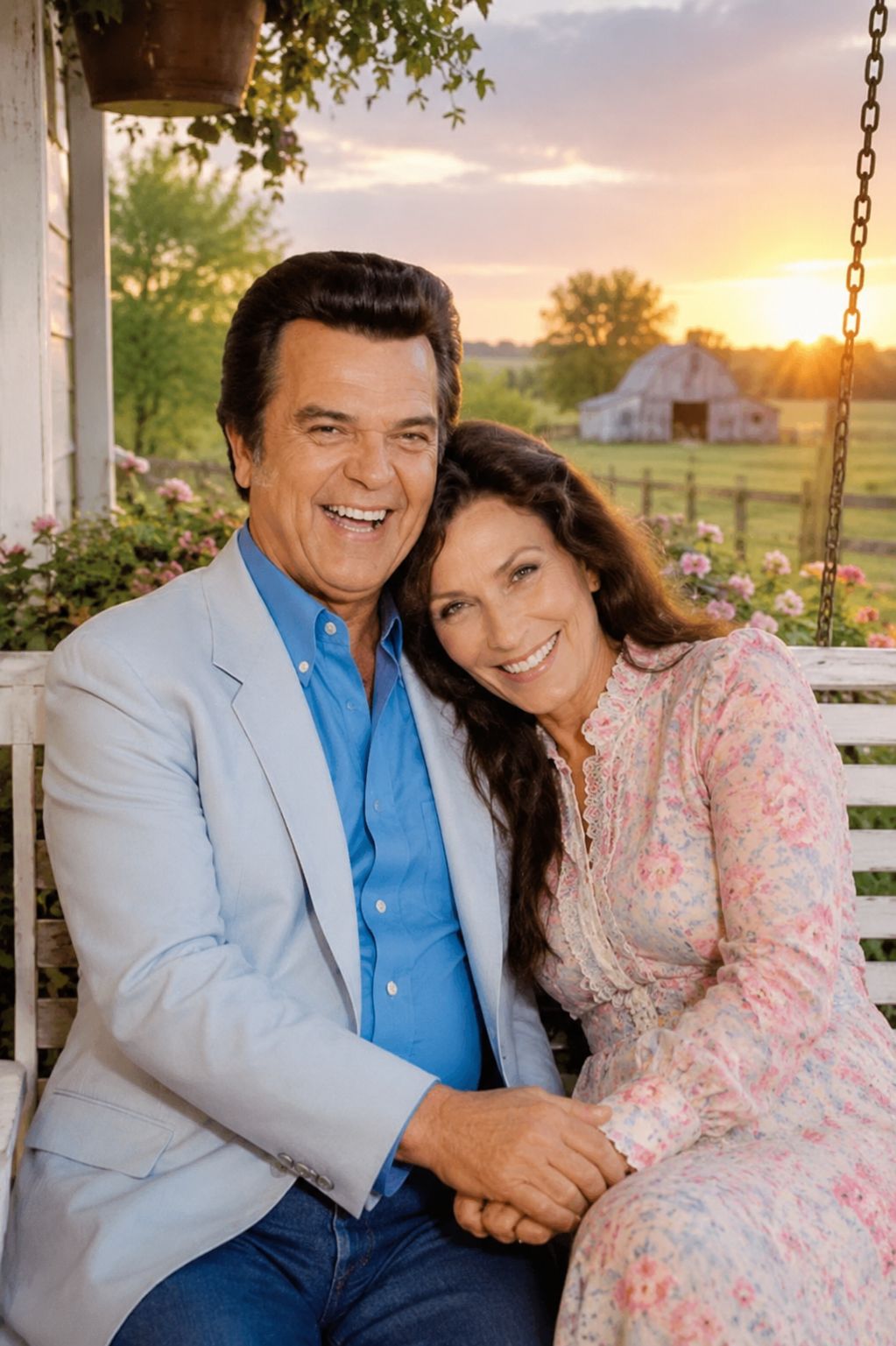
For decades, country music fans have whispered the same question whenever Conway Twitty and Loretta Lynn appeared together:
Was there something more between them?
It is easy to understand why people wondered.
Put Conway Twitty and Loretta Lynn on a stage together, and the line between performance and reality seemed to disappear. Their voices carried the tension of two people who knew exactly where to hurt each other, exactly how to comfort each other, and exactly when to let silence say what words could not.
Their songs were filled with secret meetings, forbidden attraction, broken marriages, jealousy, temptation, and impossible choices.
To millions of listeners, it sounded too real to be acting.
But perhaps that is where the greatest misconception began.
The deepest secret of Conway and Loretta was not a hidden romance.
It was the choice they made to protect the music, protect their families, and protect a friendship that became one of the most extraordinary partnerships country music ever witnessed.
And once you understand that choice, their story becomes even more moving.
The Rumor Was Born From the Music
The partnership began almost naturally.
Lynn later recalled that she and Twitty started singing together in dressing rooms while they were overseas with a touring group. When they returned home, they decided to see what producer Owen Bradley thought of their voices together. Bradley loved what he heard and encouraged them to record.
That simple experiment would become legendary.
Between 1971 and 1988, the pair released 11 studio albums together and produced a string of major country hits. They won the Country Music Association Vocal Duo of the Year award four consecutive times from 1972 through 1975.
But the songs themselves created a problem.
They didn’t sound like two coworkers reading lyrics from a page.
They sounded like two people living inside the story.
Songs such as “After the Fire Is Gone” placed them in the roles of two people tempted by a forbidden relationship. Other recordings pushed the emotional boundaries even further.
The performances were so convincing that audiences began to believe the characters they heard were actually Conway and Loretta.
Loretta eventually had to address the rumors herself.
“Everybody thought me and Conway had a thing going.”
Then came the clarification that should have ended the speculation:
“But that’s the farthest from the truth.”
According to Lynn, they were friends, not lovers.
That distinction matters.
Because what they created together did not require a secret affair to be powerful.
Their chemistry was musical.
And it was extraordinary.
The Choice That Changed Everything
Perhaps the most important decision Conway and Loretta made was not to turn their chemistry into something it wasn’t.
They could have allowed the rumors to become part of their public identity.
They could have encouraged the speculation.
They could have blurred the boundaries between their stage characters and their real lives.
Instead, they kept coming back to the music.
That choice allowed their partnership to survive.
Loretta’s husband, Oliver “Doolittle” Lynn, reportedly loved Conway and considered him a close friend. Loretta later remembered how much Conway and Doolittle enjoyed one another’s company, especially while traveling.
That detail changes the entire emotional picture.
Imagine the backstage world behind those supposedly scandalous songs.
The audience hears Conway and Loretta singing about forbidden love.
But behind the curtain were friendships, marriages, families, musicians, producers, jokes, rehearsals, and ordinary moments.
The fantasy belonged to the record.
The friendship belonged to real life.
And perhaps that separation was exactly why the partnership lasted.
They Knew How to Make Fiction Feel Like Truth
This is where Conway and Loretta demonstrated their genius.
Great country music often works because it tells the truth through fiction.
A song doesn’t have to be autobiographical to make someone cry.
A singer doesn’t have to experience every heartbreak personally to convince you that heartbreak is real.
Conway and Loretta understood that better than almost anyone.
Their voices created a conversation.
Conway’s smooth, controlled baritone could sound confident one moment and wounded the next.
Loretta’s voice could be playful, defiant, vulnerable, or furious.
Together, they created characters who seemed to have history.
That was the magic.
They weren’t necessarily revealing their private lives.
They were revealing something much more universal:
what people feel when love becomes complicated.
“After the Fire Is Gone” Became More Than a Song
Few recordings demonstrate this better than “After the Fire Is Gone.”
The song reached No. 1 on the country chart in 1971 and became the duo’s first chart-topping hit.
Its premise was deliberately dangerous: two people drawn together because something has disappeared from their marriages.
In another singer’s hands, the song might have sounded like a conventional cheating narrative.
With Conway and Loretta, it felt intimate.
Their voices seemed to be having a private conversation that the listener had accidentally overheard.
That was precisely why the rumors became so persistent.
But Loretta knew what audiences sometimes forgot:
actors can portray temptation without being tempted.
Singers can perform heartbreak without being heartbroken.
And two artists can have extraordinary chemistry without being romantically involved.
That may sound obvious today.
But in the golden era of country duets, the emotional illusion could be incredibly powerful.
The Real Secret Was Trust
There is another way to look at their relationship.
The secret wasn’t passion.
It was trust.
To sing those songs convincingly, both performers had to trust the other person completely.
Loretta had to know Conway would give her space.
Conway had to know Loretta would challenge him.
Neither could overpower the other.
They had to listen.
They had to react.
They had to leave room for the other voice to become part of the story.
That is difficult to achieve.
And it is one reason their recordings still feel alive decades later.
As Garth Brooks and Trisha Yearwood have discussed, the power of Lynn and Twitty’s duets came from an energy that neither artist could create alone.
That energy is what fans remember.
Not the rumor.
They Were Friends Until the End
The most heartbreaking chapter of their story came after their great run as a recording partnership.
Their duet career eventually slowed as both artists concentrated on their enormous solo careers. Yet the friendship remained.
And then came June 1993.
Conway Twitty became seriously ill while in Missouri.
By extraordinary coincidence, Loretta Lynn was already at a hospital in Springfield because her husband was receiving treatment.
Loretta later recalled seeing Conway arrive and rushing downstairs because she assumed he was coming to visit Doolittle.
Instead, she discovered that Conway himself was gravely ill.
He died that night.
The story has an almost unbearable quality to it.
After years of singing about impossible goodbyes, Loretta suddenly faced a real one.
No microphone.
No script.
No fictional character.
No song to hide behind.
Just the devastating reality of losing someone she considered a friend.
Loretta later described Conway as one of the few people in the music business her husband truly cared about.
And that may tell us more about Conway and Loretta than any rumor ever could.
The Friendship Was the Part Nobody Needed to Invent
Country music loves legends.
It loves secrets.
It loves stories that begin with, “What really happened between them?”
But sometimes the truth is more beautiful than the rumor.
Conway Twitty and Loretta Lynn did not need to secretly be lovers to create unforgettable music.
They needed talent.
Trust.
Respect.
Timing.
And a willingness to step into fictional worlds together while keeping their real lives separate.
Their songs allowed audiences to imagine forbidden love.
Their friendship demonstrated something more difficult:
loyalty without romance.
And that may be the deepest secret of all.
Why Their Story Still Matters
Today, when clips of Conway and Loretta performances circulate online, younger listeners can still feel the same electricity audiences felt decades ago.
The voices still sound intimate.
The glances still look meaningful.
The lyrics still sound dangerous.
The chemistry still feels almost impossible to explain.
But perhaps that is the point.
The greatest performers make us forget we are watching a performance.
Conway and Loretta were masters of that illusion.
They could make millions believe they were witnessing a private relationship when they were actually witnessing two extraordinary artists completely committed to their craft.
And when the final note faded, the truth remained.
They were friends.
They were partners.
They were musical equals.
And they created something that neither could have created alone.
The rumor made their story sensational. The truth made it unforgettable.
Conway Twitty died in 1993.
Loretta Lynn continued carrying his memory and their music with her for decades afterward, until her own death in 2022.
What remains is not a scandal.
It is a catalog.
Eleven studio albums.
Multiple No. 1 records.
Four consecutive CMA Duo of the Year awards.
And a body of music that still convinces listeners that something extraordinary was happening whenever their voices met.
Maybe that is why the rumors never completely disappeared.
Because their music was simply too convincing.
But perhaps we should stop asking whether Conway and Loretta secretly loved each other.
The better question is this:
How did two people who were not lovers create some of the most believable love songs in country music history?
The answer is talent.
It is trust.
It is friendship.
And above all, it is the courage to understand the difference between the life you live and the story you sing.
That was the choice that changed everything.
And decades later, Conway Twitty and Loretta Lynn are still proving that sometimes the most powerful love story in music isn’t a romance at all.
Sometimes, it is the story of two friends who trusted each other enough to create something timeless.
VIDEO: