 By admin
 INTRODUCTION:
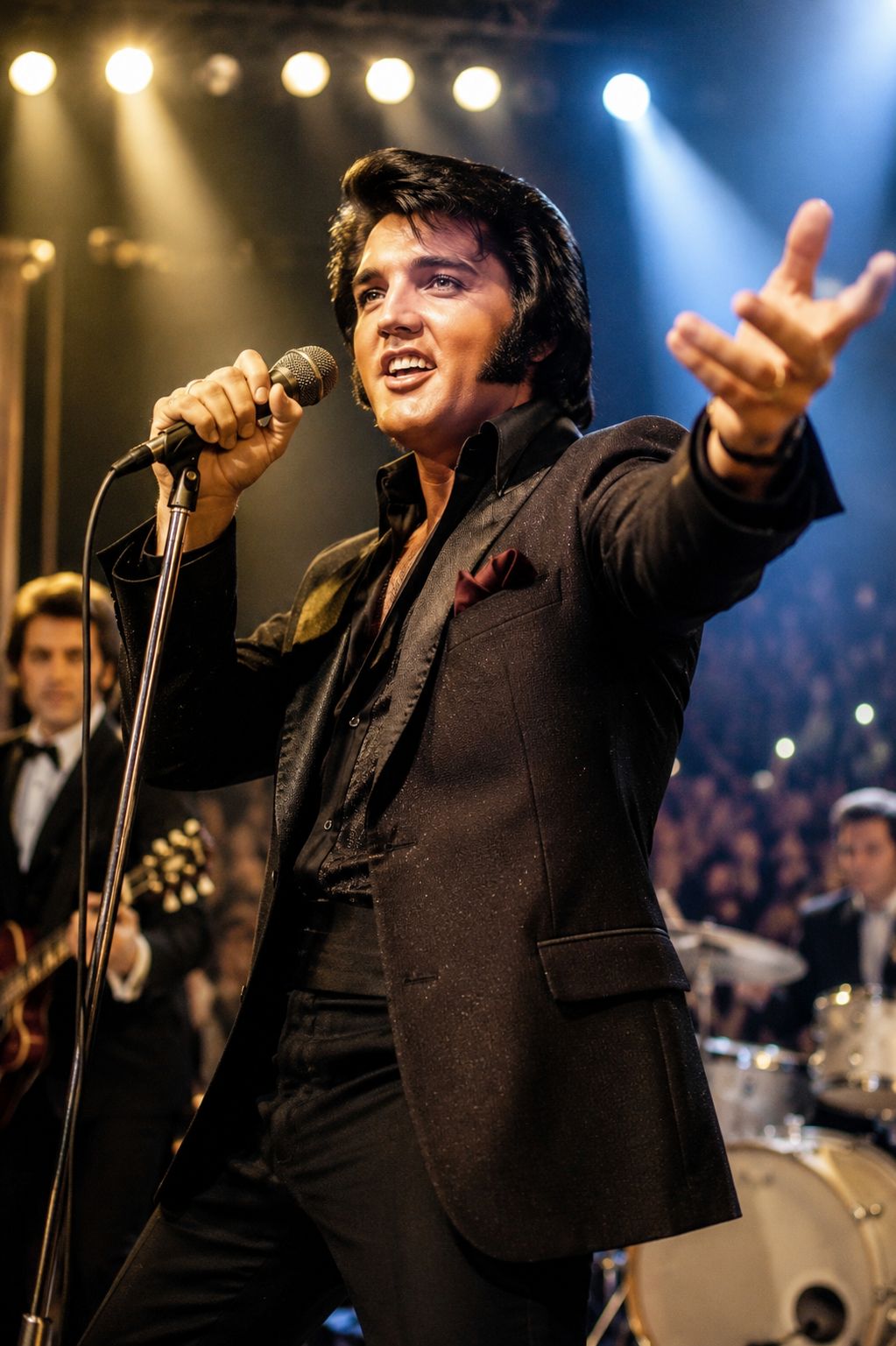
There are moments in music history that feel less like performances and more like resurrections.
For Elvis Presley, the year was 1968.
The world had changed. Rock and roll had evolved. New stars dominated the charts. And the man once crowned “The King” was beginning to look more like a relic from another era.
A decade earlier, Elvis had ignited a cultural revolution. With a curl of his lip, a shake of his hips, and a voice unlike anything America had ever heard, he transformed popular music forever. Teenagers worshipped him. Parents feared him. The music industry chased him.
But by the late 1960s, the landscape was unrecognizable.
The Beatles had conquered the world. Bob Dylan had redefined songwriting. Psychedelic rock was exploding. Young audiences were demanding authenticity, rebellion, and artistic depth.
Meanwhile, Elvis was trapped.
For years, he had been locked into a grueling Hollywood machine, starring in one formulaic movie after another. The films made money, but they slowly eroded the mystique that had once made him untouchable. Critics mocked him. Fans worried. Even some of his closest supporters quietly wondered if his greatest days were already behind him.
Newspapers openly questioned whether Elvis still mattered.
Some believed the King’s reign was over.
“Elvis had become a caricature of himself in the eyes of many critics. They thought he was finished.”
The criticism cut deeper than most people realized.
Behind the fame, Elvis understood exactly what was happening. He knew he had drifted away from the raw, electrifying performer who had once changed history. He missed the energy. He missed the music. Most of all, he missed connecting directly with an audience.
He wanted his crown back.
But reclaiming it would require risking everything.
In 1968, NBC approached Elvis about appearing in a television special. Initially, the network envisioned a safe, family-friendly Christmas program filled with holiday songs and polished production numbers.
It sounded predictable.
Safe.
Forgettable.
And Elvis wanted no part of it.
This was his chance to prove he still had something to say.
Producer Steve Binder quickly recognized that beneath Elvis’s movie-star image still lived the dangerous, passionate artist who had stunned America in the 1950s. Binder encouraged him to abandon the formula and simply be himself.
It was a radical idea.
No movie costumes.
No scripted Hollywood persona.
Just Elvis.
At first, there was fear.
Years had passed since Elvis had performed live in front of a substantial audience. He worried whether people still cared. He questioned whether he could still command a stage. Even the idea of returning to his roots felt intimidating.
What if the critics were right?
What if he had lost it?
Those doubts haunted him during rehearsals.
Yet something remarkable began to happen.
As rehearsals progressed, the old fire returned.
Musicians who worked on the project later recalled witnessing a transformation. The shy, uncertain entertainer gradually disappeared, replaced by the fearless performer who had once electrified audiences on the Louisiana Hayride and shocked television viewers nationwide.
The turning point came during an informal jam session.
Seated in a small circle with old friends Scotty Moore and D.J. Fontana, Elvis picked up a guitar and began singing.
No elaborate set.
No choreography.
No safety net.
Just music.
What unfolded became one of the most iconic moments in television history.
Dressed entirely in black leather, Elvis sat surrounded by fans and delivered stripped-down, emotionally charged performances of classics like “Heartbreak Hotel,” “Lawdy Miss Clawdy,” and “Baby What You Want Me to Do.”
The atmosphere crackled with electricity.
You could see it in his eyes.
You could hear it in his voice.
The swagger was back.
The danger was back.
The King was back.
“For the first time in years, audiences weren’t watching a movie star pretending to be Elvis Presley. They were watching the real Elvis.”
Viewers were stunned.
The special, later known simply as the “’68 Comeback Special,” aired on December 3, 1968, and immediately became a cultural phenomenon.
Millions tuned in.
Many expected nostalgia.
What they witnessed instead was reinvention.
Elvis wasn’t merely revisiting his past. He was reclaiming his identity.
One performance, in particular, encapsulated everything he was fighting for.
Near the conclusion of the special, Elvis debuted a powerful new song: “If I Can Dream.”
Inspired by the social turmoil of the era and the recent assassinations of Martin Luther King Jr. and Robert F. Kennedy, the song carried a message of hope, unity, and longing.
Its lyrics resonated deeply.
Standing beneath dramatic lighting, dressed in a white suit, Elvis delivered the performance with extraordinary intensity. Sweat poured down his face. Emotion radiated from every note.
He wasn’t acting.
He wasn’t playing a role.
He was baring his soul.
“There must be lights burning brighter somewhere…”
Those words seemed to speak not only to America but to Elvis himself.
For years, he had searched for that brighter place.
Now, he had found it.
Observers later said they could see tears in his eyes as he reached the song’s climactic ending.
When he finished, there was no doubt.
The comeback had succeeded.
Critics who had dismissed him suddenly changed their tune. Reviewers praised the rawness, passion, and authenticity of the performance. Fans old and new embraced him once again.
Most importantly, Elvis rediscovered his confidence.
The television special reignited his artistic spirit and paved the way for his return to live concerts. Within months, he would begin the legendary Las Vegas engagements that reestablished him as one of the world’s most compelling live performers.
The success also reminded the industry of a timeless truth: genuine talent never truly disappears.
Sometimes, it simply waits for the right moment to rise again.
Looking back, the greatest triumph of the 1968 comeback wasn’t the ratings, the acclaim, or even the revival of Elvis’s career.
It was courage.
Elvis could have continued making movies and protecting his image. He could have chosen comfort over vulnerability.
Instead, he chose risk.
He chose honesty.
He chose music.
And in doing so, he gave the world one of the greatest comeback stories ever told.
Today, more than half a century later, the “’68 Comeback Special” remains essential viewing—not because it preserved a legend, but because it revealed the human being behind the legend.
A man facing doubt.
A man confronting failure.
A man refusing to surrender.
Because sometimes, the most extraordinary victories happen when the world has already counted you out.
And on that unforgettable night in 1968, Elvis Presley didn’t just reclaim his throne.
He reminded the world why he had earned it in the first place
VIDEO: