 By admin
 INTRODUCTION:
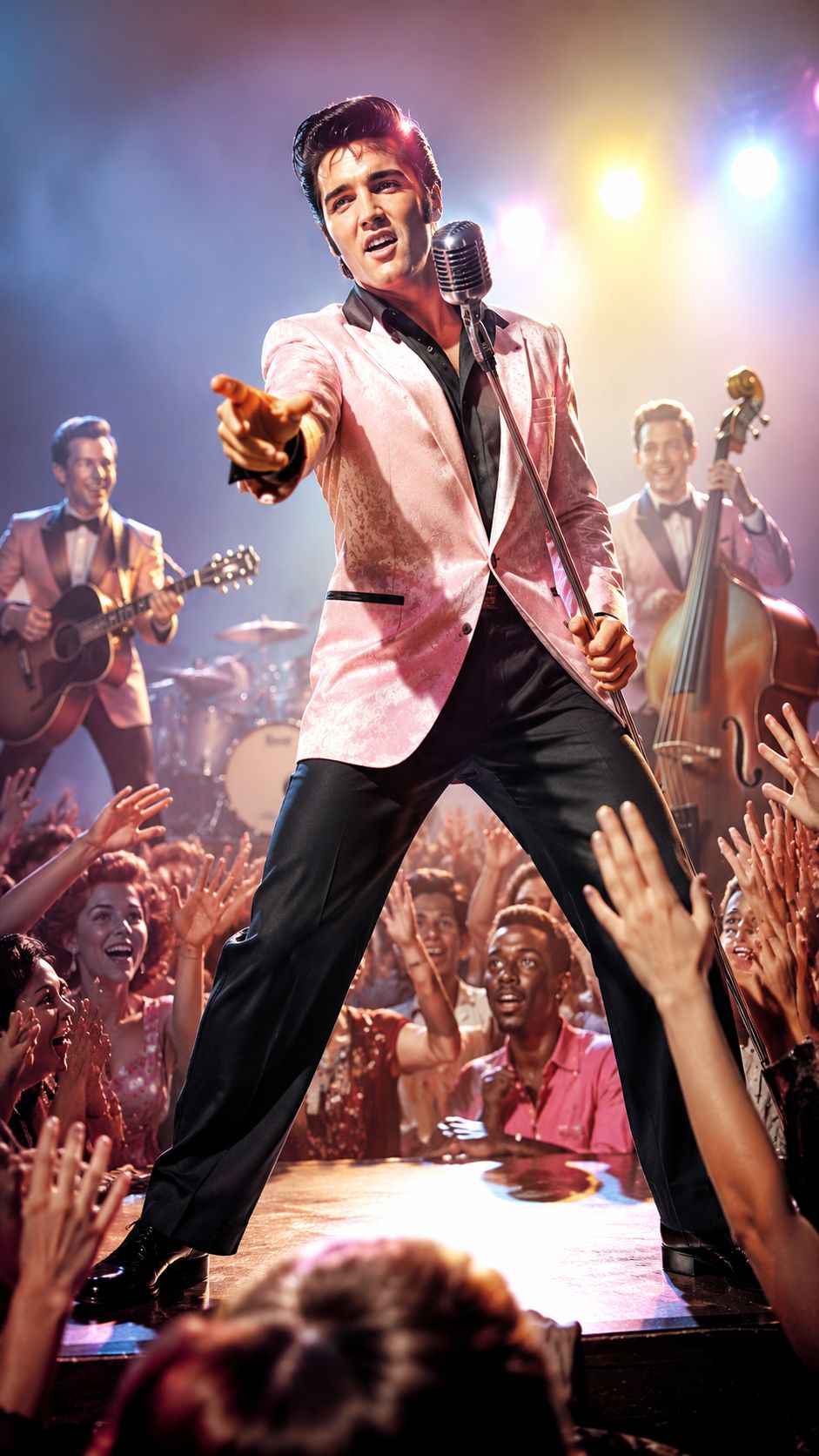
The 1950s were a decade of strict boundaries in America. Neighborhoods were divided. Radio stations were divided. Even music itself was divided. White audiences listened to one kind of sound, while Black audiences embraced another. The walls between these worlds seemed permanent.
Then a young man from Memphis stepped into a recording studio and changed everything.
When Elvis Presley emerged onto the national stage, the impact was not gradual—it was explosive. His arrival felt less like the debut of a singer and more like the detonation of a cultural force. America had never seen anything quite like him. He possessed the emotional storytelling of Country Music, the raw energy of Rhythm and Blues, the spiritual passion of gospel, and a stage presence that electrified every room he entered.
To millions of young listeners, Elvis Presley represented freedom. To many parents, he represented rebellion. To the music industry, he represented uncertainty. Yet beneath the controversy was something far more significant: a revolutionary blending of musical traditions that had long been separated by race.
The story of Elvis Presley is not simply the story of a superstar. It is the story of how music challenged social barriers, transformed popular culture, and helped reshape the American identity. His rise marked a turning point that still echoes through modern music today.
The Musical Landscape Before Elvis
Before Elvis Presley, the American music industry largely operated within racial lines. White audiences were marketed Country Music, western swing, and traditional pop. Black audiences primarily consumed Rhythm and Blues, blues, jazz, and gospel.
This separation was deeply rooted in the social realities of the era. Radio stations often programmed music according to race. Record labels categorized artists accordingly. The industry maintained invisible walls that discouraged crossover success.
Yet the sounds themselves were already influencing one another.
In the American South, especially around Memphis, young musicians grew up hearing multiple traditions. Church choirs sang gospel hymns. Local jukeboxes blasted blues records. Country musicians performed at community gatherings. These influences mixed naturally among listeners even when the business world tried to keep them apart.
Elvis Presley absorbed all of it.
He listened to Black blues artists, gospel quartets, and country singers with equal fascination. Rather than choosing one tradition, he internalized them all.
That combination would become his greatest weapon.
He did not merely sing songs. He became a bridge between musical worlds that America had spent decades keeping apart.
The Sun Records Revolution
The turning point arrived at Sun Records, where producer Sam Phillips was searching for a new sound.
Phillips famously believed there was tremendous commercial potential in a white performer who could capture the emotional intensity and rhythmic feel of Black music. When Elvis Presley entered the studio, he found exactly what he had been seeking.
The breakthrough came with “That’s All Right”.
The recording sounded unlike anything dominating mainstream radio. It carried the spirit of Rhythm and Blues while maintaining elements familiar to fans of Country Music. The result was energetic, unpredictable, and impossible to ignore.
Listeners were confused—in the best possible way.
Many radio audiences initially assumed the singer was Black. Others could not categorize the music at all. The record challenged existing assumptions about what American popular music could sound like.
The walls were beginning to crack.
Blending Rhythm and Blues with Country
What made Elvis Presley revolutionary was not simply his voice. It was his ability to combine traditions without making either feel artificial.
His phrasing reflected the influence of Black blues performers. His storytelling instincts came from Country Music. His vocal power drew heavily from gospel traditions. Together, these elements created a style that felt fresh and authentic.
Songs such as “Heartbreak Hotel”, “Blue Suede Shoes”, and “Hound Dog” showcased this fusion.
“Heartbreak Hotel” carried emotional depth and loneliness rooted in country storytelling.
“Hound Dog”, originally associated with Black blues traditions, exploded with a new level of mainstream visibility through Elvis Presley.
“Blue Suede Shoes” blended youthful swagger with a driving rhythm that appealed across demographic lines.
This was more than musical innovation.
It was cultural disruption.
Every record felt like a challenge to the old rules. Every performance suggested that music could unite audiences who had been separated for generations.
Breaking Racial Barriers Through Sound
The phrase “breaking racial barriers” is often used casually today, but in the context of the 1950s, it carried enormous significance.
America was living through segregation. Social integration remained deeply controversial across much of the country. Music reflected those realities.
Yet young listeners often cared less about categories than older generations did.
Teenagers who heard Elvis Presley were drawn to the excitement, passion, and authenticity of the music. Many discovered the roots of Rhythm and Blues through his recordings. Others became curious about artists whose styles had influenced him.
Critics continue to debate the complexities of cultural exchange, appropriation, and commercial success. Those discussions remain important. But it is equally true that Elvis Presley introduced millions of white listeners to sounds that had originated in Black musical communities.
His success expanded the audience for those influences and helped accelerate broader musical integration.
The transformation would eventually shape the future of Rock and Roll.
The Birth of a Cultural Earthquake
The impact of Elvis Presley extended far beyond radio playlists.
His television appearances became national events. His movements on stage generated controversy. Religious leaders criticized him. Commentators questioned his influence on young people.
The backlash only increased his popularity.
For teenagers, Elvis Presley symbolized a new generation unwilling to accept inherited limitations. He challenged expectations regarding appearance, behavior, and musical taste.
The emergence of Rock and Roll became inseparable from this spirit of rebellion.
Artists who followed—including Jerry Lee Lewis, Johnny Cash, Chuck Berry, and Little Richard—helped build a movement that reshaped popular culture.
But Elvis Presley became its most visible symbol.
Like an atomic blast, the shockwave spread in every direction.
Fashion changed.
Radio changed.
Television changed.
Music changed forever.
Why Country Music Owes Part of Its Modern Identity to Elvis
For students of Country Music, the significance of Elvis Presley cannot be overstated.
Although he became known globally as the King of Rock and Roll, his artistic DNA was deeply connected to country traditions. His storytelling, emotional delivery, and connection to Southern culture reflected foundations that came directly from Country Music.
By blending country elements with Rhythm and Blues, he expanded the possibilities of what country-influenced music could achieve commercially.
Future generations of artists—from Waylon Jennings and Dwight Yoakam to Keith Urban and Chris Stapleton—would benefit from a musical landscape where genre boundaries became increasingly flexible.
The willingness to blend influences has become one of country music’s defining strengths.
That legacy traces directly back to the revolutionary fusion that Elvis Presley helped popularize.
The Lasting Legacy
More than seventy years later, the story remains remarkable.
A young man from Memphis stepped into a divided musical world and created a sound that refused to recognize its boundaries. By combining Rhythm and Blues, Country Music, gospel, and emerging Rock and Roll, Elvis Presley altered the trajectory of popular music.
His rise was not simply about fame.
It was about transformation.
It was about proving that great music could travel across social divisions, challenge assumptions, and bring people together through shared emotion.
Long after the headlines faded and the controversies cooled, the music remained. And within that music lived a powerful truth: when cultures connect instead of divide, history changes.
The atomic blast that began in the 1950s never truly ended. Its echoes continue to resonate through every artist who dares to blend traditions, cross boundaries, and create something entirely new.