 By admin
INTRODUCTION:
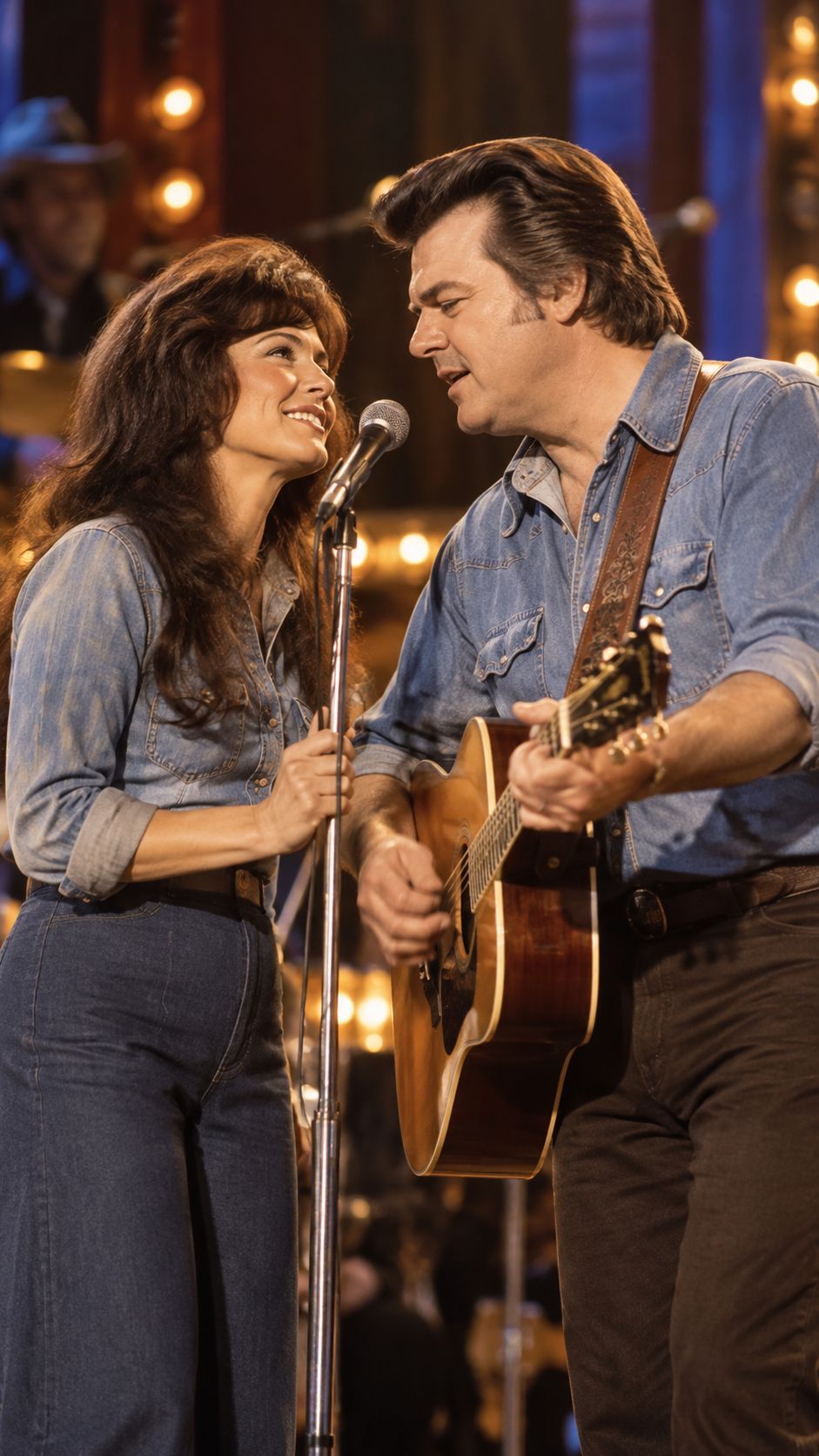
There was a time when country music could tell an entire love story with just two voices, a trembling melody, and a few carefully chosen words. And few musical partnerships understood that power better than Conway Twitty and Loretta Lynn.
When these two legendary performers stood together, something extraordinary happened. Their voices seemed to carry conversations that went far beyond the lyrics. Conway Twitty brought his unmistakable smoothness, emotional intensity, and romantic delivery, while Loretta Lynn answered with a fearless honesty that had made her one of country music’s most recognizable voices.
Their duets were never simply songs about love. They explored temptation, longing, heartbreak, jealousy, forgiveness, and the complicated emotions that people sometimes struggle to express openly.
During the 1970s, country radio was navigating changing cultural expectations. Traditional audiences still valued familiar moral themes, while younger listeners were increasingly drawn to songs that sounded more intimate, realistic, and emotionally daring.
Against that backdrop, the chemistry between Conway and Loretta became especially fascinating.
But was their most passionate duet actually banned from radio stations? The story deserves a closer look, because the truth behind the controversy reveals something even more interesting about country music, broadcasting standards, and the extraordinary influence of two artists who knew how to make listeners feel every word.
THE SONG THAT TESTED COUNTRY RADIO’S BOUNDARIES
To understand the controversy surrounding Conway Twitty and Loretta Lynn, it is important to separate the legends surrounding their music from the documented history.
There is no well-established evidence that a major Conway and Loretta duet was officially banned nationwide during the 1970s. However, their recordings explored subjects that challenged the expectations of traditional country radio, and one particular song, The Pill, by Loretta Lynn, became a genuine example of how controversial country music could become.
The distinction matters. Their duets were not necessarily forbidden recordings; they were part of a musical era in which artists increasingly tested what radio audiences were willing to hear.
1. THE DUET THAT MADE COUNTRY MUSIC FEEL MORE INTIMATE
The beginning of an extraordinary musical partnership
When Conway Twitty and Loretta Lynn began recording together in 1971, country music gained one of its most recognizable partnerships.
Their first major duet success, After the Fire Is Gone, immediately demonstrated why their combination worked so beautifully.
The song told the story of two people confronting the emotional emptiness of relationships that had lost their original passion. Rather than presenting a simple love story, it explored the complicated feelings surrounding temptation and emotional dissatisfaction.
What made the recording particularly compelling was the contrast between their voices.
Conway sounded controlled, warm, and deeply romantic. Loretta brought a more direct, vulnerable quality, creating the impression of two people having an intensely personal conversation.
The recording reached No. 1 on the country chart in 1971, establishing the foundation for their extraordinary success.
Their chemistry was not manufactured through elaborate production. It came from the way their voices responded to one another.
Listeners could hear hesitation, confidence, affection, and emotional conflict in the smallest changes of their performances.
That was the secret behind their appeal.
2. WHY THEIR SONGS SOMETIMES MADE TRADITIONAL AUDIENCES UNCOMFORTABLE
Country music in the 1970s was changing.
For decades, many country recordings had focused on familiar themes: marriage, family, faith, heartbreak, loyalty, and the consequences of poor decisions.
But society was changing, and country artists were increasingly willing to explore subjects that previous generations might have avoided.
Conway and Loretta understood this transformation.
Their songs frequently presented love as something complicated rather than perfect. Their characters experienced loneliness, temptation, emotional distance, and the difficult choices that sometimes accompany relationships.
For some traditional listeners, this honesty was refreshing.
For others, it could be uncomfortable.
The controversy surrounding country music during this period was not simply about whether a song sounded romantic or passionate. It was about what the lyrics suggested about marriage, women, personal freedom, and social expectations.
And perhaps no artist demonstrated those tensions more dramatically than Loretta Lynn.
3. THE REAL RADIO CONTROVERSY: LORETTA LYNN’S THE PILL
If there is one recording that illustrates the resistance faced by country artists during this period, it is The Pill, released by Loretta Lynn in 1975.
Unlike her romantic duets with Conway Twitty, this was a solo recording.
Its subject was birth control and a woman’s ability to make decisions about her own life.
At the time, such a subject was extraordinarily provocative for mainstream country radio.
The song challenged traditional expectations about motherhood, marriage, and women’s roles. Its lyrics were direct, humorous, and unapologetic.
Some radio stations refused to play it because they considered its subject matter too controversial for their audiences.
Yet the resistance did not erase its impact.
Instead, the controversy helped turn The Pill into one of the most discussed recordings of Loretta’s career.
It also demonstrated something important about her personality as an artist: she was not interested in pretending that women experienced life without complicated emotions, difficult decisions, or personal frustrations.
This is an important distinction when discussing the supposed ban on a Conway and Loretta duet. The documented radio controversy belongs to The Pill, not to a verified nationwide ban on their passionate collaborations.
Country Music Project+1
4. AS SOON AS I HANG UP THE PHONE: A DUET THAT SOUNDED LIKE A PRIVATE CONFESSION
Among the most unusual recordings in their partnership was As Soon as I Hang Up the Phone, released in 1974.
This was not an ordinary duet.
Instead of having both singers perform conventional verses and choruses, the recording used a dramatic combination of spoken dialogue and singing.
Conway Twitty delivered his part as though speaking to someone over the telephone, while Loretta Lynn responded through emotionally charged singing.
The result was a miniature dramatic production.
The listener was not simply hearing two famous country singers harmonizing. The listener was entering the middle of an emotionally complicated conversation.
The story involved a relationship approaching its breaking point. Every exchange carried a sense of urgency, disappointment, and emotional vulnerability.
The unusual recording technique made the song feel remarkably personal.
Imagine listening to a country radio station in 1974 and suddenly hearing what sounded like a private telephone conversation unfolding through music.
That was part of the recording’s appeal.
It was intimate without needing elaborate instrumentation. It relied on storytelling, performance, and the audience’s willingness to become emotionally involved.
The single reached No. 1 on the American country chart, demonstrating that listeners were eager for something different.
There is no reliable evidence that it was banned from radio stations. In fact, its chart success tells a rather different story: audiences embraced the unusual approach.
Wikipedia+1
5. THE PASSION BEHIND LEAD ME ON
Another recording deserves special attention: Lead Me On, released in 1971.
The song explored the emotional pull between two people drawn toward one another despite the complications surrounding their feelings.
It was not a cheerful, uncomplicated declaration of love.
There was tension beneath the melody, and that tension was precisely what made the performance memorable.
Loretta Lynn brought her characteristic emotional honesty, while Conway Twitty delivered the kind of smooth, intimate vocal performance that had become his trademark.
Their voices created a musical conversation in which neither singer overwhelmed the other.
Instead, they seemed to understand exactly when to step forward and when to let the other take control.
For country music listeners, this was a powerful combination.
The song became another No. 1 country hit for the duo, confirming that their willingness to explore emotionally complicated relationships was commercially successful.
Rather than disappearing from the airwaves, their music helped establish a new standard for country duets.
Wikipedia+1
6. WHY CONWAY AND LORETTA’S CHEMISTRY FELT SO DIFFERENT
What made Conway Twitty and Loretta Lynn special was not simply the fact that they sang about romance.
It was the way they represented two different emotional perspectives.
Conway often sounded like a man struggling to express feelings he could barely control.
Loretta, meanwhile, possessed a voice that could communicate disappointment, affection, frustration, and determination without losing its unmistakable character.
Their musical partnership worked because neither performer needed to imitate the other.
They were different personalities brought together through storytelling.
Their recordings also benefited from the production expertise of Owen Bradley, whose work helped shape the classic Nashville sound.
The arrangements left room for the singers’ personalities to shine. Rather than overwhelming the performances with complicated instrumentation, the recordings emphasized melody, lyrics, and vocal interaction.
This approach allowed listeners to concentrate on the emotional story.
And that emotional connection was essential.
A great duet requires more than two talented singers. It requires two performers who understand how to make a conversation sound believable.
Conway and Loretta possessed that rare ability.
7. THE 1970s: WHEN COUNTRY MUSIC BEGAN TO CHALLENGE ITS OWN RULES
The decade was an important turning point for country music.
Artists were experimenting with storytelling, arrangements, production, and lyrical subjects.
Traditional country audiences were still deeply important, but performers were also reaching listeners who wanted music that reflected the changing realities of everyday life.
Loretta Lynn became one of the most influential voices in that transformation.
Her willingness to address difficult subjects helped establish her reputation as a fearless storyteller.
Conway Twitty, meanwhile, brought a distinctive romantic style that expanded the emotional possibilities of country music.
Together, they created a catalog that could move from playful humor to heartbreak, from passionate romance to complicated human relationships.
Their success was remarkable.
Their collaborative discography eventually included ten studio albums, and their partnership produced numerous major country hits, including five No. 1 singles in the United States.
Wikipedia+1
That achievement is particularly significant because their music did not depend on following one formula.
They understood that audiences wanted to laugh, cry, remember, and sometimes confront uncomfortable feelings.
8. THE MISUNDERSTOOD STORY OF THE RADIO BAN
So why does the story of a supposedly banned Conway and Loretta duet continue to sound believable?
Part of the explanation lies in the genuine controversies surrounding country music during the 1970s.
The Pill really did encounter radio resistance. Other recordings of the era also challenged broadcasting conventions and traditional expectations.
Over time, these separate stories can become mixed together, especially when audiences remember the passionate nature of Conway and Loretta’s performances.
Their duets certainly explored subjects that could provoke discussion.
However, there is an important difference between a song being controversial, an individual station refusing to play it, and an official widespread radio ban.
Those are three different things.
The documented history supports the first two in the broader country music environment, particularly in Loretta’s solo career, but does not establish a nationwide ban on their most passionate duet.
And perhaps that makes their musical legacy even more interesting.
They did not need a forbidden recording to become unforgettable.
Their songs already possessed something that could not be manufactured through publicity: genuine emotional power.
9. WHY FANS STILL REMEMBER THEIR MUSIC TODAY
Decades have passed, but the recordings of Conway Twitty and Loretta Lynn continue to find new listeners.
There is something timeless about hearing two distinctive voices tell a story together.
Modern country music has sophisticated production, powerful vocal performances, and countless talented collaborations.
But the classic Conway and Loretta recordings offer something that is increasingly difficult to reproduce: the feeling of listening to two people genuinely responding to one another.
After the Fire Is Gone still carries the emotional weight of complicated love.
Lead Me On still captures the tension of attraction.
As Soon as I Hang Up the Phone still sounds like a dramatic conversation that listeners have accidentally overheard.
And Louisiana Woman, Mississippi Man remains a joyful reminder of how effortlessly the pair could turn musical chemistry into an unforgettable country hit.
Their recordings remind us that country music has never been exclusively about beautiful melodies.
It has always been about people.
People who fall in love, make mistakes, experience heartbreak, search for forgiveness, and struggle to understand their own emotions.
That is why these songs continue to matter.
They are not simply recordings preserved from another decade. They are stories that still feel familiar to people who have lived through similar experiences.
10. THE LEGACY OF TWO VOICES THAT COULD NEVER BE REPLACED
Perhaps the greatest achievement of Conway Twitty and Loretta Lynn was that they made collaboration feel effortless.
They brought different personalities, different vocal qualities, and different approaches to storytelling into the same recording studio.
Yet their voices blended in a way that felt completely natural.
Their partnership helped define an important chapter in country music history, proving that a duet could become much more than two artists singing the same song.
It could become a conversation.
It could become a confession.
It could become a story that listeners carried with them long after the final note disappeared.
And while the claim that radio stations banned their most passionate duet remains unverified, the genuine controversies surrounding their era reveal just how much country music was changing.
Conway Twitty and Loretta Lynn were part of that transformation.
They did not have to be forbidden to be unforgettable.
Their music was powerful enough to stand on its own.
FINAL THOUGHT: SOME SONGS NEVER LOSE THEIR FIRE
The greatest country duets are not always the loudest or the most complicated. Sometimes, all they need are two voices, an honest story, and the courage to sing about emotions that people rarely discuss openly.
Conway Twitty and Loretta Lynn understood that better than almost anyone.
Their musical partnership remains a beautiful reminder of an era when country music could make millions of people feel as though a song had been written specifically for their own lives.
And now we want to hear from you:
Which Conway and Loretta duet do you believe captured their strongest musical chemistry: After the Fire Is Gone, Lead Me On, As Soon as I Hang Up the Phone, or Louisiana Woman, Mississippi Man?
Some voices belong to a generation. Others belong to forever.