 By admin
INTRODUCTION:
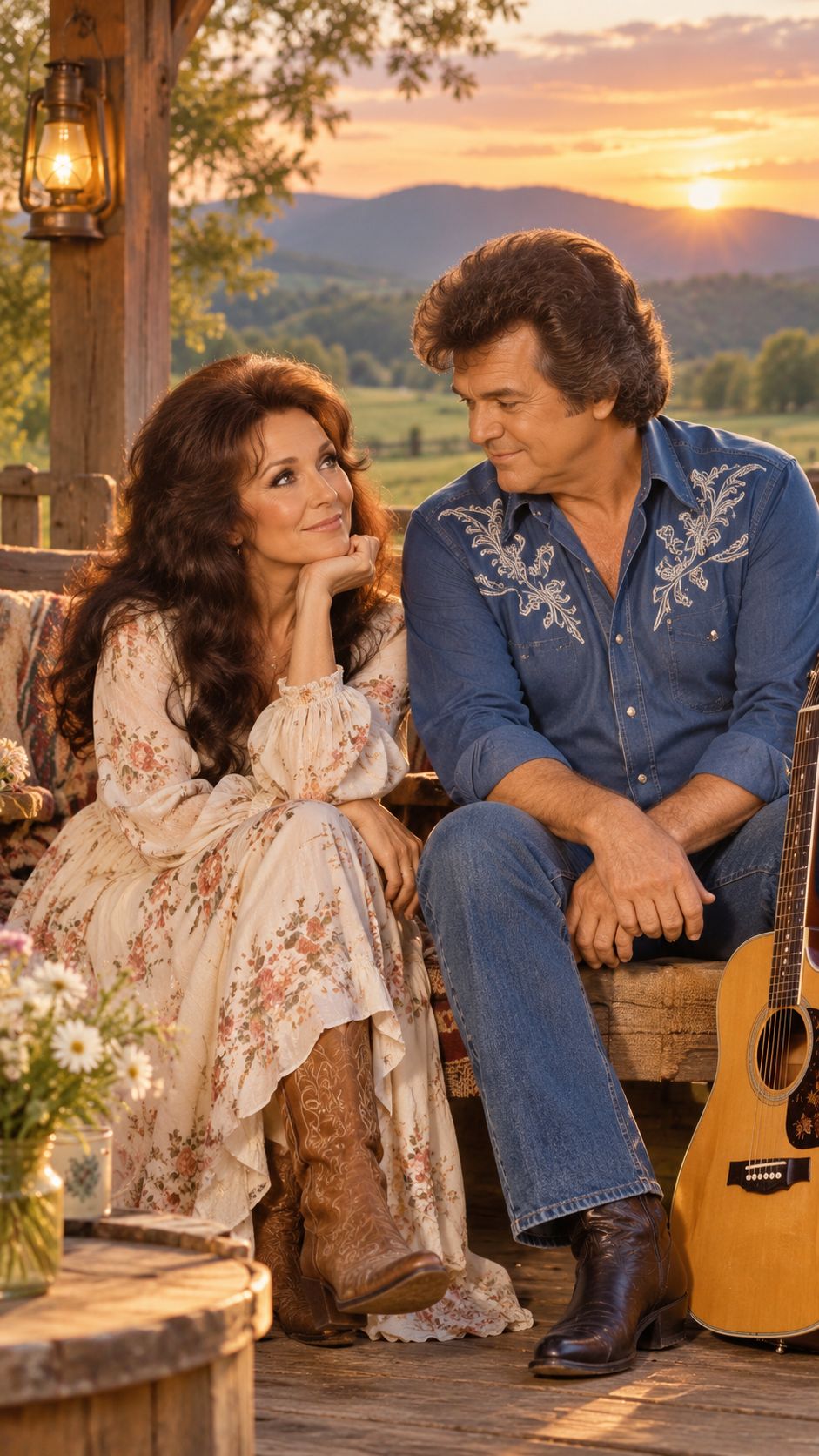
There are some country music partnerships that sound so convincing, fans begin to wonder where the performance ends and real life begins.
Conway Twitty and Loretta Lynn were one of those rare pairs.
When their voices met, there was tension. There was tenderness. There was teasing, longing, regret, and sometimes the unmistakable feeling that two people were saying things to each other they could never say anywhere else.
For decades, listeners looked at that chemistry and asked the same question:
Was there ever something more between Conway and Loretta?
The answer, according to Loretta herself, was no. And strangely enough, that makes their story even more powerful.
Their connection did not need to become an affair to become legendary.
It was built around something more complicated—and perhaps more heartbreaking: two performers who understood exactly how to make forbidden love sound real without turning their own lives into the story.
The Songs That Made America Wonder
The mystery began almost immediately.
In 1970, Loretta Lynn and Conway Twitty recorded “After the Fire Is Gone,” a song about two people whose relationships at home have lost their passion and who find themselves drawn toward one another.
The song became their first No. 1 country hit together in 1971.
And the lyrics were anything but innocent.
They weren’t singing about a simple romance.
They were singing about temptation.
About loneliness.
About the dangerous emotional space between commitment and desire.
That made their voices sound almost painfully intimate.
Listeners didn’t simply hear two singers.
They heard two characters who seemed to understand each other’s loneliness.
And because Conway and Loretta performed those emotions with such natural chemistry, audiences began assuming the emotions belonged to the singers themselves.
Loretta later explained the misunderstanding plainly:
“Everybody thought me and Conway had a thing going. And that’s the farthest from the truth.”
That statement is important because it cuts through decades of speculation.
The chemistry was real.
The romance was part of the performance.
But the two were not lovers.
Their Chemistry Was Almost Too Convincing
What made Conway Twitty and Loretta Lynn different from ordinary duet partners was the way they listened to each other.
Conway’s smooth, controlled baritone could sound almost conversational. Loretta’s voice carried a different kind of emotional force—direct, earthy, and unmistakably personal.
Together, their voices created tension.
When Conway sang a line, Loretta seemed to answer him rather than simply sing the next lyric.
When Loretta pushed emotionally, Conway often pulled back.
That contrast created drama.
And drama is exactly what great country storytelling requires.
Their partnership developed after they began singing together backstage while touring overseas in 1969. Loretta recalled that they would sing in dressing rooms and eventually decided to see what producer Owen Bradley thought of the combination. Bradley liked what he heard, and the collaboration moved into the studio.
What began almost casually became one of country music’s most recognizable partnerships.
Their recordings eventually included songs such as “After the Fire Is Gone,” “Lead Me On,” and “Louisiana Woman, Mississippi Man.” Conway’s official biography describes their partnership as one of the most successful male-female duet collaborations in country music.
But the more convincing they became together, the more difficult it became for audiences to separate the characters from the people.
The Heartbreaking Part Was the Boundary
The most fascinating part of their story isn’t that they supposedly resisted a secret romance.
There is no reliable evidence that such a romance existed.
The deeper story is that they were capable of creating the illusion of forbidden love while maintaining a friendship outside the songs.
Loretta was married to Oliver “Doolittle” Lynn, whom she often called Doo.
And according to Loretta, Doo actually liked Conway.
That detail almost sounds unbelievable considering the themes of some of the duets.
But Loretta recalled that her husband and Conway became friends, joking and talking together.
“I loved Conway as a friend, and my husband loved him.”
That changes the entire emotional picture.
Imagine the strange situation:
Loretta and Conway could walk into a studio and record a song about forbidden attraction.
They could sing about two people meeting behind their spouses’ backs.
They could look at each other and make millions of listeners believe they were secretly in love.
Then the microphones would turn off.
The characters disappeared.
And they went back to being friends.
That separation may have been the greatest achievement of their partnership.
They Were Acting—But They Were Also Telling the Truth
There is an important distinction here.
Their songs weren’t necessarily autobiographical.
But they were emotionally truthful.
Country music has always depended on performers making listeners believe that a song happened to them.
A great singer doesn’t have to experience every story personally.
They have to understand the emotion.
Conway and Loretta understood temptation, loneliness, marriage, regret, desire, and heartbreak well enough to inhabit those characters completely.
That is why their performances still feel intimate decades later.
In fact, the illusion became so convincing that people sometimes treated the songs as evidence of a relationship that Loretta explicitly denied.
During a later interview with Terry Gross, Loretta again addressed the rumors after discussing “After the Fire Is Gone.”
“Me and Conway were friends. We wasn’t lovers.”
There is something almost heartbreaking about how simple that statement is.
Because the music made people expect a complicated secret.
The reality was much quieter.
They were friends.
And perhaps that was enough.
Why They Never Needed to Cross the Line
There is a temptation to romanticize forbidden relationships in country music.
But the story of Conway Twitty and Loretta Lynn offers another possibility.
Sometimes the strongest connection is the one that remains within its boundaries.
They had something valuable that did not need to become romantic.
They trusted one another artistically.
They understood how to challenge one another vocally.
They could take emotionally dangerous material and make it believable.
And they knew the difference between playing lovers and becoming lovers.
That distinction allowed their partnership to survive.
Their chemistry wasn’t destroyed by reality because, according to Loretta, reality never required the romance in the first place.
The Songs Were the Place Where They Could Cross the Line
Perhaps this is the most beautiful way to understand their partnership.
They didn’t cross the line in life.
They crossed it in song.
For three minutes, they could become people who were tempted.
They could become strangers meeting in secret.
They could become a couple whose marriages were falling apart.
They could explore emotions that polite society rarely discussed openly.
Then the song ended.
The lights came up.
And Conway and Loretta returned to their real lives.
That is why songs such as “After the Fire Is Gone” remain so powerful.
They don’t prove that Conway and Loretta were secretly in love.
They prove that they were extraordinarily good at making an audience feel love, even when the story belonged to someone else.
A Legacy Built on Trust, Not Scandal
Their partnership ultimately became much larger than the rumors surrounding it.
They recorded numerous successful duets and won the Country Music Association’s Vocal Duo of the Year award four consecutive times, according to archival material documenting their career.
Their legacy rests on music—not on an alleged secret affair.
And perhaps that’s why their story continues to fascinate country fans.
Because the question isn’t really whether Conway Twitty and Loretta Lynn secretly wanted each other.
The more interesting question is how two people could create such overwhelming romantic chemistry without allowing that chemistry to control their lives.
The answer appears to be trust, professionalism, friendship, and extraordinary storytelling ability.
They didn’t need a scandal to make history.
They didn’t need a forbidden romance behind the scenes.
They only needed two microphones.
And when those microphones were turned on, something extraordinary happened.
Two friends became two lovers.
Two voices became one conversation.
And millions of listeners forgot, just for a few minutes, that they were watching a performance.
“The chemistry was real. The romance was the story. And the friendship was what remained when the music stopped.”
That may be the most enduring mystery of Conway Twitty and Loretta Lynn.
Not why they crossed the line.
But how beautifully they managed not to—while making the entire world believe they had.
VIDEO: