 By admin
 INTRODUCTION:
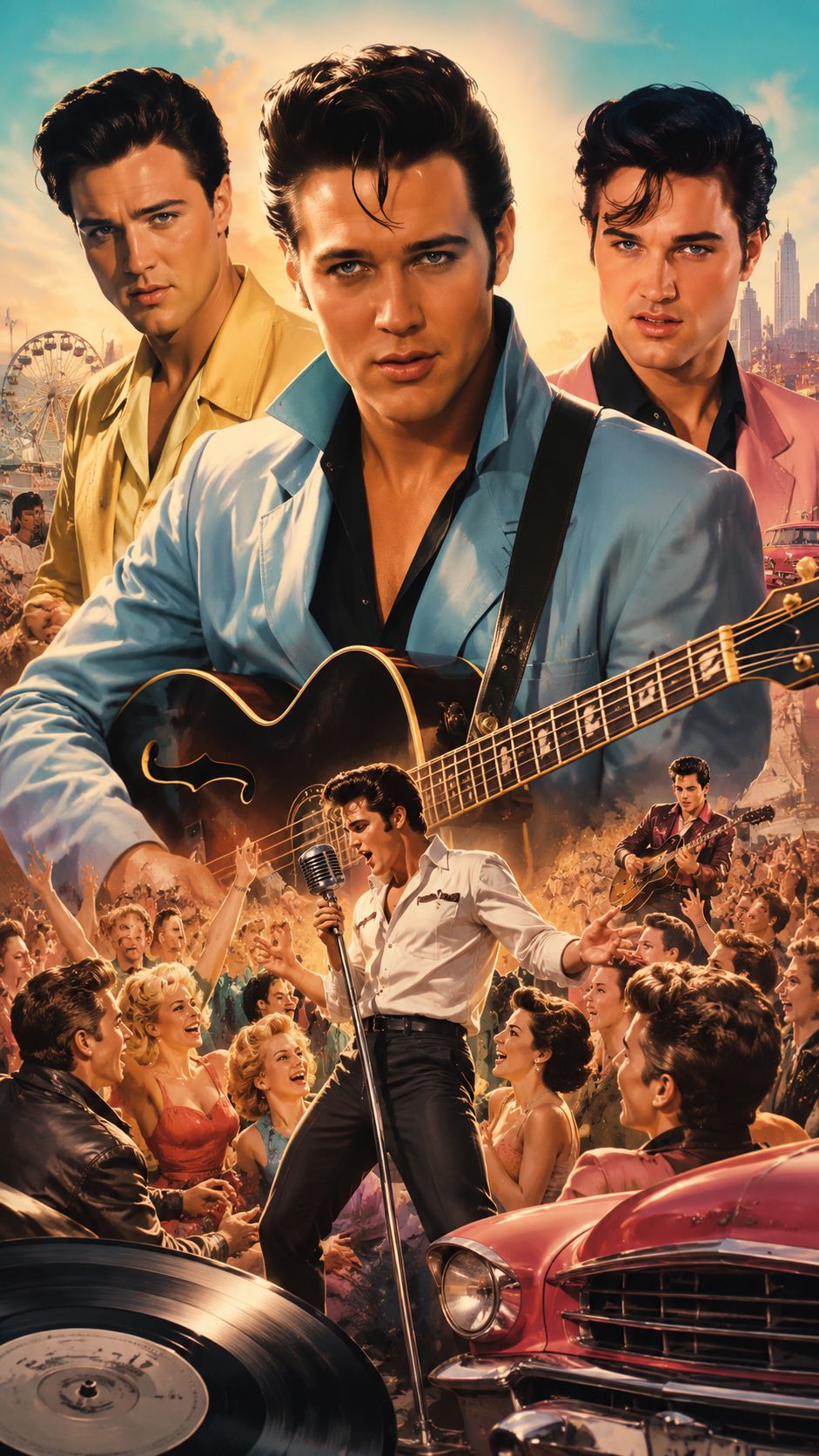
Nearly five decades after his passing, Elvis Presley remains one of the most beloved and influential figures in popular culture. Time has a way of fading legends, turning once-revolutionary stars into distant memories. Yet Elvis Presley has somehow escaped that fate. His voice still echoes through radios, documentaries, streaming playlists, and family living rooms. His image remains instantly recognizable across generations. Young listeners who were born decades after his death continue discovering his music, while lifelong fans keep his legacy alive with remarkable devotion.
But the enduring fascination with Elvis Presley cannot be explained by record sales alone. It is not simply about hit songs or chart success. It is about what he represented during one of the most transformative periods in modern history. He emerged at a moment when America was wrestling with cultural identity, generational conflict, and social change. To millions, he became more than an entertainer. He became a symbol of freedom, rebellion, possibility, and self-expression.
The story of Elvis Presley is ultimately the story of a society learning to challenge its own boundaries. His music ignited a movement, but his cultural impact reached far beyond the stage. That is why, nearly fifty years later, the King of Rock and Roll continues to reign in the hearts of millions around the world.
More Than a Singer: The Birth of a Cultural Revolution
When Elvis Presley first appeared in the mid-1950s, America was a nation deeply rooted in tradition. Social expectations were rigid, cultural divisions were pronounced, and mainstream entertainment followed predictable rules. Then came a young man from Memphis, blending musical influences that many believed should never mix.
Rock and Roll was still emerging as a new force, drawing energy from Blues, Gospel, and Country Music. Elvis Presley became the perfect vessel for this fusion. His groundbreaking recordings at Sun Records introduced a sound that felt dangerous, exciting, and completely new.
Songs like Heartbreak Hotel, Hound Dog, Don’t Be Cruel, and Jailhouse Rock did more than entertain audiences. They challenged cultural norms and inspired young people to embrace individuality.
For millions of teenagers, Elvis wasn’t simply singing songs. He was giving them permission to be different.
His arrival marked a clear dividing line between the old America and the new America. Parents often viewed him with suspicion, while young fans saw him as a hero. That tension only increased his appeal.
The Power of Rebellion Without Revolution
One of the most fascinating aspects of Elvis Presley was his ability to symbolize rebellion without promoting destruction. Unlike many later counterculture icons, Elvis never positioned himself as a political activist or social revolutionary. Yet his very existence challenged expectations.
His style, movements, confidence, and musical choices represented freedom from conformity. His famous stage performances shocked conservative audiences and thrilled younger generations eager for change.
The famous television appearances that generated controversy now seem almost innocent by modern standards. Yet in the 1950s, they felt revolutionary.
What made Elvis Presley unique was that he embodied rebellion in a way that remained accessible. He wasn’t asking people to overthrow society. He was encouraging them to imagine a larger version of themselves.
That subtle form of rebellion proved incredibly powerful and continues to resonate today.
The Voice That Bridged Musical Worlds
While cultural symbolism explains part of his lasting appeal, the music itself remains extraordinary.
Too often, modern discussions reduce Elvis Presley to his image. Yet his vocal talent was exceptional. He possessed a remarkable ability to move effortlessly between genres.
He could deliver the emotional vulnerability of Love Me Tender, the spiritual intensity of How Great Thou Art, the infectious energy of Blue Suede Shoes, and the dramatic power of Suspicious Minds.
His musical versatility allowed him to connect with diverse audiences across generations and backgrounds.
The influence of Country Music on his artistry remains particularly important. Before becoming the King of Rock and Roll, Elvis absorbed the storytelling traditions, emotional honesty, and vocal phrasing that defined Country Music. Those roots never disappeared.
Even in his biggest hits, listeners can hear traces of country storytelling woven into the performances. That connection helps explain why so many country artists continue to honor his legacy today.
Great singers perform songs. Legendary singers make listeners feel that every word belongs to them.
That emotional authenticity remains timeless.
A Reflection of the American Dream
Another reason millions continue to admire Elvis Presley is that his life embodies one of the most enduring narratives in American culture.
He was born into modest circumstances and rose to unprecedented global fame. His journey from poverty to superstardom became a modern fairy tale.
People saw themselves in his story. He wasn’t born into privilege. He wasn’t the product of elite institutions. He represented the possibility that talent, determination, and opportunity could transform an ordinary life into something extraordinary.
This narrative remains deeply compelling because it speaks to universal aspirations. Whether someone lives in America, Europe, Asia, or elsewhere, the idea of overcoming limitations resonates across cultures.
The story of Elvis Presley is not merely about fame. It is about hope.
The Human Behind the Legend
Ironically, part of Elvis’s enduring popularity comes from his imperfections.
Modern audiences often connect most deeply with stars who reveal vulnerability. In many ways, Elvis Presley was ahead of his time in this regard.
Behind the glamorous image stood a complex individual wrestling with immense pressure, isolation, and personal struggles. His life was marked by triumphs as well as heartbreaks.
Fans continue to study his story because it reflects the complicated reality of human success. He achieved nearly everything a person could dream of, yet his life also revealed the costs that often accompany extraordinary fame.
This combination of greatness and fragility makes him feel relatable even today.
The world remembers Elvis because he was larger than life. People love Elvis because he was human.
That distinction matters.
Why New Generations Keep Discovering Him
The most remarkable aspect of the Elvis Presley phenomenon is that it continues to grow.
Streaming platforms, documentaries, biographical films, and social media have introduced his work to entirely new audiences. Younger listeners often arrive with no personal connection to the 1950s, the 1960s, or the 1970s. Yet many become captivated by his music and story.
Part of this appeal comes from authenticity. In an era dominated by algorithms, manufactured trends, and carefully managed public images, Elvis represents something raw and genuine.
His recordings capture real emotion. His performances radiate charisma that cannot be artificially replicated. His journey reflects both the possibilities and challenges of fame.
As culture changes, those qualities become even more valuable.
The Legacy Beyond Music
Ultimately, the enduring admiration for Elvis Presley transcends entertainment.
He helped transform popular music. He influenced Rock and Roll, Country Music, and countless artists who followed. He challenged cultural boundaries and became a bridge between generations.
But perhaps his greatest achievement was symbolic.
He represented a world beginning to change. He gave voice to young people searching for identity. He demonstrated that creativity could challenge conventions without abandoning humanity.
Nearly fifty years after his death, millions continue to celebrate Elvis Presley because he symbolizes something larger than any single song or performance.
He symbolizes courage, transformation, individuality, and hope.
And as long as people continue searching for those ideals, the King will never truly leave the stage.