 By admin
INTRODUCTION:
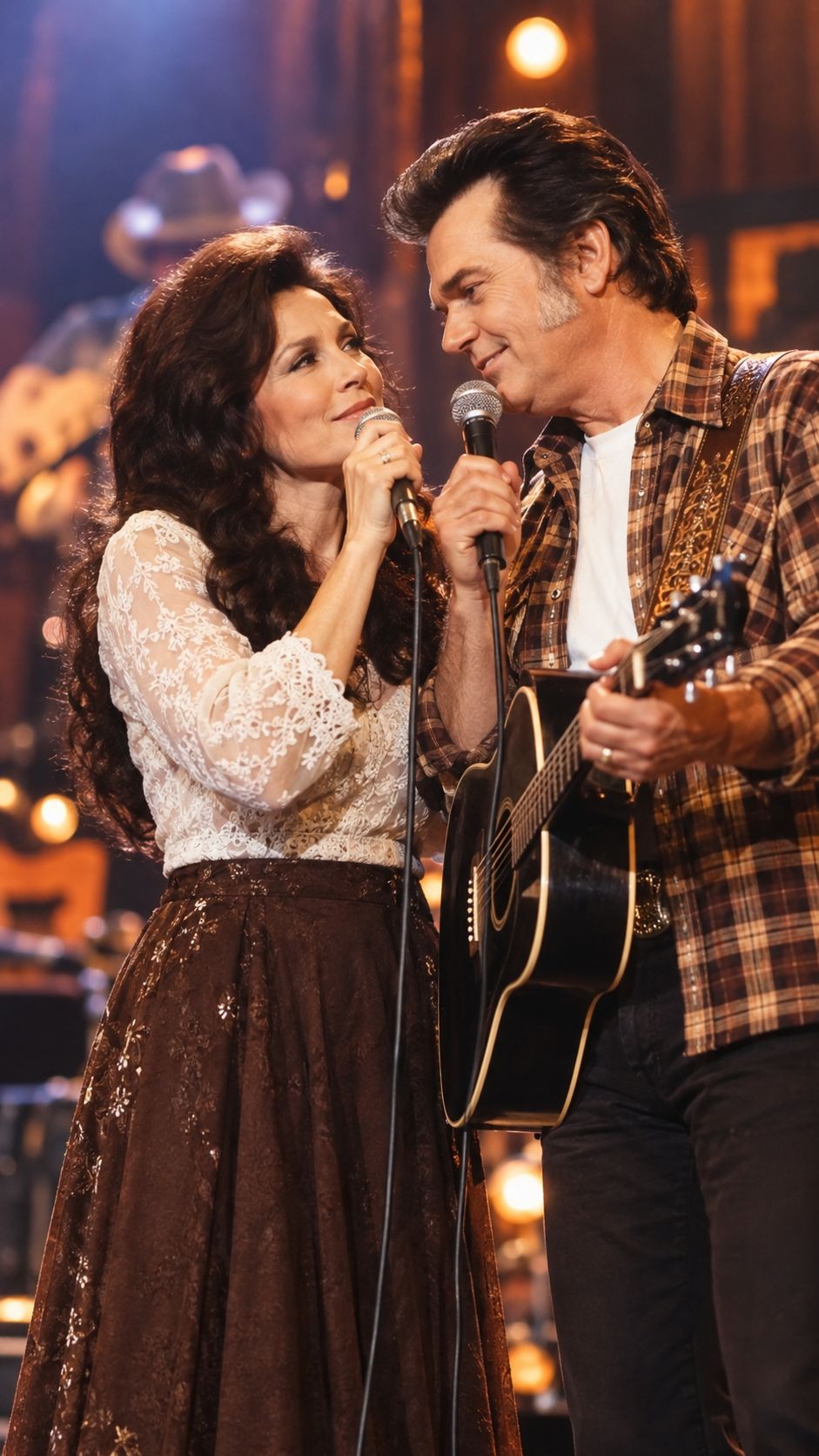
There are moments in music when two voices come together and create something far greater than the sum of their individual talents. The melody becomes unforgettable, the lyrics seem to carry a secret, and every glance between the performers makes the audience lean a little closer. For generations of country music fans, few partnerships have captured that extraordinary feeling quite like Conway Twitty and Loretta Lynn.
Together, these two country legends created a musical partnership that felt intimate, unpredictable, and almost impossible to explain. His smooth, velvety voice blended effortlessly with her unmistakable Appalachian strength, producing performances that sounded less like rehearsed duets and more like conversations between two people who understood every emotion behind the words.
Their chemistry was so compelling that audiences often wondered what made their connection feel so genuine. Was it the way Conway Twitty softened his delivery when singing beside Loretta Lynn? Was it her fearless ability to answer his voice with equal tenderness and fire? Or was it simply the magic that happens when two extraordinary artists recognize something special in each other?
Their partnership never needed sensational headlines to become legendary. Their songs told stories of love, longing, temptation, heartbreak, and complicated human relationships, while their voices brought those stories to life.
Decades later, their recordings continue to captivate listeners, reminding us that the most powerful musical chemistry cannot be manufactured. It must be felt, shared, and delivered with a truth that audiences recognize instantly.
1. The Unexpected Pairing That Changed Country Music


When Conway Twitty and Loretta Lynn began recording together, neither artist needed the other to establish a place in country music history.
Conway Twitty, born Harold Lloyd Jenkins, had already traveled an unusual musical road. He began his career in rock and roll before transitioning into country music, developing a rich, intimate vocal style that became one of the genre’s most recognizable sounds. His voice could communicate confidence, vulnerability, and romantic tension with remarkable ease.
Loretta Lynn, meanwhile, had built her reputation on honesty, independence, and an unmistakable ability to express the experiences of ordinary people. Her songs spoke directly to women whose stories were often overlooked, and her voice carried both tenderness and defiance.
On paper, their artistic personalities were different. In practice, those differences became their greatest strength.
Conway possessed a smooth, almost conversational delivery. Loretta brought a directness that could transform even a gentle melody into a dramatic exchange. When they sang together, neither voice disappeared into the other. Instead, each created space for the other to respond.
That balance was essential.
A successful duet requires more than two talented singers standing beside one another. It requires timing, sensitivity, and the ability to understand when to lead and when to listen. Conway Twitty and Loretta Lynn made that process sound effortless.
Their partnership demonstrated that musical chemistry does not depend on two artists sounding alike. Sometimes, it emerges precisely because they sound different.
And that difference gave their performances a distinctive identity that audiences could recognize within seconds.
2. Why Their Chemistry Felt So Dangerously Real
The word dangerous in discussions of Conway and Loretta is best understood as a description of their artistic tension, not evidence of a hidden romance or scandal.
Their music often explored emotional situations that were anything but simple. The characters in their songs faced temptation, regret, jealousy, reconciliation, and the difficult decisions that accompany love.
Because both singers understood how to communicate complicated feelings, their performances rarely felt one-dimensional.
Conway could deliver a line with a subtle warmth that suggested reassurance one moment and uncertainty the next. Loretta could answer with a sharp, knowing tone that conveyed affection without surrendering her character’s independence.
The result was dramatic storytelling.
Listeners were not simply hearing two voices harmonize. They were hearing two personalities interact.
Consider how a great dramatic scene works in a film. One character makes a confession, another responds, and the meaning of the conversation depends on everything that remains unspoken. The most memorable moments often occur between the lines.
That same principle helped make the duets of Conway Twitty and Loretta Lynn so compelling.
Their vocal exchanges created anticipation. A phrase from Conway might establish a romantic mood, while Loretta’s response could challenge, soften, or complicate it. Their harmonies then brought those opposing emotions together without necessarily resolving the tension.
This was the secret behind the feeling that their performances contained something more than ordinary entertainment.
They gave listeners room to imagine the story.
And imagination is one of music’s most powerful forces. When an audience feels emotionally involved, a song becomes more than a recording. It becomes a personal memory, a reflection of a past relationship, or a reminder of a moment when love seemed both beautiful and painfully complicated.
That is why their chemistry continues to inspire discussion long after the original performances.
3. The Songs That Turned Two Voices Into One Legendary Story


The strongest evidence of their connection is not found in rumors or exaggerated stories. It is found in the music itself.
Several recordings helped establish Conway Twitty and Loretta Lynn as one of country music’s defining duet partnerships.
After the Fire Is Gone: The Power of Emotional Restraint
Released in 1971, After the Fire Is Gone became a landmark in their collaborative career. The song earned them a Grammy Award for Best Country Performance by a Duo or Group with Vocal in 1972, confirming that their partnership resonated with both audiences and the music industry.
Its emotional power comes from its portrayal of a relationship complicated by dissatisfaction and the search for affection outside an existing commitment.
The subject matter is uncomfortable by design. The song asks listeners to confront the distance between outward appearances and private feelings.
Rather than turning the performance into theatrical excess, Conway and Loretta allow their voices to communicate the characters’ conflicting emotions. Their delivery gives the story a sense of intimacy, making the listener feel like an observer of a difficult conversation.
The recording illustrates one of their greatest strengths: they understood that emotional intensity does not always require a louder voice.
Sometimes, a restrained phrase communicates more than a dramatic outburst ever could.
Louisiana Woman, Mississippi Man: Chemistry With a Different Energy
If After the Fire Is Gone revealed the dramatic possibilities of their partnership, Louisiana Woman, Mississippi Man demonstrated its playful, energetic side.
Released in 1973, the song presents a couple separated by geography but united by their determination to overcome the distance between them.
The premise gives both singers room to display their personalities. Conway brings his familiar smoothness, while Loretta responds with spirited confidence. Their vocal exchanges have momentum, humor, and a sense of friendly competition.
The song does not rely on sadness to create emotional engagement. Instead, it invites listeners into a lively back-and-forth that feels spontaneous, even though the performance is carefully constructed.
This contrast matters.
Great musical partnerships need more than one emotional color. They must be able to communicate joy as convincingly as heartbreak, confidence as naturally as vulnerability.
Conway Twitty and Loretta Lynn could move between these moods without losing their recognizable identity.
Lead Me On: When Vulnerability Takes Center Stage
Another important recording, Lead Me On, further demonstrated their ability to explore the uncertain territory between desire and emotional hesitation.
Its appeal rests on the tension between what the characters want and what they are willing to admit. That tension gave Conway and Loretta another opportunity to use subtle vocal choices to deepen the narrative.
Across these recordings, one pattern becomes clear: their most effective performances were built on storytelling rather than spectacle.
They did not simply sing about emotions. They made those emotions understandable.
4. The Secret Was Not Romance. It Was Respect.
One of the most persistent questions surrounding celebrated musical partnerships is whether powerful onstage chemistry must reflect a romantic connection away from the spotlight.
In the case of Conway Twitty and Loretta Lynn, their musical intimacy has often encouraged listeners to imagine a deeper personal story. Yet their compelling performances are not proof of a secret romance, and their legacy does not depend on such a claim.
A more meaningful explanation lies in their professional relationship.
Loretta Lynn had a strong artistic identity and was never merely a supporting voice. Her delivery could challenge the emotional assumptions of a song, giving its female perspective equal weight. Conway Twitty, with his instinct for phrasing and his ability to convey warmth, complemented that strength rather than overwhelming it.
Their partnership worked because both artists had something distinct to contribute.
Respect in a duet is audible. It appears in the way one singer leaves room for the other, the way a harmony supports rather than competes, and the way a response sounds connected to the line that came before it.
These details may seem small, but they are central to great collaborative performances.
The finest duets create the impression that each singer is genuinely listening. Instead of delivering two separate interpretations, the performers build a shared emotional world.
That is what made their recordings so convincing.
Their chemistry did not require audiences to believe in a real-life love affair. It required audiences to believe in the characters they portrayed.
And they succeeded.
5. How Their Partnership Helped Define the Golden Era of Country Duets


The 1970s were an important period for country music, as established traditions continued to evolve alongside changing production styles, new audiences, and increasingly diverse approaches to songwriting.
Within that environment, Conway Twitty and Loretta Lynn offered something immediately recognizable: traditional country storytelling delivered through a partnership with broad emotional appeal.
Their music appealed to listeners who valued strong melodies and familiar country instrumentation, but its dramatic themes also reached people who simply understood the complications of relationships.
That combination helped their duets travel beyond the boundaries of a single audience.
Their success also reinforced the importance of the duet as an art form. A duet could be more than two famous artists sharing a recording. It could create a complete narrative, with each voice representing a different perspective.
In a solo song, the listener generally follows one central point of view. In a duet, the emotional landscape becomes more complicated. The audience hears competing desires, contrasting interpretations, and the possibility of reconciliation or conflict.
Conway and Loretta understood how to use that structure.
Their voices could represent two people reaching toward each other, disagreeing, remembering, or trying to make sense of a difficult situation. This gave their songs a cinematic quality without requiring elaborate production.
The recordings felt immediate because the central drama was human.
That is an important reason their work remains relevant. Technology, fashion, and musical trends have changed dramatically since their greatest collaborative successes, but the emotional questions at the heart of their songs have not disappeared.
People still struggle to communicate. They still wonder whether love is enough. They still experience the difference between what they feel and what they are prepared to say.
The language of the songs may belong to a particular era, but the feelings remain recognizable.
6. The Awards Were Important, but the Emotional Connection Was Greater
Commercial success and industry recognition helped establish the stature of Conway Twitty and Loretta Lynn, but neither provides the complete explanation for their enduring appeal.
Their collaboration produced multiple successful recordings, including songs that reached the top of the country charts. Their Grammy-winning performance of After the Fire Is Gone was a particularly significant milestone.
Yet awards can tell us only so much.
They can confirm that a recording achieved recognition at a particular moment. They cannot fully explain why a listener returns to that recording decades later, or why a familiar harmony can suddenly bring back memories of a parent, a grandparent, a first love, or a long drive through the countryside.
Those experiences belong to the listener.
For some fans, hearing Loretta Lynn sing alongside Conway Twitty recalls a time when country music played constantly in the family home. For others, the recordings offer a connection to an older generation whose stories were expressed through songs rather than lengthy conversations.
And for younger listeners discovering classic country today, the appeal can be surprisingly immediate.
The production may sound different from contemporary recordings, but the performances do not feel emotionally distant. Their voices communicate recognizable human experiences with clarity and conviction.
That is the difference between a song that was popular and a song that becomes part of a family’s cultural memory.
Popularity belongs to a moment.
A lasting emotional connection can survive for generations.
7. Why Modern Audiences Still Find Their Chemistry Fascinating
In today’s music environment, audiences encounter performances through short video clips, social media discussions, streaming playlists, and recommendations from friends and family.
A single expressive glance or a perfectly timed vocal exchange can introduce an older recording to someone who has never heard the full song.
The music of Conway Twitty and Loretta Lynn is particularly suited to this kind of rediscovery because their performances contain identifiable emotional moments.
A listener does not need extensive knowledge of country music history to appreciate the contrast between Conway’s smooth voice and Loretta’s expressive delivery. The appeal is immediate, even when the listener cannot explain the musical techniques that create it.
Their songs also invite conversation.
Was Conway’s understated delivery the perfect complement to Loretta’s strong personality? Which of their duets best communicated the tension between two people? Did their harmonies make a sad story feel more painful, or did they provide a sense of comfort?
These questions keep the recordings alive in ways that statistics alone cannot measure.
However, their legacy deserves more than sensational speculation. The phrase dangerous chemistry captures the emotional tension of their performances, but their achievement was ultimately rooted in musical craftsmanship, interpretation, and mutual artistic understanding.
That is a more remarkable story than any unsupported rumor.
They created performances that felt intimate without needing to reveal everything, and dramatic without losing the natural character of country music.
For modern audiences accustomed to highly polished productions, that directness can feel refreshing.
Two voices. A compelling story. An emotional exchange that sounds as though it matters.
Sometimes, that is all a timeless song needs.
8. The Legacy That Neither Time Nor Trends Could Erase
Conway Twitty died in 1993, and Loretta Lynn died in 2022. Their passing marked the end of two extraordinary lives, but their musical partnership continues through the recordings they left behind.
Their legacy is not simply that they made successful duets. It is that they demonstrated how two distinct artistic personalities could create something neither might have achieved in quite the same way alone.
Conway brought a remarkable sensitivity to romantic storytelling. Loretta brought honesty, independence, and a voice that could communicate affection and resistance in the same breath.
Together, they gave country music a collection of performances that remain instantly identifiable.
Their work also reminds us that musical greatness does not always come from vocal power or technical complexity. Sometimes, it comes from knowing exactly how to deliver a single line, when to allow a silence to linger, or how to make a harmony feel like the natural conclusion of an emotional conversation.
That is an art that cannot be reduced to a formula.
And perhaps that is why their partnership continues to fascinate listeners who were not even born when many of their most celebrated recordings were released.
The performances still feel alive because the people inside the songs feel alive. Their hopes, mistakes, contradictions, and desires remain familiar.
The years have changed the world around their music, but they have not changed the fundamental emotions that made it resonate.
When the opening notes of After the Fire Is Gone return, or when the lively exchanges of Louisiana Woman, Mississippi Man begin, the listener is transported into a musical world built on character, tension, and extraordinary vocal compatibility.
That is the real power of Conway Twitty and Loretta Lynn.
Their chemistry was not a mystery that needed to be solved. It was an artistic achievement that deserved to be heard.
CONCLUSION: A Musical Connection That Still Feels Like Magic
The story of Conway Twitty and Loretta Lynn is ultimately a story about the extraordinary possibilities of collaboration.
Two artists with different backgrounds, distinctive voices, and unmistakable personalities found a way to make their musical differences work in perfect harmony. Their performances explored complicated relationships without reducing them to simple answers, and their songs gave listeners room to recognize pieces of their own lives.
That is why their partnership remains so compelling.
The real secret was not scandal, speculation, or a hidden romance. It was the combination of great songwriting, emotional intelligence, individual character, and the rare ability to make a rehearsed performance feel completely spontaneous.
Conway Twitty and Loretta Lynn understood that a duet succeeds when both voices matter, when every response has meaning, and when the story feels bigger than the singers themselves.
Their music continues to remind us that country music is at its most powerful when it tells the truth about human emotions, even when that truth is uncomfortable.
And perhaps the most remarkable thing about their legacy is this: decades after they first brought their voices together, listeners are still asking why those performances feel so special.
Maybe the answer is beautifully simple.
Some artists sing together.
Others create a moment that lasts forever.
Conway Twitty and Loretta Lynn did both.
Now it’s your turn, classic country fans: Which Conway Twitty and Loretta Lynn duet still gives you chills every time you hear it — After the Fire Is Gone, Louisiana Woman, Mississippi Man, or Lead Me On?
Because sometimes, the greatest proof of musical magic is not an award, a chart position, or a headline.
It is the fact that, after all these years, we are still listening.
VIDEO: