 By admin
 INTRODUCTION:
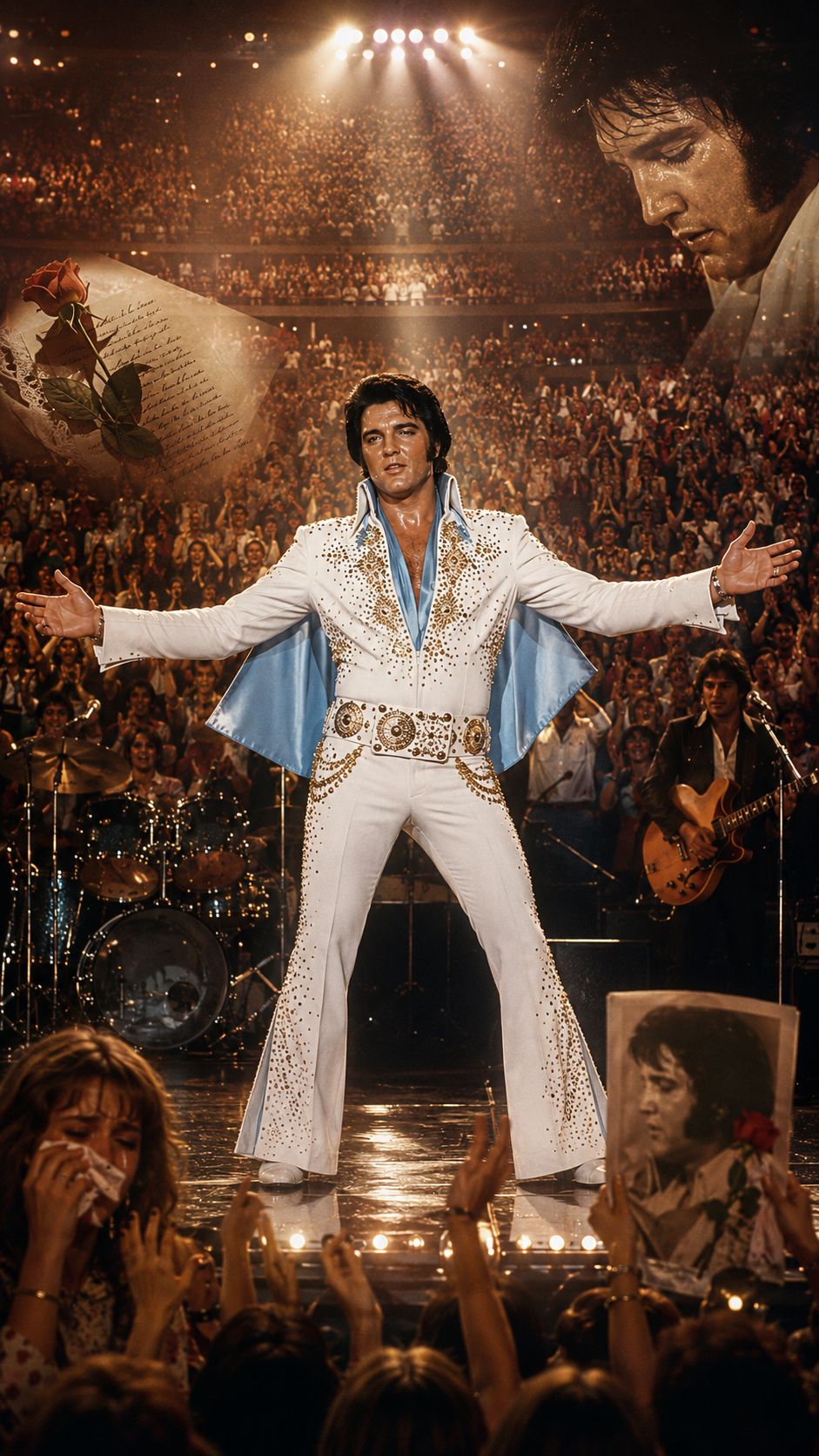
History often reveals itself only in hindsight. On June 26, 1977, thousands of fans gathered at the Market Square Arena in Indianapolis, expecting another unforgettable evening with Elvis Presley. What they could not have known was that they were witnessing the final live performance of a man whose influence had already transformed popular music forever. Seven weeks later, the world would awaken to the shocking news of his death, forever turning that summer concert into one of the most poignant moments in entertainment history.
For nearly a quarter century, Elvis Presley had stood at the center of a cultural revolution. He was more than a singer; he was a phenomenon who shattered musical boundaries, merged traditions, and gave birth to a new era of global stardom. His voice carried the emotional depth of Country Music, the spiritual intensity of Gospel, the rebellious energy of Rock and Roll, and the soulful heart of the American South.
The final concert was not a farewell tour announced in advance. There were no grand speeches, no carefully scripted goodbyes, and no sense that the curtain was about to fall. Instead, it was a performance marked by determination, vulnerability, and an enduring connection between artist and audience.
Looking back today, June 26, 1977, stands as more than the date of a final show. It represents the closing chapter of one of music’s greatest stories—a story whose impact continues to resonate across generations.
The Final Night in Indianapolis
The evening of June 26, 1977, unfolded like countless other stops on Elvis Presley’s touring schedule. Fans packed the arena eager to hear the legendary performer deliver the songs that had become the soundtrack of their lives. Despite visible health struggles and the physical toll of years spent under relentless public scrutiny, Elvis Presley stepped onto the stage and did what he had always done: he entertained.
The setlist reflected the remarkable breadth of his career. Songs such as “Love Me,” “Jailhouse Rock,” and “Hurt” reminded audiences of the extraordinary range that had made him a global icon. Even as his body showed signs of exhaustion, his voice still possessed flashes of the power and emotion that had captivated millions.
“The King was tired, but the magic was still there. Every note carried the weight of a lifetime.”
Witnesses often describe the performance as emotional rather than flawless. Yet perfection was never the reason fans loved Elvis Presley. They came because he represented authenticity, passion, and a connection that transcended technical execution.
A Career That Redefined Music
To understand why the final performance remains so significant, one must appreciate the scale of Elvis Presley’s influence.
Before Elvis Presley, American music existed in largely separate cultural lanes. Country Music, rhythm and blues, Gospel, and pop often occupied distinct audiences. Through his unique style, he blended these traditions into something entirely new.
When “That’s All Right” emerged in 1954, it signaled the birth of a cultural earthquake. Soon afterward, songs such as “Heartbreak Hotel,” “Hound Dog,” and “Don’t Be Cruel” transformed the young singer from Memphis into a worldwide sensation.
His impact extended beyond music. He changed fashion, performance styles, marketing strategies, and the very concept of celebrity. The template for the modern superstar can be traced directly back to Elvis Presley.
Artists across genres—from Country Music legends to rock icons and contemporary pop stars—continue to acknowledge their debt to the King. Without Elvis Presley, the musical landscape of the twentieth century would look dramatically different.
The Emotional Weight of the Last Performance
Final performances often acquire legendary status because audiences understand they are witnessing the end of an era. The uniqueness of June 26, 1977, lies in the fact that nobody realized it at the time.
There was no formal farewell.
There was no announcement.
There was simply a man doing the work he loved.
That reality makes the concert especially moving. Fans who attended believed they would have future opportunities to see Elvis Presley again. Instead, they unknowingly became participants in a historic moment.
“Sometimes history whispers instead of shouting. The final concert of Elvis Presley was one of those moments.”
When viewed through the lens of history, every song performed that night carries additional emotional significance. Each lyric, each applause break, and each interaction between performer and audience feels imbued with a sense of destiny.
The Country Music Connection
Although many remember Elvis Presley primarily as the King of Rock and Roll, his roots were deeply connected to Country Music.
His early recordings reflected influences from country pioneers who shaped his musical identity. Throughout his career, he continued to record country-inspired material and maintain strong ties to Nashville traditions.
Songs like “Kentucky Rain” showcased his ability to bridge country storytelling with mainstream appeal. His interpretations brought country themes to broader audiences and helped expand the genre’s reach.
The influence worked both ways. Many future Country Music stars adopted elements of his stage presence, vocal style, and emotional delivery. The modern country performer who combines traditional storytelling with arena-sized charisma owes something to Elvis Presley’s blueprint.
This connection helps explain why his final performance resonates so strongly within country circles. It was not merely the end of a rock legend’s career—it was the closing chapter of an artist who helped reshape multiple genres simultaneously.
Legacy Beyond the Final Curtain
The true measure of an artist is not how they leave the stage, but what remains after they are gone.
Nearly five decades after his death, Elvis Presley continues to influence musicians worldwide. His recordings remain popular. His image remains instantly recognizable. His cultural significance remains unparalleled.
The enduring fascination with the June 26, 1977 concert stems from what it symbolizes. It represents resilience in the face of personal struggles. It represents dedication to fans. Most importantly, it represents the lasting bond between music and memory.
Younger generations who never saw Elvis Presley perform live continue to discover his work. Streaming platforms, documentaries, films, and archival recordings ensure that his artistry remains accessible to new audiences.
“The King left the stage, but the music never stopped.”
Every artist who steps before a microphone hoping to connect with an audience inherits part of the path Elvis Presley helped create. His influence can be heard in modern Country Music, contemporary pop, rock, and countless other genres.
Why June 26, 1977 Still Matters
The final concert matters because it reminds us that legends are human. Behind the fame, record sales, and cultural mythology stood a performer who dedicated his life to entertaining audiences.
June 26, 1977, was not defined by spectacle. It was defined by presence. Elvis Presley showed up, sang his songs, and gave fans one more evening of music. In doing so, he unknowingly created one of the most powerful moments in entertainment history.
Today, that Indianapolis performance stands as a bridge between memory and legacy. It marks the end of a remarkable career while simultaneously highlighting why the King’s influence refuses to fade.
The final notes may have ended that night, but the story of Elvis Presley continues to inspire musicians, historians, and fans around the world. His last performance was not merely a conclusion—it was the beginning of a legacy that would grow even larger after the curtain fell.