 By admin
 INTRODUCTION:
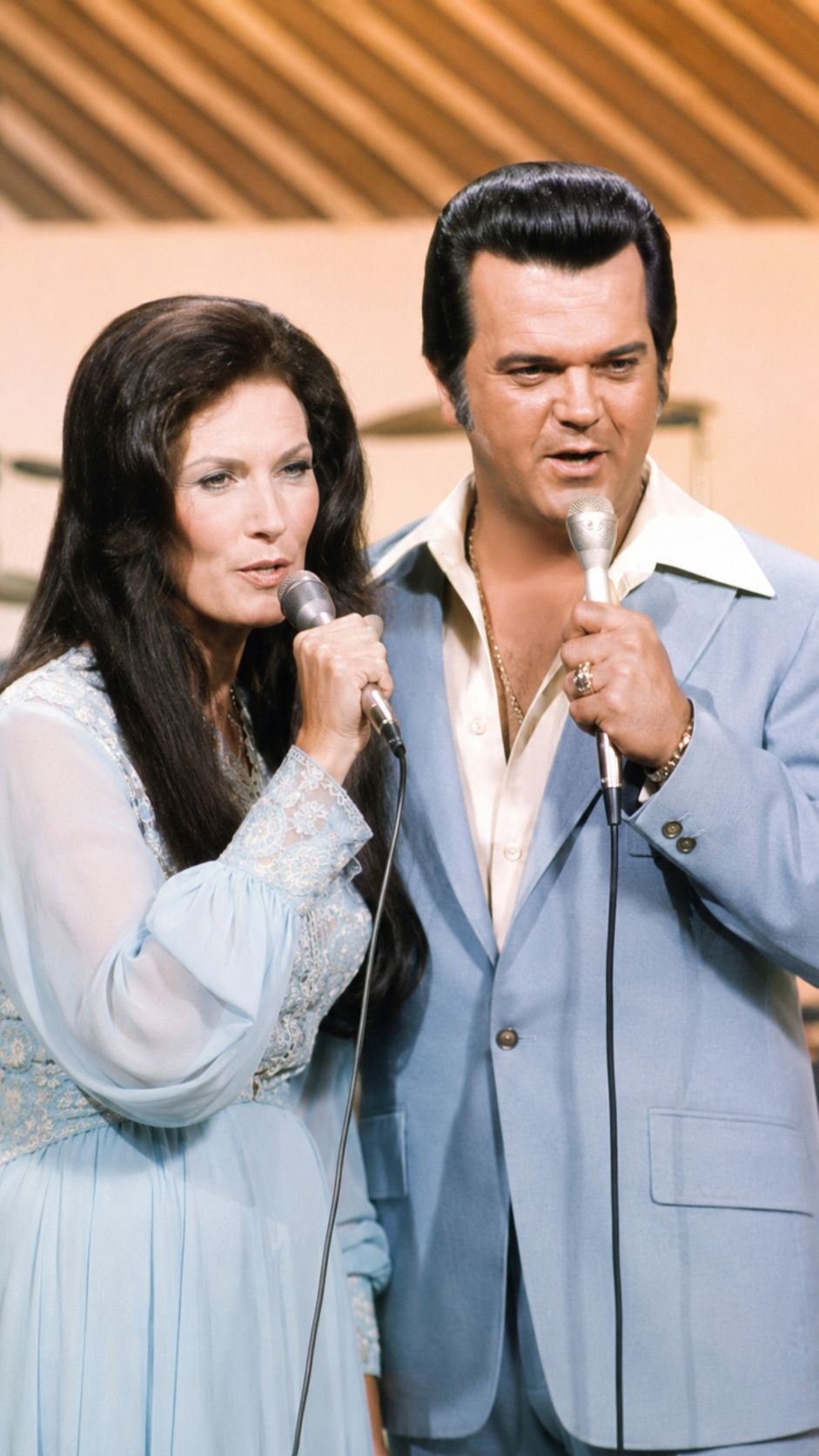
Country music has always been built on stories. Stories of heartbreak and healing. Stories of working people trying to survive another day. Stories that feel less like entertainment and more like conversations between old friends sitting on a front porch after sunset. Yet among all the legends who have carried those stories through the decades, few partnerships have ever captured lightning in a bottle the way Conway Twitty and Loretta Lynn did.
Their music was not manufactured. It was not engineered by marketing departments, streaming algorithms, or social media campaigns. It emerged from something far rarer—two artists who understood the human condition so deeply that every duet felt like a chapter from real life. When they sang together, listeners didn’t hear two celebrities performing. They heard a husband and wife arguing across a kitchen table, lovers trying to mend broken hearts, or everyday people wrestling with the realities of life and love.
That authenticity became their greatest weapon. Decades later, countless artists have attempted to recreate the magic of legendary duos. Many have achieved commercial success. Some have produced memorable collaborations. Yet none have managed to replicate the cultural force that Conway Twitty and Loretta Lynn represented.
The reason goes far beyond talent. In fact, it reveals a truth about the modern music industry that many fans instinctively feel but rarely articulate.
The story of Conway Twitty and Loretta Lynn begins during one of the most fascinating periods in Country Music history. The late 1960s and 1970s represented a golden era when artists still developed their identities through years of performing in clubs, radio stations, fairs, and honky-tonks before reaching national audiences.
By the time the pair joined forces, both stars had already established themselves as major solo acts. Loretta Lynn had become the fearless voice of working-class women, delivering groundbreaking songs like Coal Miner’s Daughter, The Pill, and You Ain’t Woman Enough. Meanwhile, Conway Twitty possessed one of the most recognizable voices in American music, capable of blending tenderness, passion, and vulnerability into every performance.
What made their partnership extraordinary was that neither artist needed the other for success.
That fact matters.
Most modern collaborations are born from strategic necessity. Labels pair artists to expand demographics, boost streaming numbers, or create viral moments. The collaboration itself often becomes the product.
With Conway Twitty and Loretta Lynn, the opposite occurred.
The partnership existed because the chemistry was undeniable.
When Conway and Loretta sang together, audiences believed every word because neither artist appeared to be performing a role.
Songs like After The Fire Is Gone, Lead Me On, Louisiana Woman, Mississippi Man, and As Soon As I Hang Up The Phone felt startlingly authentic. Their recordings captured emotional tension that modern production techniques simply cannot manufacture.
The industry today has more technology than ever before. Producers can correct pitch, align harmonies, adjust timing, and polish performances until they sparkle. Yet those same tools often eliminate the imperfections that reveal humanity.
Conway Twitty and Loretta Lynn thrived because of those imperfections.
Listeners could hear flirtation.
They could hear frustration.
They could hear humor.
Most importantly, they could hear truth.
The modern music ecosystem operates at a completely different speed. Artists are expected to maintain constant visibility across multiple platforms. Success is measured in streams, engagement metrics, trending clips, and viral moments. Songs frequently become content rather than experiences.
For Conway Twitty and Loretta Lynn, music remained the center of everything.
That distinction changed the way audiences connected with them.
During the height of their success, fans invested in artists for years, sometimes decades. They followed careers rather than playlists. They understood personalities, histories, and artistic journeys. As a result, when Conway Twitty and Loretta Lynn released a duet, listeners already knew who these people were.
Every song carried emotional context.
Today, many collaborations occur between artists whose audiences barely overlap beyond algorithmic recommendations. The songs may generate enormous numbers, but they rarely develop the emotional depth that defined classic Country Music partnerships.
Another reason the industry cannot recreate another duo like them lies in cultural change itself.
The America that produced Conway Twitty and Loretta Lynn was more regionally connected to country storytelling traditions. Rural communities, blue-collar families, and small-town experiences formed a shared cultural language.
When they sang about marriage struggles, financial hardships, temptation, loyalty, and forgiveness, millions immediately recognized those experiences.
Their songs functioned as mirrors.
Modern audiences are more fragmented than ever. Music consumption is personalized and individualized. Two people living next door to each other may listen to entirely different genres, artists, and playlists.
The shared emotional space that once elevated duos into cultural institutions has become increasingly rare.
Conway and Loretta were not simply successful musicians. They became symbols of relationships, resilience, and real life itself.
There is also a deeper artistic factor that often goes unnoticed.
Neither artist feared emotional vulnerability.
In contemporary music culture, branding frequently takes precedence over emotional risk. Public personas are carefully managed. Images are curated. Narratives are controlled.
Yet Loretta Lynn built her career by confronting uncomfortable truths. She sang about subjects many considered controversial. She embraced honesty even when it threatened commercial success.
Similarly, Conway Twitty brought extraordinary emotional openness to his performances. His voice communicated longing, regret, desire, and tenderness with remarkable precision.
Together, they created a musical dialogue that felt unscripted.
Listeners weren’t witnessing two brands collaborating.
They were witnessing two human beings communicating through song.
That authenticity remains impossible to fake.
The final reason the modern industry cannot recreate another powerhouse duo like Conway Twitty and Loretta Lynn may be the simplest—and the most important.
Great art often emerges from specific moments in history.
The rise of Country Music radio.
The dominance of album-oriented listening.
The cultural influence of the 1970s.
The unique personalities of both artists.
The songwriting traditions of Nashville.
The audiences who embraced those stories.
All of those elements converged at exactly the right moment.
You can imitate the sound.
You can imitate the style.
You can even imitate the marketing.
But you cannot recreate the circumstances.
And that is why their legacy continues to grow decades after their greatest recordings first reached listeners.
Because the world did not simply witness a successful musical partnership.
It witnessed something unrepeatable.
The magic of Conway and Loretta was never just in the songs. It was in the rare moment when authenticity, talent, timing, and truth collided—and country music has spent decades searching for that lightning ever since.
Their recordings remain timeless reminders that genuine connection cannot be engineered. It cannot be programmed into an algorithm. It cannot be assembled in a boardroom.
It can only happen when two extraordinary artists meet at precisely the right moment and create something bigger than themselves.
That is why the legend of Conway Twitty and Loretta Lynn endures.
And that is exactly why the modern music industry may never produce another duo quite like them.