 By admin
INTRODUCTION:
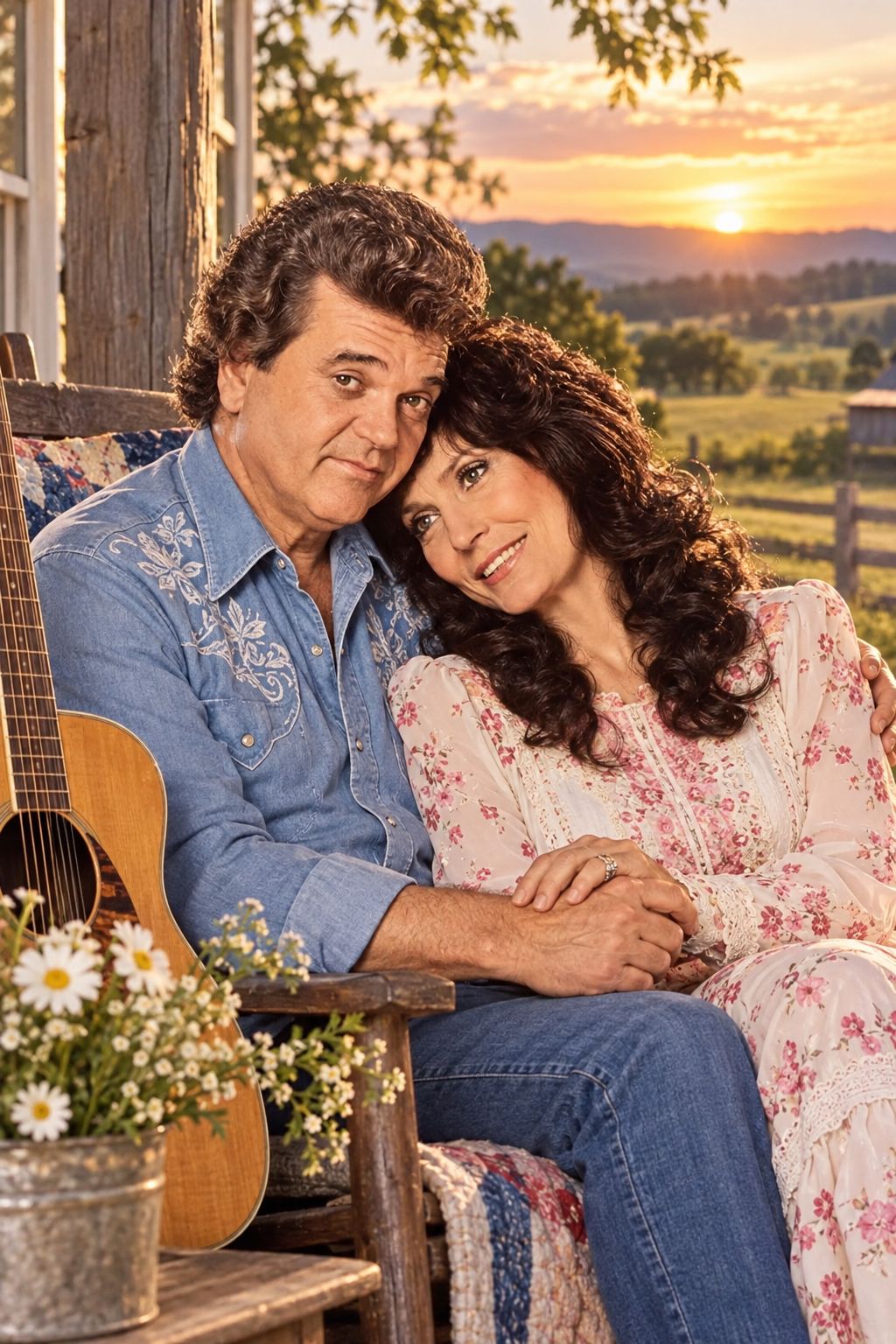
There was something almost magical about Conway Twitty and Loretta Lynn.
When they stood side by side beneath the Nashville lights, their voices seemed to tell a story that was bigger than either singer alone. He brought the deep, velvet darkness. She brought the fire, grit, humor, and heartbreak. Together, they created some of the most unforgettable duets in country music history.
But their chemistry also created a mystery.
Fans watched them sing about forbidden love, temptation, jealousy, and relationships falling apart. Their performances could feel so intimate that audiences naturally wondered whether there was something more happening behind the microphones.
Loretta Lynn eventually addressed those rumors herself.
“Everybody thought me and Conway had a thing going. And that’s the farthest from the truth.”
According to Lynn, the real story was something much more meaningful: friendship, trust, professionalism, and an understanding that their musical partnership worked because they respected the lives they had outside the spotlight.
And that may have been the closest thing they had to a “secret pact.”
The Partnership That Changed Country Music
When Conway Twitty and Loretta Lynn began recording together, neither needed the other to become a star.
Lynn was already one of country music’s most powerful female voices. Twitty, meanwhile, had transformed himself from a rock-and-roll performer into one of country music’s dominant hitmakers.
Twitty eventually accumulated an extraordinary forty No. 1 Billboard country hits, while Lynn had already established herself as a groundbreaking songwriter and performer.
Then came “After the Fire Is Gone.”
Released in 1971, the song became a No. 1 country hit and launched one of the most successful male-female partnerships the genre had ever seen.
It wasn’t simply that their voices sounded good together.
They understood how to tell a story together.
Twitty could sound wounded without saying too much. Lynn could answer him with just enough vulnerability and defiance to make the listener believe every word.
Their songs often sounded like conversations between two people standing on the edge of making a terrible decision.
And audiences couldn’t look away.
The “Secret” Was That They Knew Where the Line Was
The most fascinating part of the Twitty-Lynn story is that the very thing audiences interpreted as romantic chemistry was, according to Lynn, built on genuine friendship.
Lynn explained that she loved Conway as a friend—and that her husband, Oliver “Mooney” Lynn, liked him too.
In fact, she recalled that Conway was essentially the only person in the music business her husband particularly cared for.
That detail changes everything.
Imagine the pressure.
Two married country stars are performing songs filled with passion and betrayal. Their voices blend so naturally that audiences begin imagining a romance behind the scenes.
Yet the people actually involved understood the difference between performing intimacy and living it.
That distinction may have protected their friendship for years.
Their secret wasn’t pretending there was chemistry.
Their secret was knowing exactly what that chemistry meant—and what it didn’t.
They Turned Emotion Into Art
One reason their partnership lasted was simple: they didn’t fight the emotional power of their songs.
They embraced it.
“After the Fire Is Gone” wasn’t a declaration of their own relationship. It was storytelling.
So were songs such as “Lead Me On,” “Louisiana Woman, Mississippi Man,” and “Feelins’.”
Their recordings explored complicated adult emotions—loneliness, temptation, regret, desire, and the ache of relationships that weren’t working.
And because both singers possessed such strong personalities, neither disappeared inside the duet.
Lynn remained unmistakably Loretta.
Twitty remained unmistakably Conway.
The magic happened in the space between them.
The Country Music Hall of Fame notes that the pair became one of the most successful duet teams in country history, earning the CMA Vocal Duo of the Year honor repeatedly from 1972 through 1975. Twitty and Lynn also won a Grammy and four CMA awards together.
They Didn’t Need to Manufacture a Relationship
This is perhaps the most misunderstood part of their legacy.
Modern audiences sometimes assume that extraordinary chemistry must come from romance.
But country music has always understood something different.
Sometimes two people can understand each other artistically without becoming romantically involved.
Twitty and Lynn seemed to possess that rare ability.
They knew how to listen to one another.
They knew when to push a lyric.
They knew when to hold back.
And most importantly, they trusted each other.
That trust allowed them to sing words that might have been uncomfortable in real life without allowing the performance to destroy the friendship underneath it.
Behind the Laughter Was Something Real
Lynn’s memories of Twitty weren’t dominated by glamorous backstage moments.
They included ordinary friendship.
She remembered Conway laughing with her husband, trading jokes with him—some of them, she jokingly admitted, probably lies.
That image is almost more powerful than any romantic rumor.
While audiences imagined secret glances and forbidden feelings, the reality may have been much simpler:
Conway was the friend who could make Loretta’s husband laugh.
And that gave their professional relationship a foundation that gossip could never easily destroy.
The Music Became Bigger Than the Rumors
The irony is that the rumors probably helped make the performances even more compelling.
Listeners heard two voices that sounded emotionally connected.
They watched two performers who appeared completely comfortable beside one another.
They sang lyrics about love and betrayal with such conviction that it became easy to forget they were acting out stories written for songs.
But that was the gift.
Great country singers don’t merely sing words.
They make you believe the words happened to them.
Twitty was especially gifted at that. His career was built around intensely emotional performances, while Lynn had developed a reputation for transforming personal experience and social realities into fearless country songwriting.
Together, they created something neither could have created alone.
A Partnership That Outlived the Stage
Conway Twitty died suddenly in 1993 at age 59, ending a career that had stretched across decades. He was later inducted into the Country Music Hall of Fame in 1999.
Loretta Lynn continued recording and performing for decades afterward, eventually passing away in 2022.
But the recordings they made together never really aged.
That’s because they weren’t built solely around trends.
They were built around human emotion.
Loneliness doesn’t age.
Temptation doesn’t age.
Heartbreak doesn’t age.
And neither does the feeling of hearing two people sing as though they’re having a private conversation that somehow everyone in the room has been invited to hear.
The Pact Was Never Written Down
There may never have been a literal piece of paper or formal agreement between Conway Twitty and Loretta Lynn declaring the rules of their friendship.
But their actions suggest something more powerful than a contract.
Trust the music.
Respect the friendship.
Protect the families.
Leave the romance to the songs.
That may have been the unwritten pact that allowed them to keep returning to the microphone together.
And perhaps that’s why their partnership remains so fascinating.
The world wanted a scandal.
They gave the world music.
The world wanted to believe there was a secret romance.
They gave us friendship.
The world wanted to know what happened when the microphones were turned off.
Maybe the answer was beautifully ordinary: two country legends who trusted each other enough to create extraordinary art.
Sometimes the greatest love story in music isn’t about two people falling in love.
It’s about two people who understood each other well enough to make millions of people feel it.
That was the real magic of Conway Twitty and Loretta Lynn.
Not a forbidden romance.
Not a hidden affair.
But a rare musical connection built on respect—and powerful enough to make generations of listeners wonder if the story was real.
Because when Conway Twitty and Loretta Lynn sang together, fiction sounded like truth.
And that is why, decades later, their voices still feel like they are telling us a secret.
VIDEO: