 By admin
 INTRODUCTION:
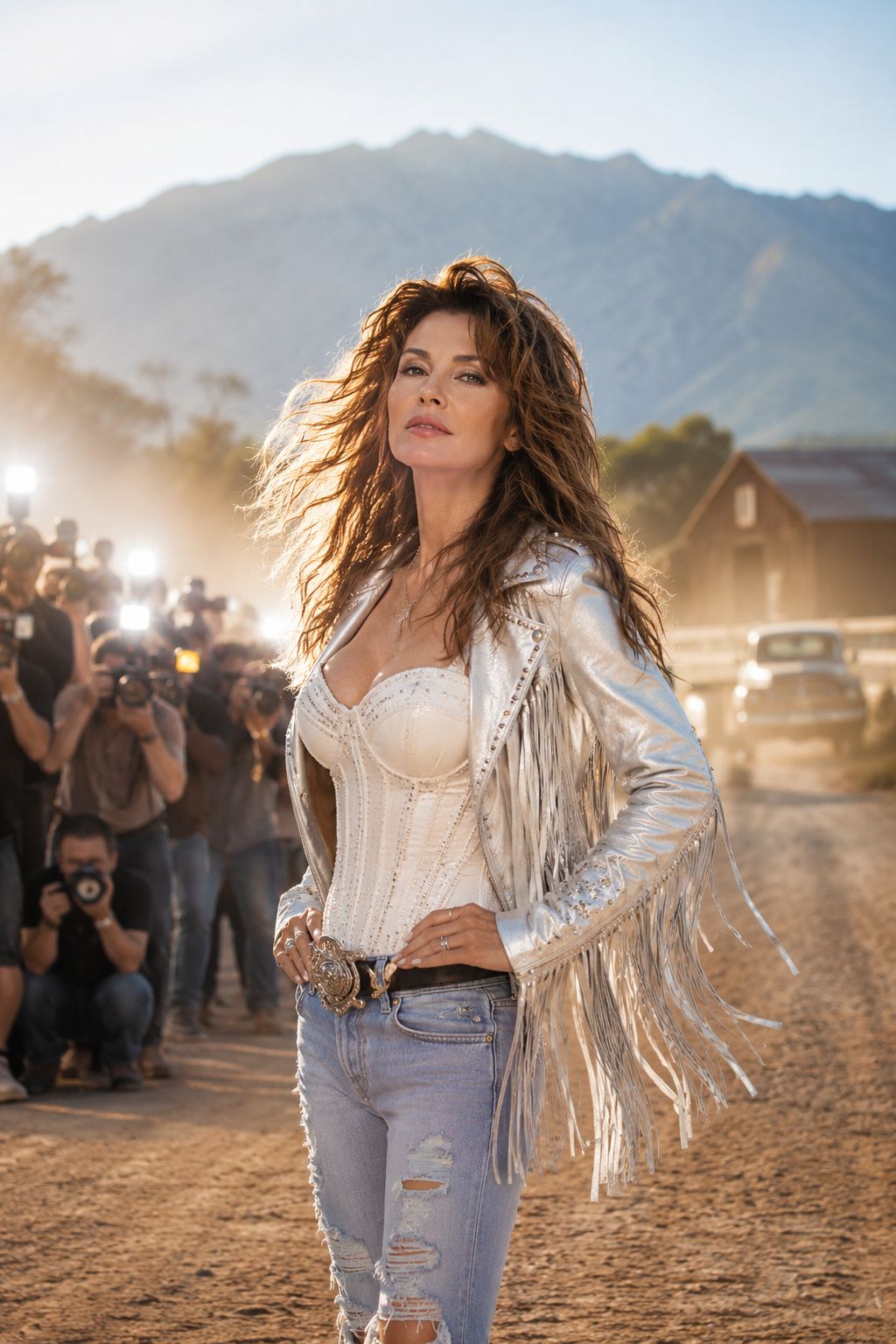
When Shania Twain exploded onto the country music scene in the 1990s, she didn’t just become a superstar—she became a lightning rod. To millions of fans, she represented confidence, freedom, and the future of country music. To many critics, however, she was something entirely different.
She was “too pop.”
“Too glamorous.”
“Too sexy.”
“Too commercial.”
And for years, one question quietly echoed through Nashville:
Was Shania Twain saving country music—or destroying it?
Looking back decades later, the controversy surrounding her career says just as much about country music’s identity crisis as it does about Shania herself.
A Woman Who Refused to Fit Nashville’s Rules
Before Shania Twain, female country stars generally followed a familiar blueprint.
Traditional sound.
Traditional image.
Traditional expectations.
Then came a young Canadian singer with model-like confidence, rock-star energy, and songs that sounded unlike anything country radio had ever embraced.
When The Woman in Me arrived in 1995, listeners noticed something different.
By the time Come On Over was released in 1997, that difference had become impossible to ignore.
The album didn’t merely sell well.
It rewrote history.
It eventually became the best-selling studio album by a female artist in any genre and the best-selling country album ever released.
Ironically, its unprecedented success made many critics even more uncomfortable.
Success that enormous often creates resistance.
“She wasn’t breaking country music’s rules—she was exposing how limited those rules had become.”
The “Too Pop” Argument
The loudest criticism centered on one accusation.
Shania wasn’t “country enough.”
Her producer—and then-husband—Robert John “Mutt” Lange was famous for producing rock legends like Def Leppard and AC/DC.
His polished production style transformed Shania’s recordings into massive crossover hits.
Songs like:
- You’re Still the One
- That Don’t Impress Me Much
- Man! I Feel Like a Woman!
- From This Moment On
featured lush harmonies, massive choruses, and production techniques rarely heard on country radio before.
Purists argued the steel guitar had been replaced by pop hooks.
Others insisted Nashville was losing its identity.
To them, Shania wasn’t expanding country music.
She was diluting it.
Yet fans didn’t seem to care.
They simply loved the songs.
She Changed More Than the Sound
The music wasn’t the only thing causing controversy.
Shania completely redefined what a female country superstar could look like.
She wore leopard prints.
Leather outfits.
High-fashion dresses.
Music videos filled with cinematic visuals.
Confident body language.
Fearless attitude.
Some traditional observers believed this image leaned too heavily into pop celebrity culture.
Others questioned whether glamour belonged in country music at all.
What they often overlooked was something much deeper.
Shania wasn’t asking permission.
She wasn’t trying to imitate anyone.
She was building an entirely new lane.
“Every generation has one artist accused of changing too much. History usually remembers them as pioneers.”
The Hidden Double Standard
Many observers have since pointed out an uncomfortable truth.
Male artists regularly experimented with rock influences without receiving nearly the same level of criticism.
Country legends had blended genres for decades.
Southern rock.
Outlaw country.
Bluegrass.
Pop-country.
Country-rock.
Each wave initially faced resistance before becoming accepted.
Why did Shania’s crossover feel so threatening?
Part of the answer may have been visibility.
She wasn’t simply successful.
She became one of the biggest entertainers on Earth.
Her videos aired worldwide.
Her albums dominated international charts.
Her tours resembled arena rock productions.
She wasn’t merely representing country music.
She was redefining how the world saw it.
Confidence Became Part of the Controversy
Songs like Man! I Feel Like a Woman! weren’t simply catchy.
They celebrated female confidence in ways country audiences hadn’t often heard.
Rather than singing about heartbreak alone, Shania sang about independence.
Joy.
Adventure.
Self-worth.
Fun.
She smiled.
She laughed.
She flirted.
She owned every stage she stepped onto.
Some listeners celebrated that confidence.
Others viewed it as a departure from traditional expectations.
Looking back today, many of those songs feel remarkably modern.
In many ways, they arrived years ahead of their time.
“The greatest threat wasn’t that Shania sounded different. It was that millions of women immediately connected with her.”
Commercial Success Created More Critics
Massive popularity often creates a strange paradox.
The bigger an artist becomes, the more people begin questioning whether they deserve that success.
Shania became unavoidable.
Country stations played her constantly.
Pop stations embraced her.
International audiences who had never listened to country music suddenly became fans.
Traditionalists feared country music might permanently shift toward crossover sounds.
Ironically, history suggests the opposite happened.
Country music continued evolving.
Traditional artists still found audiences.
New voices emerged.
Meanwhile, Shania’s music inspired an entirely new generation of performers.
The Long Silence
Just as her career appeared unstoppable, tragedy intervened.
After battling Lyme disease and later developing serious vocal complications, Shania largely disappeared from recording.
For years, fans wondered whether they would ever hear that voice again.
During her absence, something interesting happened.
Many of the harshest criticisms faded.
Instead, people remembered the music.
The records.
The concerts.
The confidence she inspired.
Distance often changes perspective.
Artists who once divided audiences frequently become legends.
The Legacy Critics Couldn’t Stop
Today, countless country and pop artists openly credit Shania Twain as a major influence.
Her fingerprints appear across modern country music.
Powerful female performers.
Genre blending.
Arena-sized productions.
Fashion-forward performances.
Global marketing.
Much of what once seemed controversial has become completely normal.
The “dangerous” artist eventually became part of the establishment.
History has a remarkable sense of irony.
Was There Really a Conspiracy?
The word “conspiracy” makes for a dramatic headline, but reality is usually more complicated.
There is no credible evidence of a coordinated effort to silence or sabotage Shania Twain.
What did exist was a broad wave of skepticism from some critics, industry traditionalists, and fans who feared that country music’s core identity was changing too quickly. Those debates were real, public, and often passionate—but they reflected differing opinions about the genre’s future rather than a hidden campaign.
That distinction matters because it highlights what was truly at stake.
This wasn’t simply about one artist.
It was about what country music should become.
Should it remain tightly rooted in tradition?
Or should it evolve with every new generation?
Shania became the face of that debate because she stood at the crossroads of country, pop, rock, and international stardom.
A Revolution Disguised as a Pop Song
Today, it’s difficult to imagine country music without the doors that Shania Twain helped open.
Artists now move comfortably between country, pop, rock, folk, and even hip-hop influences. Stadium tours, cinematic music videos, and global fan bases are no longer unusual for country stars. Many of those paths were made easier because Shania proved they were possible.
Her story reminds us that innovation often arrives wearing the label of controversy.
The artists who challenge expectations rarely receive unanimous applause in the moment. Instead, they endure criticism, skepticism, and endless debates about whether they belong.
Years later, those same artists are often celebrated as visionaries.
Perhaps the real lesson isn’t that Shania Twain was “too dangerous” for country music.
Perhaps she was simply too far ahead of it.
The voices that once warned she would change country music forever turned out to be right. What they couldn’t foresee was that, for millions of fans around the world, that change would become part of the genre’s greatest modern success story.
VIDEO:
https://youtu.be/a-Lp2uC_1lg?si=x_fwdhhFVu0SrID1