 By admin
INTRODUCTION:
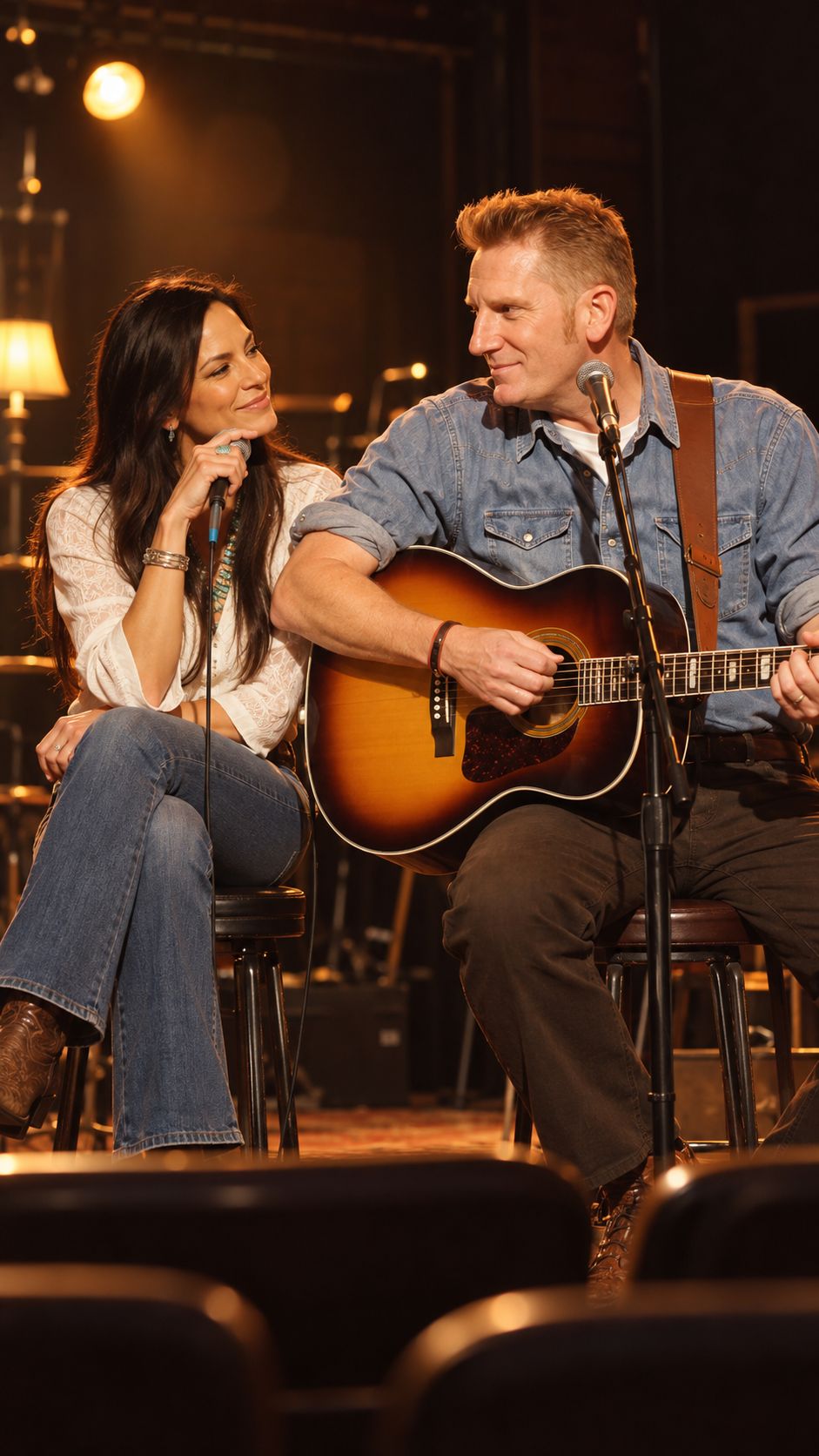
Some songs become hits because the world is ready to hear them. Others become unforgettable because they carry a truth so personal, so fragile, and so deeply human that sharing them feels almost like opening a private letter to strangers. For Joey + Rory, the husband-and-wife country music duo who captured hearts with their sincerity, faith, and old-fashioned storytelling, the line between a personal confession and a public song was never easy to cross.
Their music was never simply about catchy melodies or chart positions. It was about the quiet beauty of ordinary life, the promises made between two people, the sacrifices hidden behind a smile, and the faith that can sustain a family when the future becomes uncertain. Songs such as “Cheater, Cheater,” “When I’m Gone,” and “That’s Important to Me” reached listeners in different ways, but each reflected the honesty that made the duo special.
Yet the idea that their most famous songs were almost never released deserves a closer look. Not every beloved recording was literally rejected or shelved, and there is an important difference between a documented story of a song’s creation and the emotional risks artists face when sharing something deeply personal.
The more revealing story is how Joey Feek and Rory Feek built a musical legacy from material that demanded vulnerability, patience, and courage—and how songs that might have remained private expressions ultimately found a home in the hearts of millions.
1. The Truth Behind the Songs: When Honesty Became Their Greatest Risk
To understand why some of Joey + Rory’s most memorable songs could easily have been overlooked, it helps to understand the country music industry they entered.
By the late 2000s, country radio was changing. Production was becoming bigger, pop influences were growing stronger, and record labels were constantly searching for songs that could attract attention quickly. In that environment, a husband-and-wife duo whose greatest strength was their willingness to sing about everyday life faced a particular challenge: their music did not always fit the expectations of commercial country music.
Rory Feek understood the difficulty of getting personal songs heard. He was already an accomplished songwriter whose work had been recorded by other country artists. But writing a song that another performer could use was different from creating music that revealed something deeply personal about his own life.
In a 2009 interview, Rory discussed how many of his songs were overlooked because they contained personal elements or were not considered radio-friendly. He also explained that he and Joey Feek were more willing to be honest as performers than some artists who might record their material.
That observation helps explain the heart of their musical identity.
They were not simply looking for songs that sounded good. They wanted songs that meant something.
And sometimes, meaning something deeply was precisely what made a song difficult to sell.
Their story was not that every famous recording was rejected or nearly abandoned. Rather, it was that their willingness to embrace unconventional material helped them create a body of work that might have sounded too personal, too traditional, or too different for a more commercially cautious artist.
The songs that defined them emerged from that willingness to take a chance.
2. “Cheater, Cheater”: The Unusual Song That Introduced America to Joey + Rory

When Joey + Rory released “Cheater, Cheater” in 2008, they introduced audiences to a side of country music that was playful, sharp-tongued, and unapologetically direct.
The song was not a delicate ballad about heartbreak. It was an energetic confrontation with infidelity, delivered with a spirited country sound and a narrator who refused to remain silent.
That boldness was part of its appeal, but it also illustrates an important truth about songwriting: a good song does not always find its audience the first time around.
Before Joey + Rory released their version, the country duo Bomshel had already recorded the song. Its earlier release failed to make a significant chart impact. When Joey and Rory brought their interpretation to listeners, however, the song found a stronger response, eventually reaching No. 30 on the country charts.
That history complicates the idea that the song was almost never released. It had already been recorded and released. The more interesting question is why a song that had struggled to gain traction could become an important breakthrough for another artist.
The answer lies partly in interpretation.
Joey Feek’s vocal delivery gave the song a distinctive personality. She could communicate frustration without losing the humor and liveliness that made the performance entertaining. Meanwhile, the arrangement leaned into traditional country and bluegrass influences rather than attempting to make the song sound like a generic radio production.
The result felt authentic to the duo.
Their appearance on the television competition Can You Duet helped introduce them to a national audience, and their debut album, The Life of a Song, gave the recording a home.
The song’s success demonstrated that material could be overlooked in one context and rediscovered in another.
Sometimes, the difference between a forgotten song and a memorable hit is not the writing itself. It is finding the voices that understand how to bring that writing to life.
For Joey and Rory, “Cheater, Cheater” was an early reminder that taking a chance on an unconventional song could open a door that a safer choice might never have opened.
3. “That’s Important to Me”: A Song That Began as a Private List of Values
If “Cheater, Cheater” introduced the duo’s lively side, “That’s Important to Me” revealed the quieter foundation beneath their music.
Released on their second album, Album Number Two, the song grew from a list of things that mattered to the couple when they were newly married.
Joey Feek explained that she and Rory began writing down their priorities, drawing on her upbringing on a farm in Indiana and their hopes for raising a family. They wanted to emphasize honesty, responsibility, family life, and the simple pleasures that could easily disappear beneath the demands of modern living.
What began as a collection of personal ideas eventually became one of the defining songs in their catalog.
That journey matters because the song was not built around a conventional story of romantic triumph or heartbreak. Instead, it celebrated a particular way of living.
The message was intimate, but its appeal was universal.
Many listeners recognized their own lives in the song’s appreciation of home-cooked meals, family traditions, time outdoors, and the importance of putting loved ones first. Others heard a reminder of the values they had grown up with or hoped to pass on to their children.
Yet songs built around ordinary life can be difficult to position commercially. They do not necessarily offer a dramatic twist, a scandalous confession, or a soaring emotional climax. Their power depends on whether listeners are willing to slow down and pay attention.
That was the risk Joey + Rory took.
The song was initially considered for release as the first single from their second album, but the plan changed, and “This Song’s for You” was released first. “That’s Important to Me” subsequently became a single in its own right.
This is one of the clearest examples of how a beloved Joey + Rory song faced a real obstacle on its way to listeners—not because it was permanently rejected, but because its path to the public was not as straightforward as its eventual reputation might suggest.
For Rory, the song also represented something deeply personal. He regarded it as a cornerstone of their identity as a married couple and as musicians.
It captured the life they wanted to build, not simply the career they hoped to achieve.
And that distinction would become increasingly important as their story unfolded.
4. “When I’m Gone”: The Song That Took on a Different Meaning

Few recordings associated with Joey + Rory carry the emotional weight of “When I’m Gone.”
The song was written by their friend Sandy Lawrence after the death of her mother. Joey and Rory recorded it for their 2012 album, His and Hers, years before Joey’s cancer diagnosis transformed the way many listeners heard it.
That chronology is essential to understanding its extraordinary legacy.
The song was not originally written as a farewell from Joey to Rory. It was not created specifically to document her illness, nor should its later emotional meaning be confused with its original purpose.
Instead, the recording existed long before the circumstances that would eventually make it devastatingly personal.
When Joey was diagnosed with cervical cancer in 2014, her life and career entered an entirely different chapter. As her illness progressed, the couple faced difficult decisions about treatment, family, faith, and how to spend the time they had together.
During that period, “When I’m Gone” acquired a significance that neither a conventional release strategy nor a promotional campaign could manufacture.
Listeners began hearing the song through the reality of Joey’s situation. Words that had once expressed the pain of losing someone became inseparable from the possibility of losing her.
The recording’s emotional impact grew, and renewed attention helped it reach No. 21 on the Billboard Hot Country Songs chart in late 2015.
There is a profound irony in that development.
A song written in response to someone else’s grief became one of the most powerful expressions associated with the final chapter of Joey’s life.
But it would be misleading to say that the song was almost never released. It had been included on an album and released to radio years earlier. What changed was the context surrounding it.
The music remained the same. The meaning deepened.
A song can begin as someone else’s story and eventually become a place where millions of people recognize their own grief.
That is what happened with “When I’m Gone.”
Its enduring power came not from a manufactured tragedy but from the extraordinary intersection of a preexisting song, a beloved singer, and circumstances that gave the recording new emotional resonance.
5. The Albums That Preserved Their Authenticity

The story of Joey + Rory cannot be understood through individual songs alone. Their albums reveal a broader commitment to musical honesty.
Their debut, The Life of a Song, arrived in 2008. It established their combination of traditional country sounds, humor, warmth, and personal storytelling. Their follow-up, Album Number Two, expanded that identity, while His and Hers continued to showcase the contrast between lighter material and songs carrying more emotional weight.
They were comfortable singing about romantic frustration, ordinary family life, faith, and the complicated realities of growing older together.
That variety mattered.
Artists who build their careers around a single commercial formula can become trapped by the expectations of their audience. Joey and Rory, by contrast, made room for different sides of their personalities. A playful song could sit alongside a deeply reflective ballad without either feeling out of place.
The couple also benefited from the production and musical judgment of Carl Jackson, whose work helped shape their early recordings.
Their sound drew on the traditions of country music without treating those traditions as museum pieces. The instrumentation and vocal arrangements supported the songs rather than overwhelming them.
This approach was particularly important for material that depended on sincerity. If the production had become too elaborate, some of the intimacy might have been lost. If every song had been shaped around a radio-friendly formula, the differences between their personalities might have disappeared.
Their success therefore rested partly on what they chose not to do.
They did not need every recording to sound like a potential chart-topper. They needed the songs to sound like something they believed.
That philosophy did not eliminate the commercial challenges facing their music. Some singles performed better than others, and not every recording received the attention its creators might have hoped for.
But the albums preserved something more valuable than a collection of isolated hits: a recognizable artistic identity.
6. Joey’s Voice and Rory’s Writing: Why the Partnership Worked

At the center of the duo’s appeal was the relationship between Joey Feek’s voice and Rory Feek’s songwriting.
Their musical partnership worked because the two brought different strengths to the same material.
Joey’s voice carried a straightforward warmth that suited traditional country music. She could sing with humor, tenderness, and conviction without making the performance feel overly polished. Her delivery gave songs a human quality that made listeners feel as though they were hearing someone speak directly to them.
Rory, meanwhile, approached songwriting as a way of expressing ideas and experiences that might otherwise remain unspoken.
His work could be autobiographical, observational, humorous, or spiritual. He understood that the most memorable country songs often begin with a small detail: a familiar room, an ordinary conversation, a difficult choice, or a feeling that someone has struggled to explain.
When those two qualities came together, the music felt personal without becoming inaccessible.
This was especially apparent in “That’s Important to Me,” where the couple’s real-life priorities shaped the song, and in “When I’m Gone,” where Joey’s interpretation eventually became inseparable from the circumstances of her life.
The partnership also allowed them to take artistic risks that might have seemed less natural for other performers.
A song did not have to fit an established image or imitate the latest radio trend. It needed to make sense for the two people singing it.
That willingness to embrace material with a strong personal identity was central to Rory’s own explanation of their work.
In a business where songs are frequently evaluated according to their commercial potential, Joey and Rory demonstrated the value of another question:
Does this song tell the truth?
Not every honest song becomes a hit. Not every meaningful recording finds a large audience. But when an artist’s voice and a song’s message align, the result can outlast the circumstances of its release.
7. Joey’s Cancer Battle Changed How the World Heard Their Music

In 2014, Joey Feek was diagnosed with cervical cancer. The illness eventually became terminal, and she died on March 4, 2016, at the age of 40.
Her battle brought enormous attention to the couple’s life and music. But the significance of that attention goes beyond the sadness of her passing.
It changed the way listeners understood recordings they had known for years.
“When I’m Gone” became the most striking example. The song’s earlier release had allowed it to exist as a piece of music independent of Joey’s illness. Later, the circumstances surrounding her life gave it a new emotional dimension.
Their gospel recordings also became especially meaningful. On Hymns That Are Important to Us, released in 2016, Joey’s voice conveyed the faith that had long been central to her identity.
The album was a deeply personal project, and its release during the final period of her life made it especially poignant for listeners.
Still, it is important not to reduce Joey’s career to her illness.
She was a singer, songwriter, wife, mother, and performer long before cancer entered the story. Her musical identity included humor, traditional country influences, and a genuine appreciation for the songs she loved.
Her legacy deserves to be understood in its entirety.
The cancer diagnosis did not create the authenticity that made Joey + Rory special. It revealed how powerfully that authenticity could resonate when listeners were confronted with the fragility of life.
Their music had already been built around family, faith, love, and the passage of time. Those themes became more painful and more precious as Joey’s illness progressed.
In that sense, the songs did not need to be rewritten. Their meaning had already been there.
Listeners simply heard them differently.
8. The Greatest Lesson: Some Songs Need Time to Find Their Audience
The most compelling lesson from the story of Joey + Rory is that a song’s journey does not end when it is recorded or released.
“Cheater, Cheater” showed how a song could find a stronger audience through a different interpretation. “That’s Important to Me” demonstrated how a private list of values could become a statement that resonated with families across the country. “When I’m Gone” revealed how a recording could acquire new significance as life changed around it.
These songs followed different paths, but each illustrates the unpredictable relationship between art and the people who hear it.
It is tempting to turn their history into a dramatic story about record executives rejecting masterpieces or famous songs nearly disappearing forever. The documented history, however, offers something more nuanced—and arguably more interesting.
Their music was shaped by commercial uncertainty, artistic choices, personal conviction, and circumstances no one could have fully anticipated.
Some songs struggled to find attention. Some were released only after plans changed. Others became more meaningful years after they were recorded.
That is how a musical legacy grows.
It grows when a listener discovers an old recording at precisely the moment they need it. It grows when a song written about another family’s grief helps someone endure their own. It grows when a couple’s commitment to singing honestly leaves behind music that continues to matter after one of them is gone.
Joey + Rory did not need every song to become a chart-topping success for their work to endure.
They needed to make music that people could carry into their own lives.
And they did.
FINAL REFLECTION: The Songs Were Never Just Songs
The story behind Joey + Rory’s most beloved music is not simply a tale of songs that almost remained hidden. It is a story about the difficult choices artists make when they decide whether to follow commercial expectations or trust the material that means the most to them.
Their willingness to embrace honesty helped define their sound. Their devotion to traditional country music gave their recordings a distinctive character. And the circumstances of Joey’s final years brought a new emotional depth to songs that had existed long before her diagnosis.
Perhaps the most moving part of their legacy is that their music continues to speak to people who have never met them.
A couple’s memories become a listener’s memories. A song about an ordinary family becomes a reminder to appreciate the people sitting around the dinner table. A recording about saying goodbye becomes a source of comfort for someone facing loss.
That is the enduring power of Joey + Rory.
Their songs did not need a perfect beginning, a flawless release strategy, or a place at the top of every chart.
They needed to reach the right hearts.
And years later, they still do
VIDEO: