 By admin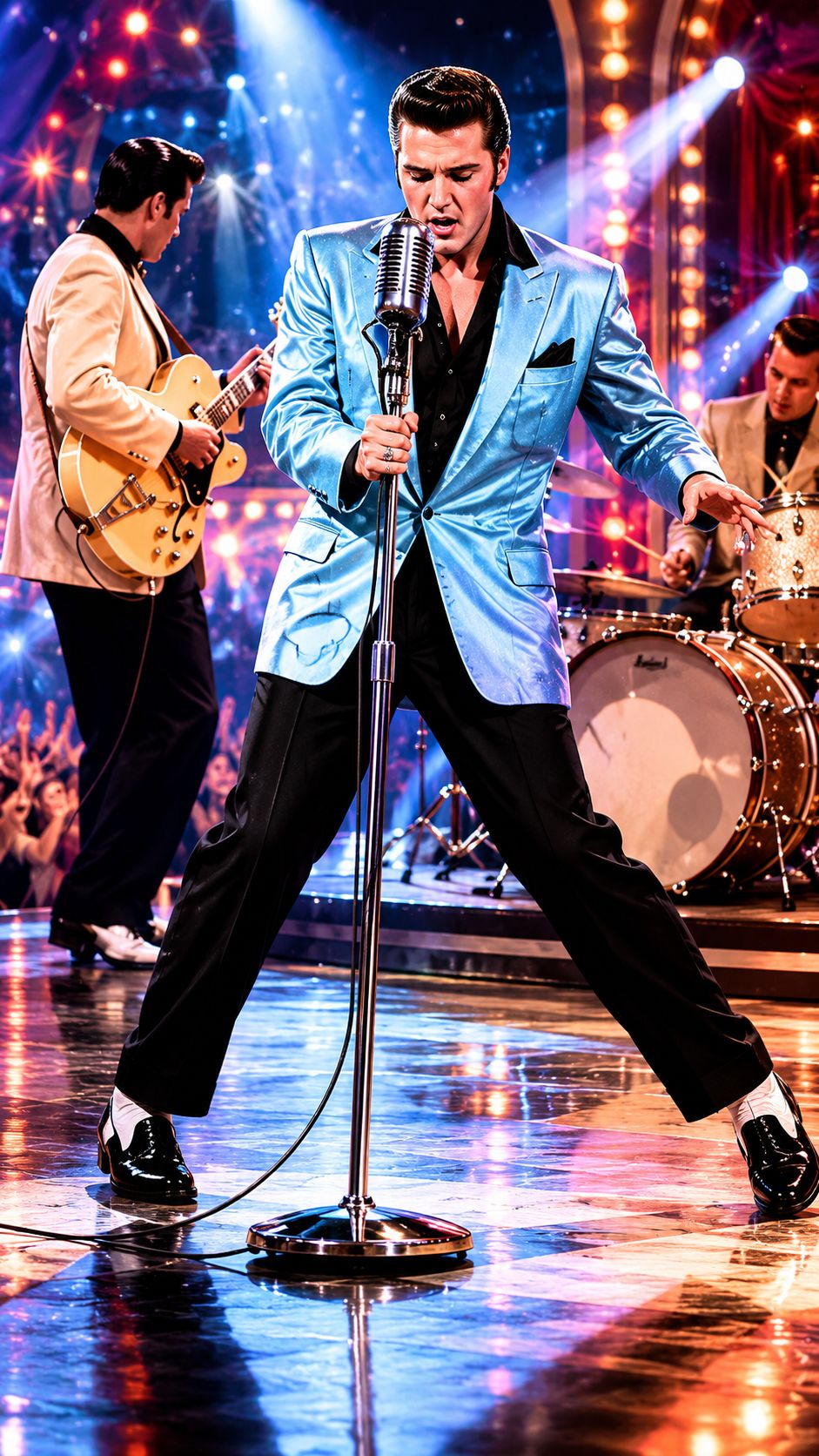
INTRODUCTION:
There are great singers, there are cultural icons, and then there is Elvis Presley—a phenomenon so powerful that his impact continues to echo across generations nearly half a century after his passing. Long before social media, streaming platforms, and global digital audiences, one young man from Tupelo, Mississippi transformed popular music and altered the course of entertainment forever. His voice was not simply heard; it was felt. It carried longing, rebellion, tenderness, faith, and raw human emotion in a way that transcended geography, race, and class.
The story of Elvis Presley is not merely the story of a successful musician. It is the story of a cultural earthquake. He emerged during a time when musical genres existed in separate worlds, then shattered those barriers with a sound that blended Country Music, Blues, Gospel, and Rock and Roll into something entirely new. Audiences did not just listen to him—they experienced him.
Decades later, countless artists have attempted to capture the same magic. Many have sold millions of records. Some have dominated charts. Others have become legends in their own right. Yet none have truly replaced Elvis. The reason lies deeper than record sales or fame. It rests in the rare intersection of talent, timing, charisma, and cultural transformation that occurs perhaps once in a century.
Some voices entertain a generation. The voice of Elvis Presley changed the world.
The Man Who Arrived at the Perfect Moment
To understand why Elvis Presley remains irreplaceable, one must first understand the era into which he emerged. The early 1950s were marked by strict cultural divisions. Popular music was fragmented. Country Music appealed largely to rural America. Blues was deeply rooted in African American communities. Mainstream pop was polished and predictable.
Then came Elvis.
When he walked into Sun Records in Memphis, few could have imagined the revolution that was about to begin. Producer Sam Phillips recognized something extraordinary in the young singer. Elvis Presley possessed a voice capable of moving effortlessly between genres. He could sing a heartfelt country ballad, a soulful gospel hymn, or a rebellious rock anthem with equal authenticity.
This was not imitation. It was fusion.
The emergence of songs like That’s All Right signaled the birth of a new sound. Audiences heard familiar influences, yet the result felt completely original. The musical boundaries that had defined American culture suddenly seemed far less permanent.
A Voice Unlike Any Other
Many singers have impressive vocal ranges. Others possess technical perfection. Yet the voice of Elvis Presley was something different.
His greatest strength was emotional communication.
Listen to Can’t Help Falling in Love, and the tenderness feels intimate and timeless. Hear Love Me Tender, and vulnerability becomes the song’s defining characteristic. Experience Suspicious Minds, and you encounter passion, desperation, and hope intertwined within every phrase.
What made Elvis extraordinary was his ability to inhabit a song completely.
He did not merely perform lyrics. He lived inside them.
His vocal style drew heavily from Gospel Music, which he loved throughout his life. That spiritual foundation gave his performances a sincerity that resonated with listeners regardless of their background. Whether singing sacred material or popular hits, he conveyed conviction.
This authenticity remains one of the primary reasons modern audiences continue discovering his music decades later.
The Birth of a Global Cultural Force
Many legendary artists achieve musical success. Very few become symbols recognized in every corner of the world.
Elvis Presley accomplished both.
His rise coincided with the explosive growth of television. Appearances on programs such as The Ed Sullivan Show transformed him into a household name almost overnight. Viewers were captivated not only by his voice but by his presence.
The famous movements, the confidence, the style—everything about Elvis challenged conventional expectations.
Critics often focused on his performances as controversial. Younger audiences viewed them as liberation.
This contrast fueled his ascent.
The phenomenon surrounding Elvis Presley was unlike anything previously seen in popular entertainment. Fans screamed, newspapers debated his influence, and parents worried about the cultural changes he seemed to represent.
Yet beneath the controversy stood a remarkable truth: people could not stop watching.
Why Country Music Still Claims Elvis
Although many associate Elvis Presley primarily with Rock and Roll, his connection to Country Music remains profound.
His upbringing exposed him to the sounds that defined Southern America. Those influences never disappeared. They remained embedded within his phrasing, storytelling, and emotional delivery.
Songs such as Blue Moon of Kentucky demonstrated his ability to reinterpret country material while maintaining respect for its roots. Even during the height of his rock superstardom, traces of Country Music remained present in his recordings.
This dual identity helped broaden the genre’s appeal. Millions who discovered Elvis through Rock and Roll were simultaneously exposed to country traditions.
In many ways, he became an ambassador between musical worlds.
The King never abandoned his roots. He carried them onto the world’s biggest stages.
The Power of Reinvention
Another reason Elvis Presley remains unmatched is his capacity for reinvention.
Many artists enjoy brief periods of dominance before fading from public attention. Elvis repeatedly reinvented himself.
The rebellious young rocker of the 1950s evolved into a Hollywood star during the 1960s. Later, he returned triumphantly through the legendary 1968 Comeback Special, reminding audiences why he had become a cultural phenomenon in the first place.
The performance showcased a mature artist reconnecting with his essence.
Songs like If I Can Dream revealed emotional depth and social awareness. The raw energy of the comeback captivated viewers and revitalized his career.
Then came the spectacular Las Vegas era, where he combined charisma, vocal mastery, and theatrical excellence into unforgettable live performances.
Few artists have successfully navigated so many transformations while maintaining a singular identity.
The Influence That Cannot Be Measured
The influence of Elvis Presley extends far beyond music charts.
Artists across genres—from Country Music to pop, rock, and soul—have cited him as a defining inspiration. His impact can be heard in vocal styles, stage performances, fashion choices, and artist branding strategies that remain common today.
Yet influence alone does not explain why he remains irreplaceable.
The deeper truth is that Elvis occupies a unique historical position.
He arrived when society was changing. He embodied those changes. He accelerated them. And he did so with a voice capable of uniting audiences who otherwise shared little in common.
That combination cannot be replicated because the conditions that created it no longer exist.
The world that produced Elvis Presley was unique.
So was the man.
The Legacy Beyond the Legend
Every generation searches for its own icons. New stars emerge. Musical trends evolve. Technologies transform how audiences consume entertainment.
Yet the legacy of Elvis Presley continues to endure.
Young listeners still discover Jailhouse Rock, Heartbreak Hotel, Hound Dog, and Suspicious Minds. They continue to feel the excitement that captivated earlier generations.
Why?
Because genuine artistry transcends time.
The greatest legends are not preserved by nostalgia alone. They survive because their work continues to speak to fundamental human emotions.
Elvis Presley remains one of those rare figures.
His voice carried joy, pain, faith, desire, loneliness, confidence, and hope. Those emotions remain as relevant today as they were during his lifetime.
Legends are remembered. Icons are celebrated. But once in a lifetime, a voice emerges that becomes part of history itself.
That is why Elvis Presley will never truly be replaced.
He was not merely a singer.
He was a cultural revolution set to music.