 By admin
 INTRODUCTION:
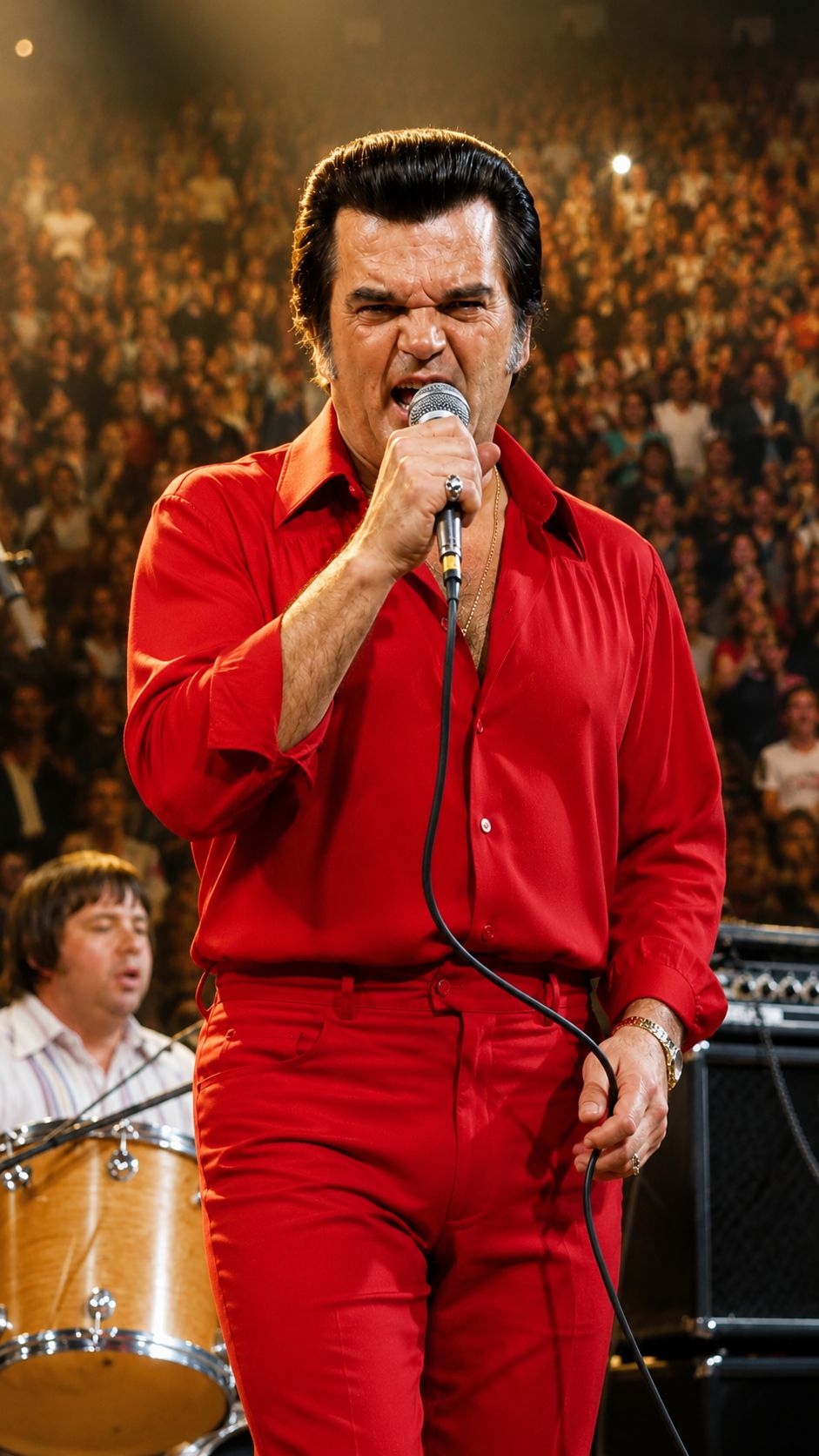
In the rich emotional landscape of Country Music, controversy often arrives wearing familiar disguises. Sometimes it emerges through political statements. Sometimes through cultural rebellion. And sometimes through lyrics that challenge accepted social boundaries. Yet few records in the history of the genre generated as much quiet discomfort as Conway Twitty’s “You’ve Never Been This Far Before.”
Released in 1973, the song did not rely on shock value, sensationalism, or defiant outrage. Instead, it ventured into territory that many artists of the era carefully avoided: emotional and physical intimacy portrayed with startling honesty. At a time when romantic storytelling in Country Music often concealed passion behind metaphor and polite distance, Conway Twitty stepped closer than most listeners expected.
His delivery was not aggressive. It was not theatrical. In fact, its power came from the opposite approach. Every line felt whispered rather than sung. Every phrase sounded personal, vulnerable, and almost uncomfortably real. Listeners were not simply hearing a love song; they felt as though they were witnessing a deeply private conversation unfolding behind a closed door.
For some, the record was breathtakingly romantic. For others, it crossed an invisible line. The debate that followed transformed “You’ve Never Been This Far Before” into one of the most discussed recordings of its era—an unforgettable moment when emotional truth challenged the boundaries of what Nashville believed radio audiences were prepared to hear.
The Song That Arrived at the Perfect Storm
By the early 1970s, Conway Twitty had already established himself as one of the defining voices in Country Music. His remarkable ability to communicate vulnerability had earned him a loyal audience, while his distinctive vocal style made him instantly recognizable.
Unlike many performers who depended on dramatic vocal flourishes, Conway Twitty understood the power of restraint. He knew that sometimes a whisper carried more weight than a scream.
That artistic philosophy reached its peak with “You’ve Never Been This Far Before.”
From its opening moments, the song felt unusually intimate. Rather than focusing on heartbreak, longing, or nostalgic memories—traditional themes that dominated much of Country Music—the narrative centered on a couple sharing a transformative romantic moment. The lyrics placed listeners directly inside the emotional experience.
For many fans, the honesty was refreshing.
For others, it felt almost intrusive.
“Every word sounded less like a performance and more like a confession.”
The song blurred the line between storytelling and observation. Instead of describing romance from a safe distance, Conway Twitty invited listeners into the room.
That invitation would become the source of both its acclaim and controversy.
Why Nashville Became Uncomfortable
To understand the reaction, it is important to remember the cultural environment of 1973.
The United States was experiencing enormous social change. Popular music was becoming more open about relationships, sexuality, and personal freedom. Yet Country Music remained relatively conservative compared to other genres.
Many artists still approached romantic subjects with careful subtlety. Even when songs explored physical attraction, they typically did so through symbolism and suggestion rather than direct emotional immediacy.
“You’ve Never Been This Far Before” challenged that convention.
Although the lyrics never became explicitly graphic, they created a level of intimacy that many listeners had rarely encountered on Country Music radio.
The discomfort stemmed not from what was said.
It came from what was implied.
The pauses.
The breathy delivery.
The emotional tension.
The feeling that something deeply personal was unfolding in real time.
“The song wasn’t controversial because it was loud. It was controversial because it was honest.”
For a segment of the audience, that honesty felt revolutionary. For others, it felt inappropriate for mainstream radio.
The Censorship Rumors That Refused to Die
As the song climbed the charts, rumors began circulating that some radio stations were reluctant to play it.
Stories spread that broadcasters considered the record too suggestive. Others claimed stations shortened airtime or avoided peak-hour rotations. Whether exaggerated or partially true, the rumors only intensified public fascination.
Ironically, attempts to question the song’s appropriateness may have contributed to its popularity.
Listeners wanted to know what made the record so controversial.
When they heard it, many discovered something unexpected.
Instead of finding vulgarity, they found vulnerability.
The song’s power came not from explicit content but from emotional realism. It captured a romantic moment with a level of sincerity rarely heard in mainstream Country Music.
As debate grew, curiosity grew alongside it.
And curiosity sells records.
Conway Twitty’s Masterclass in Emotional Delivery
The true genius of “You’ve Never Been This Far Before” lies in Conway Twitty’s performance.
A different singer might have turned the material into melodrama. Another vocalist might have emphasized the sensual aspects too heavily.
Conway Twitty did neither.
He approached the song with remarkable sensitivity.
His voice remained calm, measured, and almost conversational. The performance never felt forced. Instead, it conveyed tenderness, nervousness, affection, and anticipation simultaneously.
That emotional complexity elevated the record beyond simple romance.
Listeners could hear genuine humanity.
They could hear uncertainty.
They could hear trust.
Most importantly, they could hear two people sharing a moment that felt authentic rather than manufactured.
“The magic wasn’t in the lyrics alone. The magic was in the way Conway Twitty made listeners believe every single word.”
This authenticity became one of the defining characteristics of his career and one of the reasons his music continues to resonate decades later.
Defying Expectations and Reaching No. 1
Despite controversy—or perhaps because of it—“You’ve Never Been This Far Before” became a massive commercial success.
The song climbed to the top of the country charts, proving that audiences were more receptive to emotional honesty than many industry gatekeepers believed.
Its success sent an important message throughout Nashville.
Listeners did not necessarily want safer songs.
They wanted believable songs.
The triumph of “You’ve Never Been This Far Before” demonstrated that authenticity could be just as powerful as tradition.
In many ways, the record anticipated broader changes that would gradually reshape Country Music in the decades that followed. Artists became increasingly willing to explore relationships, vulnerability, and personal experiences with greater openness.
What once felt risky slowly became accepted.
What once felt controversial eventually became timeless.
The Legacy of an Unforgettable Country Classic
More than fifty years after its release, “You’ve Never Been This Far Before” remains one of the most fascinating recordings in the history of Country Music.
It serves as a reminder that genuine artistic impact rarely comes from trying to shock audiences. Instead, lasting influence often emerges when artists reveal uncomfortable truths about the human experience.
The song challenged assumptions about romance, radio, and audience expectations.
It proved that intimacy could be powerful without becoming explicit.
It showed that vulnerability could be commercially successful.
And it reaffirmed why Conway Twitty remains one of the genre’s most important storytellers.
Today, the controversy surrounding the record feels almost quaint compared to modern standards. Yet that perspective only highlights how groundbreaking the song truly was in 1973.
Its legacy is not defined by censorship rumors or cultural debate.
Its legacy is defined by courage.
The courage to sing softly when everyone expected louder performances.
The courage to be emotionally exposed when others preferred distance.
And the courage to trust that listeners would recognize authenticity when they heard it.
More than a chart-topping hit, “You’ve Never Been This Far Before” became a landmark moment in Country Music history—a song that whispered its way into the cultural conversation and never truly left.