 By admin
 INTRODUCTION:
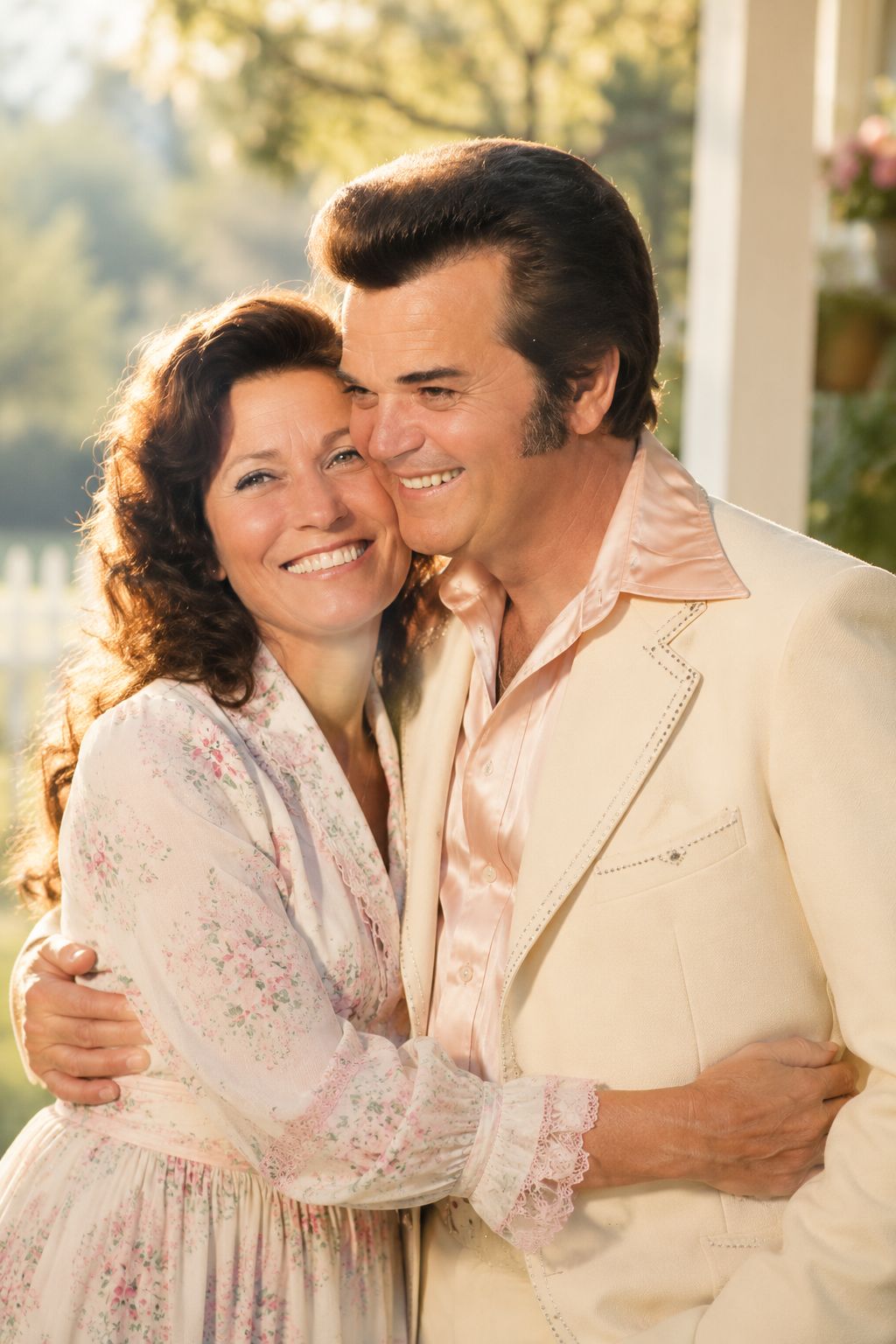
For decades, country music fans asked the same irresistible question: Were Conway Twitty and Loretta Lynn secretly in love?
The question seemed almost unavoidable.
Put the two of them on a stage, hand them microphones, and something happened that was difficult to explain. Their voices intertwined with astonishing ease. Their glances lingered. Their teasing sounded spontaneous. Their arguments in song felt personal. Their love songs didn’t sound like two performers reading lyrics—they sounded like two people revealing something they had been trying desperately to hide.
And that was precisely the problem.
The better Conway Twitty and Loretta Lynn became at performing together, the more believable the rumors became.
But the truth was simultaneously simpler—and, in some ways, more beautiful.
They were not married. They were not secret lovers. They were exceptionally close friends and extraordinary musical partners who understood exactly how to make an audience believe in a love story that existed primarily inside the songs.
Loretta herself eventually addressed the speculation bluntly.
“Everybody thought me and Conway had a thing going. And that’s the farthest from the truth.”
She described Conway as a friend she loved, while emphasizing that her husband, Oliver “Doolittle” Lynn, also respected and cared about him.
So why did so many people believe otherwise?
The answer begins with the music.
The Meeting That Started It All
Their story did not begin with romance. It began with admiration.
By the time Conway and Loretta crossed paths professionally, both were already major country personalities. Twitty had first achieved fame in rock and pop before transforming himself into one of country music’s defining voices. Lynn had become one of Nashville’s most formidable female stars.
Interestingly, they were already fans of each other.
Twitty had admired Lynn’s music. Lynn, meanwhile, had been a Conway Twitty fan since she was young. According to a contemporary Billboard account, she had even kept a Conway Twitty poster in her home before she became famous herself.
Their first real musical spark came while they were touring Europe in 1969.
They began singing together almost casually.
There was no grand announcement. No carefully manufactured romance.
Just two singers discovering that their voices fit.
That informal chemistry eventually became a recording partnership. Their first recordings together were followed by the 1971 breakthrough of “After the Fire Is Gone.”
And suddenly, country music had a new kind of couple.
Not a married couple.
A musical couple.
Then Came the Song That Made People Believe
“After the Fire Is Gone” was almost designed to create trouble.
The song tells the story of two married people whose relationships have lost their passion and who find emotional refuge in each other.
That is already dangerous territory.
Now imagine Conway Twitty singing those words directly to Loretta Lynn while she answers him with equal emotional intensity.
For listeners, the boundary between character and performer became dangerously thin.
The song became a No. 1 country hit and won the pair a Grammy.
Suddenly, audiences weren’t simply hearing a duet.
They were watching a drama.
And Conway and Loretta were exceptionally good actors.
Their performances had an almost theatrical quality. They could tease each other one moment and sound heartbroken the next. Their voices could suggest attraction, frustration, tenderness, jealousy, or regret—all within a few minutes.
The audience knew they were performers.
But emotionally, it was easy to forget.
Their Chemistry Was Almost Too Convincing
This is where the mythology became larger than the facts.
Country music has always depended on storytelling. The greatest performers don’t merely sing lyrics—they inhabit them.
Conway and Loretta understood that instinctively.
Twitty had a smooth, controlled baritone that could make even provocative lyrics sound intimate. Lynn brought something completely different: emotional directness, humor, toughness, and vulnerability.
Together, those contrasts created electricity.
Their duet catalog included songs such as “Lead Me On,” “Louisiana Woman, Mississippi Man,” “As Soon as I Hang Up the Phone,” and “Feelins’.” They accumulated an extraordinary run of successful recordings, and their partnership became one of the most celebrated male-female duos in country history.
They were named CMA Vocal Duo of the Year four consecutive times, from 1972 through 1975.
But success created another problem.
The more audiences loved watching them together, the more audiences wanted the story to continue after the music stopped.
Fans began wondering whether the chemistry was real.
Loretta Sometimes Made the Rumors Worse—On Purpose
Perhaps one of the funniest parts of this entire story is that Loretta knew exactly what audiences were thinking.
And sometimes, she enjoyed teasing Conway about it.
In a 1978 Billboard account, Lynn recalled a fan repeatedly asking whether she and Conway were married after a show.
The question apparently went on and on.
Finally, Loretta delivered the kind of mischievous answer that only Loretta Lynn could get away with.
She told the fan:
“No, we are not. We are just living together.”
Conway reportedly turned red and walked away.
It was a joke—but it reveals something important about their relationship.
They knew the rumors existed.
They knew people saw the chemistry.
And rather than becoming frightened by the speculation, Loretta occasionally turned it into part of the entertainment.
That playful relationship between them only made the public fascination stronger.
The Songs Didn’t Help Their Case
If the pair had recorded nothing but wholesome, uncomplicated love songs, perhaps the rumors would have faded.
Instead, they repeatedly chose songs filled with emotional danger.
“After the Fire Is Gone” dealt with temptation.
“Lead Me On” played with emotional surrender.
“Louisiana Woman, Mississippi Man” portrayed two people separated by geography but determined to be together.
“Feelins’” explored the complicated emotions of romantic intimacy.
And then there was Conway’s solo material.
Some of Twitty’s biggest songs were famously sensual or provocative. His ability to communicate desire through a restrained performance style became one of his trademarks.
When audiences combined that image with his chemistry with Loretta, speculation was practically inevitable.
But a song is not a confession.
That distinction matters.
The Real Relationship Was Stronger Than the Rumor
There is something almost unfair about describing their story only as a rumor of romance.
Because what they actually had was remarkable.
They trusted each other.
They understood each other’s timing.
They knew when to push a performance and when to pull back.
And they could make each other laugh.
Twitty himself described Lynn as one of his best friends in the music business and explicitly rejected the idea that anything romantic had happened between them.
That statement is important because it strips away the mythology and reveals the foundation beneath it.
Friendship.
Professional respect.
Mutual admiration.
And an extraordinary ability to tell stories together.
Even Loretta’s Husband Was Part of the Story
Perhaps the strongest evidence that the relationship was understood by the people closest to them is the role played by Loretta’s husband, Oliver “Doolittle” Lynn.
Far from treating Conway as a threat, Doolittle reportedly loved him.
In fact, Doolittle was instrumental in their musical partnership.
He helped identify “Louisiana Woman, Mississippi Man,” a song that became one of the duo’s signature recordings. Loretta later recalled how her husband found the song and recognized its potential.
That detail changes the entire picture.
The supposed “love triangle” becomes something very different.
A husband.
A wife.
A trusted friend.
And two performers creating music that sounded far more intimate than real life actually was.
More Than Friends—But Never Lovers
So perhaps the title of their story should not be “Conway Twitty and Loretta Lynn: The Secret Romance.”
Perhaps it should be something more complicated.
More than ordinary friends, but never lovers.
Because their bond clearly meant something profound to both of them.
Loretta wasn’t simply paired with another singer.
Conway wasn’t simply paired with another female vocalist.
They had found a musical counterpart who could finish an emotional sentence before the other person had even sung it.
That kind of connection is rare.
And because it is rare, people naturally tried to give it a romantic explanation.
But sometimes two people can share extraordinary intimacy without becoming romantically involved.
Sometimes friendship can be powerful enough to sound like love.
The Final Proof Was in Loretta’s Grief
When Conway Twitty died in 1993 at just 59, Loretta’s reaction said everything.
She mourned not a secret lover, but someone she considered a great friend and irreplaceable musical partner.
She said she had lost not only a singing partner but also a great friend.
Nearly three decades later, Loretta herself passed away in 2022.
By then, the rumors had become part of country music folklore.
But folklore isn’t always truth.
And perhaps that is what makes their story so enduring.
The world wanted Conway and Loretta to be lovers because their music made love sound real.
But they didn’t need to be lovers to create that illusion.
They simply needed two extraordinary voices, two personalities that complemented each other, and enough trust to step inside a song and make millions of people believe it.
Their greatest love story was never a romance. It was the music they made together.
And that may be why Conway Twitty and Loretta Lynn remain unforgettable.
They didn’t prove that every great musical partnership is secretly a love affair.
They proved something far more fascinating:
Sometimes the deepest chemistry between two people is the chemistry of friendship, trust, humor, and shared artistry.
For more than a decade, Conway and Loretta gave country music some of its most passionate duets. Their performances made audiences laugh, ache, wonder, and sometimes even gossip.
But behind the whispers was a much simpler truth.
They were friends.
They were partners.
They were two masters of country storytelling.
And together, they were so convincing that the whole world almost turned their greatest musical fiction into reality.
VIDEO: