 By admin
 INTRODUCTION:
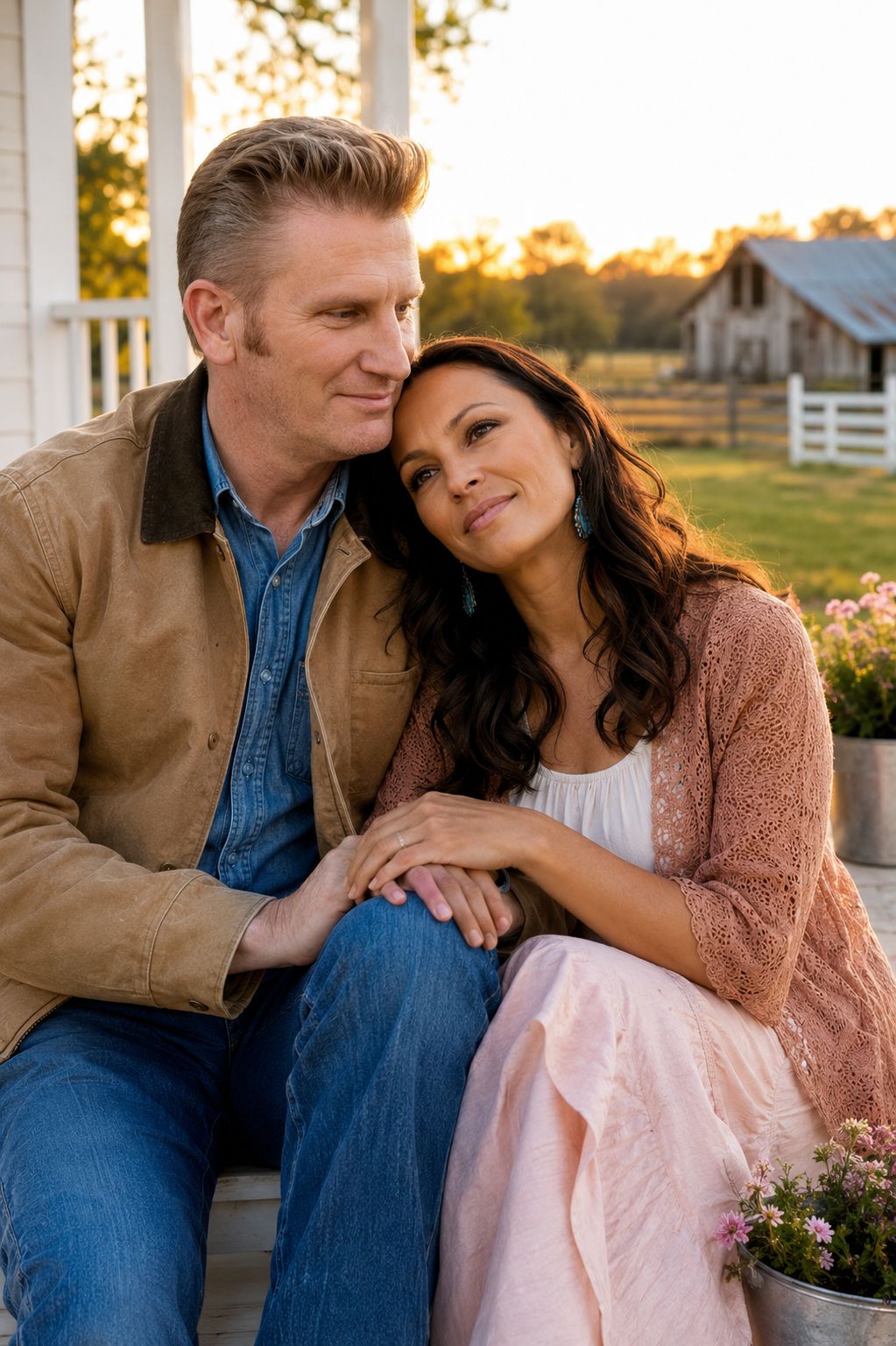
There are love stories that end when one person dies.
And then there are love stories that somehow continue.
For Rory Feek, the death of his wife and musical partner Joey was never simply the end of a marriage. It was the beginning of a completely different kind of life — one shaped by memories, grief, faith, fatherhood, music and the question of whether loving someone deeply ever really stops when they are gone.
Years after Joey Feek died from cervical cancer in March 2016, Rory said something that stunned many people who heard it.
“I feel just as married and just as in love.”
Those words were not spoken as a romantic slogan. They came from a widower trying to explain something difficult to put into ordinary language: Joey was no longer physically beside him, but Rory did not feel as though the marriage had simply disappeared.
That distinction became one of the most moving parts of Rory and Joey’s story.
A Marriage That Became Much More Than Music
Rory and Joey Feek married in 2002, long before millions of country fans became emotionally invested in their story.
Their relationship eventually became the foundation of Joey + Rory, the husband-and-wife country duo whose music blended traditional country warmth, gospel influences and the intimacy of two people singing about life together.
But their greatest story was never simply their career.
It was the ordinary life they built away from the spotlight.
They lived on a farm. They raised children. They worked together. They laughed together. They created music together. And after Joey was diagnosed with cervical cancer in 2014, their private life became an extraordinarily public portrait of love under unimaginable pressure. Joey died on March 4, 2016, at only 40 years old.
For Rory, grief did not arrive as one dramatic moment and then disappear.
It became part of every morning.
Every room.
Every song.
Every memory.
In the months immediately following Joey’s death, Rory admitted that he struggled to accept the permanence of what had happened. He even found it difficult to place a permanent headstone at Joey’s grave because, emotionally, permanence was precisely what he was struggling to accept. Instead, he created a simple place where he could sit near her.
And there was one detail that captured the intimacy of his grief better than almost anything else.
Rory said he had a place for his coffee and a place for Joey’s.
“And we still have coffee together.”
That wasn’t denial.
It was Rory finding a way to maintain a relationship with the woman who had shaped so much of his adult life.
“Just as Married” — The Words That Stayed With Fans
By 2018, Rory was beginning to perform publicly again.
That decision was complicated.
Joey had not simply been his wife. She had been his singing partner, his creative partner and one of the central people through whom he understood himself.
Going onstage alone therefore felt almost unnatural.
Rory described performing without her as surreal, strange and, in some ways, wrong. But he also slowly discovered that continuing to live did not mean abandoning the person he had lost.
That was when he offered perhaps the clearest explanation of his emotional state.
“I feel just as married and just as in love, and I feel like she’s just as much a part of our life as she was.”
For fans, those words transformed the idea of grief.
Rory wasn’t saying that life had stopped.
He was saying that love had changed form.
Joey couldn’t walk into the room anymore.
She couldn’t stand beside him onstage.
She couldn’t sing harmony beside him.
But she remained woven into the family they had created, the daughter they shared, the music they had made and the memories that continued to shape Rory’s decisions.
In that sense, Rory wasn’t trying to replace Joey.
He was trying to learn how to live with the enormous space her absence had created.
The Farm Became a Place of Memory
Much of Rory’s grieving happened far away from the glamour of Nashville.
It happened at home.
The Feek farm became almost another character in their story — a place where the memories of Joey remained tangible.
That was important because Rory’s relationship with Joey had never been built entirely around fame.
Their greatest moments often existed in ordinary spaces: a kitchen, a porch, a farm, a family gathering or a quiet conversation.
After Joey died, those same spaces became reminders.
The challenge wasn’t merely missing her.
It was learning how to inhabit a world that still contained everything they had built together while she was no longer physically there.
That is one reason Rory’s story resonated so strongly with country music fans.
Country music has always understood the emotional power of home.
A farmhouse.
An old photograph.
A worn guitar.
A voice singing about someone who isn’t there anymore.
Rory’s life after Joey seemed to turn those familiar country themes into reality.
Love, Loss and the Courage to Keep Living
One of the most important lessons in Rory’s story is that grief and hope are not opposites.
They can exist simultaneously.
A person can miss someone deeply and still laugh.
A widower can remain devoted to a late wife and still raise his children.
A man can carry enormous sadness and still discover moments of gratitude.
Rory’s journey showed that healing doesn’t necessarily mean forgetting.
Sometimes healing means learning how to carry the memory without allowing the memory to destroy the future.
That idea became especially significant because Rory was not grieving only as a husband.
He was also grieving as a father.
After Joey’s death, Rory had to raise their young daughter, Indiana, while continuing to navigate life without his partner. Joey had also been deeply connected to Rory’s older daughters, making her loss reverberate throughout the family.
Suddenly, Rory had to become the parent who carried the memories for everyone.
He had to answer questions.
He had to keep moving.
He had to make breakfast.
He had to work.
He had to be present.
And perhaps most painfully, he had to keep living in the future when part of him desperately wanted to remain in the past.
Then Life Surprised Him Again
There is another chapter to Rory’s story that makes his earlier words about feeling married even more meaningful — and more complicated.
In 2024, eight years after Joey’s death, Rory married Rebecca, who had been connected to his family as Indiana’s teacher.
The wedding did not erase Joey.
Instead, Rory described the new chapter as something that could exist alongside the beautiful past he had shared with Joey.
Their daughter Indiana played an important role in bringing Rory and Rebecca closer. At the wedding, Rory even surprised Rebecca by performing a song he had written called “I Do.”
For some observers, moving forward might have seemed impossible.
But perhaps Rory’s earlier reflections had already offered the answer.
Loving again does not necessarily mean loving the person who died less.
The heart isn’t a room with only one chair.
The past can remain precious while the future becomes meaningful.
That is arguably one of the most powerful lessons hidden inside Rory Feek’s story.
Ten Years Later, Joey’s Influence Remains
In March 2026, a decade after Joey’s death, Rory returned to the subject of his late wife in a deeply emotional tribute.
He described Joey as the bravest person he had ever known and reflected on the enormous impact her life continued to have on people long after her death.
He also shared a remarkable thought about Joey’s final days: that she understood her own story was ending while another chapter was beginning for Rory and their daughter.
According to Rory’s tribute, Joey had encouraged them to find love again after she was gone and had even prayed for Rebecca, despite never meeting her.
That detail changes the way the entire story can be understood.
Joey’s legacy wasn’t simply about being remembered.
It was about what she wanted the people she loved to do with the lives they still had.
To live.
To love.
To raise their daughter.
To continue.
To hope.
The Real Meaning Behind Rory’s “Married” Heart
Perhaps the most beautiful part of Rory Feek’s story is that there was never a simple switch from “married” to “widowed.”
There was no morning when he woke up and suddenly stopped loving Joey.
There was no ceremony that could erase fourteen years of marriage.
There was no song that could completely capture what they had been to each other.
Instead, Rory carried the marriage forward through memory.
And eventually, he carried those memories into a new chapter.
That is why his story is bigger than a celebrity love story.
It is about what happens when life refuses to follow the ending we expected.
Joey died.
Rory survived.
He grieved.
He remembered.
He raised their daughter.
He returned to music.
And, eventually, he opened his heart to love again.
The remarkable thing is that none of those chapters required him to pretend the previous one had never happened.
“Having loved someone makes having lost them more than worth it.”
That sentiment, reflected in Rory’s later tribute to Joey and their first co-written song, may be the simplest way to understand their entire journey.
Because perhaps the greatest tragedy isn’t loving someone and losing them.
Perhaps it would be never having loved them at all.
Rory and Joey’s story reminds country music fans that love does not always disappear when a person does.
Sometimes it becomes a song.
Sometimes it becomes a photograph.
Sometimes it becomes a daughter growing up.
Sometimes it becomes a quiet place on a farm where two cups of coffee once seemed ordinary.
And sometimes, years later, it becomes the courage to say “I do” to life once again.
That is what makes Rory Feek’s journey so profoundly human.
He didn’t forget Joey.
He didn’t need to.
He simply learned that remembering someone can be part of moving forward — not the opposite of it.
And for anyone who has ever lost someone they loved, that may be the most comforting message of all.
VIDEO: