 By admin
 INTRODUCTION:
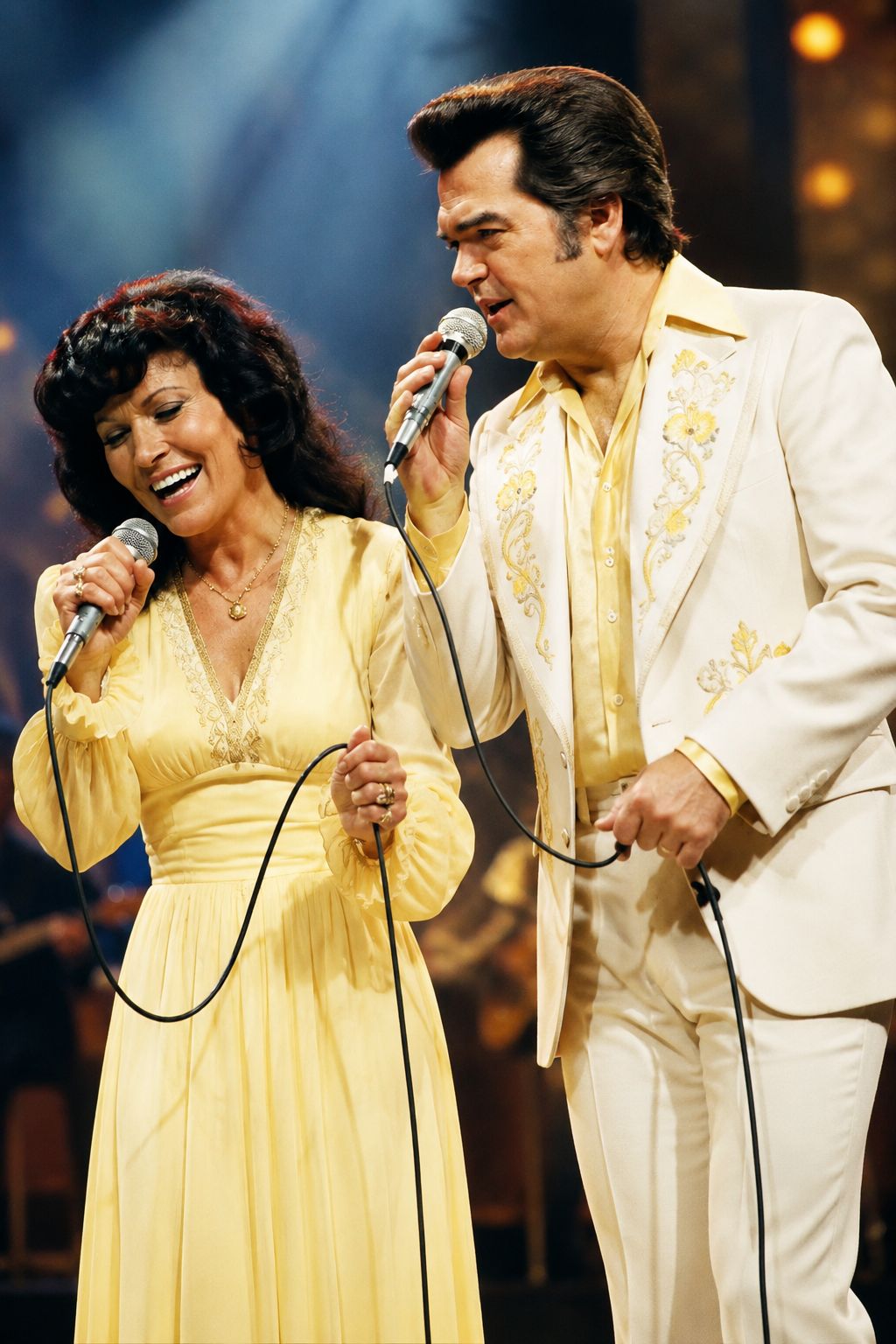
There are songs that become hits.
There are songs that become classics.
And then there are songs that become part of the language of heartbreak itself.
For Conway Twitty, that song was “Hello Darlin’.”
Fifty-six years ago, in 1970, Twitty released a recording that would transform a simple greeting into one of the most recognizable openings in country music history. The song eventually reached No. 1 on the Billboard Hot Country Singles chart, where it remained for four weeks. It would later become Twitty’s signature recording, a concert standard, and one of the defining songs of his career.
But statistics alone cannot explain why “Hello Darlin’” still hits differently.
You have to hear the first few seconds.
You have to imagine the room going quiet.
And you have to understand what Conway Twitty did with something most singers would have been afraid to attempt: he stopped singing and simply spoke.
“Hello darlin’.”
Two words.
That was all it took.
The Moment Before the Song Begins
Country music has always understood the power of silence.
A fiddle can cry.
A steel guitar can ache.
A voice can break.
But sometimes the most devastating moment comes before the melody even begins.
“Hello Darlin’” opens like a conversation between two people who have unfinished business. Rather than launching immediately into a conventional country vocal, Twitty sounds as though he has unexpectedly encountered someone from his past.
It feels personal.
It feels uncomfortable.
It feels real.
And that was precisely the magic.
Twitty had already experienced extraordinary success in music before “Hello Darlin’,” including his earlier rock-and-roll career and his eventual transformation into one of country music’s most reliable hitmakers. But this song captured a different side of him—the intimate storyteller who could make millions of listeners feel as if he were singing directly to one person.
The song was released on March 23, 1970, as the title track and lead single from his album Hello Darlin’. It quickly became a country-radio phenomenon.
By May 31, it had reached the top of Billboard’s country chart.
And it stayed there for four weeks.
Why “Hello Darlin’” Felt So Different
The genius of the recording isn’t that the story is complicated.
It isn’t.
That is precisely why it works.
At its heart, “Hello Darlin’” is about seeing someone you once loved and realizing that the feelings you thought were buried are still alive.
There is longing.
There is regret.
There is pride.
There is vulnerability.
And beneath everything is the haunting question every person who has ever lost someone understands:
What if we had another chance?
Twitty doesn’t approach that question with theatrical exaggeration.
Instead, he lets the emotional tension breathe.
That restraint is one reason the song has survived.
The heartbreak isn’t shouted. It is whispered.
And somehow, that makes it hurt more.
The Famous Opening Almost Became Something Else
One of the most fascinating pieces of the song’s history involves the opening itself.
Twitty wasn’t initially satisfied with how the first line sounded during the recording process. Producer Owen Bradley suggested that instead of singing the words, Twitty should simply speak them. That seemingly small decision became one of the most recognizable moments in country music.
Think about how risky that could have been.
Country radio was filled with powerful singers.
Big voices.
Dramatic arrangements.
Memorable choruses.
And here was Conway Twitty, beginning one of his biggest songs by essentially talking to someone.
Yet the gamble worked.
In fact, it became the entire point.
The spoken introduction creates the illusion that the listener has walked into the middle of a private conversation.
For a few seconds, Conway isn’t performing.
He is remembering.
The Voice Behind the Heartbreak
Twitty possessed something that is difficult to teach: emotional credibility.
His voice had warmth, but it also carried weariness.
He could sound confident and vulnerable in the same sentence.
That combination became one of the foundations of his country career.
“Hello Darlin’” allowed him to use every part of that emotional palette.
He doesn’t sound like a man who has completely moved on.
He sounds like a man who wishes he had.
That distinction is everything.
Because anyone can sing about heartbreak.
The great country singers make you believe they’ve actually lived it.
Twitty had that ability.
And listeners recognized themselves in it.
From No. 1 Hit to Signature Song
When “Hello Darlin’” reached No. 1, it wasn’t simply another successful single.
It became a defining moment.
The song was eventually recognized as Twitty’s signature recording and was named the No. 1 country song of 1970 in retrospective accounts of the year’s music. It also became a standard part of his live performances.
That longevity is extraordinary.
A song can dominate radio for a few months and then disappear.
“Hello Darlin’” did the opposite.
It became attached to Conway Twitty himself.
For generations of listeners, hearing those opening words immediately brings his voice to mind.
That is the definition of a signature song.
Why Older Country Fans Still Feel It
Ask longtime country listeners about Conway Twitty and the answers can vary.
Some will mention “Linda on My Mind.”
Others will choose “It’s Only Make Believe.”
Some will point to his unforgettable collaborations with Loretta Lynn.
But “Hello Darlin’” occupies a unique place because it represents the emotional center of Twitty’s artistry.
It doesn’t require a complicated backstory.
It doesn’t depend on knowing every detail of his career.
You simply hear it.
And suddenly, you’re somewhere else.
Maybe you’re sitting in an old car with the radio turned low.
Maybe you’re remembering someone who disappeared from your life decades ago.
Maybe you’re thinking about the person you never quite stopped loving.
That is what great country music does.
It doesn’t merely tell a story.
It gives your memories a soundtrack.
The Song’s Quiet Power
There is a reason country music has always been so comfortable with sadness.
Country songs don’t necessarily promise that everything will be okay.
Sometimes they simply sit beside you while things hurt.
“Hello Darlin’” belongs to that tradition.
It doesn’t try to erase the pain.
It allows the pain to exist.
And that is why its emotional impact has lasted.
Some songs remind you of a person. “Hello Darlin’” can make you remember an entire chapter of your life.
That is an extraordinary achievement for a recording that begins with only two spoken words.
Conway Twitty’s Transformation
The story becomes even more remarkable when viewed against Twitty’s broader career.
Before becoming one of country music’s greatest romantic voices, Twitty had built a reputation in rockabilly and rock and roll, including the massive success of “It’s Only Make Believe.” His eventual move deeper into country music turned out to be one of the most important transformations of his career.
By the late 1960s and early 1970s, he had developed into one of country music’s premier hitmakers.
“Hello Darlin’” arrived at exactly the right moment.
It showed audiences that Conway Twitty wasn’t simply a singer who could deliver a melody.
He could inhabit a character.
He could create a scene.
He could make a listener feel as though the singer was standing three feet away, looking directly into their eyes.
And that became one of his greatest gifts.
The Legacy Goes Beyond the Charts
The numbers are impressive.
No. 1 on the country chart.
Four weeks at the top.
A signature song.
A country standard.
A Grammy Hall of Fame recording, with “Hello Darlin’” receiving that recognition in 1999.
But legacy isn’t ultimately measured in chart positions.
It’s measured in whether people still care.
More than half a century later, country fans continue to name “Hello Darlin’” among their favorite Conway Twitty recordings. Contemporary fan discussions still show listeners connecting deeply with his music, particularly songs that remind them of parents, grandparents, relationships, and pivotal moments in their lives.
That tells us something the charts cannot.
The song survived because people attached their own memories to it.
56 Years Later, Those Two Words Still Work
Music has changed dramatically since 1970.
Production has changed.
Radio has changed.
Country music itself has changed.
But emotional truth doesn’t age.
That’s why “Hello Darlin’” continues to work.
A person can hear that opening today and immediately understand the situation.
Someone is standing in front of someone they once loved.
There are things left unsaid.
There are memories that never completely disappeared.
And there is still a tiny possibility that the past might somehow reopen.
Then Conway Twitty speaks.
“Hello darlin’.”
And suddenly, 56 years disappear.
That is the real achievement of the song.
Not merely reaching No. 1.
Not merely becoming a career-defining hit.
Not merely becoming one of Conway Twitty’s most recognizable recordings.
Its greatest achievement is much simpler:
It made people feel something they already knew but couldn’t put into words.
And perhaps that is why, decades after Conway Twitty left us, his voice still feels so close.
Because heartbreak doesn’t belong to one generation.
Neither does love.
Neither does regret.
And neither does a song that knows exactly where the heart hurts.
The Final Note
In the history of country music, countless songs have reached No. 1.
Far fewer become permanent emotional landmarks.
“Hello Darlin’” is one of them.
It began with a simple greeting.
It became a four-week No. 1 hit.
It became Conway Twitty’s signature song.
And eventually, it became something even bigger—a musical doorway into memories that listeners never completely forgot.
So the next time those first words come through the speakers, don’t just hear a classic country song.
Listen to the silence around it.
Listen to the hesitation.
Listen to the voice.
Because somewhere between those two simple words and the first notes of the melody lies the reason Conway Twitty remains one of country music’s greatest storytellers.
And 56 years later, “Hello Darlin’” still knows exactly how to break your heart.
VIDEO: