 By admin
INTRODUCTION:
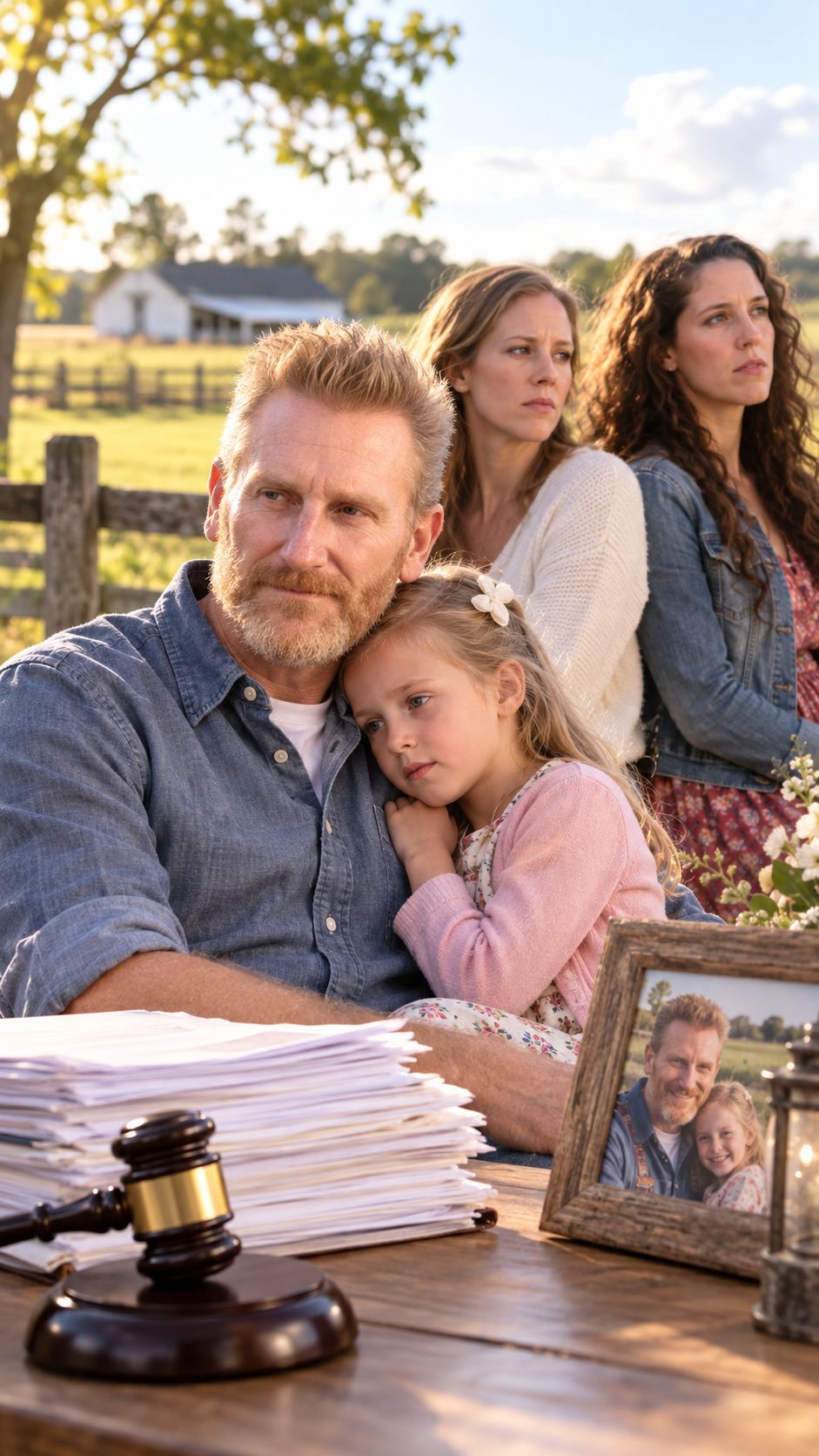
For years, Rory Feek seemed to represent a particular kind of country music story: quiet faith, family, heartbreak, forgiveness, and a life deliberately removed from the machinery of celebrity.
After the death of his wife and musical partner Joey Feek in 2016, Rory became known not simply as a country songwriter, but as a widowed father documenting life on his Tennessee farm. His writing often centered on gratitude, faith, fatherhood, and the belief that even devastating seasons could eventually produce something beautiful.
That image made what happened next especially jarring.
Beginning in 2024, a deeply personal dispute involving Rory, his two adult daughters Heidi and Hopie, and his youngest daughter Indiana moved from private family conflict into the legal system. At the same time, allegations surrounding the religious community where Rory and his family were living triggered a separate federal defamation lawsuit.
The result was a complicated legal and family battle that continues to generate headlines in 2026.
And importantly, the allegations made by the various sides should not be confused with findings of fact by a court. Much of the underlying dispute involves confidential proceedings because Indiana is a minor.
From a Country Love Story to a Family Crisis
To understand why the controversy shocked Rory’s audience, it helps to understand the emotional history behind it.
Rory and Joey built their public identity around marriage, music, faith, and family. Their story became particularly poignant after Joey’s cancer diagnosis and death. Rory subsequently continued raising Indiana, their daughter, while sharing his experiences through music, writing, and social media.
But the relationship between Rory and his older daughters eventually deteriorated.
According to Rory’s own account, tensions with Heidi began years before the legal confrontation. In a 2026 essay, he described disagreements beginning in 2022, followed by increasingly difficult conversations and eventually a breakdown in communication. He said the dispute later expanded into accusations concerning his parenting and the environment in which Indiana was being raised.
Heidi and Hopie presented a very different perspective.
Public reporting in 2024 described the sisters as concerned about Indiana’s safety and their ability to maintain contact with her. They pursued legal action related to Indiana’s custodial arrangements, while Rory maintained that his decisions were motivated by concerns about family circumstances and differing values.
That difference in perspective became the heart of the conflict.
One family. Two radically different versions of what was happening behind the farmhouse doors.
For fans who had spent years watching Rory tell stories about family reconciliation, the development was difficult to process.
The Custody Fight That Pulled Everything Into the Light
The dispute became particularly serious when Heidi sought changes involving Indiana’s custodial arrangement.
Because Indiana was a minor, many details of the proceedings have not been publicly disclosed. That limitation is crucial. Headlines can create the impression that the public knows everything about a custody dispute when, in reality, significant evidence and testimony may remain confidential.
What is publicly documented is that legal proceedings continued into 2026.
Rory wrote about the case in January 2026, describing a courtroom proceeding concerning Indiana’s future. He said a trial had been scheduled, but Heidi’s attorneys requested a continuance and additional allegations were introduced. Rory characterized the conflict as an attack on his family and reputation. That description represents his account of the dispute, not an independent court finding.
The emotional weight of the situation was enormous.
Rory has repeatedly said he loves his older daughters despite their estrangement. In his account, there were even attempts at reconciliation, including a conversation involving Rory, Rebecca, Heidi and Heidi’s husband, followed by a family Christmas gathering.
Yet those efforts did not resolve the legal conflict.
That is what makes the story more painful than a conventional celebrity lawsuit.
This was not simply two public figures arguing over money.
It was a father and daughters fighting over family relationships, a younger sister, parenting decisions, and competing ideas about what constituted protection.
Then Came Homestead Heritage
The dispute took another dramatic turn because of Homestead Heritage, the faith-based community with which Rory and his wife Rebecca became involved.
Heidi publicly raised concerns about the community and its history, including allegations of child abuse. Homestead Heritage has strongly denied those allegations. In September 2024, the organization filed a federal defamation lawsuit against Heidi, journalist Carena Liptak, and Townsquare Media, the company behind Taste of Country.
The lawsuit sought at least $250,000 in damages and alleged that statements about the community were false and damaging.
Heidi and her husband characterized the lawsuit very differently, saying they viewed it as an attempt to silence them. Again, those are competing claims—not a judicial determination that one side’s characterization is correct.
This transformed a family dispute into something much larger.
Now there were questions involving:
- Indiana’s care and custody
- The relationship between Rory and his adult daughters
- Homestead Heritage
- Allegations concerning the community
- Defamation claims
- Freedom of expression
- Confidential family-court proceedings
- The increasingly public nature of a private family breakdown
And suddenly, Rory’s peaceful country-life narrative had collided with the courtroom.
The Defamation Case Is Still a Moving Story
The federal case involving Homestead Heritage has also continued rather than disappearing after the initial headlines.
A recent 2026 court record describes the litigation as involving complex defamation claims against Heidi Feek, Townsquare Media and journalist Carena Liptak. The court record says discovery included thousands of pages of documents and forensic examination of phones and social-media accounts. Scheduling in the case was extended as the parties dealt with additional discovery and depositions.
That matters because internet discussions sometimes treat lawsuits as though filing a complaint means the allegations have already been proven.
It does not.
A lawsuit is a legal claim.
A court ruling is something different.
As of the latest publicly available information reviewed for this article, the federal litigation remained active, with procedural matters continuing in 2026.
The Most Painful Twist: Indiana Became the Center of Everything
Perhaps the most emotionally difficult aspect of the story is that Indiana has remained at the center of a dispute involving adults who all say, in different ways, that they care about her.
In 2026, the conflict became even more visible after Indiana underwent serious heart surgery.
Rory publicly documented her medical crisis and recovery. His older daughters subsequently criticized his decision to publish photographs and details about Indiana’s medical condition, arguing that such vulnerable moments should not be turned into public content. Rory’s posts described the seriousness of Indiana’s condition and his family’s experience surrounding it.
Once again, the public was confronted with two fundamentally different interpretations of the same family reality.
Rory’s supporters could see a father documenting a frightening medical experience and expressing gratitude that his daughter survived.
His critics saw a parent sharing intimate details about a child who could not consent to having her private medical experiences published.
Neither interpretation should be casually transformed into a definitive factual conclusion without the underlying evidence.
Why Fans Felt Betrayed by the Story
The reason this saga has resonated so strongly with country audiences isn’t simply because Rory Feek is famous.
It’s because his public identity was built around family.
Fans didn’t discover Rory through scandal.
They discovered him through songs, Joey’s battle with cancer, stories from the farm, photographs of Indiana, faith, fatherhood and memories of a marriage that became one of country music’s most emotional modern stories.
So when the family itself became the battlefield, the contrast was startling.
The man who spent years singing about home suddenly found himself fighting over what “home” meant.
That emotional contradiction is what makes the story so compelling.
But it is also why caution matters.
Social media compresses complicated legal disputes into dramatic headlines. A family-court case can become a viral argument before the public has access to the evidence. Allegations can become “facts” through repetition. And deeply personal accusations can be transformed into entertainment.
The Feek dispute demonstrates how dangerous that process can be.
A Country Family Story With No Easy Ending
As of 2026, there is no simple Hollywood-style conclusion.
Rory remains publicly committed to his version of events. His daughters continue to express serious concerns from their perspective. Indiana remains at the center of the dispute. The custody proceedings have continued, while the separate federal defamation litigation involving Homestead Heritage has also moved forward.
And perhaps that is the most important thing to remember.
This isn’t a finished country song with a final verse explaining who was right and who was wrong.
It is a living family conflict.
There are court documents, public statements, accusations, denials, competing narratives and private evidence the public may never see.
For Rory’s longtime fans, the hardest realization may be that the man behind the familiar country smile is living through a chapter that cannot be neatly explained by a song lyric.
The farm is still there.
The music is still there.
The memories of Joey are still there.
But the family story surrounding Rory has become something far more complicated than the peaceful picture many fans once imagined.
And until the courts resolve the remaining legal questions—or the family finds a private path toward reconciliation—the story remains unfinished.
Sometimes the darkest chapter isn’t the one written after the applause stops. It’s the one that begins when the people you love most stop agreeing on what happened.
That is the tragedy behind the headlines surrounding Rory Feek: not merely that a country star became involved in legal battles, but that a family story once celebrated for love, faith and resilience became entangled in allegations, courtrooms and estrangement.
For the fans watching from the outside, there may be no satisfying verdict beyond the legal process itself.
And perhaps that is the hardest lesson of all:
Behind every country smile is a human story—and sometimes the truth is far more complicated than the song.
VIDEO: