 By admin
 INTRODUCTION:
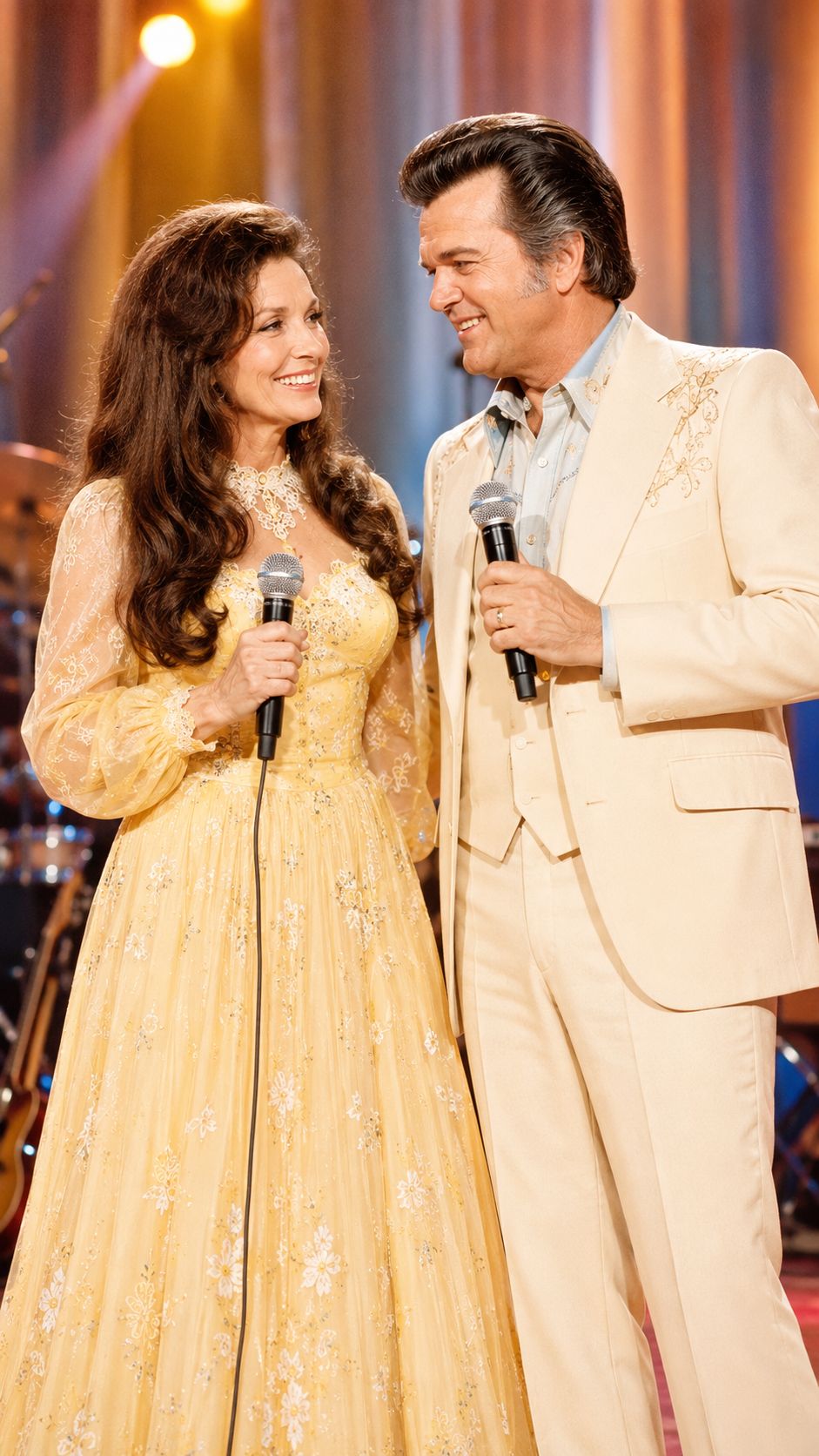
There was something almost magical about watching Conway Twitty and Loretta Lynn share a stage.
He could lean into a microphone with that unmistakable baritone, deliver a teasing line with a perfectly timed grin, and somehow make Loretta break into laughter before the next verse had even begun. She could fire back with a joke, a raised eyebrow, or one of those mischievous expressions that told the audience she was about to embarrass Conway again.
Fans saw the chemistry.
They saw the laughter.
They saw two performers who could make even the most complicated love song feel like a private conversation happening in front of thousands of people.
But what happened when the cameras stopped rolling was, in many ways, even more meaningful.
Because beneath the teasing, the flirtatious lyrics and the theatrical performances was something much less sensational—and far more genuine: a deep friendship built on trust, humor, family, and an extraordinary respect for each other’s talent.


The Partnership That Fooled Almost Everyone
From the early 1970s through the late 1980s, Twitty and Lynn became one of country music’s defining duos.
They recorded 11 studio albums together between 1971 and 1988, produced a string of major hits, and won the Country Music Association’s Vocal Duo of the Year award four consecutive times from 1972 through 1975. Their first No. 1 duet, “After the Fire Is Gone,” helped establish just how powerful their voices could be together.
But their success created an unexpected problem.
They sounded too convincing.
Their songs were filled with forbidden attraction, marriage troubles, temptation and emotional conflict. When they performed those stories, it didn’t feel like two singers acting out lyrics.
It felt real.
Audiences began wondering whether something romantic existed between them.
Loretta Lynn repeatedly rejected that idea.
“I loved Conway as a friend, and my husband loved him.”
That distinction matters.
Because the closer you look at their relationship, the clearer it becomes that the magic wasn’t based on a secret romance.
It was based on trust.
It Started With Mutual Admiration
Long before they became one of country music’s most famous duos, Conway Twitty and Loretta Lynn were already fans of one another.
Twitty later recalled meeting Lynn at Owen Bradley’s studio and discovering that the admiration went both ways. Lynn had reportedly been a Twitty fan long before she became a major star herself.
Their professional relationship truly began to take shape during an overseas tour in 1969.
Away from the spotlight, they started singing together in dressing rooms and on the road. The chemistry was obvious enough that they decided to see what might happen if they recorded together once they returned home. Loretta later described those informal performances as the beginning of the partnership.
That detail is easy to overlook.
There wasn’t some carefully manufactured Nashville plan that suddenly created the duo.
It grew naturally.
They sang because they enjoyed singing together.
And eventually, audiences discovered what they had already discovered backstage.
Their voices belonged together.
Conway Knew How to Make Loretta Laugh
The public version of Conway Twitty was often mysterious and controlled.
He wasn’t known for being a nonstop talker onstage. His official biography describes an entertainer who preferred allowing the music to communicate rather than relying heavily on stage banter.
But around Loretta—and especially around her husband, Oliver “Doolittle” Lynn—another side of him emerged.
Loretta remembered Doolittle telling Conway jokes while they traveled.
And apparently, those jokes weren’t always true.
In fact, Loretta admitted that many of Doolittle’s stories were “big lies.”
Conway didn’t seem to care.
He laughed anyway.
Loretta remembered hearing Conway laughing from across the plane or wherever they happened to be traveling.
“There goes another big story Doolittle’s told him.”
That image says more about their friendship than any dramatic backstage rumor ever could.
Picture it:
The lights are gone.
The audience is gone.
The microphones are packed away.
And somewhere away from the stage, Conway Twitty is simply laughing at one of Doolittle Lynn’s ridiculous stories.
Loretta isn’t performing.
Conway isn’t performing.
They’re just friends.
Loretta Loved Teasing Conway
If Conway represented the quiet, restrained side of the partnership, Loretta was often the mischievous force determined to make him uncomfortable.
A fascinating 1978 Billboard feature captured some of that playful relationship.
According to the story, fans repeatedly asked whether Loretta and Conway were married. During one particularly persistent exchange, Loretta finally gave an outrageous answer designed to embarrass Conway.
Conway reportedly turned red.
And then he walked away.
That was Loretta.
She knew exactly how far she could push him.
And Conway knew exactly what she was doing.
Their humor wasn’t necessarily polished or glamorous.
It was human.
It was the kind of teasing that happens between people who are comfortable enough with each other to stop worrying about appearances.
And that may explain why their performances felt so natural.
They weren’t merely pretending to have chemistry.
They genuinely liked each other.
The Songs Were the Illusion
This is where their genius becomes particularly fascinating.
Take a song such as “After the Fire Is Gone.”
The characters in the song are dealing with a relationship that exists outside the boundaries of ordinary domestic life. The emotional situation is complicated, uncomfortable and morally messy.
Yet Conway and Loretta didn’t sing it like actors reading a script.
They inhabited it.
That was part of their extraordinary ability.
Their voices created tension.
Loretta’s direct, emotionally exposed delivery could sound confrontational one moment and vulnerable the next. Conway’s smooth baritone provided a contrasting restraint.
Together, they could make a listener believe that something deeply personal was happening.
But that was the art.
Not necessarily the reality.
Loretta herself explained the difference in interviews, making clear that the relationship was friendship rather than romance.
And perhaps that makes their recordings even more impressive.
They could sing about emotional boundaries without crossing their own.
They could portray temptation without turning their friendship into scandal.
They could make millions of listeners believe in a fictional relationship while maintaining a very real friendship behind the scenes.
Doolittle Lynn’s Role Matters More Than People Realize
One of the most overlooked parts of the Conway-Loretta story is Doolittle.
Loretta’s husband wasn’t merely aware of Conway.
He genuinely liked him.
According to Lynn’s recollections, Conway was essentially the one person in country music that Doolittle particularly cared about.
That changes the emotional context completely.
The famous “Conway and Loretta” partnership wasn’t happening in some secret bubble.
Their families and marriages existed around it.
There was familiarity.
There was trust.
There was laughter.
And there was a level of comfort that made the partnership sustainable for years.
That’s why the rumors never tell the full story.
The real story is less scandalous—but arguably more beautiful.
Then Came the Goodbye Nobody Wanted
In 1993, everything changed.
Conway Twitty died at just 59 after complications following surgery.
Loretta was at the hospital with Doolittle, who was recovering from heart surgery.
She later recalled seeing Conway’s bus coming off the highway and going downstairs because she wanted to help him find the hospital room.
But Conway was seriously ill.
And that night, he was gone.
For Loretta, this wasn’t the loss of a convenient musical partner.
It was the loss of a friend.
A friend who had shared stages, buses, dressing rooms, airplanes, jokes and countless songs with her.
When she spoke about his death, Loretta emphasized exactly that.
“I’ve not only lost a great singing partner but also a great friend.”
That may be the most important sentence in the entire story.
Not lover.
Not secret partner.
Not forbidden romance.
Friend.
What Happened When the Cameras Stopped Was the Part That Mattered
Country music has always loved mythology.
Fans want to believe that the chemistry onstage reflects something hidden backstage.
Sometimes it does.
But sometimes the truth is more powerful.
Conway Twitty and Loretta Lynn didn’t need a secret romance to create unforgettable music.
They needed something harder to manufacture:
mutual respect.
They trusted one another enough to play characters convincingly.
They respected each other’s musical instincts.
They could tease each other without destroying the friendship.
They could make audiences laugh one minute and break their hearts the next.
And when the performance ended, they could simply return to being friends.
That is why their legacy has lasted.
Not because they fooled people into believing they were lovers.
But because they understood something every great duet requires:
you have to trust the other voice.
Conway trusted Loretta.
Loretta trusted Conway.
And together, they created a musical relationship so convincing that generations of listeners still wonder where the performance ended and real life began.
Maybe that’s the greatest compliment a country duet can receive.
The cameras captured the chemistry.
The records captured the voices.
But away from the spotlight, what remained was something quieter.
A friendship.
A friendship filled with jokes, laughter, music and memories.
And when Conway was gone, Loretta didn’t remember him merely as the man who stood beside her at a microphone.
She remembered the friend who made her laugh.
And sometimes, that’s the part of a person’s life that survives the longest
VIDEO: