 By admin
 INTRODUCTION:
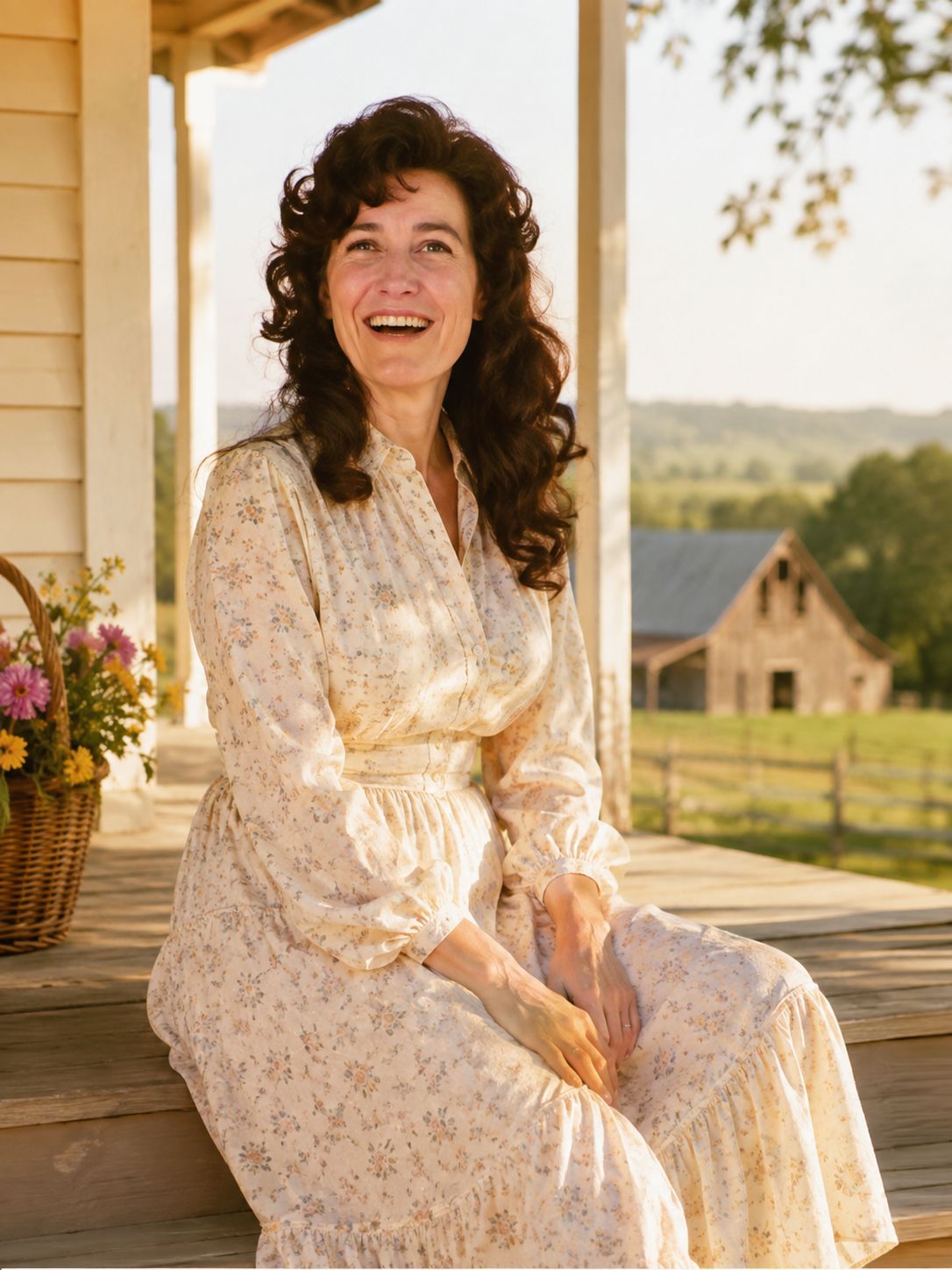
There are country singers who make hit records.
There are country singers who become legends.
And then there are artists whose voices become something much bigger than music.
Loretta Lynn belonged to that last group.
When she died on October 4, 2022, at age 90, country music lost one of its most important storytellers. But the remarkable thing about Lynn’s legacy is that her greatest contribution may not be measured by awards, chart positions, or even the songs that became standards. It may be measured by the countless women who heard her sing and quietly thought:
“If Loretta can say it, maybe I can say it, too.”
That was Lynn’s revolution.
She did not arrive in Nashville as a polished celebrity. She came from Butcher Holler, Kentucky, from a poor coal-mining family, married young, became a mother, learned guitar, and eventually turned the experiences of ordinary women into some of country music’s most unforgettable songs. The Country Music Hall of Fame describes her as an artist who insisted on telling her own “brash and brave truth.”
And that truth changed country music.
She Didn’t Sing About Perfect Women — She Sang About Real Ones
For decades, country music had been filled with heartbreak.
But Loretta Lynn approached heartbreak differently.
She didn’t always portray women as helpless victims waiting for a man to return.
Sometimes her women were angry.
Sometimes they were jealous.
Sometimes they were exhausted.
Sometimes they were funny.
And sometimes they had simply had enough.
That distinction mattered.
Songs such as “You Ain’t Woman Enough,” “Don’t Come Home A-Drinkin’,” and “Fist City” gave women something that was surprisingly rare in mainstream country music at the time: a narrator who wasn’t afraid to push back.
The Songwriters Hall of Fame notes that Lynn’s songs frequently confronted infidelity and divorce from the woman’s point of view, while presenting women who were unafraid to stand up for themselves.
That was not necessarily packaged as a political statement.
It was more personal than that.
Loretta simply told the truth as she understood it.
And sometimes the truth is more powerful than a speech.
“She didn’t need to tell women how to be strong. She showed them what strength could sound like.”
“Coal Miner’s Daughter” Was More Than a Song
If you want to understand Loretta Lynn’s extraordinary ability to make personal history feel universal, start with “Coal Miner’s Daughter.”
The song transformed her childhood into mythology without pretending it was glamorous.
She sang about poverty, family, hard work, and pride.
But underneath all of that was something even more important:
identity.
Loretta never needed to erase where she came from to become successful.
She carried Butcher Holler with her.
The Country Music Hall of Fame notes that “Coal Miner’s Daughter” became her signature song, later giving its name to her bestselling 1976 autobiography and the acclaimed film adaptation that followed.
That achievement was extraordinary because Nashville was often a place where artists were expected to become larger-than-life characters.
Loretta did the opposite.
She became legendary by insisting that her ordinary beginnings mattered.
For women who had spent their lives believing that their stories were too small to matter, that was a profound message.
Your childhood mattered.
Your family mattered.
Your struggles mattered.
Your voice mattered.
Then Loretta Started Saying Things Country Radio Wasn’t Ready to Hear
This is where Lynn’s legacy becomes even more fascinating.
She wasn’t content simply to sing about romance.
She wrote about subjects that could make audiences uncomfortable.
Infidelity.
Alcohol.
Divorce.
War.
Sex.
Birth control.
And she did it from the perspective of a woman who had lived close enough to those realities to understand their consequences.
One of the clearest examples was “The Pill.”
The song celebrated birth control at a time when the subject remained deeply controversial. According to PBS, the song was recorded in 1972 but its release was delayed for two years because executives considered the subject matter too risqué.
When it finally arrived, some radio stations refused to play it.
Loretta, however, didn’t retreat.
Her official biography describes “The Pill” as a celebration of sexual liberation and notes that many stations banned it.
Think about that for a moment.
A woman from rural Kentucky had entered the center of Nashville’s country establishment and was now forcing the industry to confront a subject that many people preferred to avoid.
That took courage.
And perhaps even more importantly, it told listeners that women were allowed to have opinions about their own lives.
Her Courage Was Often Hidden Inside Humor
One reason Loretta could go places other artists couldn’t was her sense of humor.
She could deliver a cutting line with a smile.
She could turn confrontation into entertainment.
She could make a serious subject feel conversational.
That quality helped songs like “Fist City” become massive successes rather than lectures.
The Country Music Hall of Fame specifically points to the humor in songs such as “Fist City” and “Your Squaw Is on the Warpath” as part of Lynn’s ability to speak more boldly without losing her audience.
This was one of her secret weapons.
Loretta didn’t sound like someone standing on a platform telling people what they should believe.
She sounded like the woman sitting beside you at the kitchen table.
And that made her impossible to ignore.
She Gave Women Permission to Admit They Were Angry
Perhaps the most underrated part of Lynn’s legacy is anger.
For generations, women were often expected to absorb disappointment quietly.
A husband cheated?
Forgive him.
A man drank too much?
Put up with it.
A marriage fell apart?
Keep the family together.
A woman became furious?
She was often expected to lower her voice.
Loretta Lynn didn’t always lower hers.
Her songs created space for female anger without requiring women to apologize for feeling it.
That does not mean every character in a Loretta Lynn song was morally perfect.
Far from it.
That’s exactly what made them believable.
Her women could be contradictory.
They could love someone and still be furious with him.
They could be vulnerable and defiant in the same breath.
They could cry and still draw a line in the sand.
That emotional complexity was revolutionary because it reflected real life.
And Her Success Proved There Was an Audience for Those Voices
The industry couldn’t dismiss Loretta as an outsider forever.
Her success became undeniable.
She collected an extraordinary run of hits and eventually became the first woman to win the Country Music Association’s Entertainer of the Year award, in 1972. The Country Music Hall of Fame records that she also won CMA Female Vocalist of the Year in 1967, 1972, and 1973.
Her achievements mattered because every award quietly challenged an assumption:
Women could sell records.
Women could write their own material.
Women could talk about difficult subjects.
Women could lead country music rather than simply participate in it.
And once Loretta proved it, other women had more room to try.
Her influence extended beyond the songs themselves.
The Kentucky Music Hall of Fame describes her as a trailblazer whose lyrics and recordings expressing women’s concerns and emotions influenced numerous other singers.
Her Legacy Was Never About Being Perfect
This is important.
Loretta Lynn wasn’t powerful because she presented herself as an ideal woman.
She was powerful because she presented herself as a real woman.
She had contradictions.
She had complicated experiences.
She experienced hardship.
She knew love could be beautiful and painful.
She understood that marriage could contain both devotion and disappointment.
She knew that motherhood could be exhausting and extraordinary.
And she understood something that many great songwriters eventually discover:
People don’t necessarily connect with perfection. They connect with recognition.
A woman listening to Loretta might not have lived the same life.
But she could recognize the feeling.
That was the magic.
The Women Who Came After Her Were Part of the Answer
Loretta’s influence can be felt in generations of women who followed.
Artists could enter country music with stronger expectations of creative control.
Women could write about complicated relationships.
They could sing about independence.
They could challenge double standards.
They could be funny, furious, vulnerable, sexual, maternal, ambitious, wounded, and strong — sometimes all in the same album.
Lynn’s career helped expand the boundaries of what a female country artist could say.
And perhaps the most beautiful part is that her influence didn’t require every artist to sound like Loretta.
The point was never imitation.
The point was permission.
Permission to tell your own story.
More Than a Queen of Country Music
Loretta Lynn’s awards will remain.
Her No. 1 songs will remain.
“Coal Miner’s Daughter” will remain.
Her duets with Conway Twitty will remain.
Her photographs, albums, performances, and recordings will remain.
But those are artifacts of a larger legacy.
The real legacy is the woman who heard Loretta sing about standing her ground and found enough courage to stand her own.
The mother who heard “Coal Miner’s Daughter” and realized her humble upbringing wasn’t something she needed to hide.
The wife who heard “Don’t Come Home A-Drinkin’” and recognized her own frustration.
The woman who heard “Rated X” and realized that society’s judgments did not erase her humanity.
The listener who heard “The Pill” and understood that women could talk openly about choices affecting their own lives.
Loretta didn’t solve those women’s problems.
She did something more lasting.
She gave them a voice.
And once someone hears their own voice reflected in a song, silence becomes a little harder to accept.
“Loretta Lynn didn’t simply write songs for women. She made women feel that their stories were worthy of being songs.”
That may ultimately be why her music refuses to disappear.
Because trends change.
Radio formats change.
Fashion changes.
Generations change.
But the need to be heard never does.
Loretta Lynn understood that better than almost anyone.
She took the life she was given — the poverty, the marriage, motherhood, heartbreak, ambition, controversy, humor, and survival — and turned it into music.
Then she handed that music to the world.
And somewhere, decades later, another woman heard it and thought:
“Maybe I can be brave, too.”
That is a legacy no chart can measure.
And perhaps that is why Loretta Lynn will always be more than a country music legend.
She was proof that an ordinary woman’s truth could become extraordinary — simply because she was brave enough to say it out loud.
VIDEO: