 By admin
 INTRODUCTION:
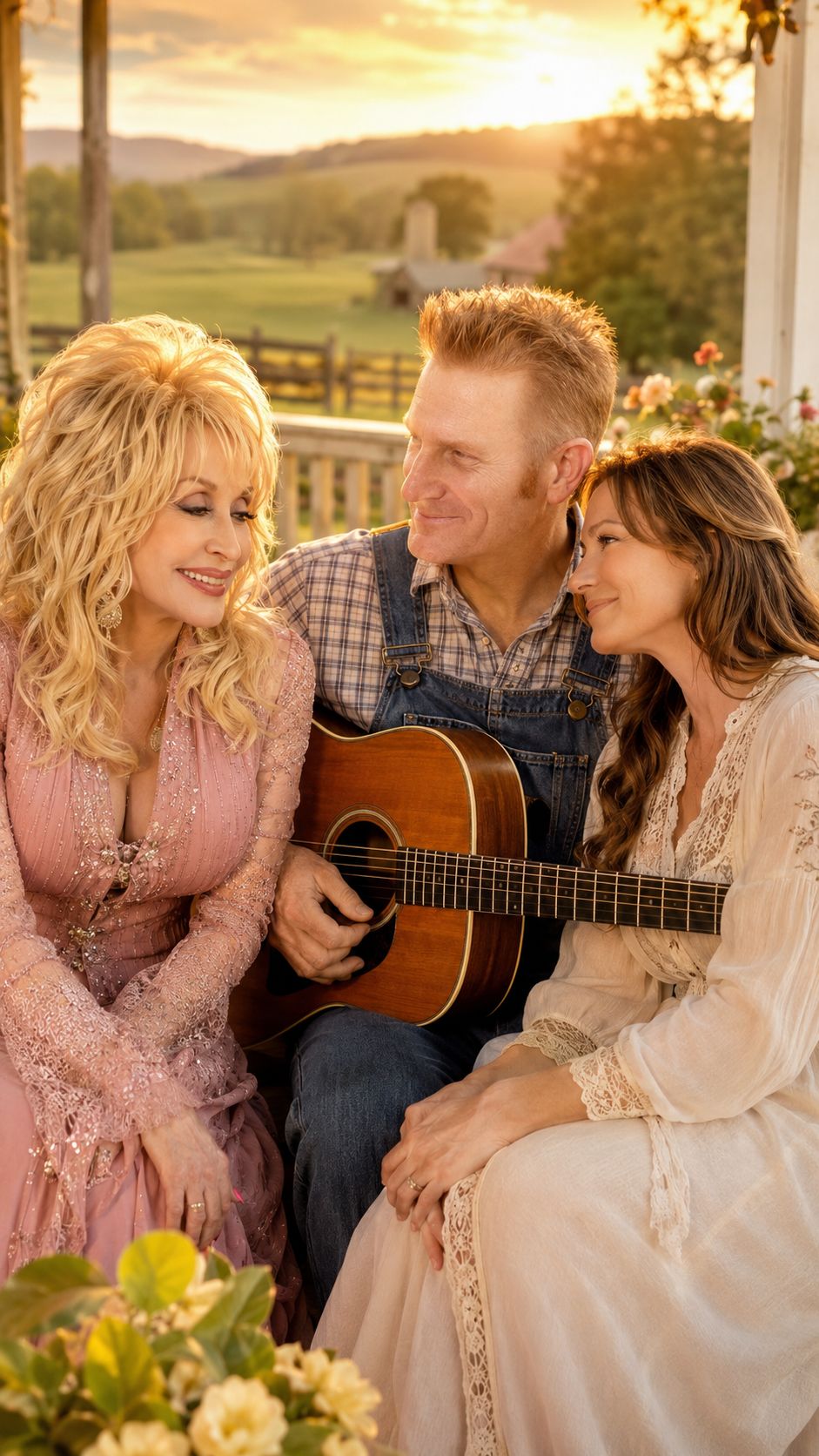
There are moments in country music when a song becomes more than a song.
It becomes a goodbye.
It becomes a prayer.
It becomes a conversation with someone who is no longer there.
For Rory Feek, “One Angel” was all of those things.
And when Dolly Parton stepped into the song, lending her unmistakable voice to a tribute for Rory’s late wife, Joey Feek, something almost unbearably beautiful happened. The collaboration connected three generations of country storytelling: the legendary artist Joey had admired since childhood, the husband who had shared a life and stage with her, and the woman whose memory still seemed to fill every quiet corner of their story.
The result was not simply a duet.
It was a musical farewell to an extraordinary woman.
The Story Behind the Song Begins With Loss
On March 4, 2016, Joey Feek died at the age of 40 after a battle with cervical cancer. She had become known to millions as one half of the beloved husband-and-wife duo Joey + Rory, but to Rory, she was far more than a musical partner.
She was his wife.
His best friend.
The mother of their daughter, Indiana.
And the woman whose voice had helped give their life its soundtrack.
The couple had first become widely known after appearing on CMT’s Can You Duet? in 2008. Their chemistry was immediate, not because they were polished in the way many Nashville acts were polished, but because they seemed genuine. Their music carried the warmth of front porches, family gatherings, old hymns, and small-town country life.
Their story became even more powerful during Joey’s illness.
Rather than disappearing from the public eye, Rory shared pieces of their journey with fans through his writing. Their private pain became something many people followed with extraordinary tenderness.
Joey’s final months were marked by courage, faith, family and music.
Her death left a silence.
And eventually, Rory began trying to find a way to sing through it.
Then Came “One Angel”
Years after Joey’s passing, Rory recorded “One Angel,” a song written by Sandy Emory Lawrence, a close friend of the Feeks.
The song did not attempt to make grief pretty.
That is one of the reasons it hits so hard.
It acknowledges anger, frustration, cancer, suffering and faith. It wrestles with the uncomfortable questions that often come with watching someone you love endure something you cannot fix.
Rather than pretending everything happens for a simple reason, the song allows grief to sound complicated.
And that made it deeply human.
“Some songs are written to entertain us. Others are written because somebody simply has to say what hurts.”
“One Angel” belonged to the second category.
Rory’s performance carried the weight of someone who had lived the story rather than merely interpreted it.
The song appeared on Gentle Man, Rory’s first solo album and his first full-length project following Joey’s death.
But then came the unexpected moment that made the tribute even more profound.
Dolly Parton heard it.
And she wanted to be part of it.
Joey’s Childhood Hero Came Back Into the Story
To understand why Dolly Parton’s appearance on “One Angel” was so emotional, you have to understand what Dolly meant to Joey.
Joey did not merely admire Dolly.
She grew up wanting to be like her.
Rory later explained that Joey’s first performance at Cunningham Elementary School in Indiana was “Coat of Many Colors,” one of Parton’s most beloved songs. Dolly’s music became part of Joey’s childhood dream of becoming a country singer.
That connection makes the “One Angel” collaboration almost feel like the closing of a circle.
A little girl in Indiana once stood in front of people singing a Dolly Parton song.
Years later, that girl became a country singer herself.
She found love.
She built a family.
She found a musical partner in Rory.
She became part of one of the most beloved husband-and-wife stories in modern country music.
And after she was gone, Dolly Parton came forward to sing for her.
Rory described the collaboration as something he and Joey could never have imagined.
Parton didn’t simply add background vocals. She sang a verse and added her own musical presence to the recording.
That distinction matters.
It transformed the recording from a husband’s solo remembrance into something resembling a musical conversation across generations.
Dolly Had Already Reached Joey Before the Song
There was another chapter to this story that makes the collaboration even more heartbreaking.
Before Joey died, Dolly had already sent her a personal video message.
Joey, who had dreamed of meeting her musical hero, finally got to hear directly from the woman she had admired for years.
The message came during Joey’s cancer battle, when her health had deteriorated significantly.
Dolly expressed her admiration and offered encouragement, prayer and love.
Rory remembered Joey watching the message surrounded by family.
And Joey cried.
So did the people around her.
Dolly later said Joey’s death affected her deeply, describing the loss as something that felt almost like losing a relative.
That earlier moment makes “One Angel” feel less like a celebrity collaboration and more like the continuation of a relationship that had begun through music.
Dolly couldn’t change what happened to Joey.
She couldn’t stop the illness.
She couldn’t give Rory more years with his wife.
But she could sing.
And sometimes, in country music, singing is how people carry what words cannot.
Rory’s Voice Carries a Different Kind of Pain
One of the most remarkable things about “One Angel” is Rory’s restraint.
He does not sound like someone trying to manufacture a dramatic moment.
He sounds like someone remembering.
That distinction is important.
Country music has always understood the power of ordinary voices telling extraordinary stories. The greatest songs about heartbreak rarely need excessive decoration. They need truth.
Rory had lived the truth behind every line.
He had watched his wife suffer.
He had watched her become a mother.
He had held onto their faith while confronting a future neither of them wanted.
And after she was gone, he had to figure out how to raise their daughter and continue living.
CBS later documented the enormous weight Rory experienced after Joey’s death, noting that even having time to prepare for the loss did not truly prepare him for its aftermath.
That is the emotional foundation underneath “One Angel.”
It isn’t simply about death.
It is about the strange reality of continuing to live after someone you love has stopped living beside you.
The Dolly Parton Connection Makes the Song Almost Poetic
There is something almost cinematic about the story.
Joey grows up listening to Dolly.
Joey sings Dolly’s songs.
Joey moves to Nashville hoping to build a life in country music.
Joey becomes a recording artist.
Joey and Rory build a career together.
Then cancer changes everything.
Joey dies.
Years later, Rory records a song about her.
And Dolly Parton—the woman who helped inspire Joey’s childhood dream—joins him.
“The voice of an angel, sang for an angel.”
That sentiment, shared by Rory when describing the collaboration, captures why the recording resonated so strongly with fans.
The symbolism is almost too perfect.
The artist Joey wanted to become.
The husband who loved her.
The song written because a friend could not keep her grief inside.
And the memory of a woman whose influence extended far beyond the recordings she left behind.
“One Angel” Is Also About the People Left Behind
Perhaps the most important lesson in the song is that grief does not end when the funeral does.
For Rory, the hardest part was not simply saying goodbye.
It was waking up the next morning.
And the morning after that.
And the year after that.
And continuing to raise Indiana without Joey physically beside them.
Joey’s death left Rory with the responsibility of carrying forward not just his own life but the family life they had built together.
That reality gave his later music a different emotional texture.
He wasn’t simply mourning the past.
He was trying to understand how to build a future without forgetting the person who had once been at its center.
That is why “One Angel” feels so different from a conventional tribute song.
It doesn’t place Joey safely in the past.
It suggests that love continues to occupy the present.
A Song That Refuses to Give Grief a Simple Ending
Country music has always been comfortable with complicated emotions.
Joy and sadness can exist in the same verse.
Faith can exist beside anger.
Hope can exist beside heartbreak.
“One Angel” embraces that contradiction.
It doesn’t tell listeners that everything is okay.
Instead, it asks them to sit with the pain.
To remember Joey.
To remember Rory.
To remember the family behind the music.
And perhaps to think about someone they have lost themselves.
That’s why the song reaches beyond the Feek story.
Almost everyone has an “angel” somewhere in their memory.
Someone whose voice they can still hear.
Someone whose chair they still notice is empty.
Someone whose favorite song can suddenly stop them in their tracks.
Dolly’s Contribution Was Small in Length, But Huge in Meaning
Dolly Parton didn’t need to dominate the recording.
In fact, the power comes from the opposite.
Her voice supports Rory’s rather than overwhelming it.
That choice makes the collaboration feel intimate.
Dolly wasn’t there to turn Joey’s story into a grand Nashville spectacle.
She was there because Joey mattered.
And because music had connected them long before they ever shared a recording.
The collaboration therefore becomes an extraordinary example of what country music can do at its best.
It can preserve memory.
It can connect generations.
It can give grief a melody.
And it can make someone who is gone feel present for just a few minutes.
Joey Feek’s Legacy Lives Beyond the Song
Joey’s story ultimately cannot be reduced to cancer.
That would be unfair to the woman she was.
She was a singer.
A wife.
A mother.
A songwriter.
A daughter.
A friend.
And a woman who spent her life pursuing a dream that began with the music of artists like Dolly Parton.
She and Rory created music that touched listeners because it felt authentic.
Their final album together, Hymns That Are Important to Us, was released shortly before Joey’s death and went on to top the country album sales chart; it later won the Grammy for Best Roots Gospel Album.
That achievement is remarkable.
But perhaps the most enduring part of Joey’s legacy is not an award or chart position.
It is the way people still talk about her.
The way Rory continues to tell her story.
The way Indiana grew up carrying her mother’s memory.
And the way Dolly Parton eventually lent her voice to a song written in Joey’s honor.
The Final Note
There are country songs that make you tap your foot.
There are country songs that make you sing along.
And then there are songs that make you stop what you’re doing and remember somebody.
“One Angel” belongs in that final category.
It is not a celebration of grief.
It is an acknowledgment of it.
Rory Feek brought the wound.
Sandy Emory Lawrence gave the wound words.
And Dolly Parton gave the memory another voice.
Together, they created something far more meaningful than another country duet.
They created a musical memorial for Joey Feek.
And perhaps that is why the recording still carries such emotional power.
Because underneath every harmony is a story.
A husband remembering his wife.
A daughter growing up with her mother’s memory.
A songwriter mourning a friend.
And a legendary singer honoring the woman who once dreamed of becoming just like her.
Some people leave the stage, but they never really leave the song.
Joey Feek may have left this world in 2016, but through Rory’s music, Dolly’s voice, and the memories of everyone who loved her, her story continues to sing.
And somewhere inside “One Angel,” there is a little girl from Indiana who once stood in front of a crowd and sang a Dolly Parton song—never knowing that decades later, her childhood hero would help sing her home.
VIDEO: