 By admin
 INTRODUCTION:
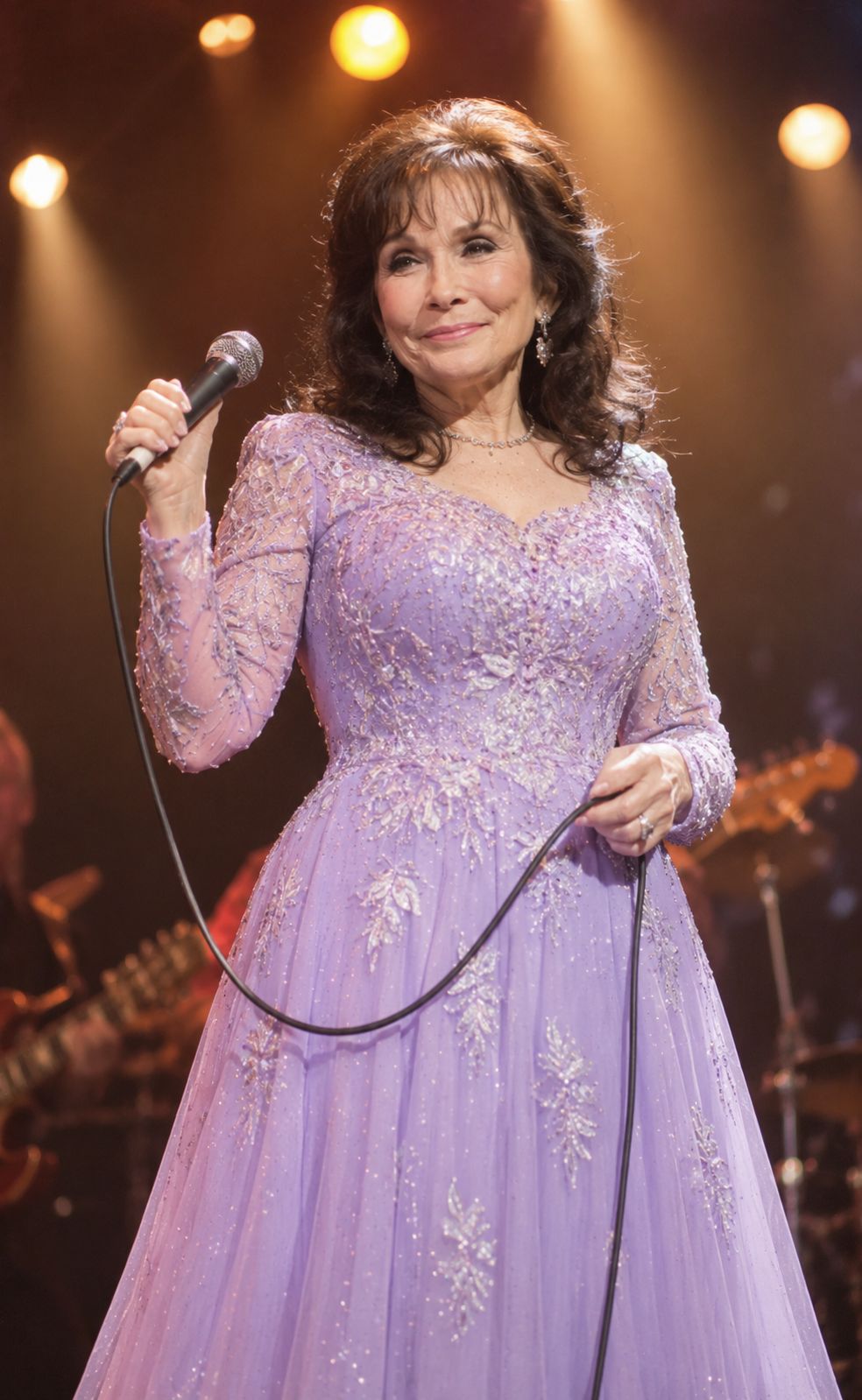
There are some artists you simply remember hearing.
Then there are artists you remember seeing.
For generations of country music fans in Pennsylvania’s Lehigh Valley, Loretta Lynn was both.
Long before streaming playlists and viral concert clips, a country star had to travel from town to town, fair to fair, carrying songs that people had already made part of their lives. And when Loretta Lynn came to the Great Allentown Fair, she wasn’t simply another name on a concert schedule. She was a living symbol of the country music tradition—one who had turned stories about family, love, marriage, hardship, motherhood, independence and rural life into songs that millions of people understood.
The official history of the Great Allentown Fair records Lynn among its notable headliners in 1981 and 1987, placing her performances firmly among the major entertainment moments of the fair’s history.
And in 1987, she returned to the Lehigh Valley alongside Conway Twitty, one half of perhaps the most celebrated male-female partnership in country music history. The official fair archive lists Conway Twitty & Loretta Lynn among the 1987 Grandstand performers.
Those dates may look like simple entries in an old concert archive.
To the people who were there, they were memories.
A Country Queen Came to Allentown
The Great Allentown Fair has always been more than rides, food, livestock and agricultural exhibits. Its Grandstand became one of the Lehigh Valley’s most important stages for major touring entertainers.
The fair’s own history describes the Grandstand as the heartbeat of its entertainment tradition, a stage that has welcomed legendary performers across generations.
And country music has been particularly important to that history.
For decades, the fair brought some of Nashville’s biggest names to Pennsylvania. Loretta Lynn belonged naturally in that tradition.
By the time she appeared at the fair in 1981, Lynn was already far beyond the status of a promising country singer. She had become one of the defining voices of American country music.
Her songs did something unusual.
They spoke plainly.
She could sing about marriage without pretending marriage was always easy. She could sing about motherhood without turning it into a sentimental postcard. She could sing about working-class life without apologizing for it.
And perhaps most importantly, she gave women a voice.
That voice could be funny.
It could be rebellious.
It could be vulnerable.
It could be furious.
But it was unmistakably hers.
“Loretta never needed to pretend to be someone else. That was the secret of her power.”
That authenticity was exactly what made a Loretta Lynn concert feel different.
The 1981 Allentown Fair Memory
The Great Allentown Fair’s historical archive specifically lists Loretta Lynn & Bill Anderson among the 1981 Grandstand performers.
Imagine the atmosphere.
It was September.
The fair was alive with the sounds and smells that defined late-summer Pennsylvania: carnival rides, food stands, crowds moving between attractions and families gathering for the evening’s entertainment.
And somewhere among those crowds were country fans who had grown up listening to Loretta Lynn on the radio.
For them, hearing her voice come alive on a stage was different from hearing a record at home.
The records were personal.
The concert was communal.
Thousands of people could suddenly recognize the same song, the same melody and the same emotional story.
A song that had once belonged to one person’s kitchen, car radio or living room suddenly belonged to everyone standing beneath the lights.
That is the magic of live country music.
Then Came Conway
If Loretta’s 1981 appearance represented the strength of her career as a solo artist, her 1987 return with Conway Twitty represented something even more special.
The official Allentown Fair archive lists Conway Twitty & Loretta Lynn as a 1987 Grandstand act.
Another account of the fair’s history places the duo among a remarkably eclectic lineup that year, alongside artists including Alabama, Bryan Adams, Chicago, The Beach Boys and Run-D.M.C.
That detail tells us something important.
Loretta and Conway weren’t relics of country music’s past.
They were still major attractions.
They could stand alongside rock, pop and emerging hip-hop acts and command their own audience.
And their audience came because of the chemistry.
Conway and Loretta understood something about performing together that few duos ever completely mastered.
They didn’t have to make their relationship look perfect.
They made it believable.
Their voices could tease each other, challenge each other and then suddenly melt together in harmony.
The songs often sounded like conversations between two people who knew exactly how complicated love could be.
“When Conway and Loretta sang together, it never felt like two singers simply sharing a microphone. It felt like two characters living inside the same story.”
That was part of the reason their music lasted.
The Sound of Real Life
Loretta Lynn’s importance cannot be separated from the subjects she chose to sing about.
She wasn’t interested in making every story comfortable.
She sang about the realities of being a woman in a changing America.
She challenged expectations.
She wrote about subjects that could make radio programmers nervous.
And she did it while maintaining a connection to the traditional country sound that had brought her to Nashville.
That balance became one of her greatest achievements.
She could be traditional without being trapped by tradition.
She could be controversial without losing her humanity.
She could speak for women without abandoning the men who loved country music, too.
That’s why a Loretta Lynn concert could contain so many different emotions.
There was laughter.
There was heartbreak.
There was pride.
There was nostalgia.
And sometimes there was simply recognition—the feeling of hearing a singer say something you had experienced yourself but never quite knew how to put into words.
Why Lehigh Valley Fans Still Remember
There is something powerful about old concert memories.
People often forget the exact setlist.
They may not remember every song that was played.
But they remember who they went with.
They remember where they sat.
They remember the lights.
They remember the feeling of waiting for the performer to appear.
And they remember the moment the familiar voice finally came through the speakers.
That is especially true for an artist like Loretta Lynn.
Her songs were deeply connected to people’s lives.
For some fans, she was the voice playing while their parents cooked dinner.
For others, she was part of a first dance, a long drive, a difficult marriage or a childhood memory.
Then suddenly, decades ago, that voice was standing on a stage in Allentown.
That transforms a song into a memory.
And memories don’t disappear simply because the performer is gone.
A Legacy That Reached Far Beyond the Stage
Loretta Lynn died in 2022 at the age of 90, but the affection surrounding her name remains remarkably strong.
The Express-Times obituary and its guestbook show just how deeply listeners continued to feel about her music. Fans described her as a one-of-a-kind singer whose voice and songs had remained part of their lives for decades.
One commenter remembered seeing Lynn perform multiple times and described her music as something that would live forever.
That may be the most accurate description of her legacy.
Because Loretta Lynn’s greatest achievement wasn’t simply collecting awards, selling records or filling concert halls.
It was becoming part of people’s memories.
And the Lehigh Valley was one of the places where that happened.
The Great Allentown Fair’s own records preserve those appearances: Loretta Lynn with Bill Anderson in 1981, and Loretta Lynn with Conway Twitty in 1987.
But an archive can only tell us that she was there.
It cannot fully capture what it felt like.
It cannot reproduce the anticipation of the crowd.
It cannot recreate the sound of thousands of people recognizing the opening notes of a beloved song.
It cannot tell us which daughter sat beside her mother, which husband brought his wife, which group of friends drove across Pennsylvania for the show, or which young fan watched Loretta and thought, perhaps for the first time, that country music could tell the truth about ordinary life.
Those are the memories that don’t make it into official records.
The Woman Behind the Legend
Loretta Lynn’s story was always bigger than fame.
She came from a poor Kentucky family and became one of country music’s most influential figures.
Her autobiography became the basis for Coal Miner’s Daughter, further cementing her story in American popular culture.
But the reason her music endured wasn’t because she had an extraordinary life alone.
It was because she could take extraordinary experiences and make them feel ordinary.
She understood that heartbreak doesn’t need an orchestra to hurt.
That motherhood doesn’t need a perfect story.
That marriage can contain both laughter and pain.
That growing older can bring both regret and gratitude.
And that a song doesn’t have to be complicated to be profound.
Sometimes it just has to be honest.
“Loretta Lynn didn’t sing about a perfect America. She sang about the America people actually lived in—and that honesty is why her voice still feels so close.”
Looking Back From Today
Today, the Great Allentown Fair continues to bring major entertainment to the Lehigh Valley.
But for older country fans, there is something especially nostalgic about remembering the era when Loretta Lynn stood on that Grandstand stage.
It was a different country music world.
There were fewer media distractions.
Artists weren’t constantly connected to fans through smartphones.
A concert was an event.
You bought the ticket.
You made the drive.
You found your seat.
And then, for a few hours, you were completely present.
When Loretta Lynn sang, people listened.
And decades later, they still remember.
That’s the real measure of a legendary performer.
Not simply how many records she sold.
Not simply how many awards she received.
But whether people who saw her decades ago still smile when they hear her name.
Whether they still remember the person sitting beside them.
Whether they still know exactly how they felt when that unmistakable country voice filled the night air.
Loretta Lynn accomplished all of that.
Her Lehigh Valley performances were only a few moments in a career that stretched across generations.
But sometimes a few hours can last a lifetime.
And for the country fans who gathered at the Great Allentown Fair to see the Coal Miner’s Daughter herself, those nights were more than concerts.
They were pieces of history.
Pieces of home.
Pieces of youth.
And pieces of a country music era that can never truly be recreated.
Loretta Lynn may be gone, but the songs remain.
And somewhere in the Lehigh Valley, there are still people who hear one of those songs and are instantly transported back to a summer night, a crowded fairground, the glow of a Grandstand stage—and the unforgettable moment when a country legend walked out and began to sing.
VIDEO: