 By admin
INTRODUCTION:
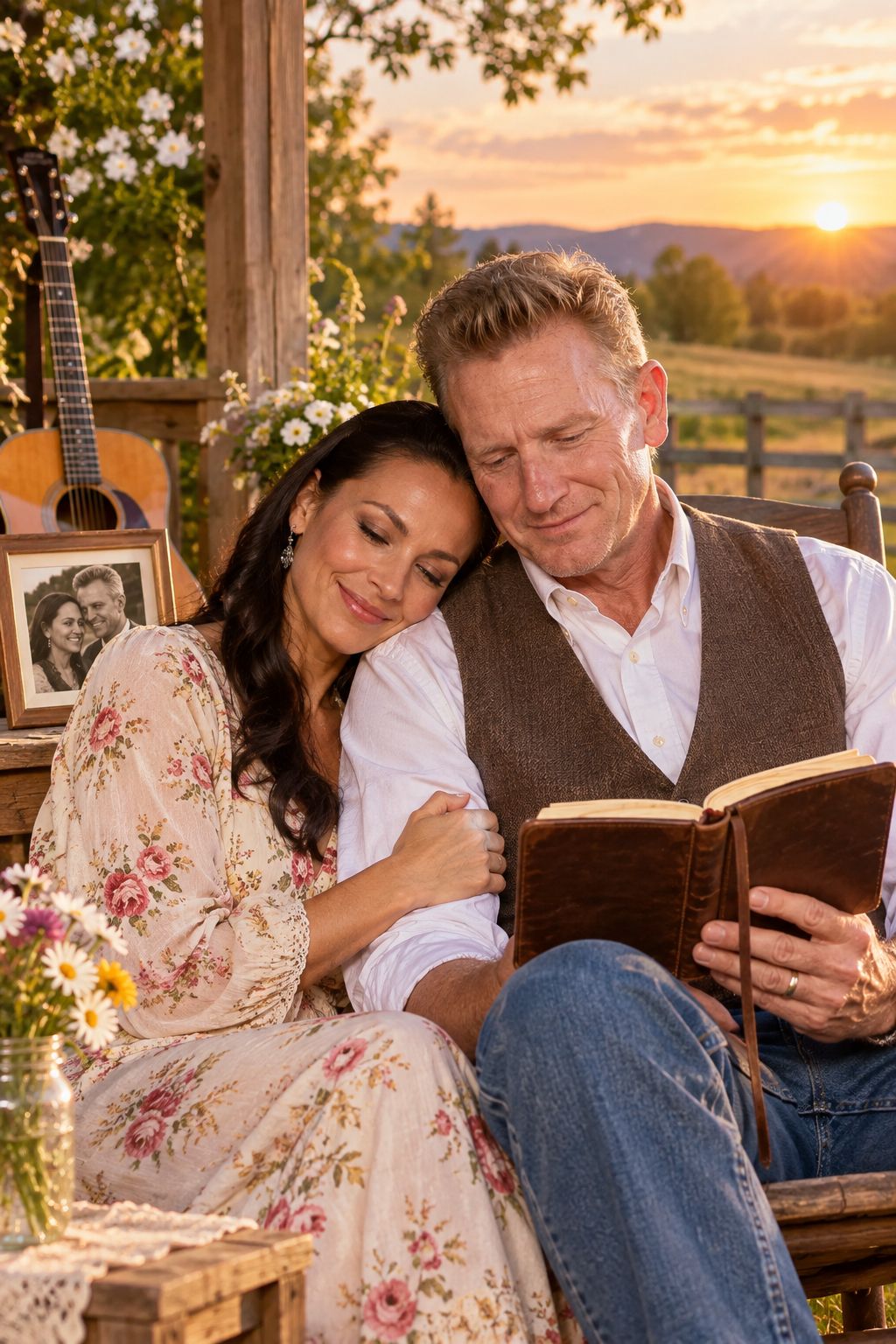
There are love stories that end when one person dies.
And then there are love stories that somehow keep writing themselves.
For country singer-songwriter Rory Feek, losing his wife and musical partner, Joey Feek, in March 2016 did not mean the end of their story. It meant learning how to live the next chapter without the woman who had shared his music, his faith, his farm, and his dreams.
Joey was only 40 when she died following a battle with cervical cancer. She left behind Rory and their young daughter, Indiana, who was just two years old.
But in the months and years that followed, Rory repeatedly returned to one profound realization: Joey had not simply left him memories.
She had left him a way to live.
That idea is at the heart of the emotional legacy surrounding Rory’s reflections on Joey—a legacy that has continued to move country music fans long after her final performance.


The Love Story That Became Something Bigger
Before tragedy transformed their lives, Rory and Joey were known simply as Joey + Rory, one of country music’s most beloved husband-and-wife duos.
Their music was rarely about flashy production or celebrity glamour.
It was about ordinary things.
Home.
Marriage.
Faith.
Family.
The small moments that become enormous when you realize how temporary life can be.
They married in 2002 and eventually built a life together on a Tennessee farm. Their relationship became inseparable from their music, and their music became inseparable from the authenticity of their relationship.
Then came Indiana.
Their daughter was born in 2014, and only weeks later doctors discovered cancer in Joey’s cervix. What followed was a heartbreaking battle that Rory documented publicly through his blog, This Life I Live. Their story touched millions because it never felt like a polished celebrity narrative.
It felt painfully human.
There was fear.
There was laughter.
There was faith.
And there was the unbearable knowledge that time was running out.
Rory later described Joey as someone whose character became clearest when life became hardest.
And perhaps the most extraordinary part was what Joey did with the time she had left.
Joey Was Thinking About Indiana’s Future
One of the most heartbreaking revelations came after Joey’s death.
Rory explained that during Joey’s final months, she deliberately encouraged Indiana to become more attached to her father.
That decision sounds almost impossible to understand from a mother’s perspective.
A mother facing death naturally wants every remaining second with her child.
But Joey understood something deeper.
Rory wrote that Joey began to recognize that she might not survive and essentially decided that Rory needed to become more important in Indiana’s daily life.
“He must become greater and I must become less.”
Those words, reported from Rory’s reflections about Joey’s decision, reveal the extraordinary sacrifice behind the scenes.
Joey wasn’t simply preparing to say goodbye.
She was preparing her daughter to live without her.
And she was preparing Rory to become the parent Indiana would need.
Rory later described Joey’s choice as an act of tremendous strength—because she willingly carried emotional pain herself in an attempt to make the transition easier for her husband and daughter.
That may be the closest thing to a “blueprint” a person can leave behind.
Not instructions written on paper.
Not a list of possessions.
But a model for how to love when love becomes painful.
“Thank You, Joey”
After Joey died, Rory faced something he had never imagined.
He had to raise their daughter alone.
And he had to do it while grieving the woman who had been his wife, his best friend, and his partner onstage.
In one of his earliest reflections after Joey’s death, Rory revealed that Indiana had not immediately begun asking where her mother was.
Instead, because of the way Joey had prepared her, Indiana had become deeply connected to Rory.
Rory was devastated by the circumstances—but also grateful.
“She let Indy fall more in love with me…and less in love with her.”
The sentence is almost impossible to read without feeling the weight behind it.
A mother was giving her daughter permission to need someone else.
And that someone was the man who would have to keep going after she was gone.
Rory’s response was simple:
“Thank you Joey.”
Those words weren’t merely gratitude.
They were recognition.
Recognition that Joey had continued mothering Indiana even while preparing for her own absence.
The Cemetery Became Part of Their Daily Life
Perhaps one of the most powerful images from Rory’s life after Joey’s death is not a concert stage.
It’s a grave.
On the Tennessee farm where Rory and Joey had built their life, Joey was laid to rest beneath the trees.
Rory struggled with the permanence of placing a traditional headstone there. In an interview with CBS, he described visiting the site frequently, even keeping a place for his coffee and another for Joey’s.
It sounds almost surreal.
But for Rory, grief wasn’t about pretending Joey had never existed.
It was about continuing the relationship in a different form.
He would sit there.
Talk to her.
Tell her what Indiana was doing.
Tell her what he was worried about.
Tell her what he was excited about.
And Indiana would sometimes play nearby.
For a few moments, Rory said, it could feel as though the family was together again.
That image says something profound about grief.
Sometimes moving forward doesn’t mean walking away from the person you lost.
Sometimes it means carrying them with you.
The “Blueprint” Was Never Really About Death
It’s tempting to think of Joey’s legacy only in terms of tragedy.
But that would miss the most important part.
Joey didn’t leave Rory a blueprint for how to grieve.
She left him a blueprint for how to live.
She showed him that family mattered more than fame.
That faith could exist alongside fear.
That ordinary days were worth celebrating.
That love could mean stepping aside so someone else could become stronger.
And perhaps most importantly, she showed him that a person’s impact can continue long after their voice becomes silent.
Rory eventually poured those lessons into his writing, parenting, music, books, and life on the farm.
His memoir, This Life I Live: One Man’s Extraordinary, Ordinary Life and the Woman Who Changed It Forever, became another way of preserving their story. The Country Music Hall of Fame and Museum later hosted Rory for a discussion about the memoir and his life with Joey.
The title itself says everything.
The woman who changed it forever.
Not the woman who disappeared from it.
The woman who changed it.
A Father Learning to See Joey Everywhere
Years later, Rory continued describing how Joey remained part of everyday life.
The farm itself became a living memorial.
The places they walked.
The songs they sang.
The stories they told.
The child they raised.
In one reflection, Rory described how difficult it was to watch Indiana grow without Joey being physically present to see it.
Yet he also recognized something beautiful:
Joey was still influencing Indiana’s life.
And Rory was still trying to follow the example she had left behind.
That is the paradox of Rory Feek’s story.
The person he lost is also the person who continues to shape the person he has become.
When a Voice Becomes a Memory
There is another moment that captures the power of Joey’s legacy.
Indiana eventually recognized her mother’s voice on the radio.
Rory recalled that his daughter heard one of Joey + Rory’s songs and immediately knew:
“It’s Mama.”
For Rory, the moment was overwhelming.
He initially couldn’t identify the voice himself.
Then he realized what Indiana had heard.
Her mother’s voice.
Still alive in a recording.
Still recognizable.
Still capable of filling a car with memories.
Think about that for a moment.
A child who was only two when her mother died could still hear her voice years later and know exactly who it was.
That is what music can do.
It freezes time.
It preserves people.
It allows someone who is gone to keep speaking.
Why Rory’s Story Still Moves Millions
Rory and Joey’s story resonates because it isn’t really about celebrity.
It’s about something almost everyone understands.
Love is temporary.
Life is unpredictable.
And none of us know how much time we have with the people who matter most.
Rory never pretended he had mastered grief.
In fact, he openly admitted that even months after Joey’s death, part of him still couldn’t accept that she wasn’t coming back.
That honesty matters.
Because grief doesn’t follow a schedule.
There is no final day when you wake up and suddenly feel “normal.”
Instead, the memories change.
The pain changes.
The relationship changes.
But love can remain.
And perhaps that’s the greatest lesson hidden inside Rory’s emotional confession.
Joey didn’t leave him with an instruction manual.
She left him with an example.
She showed him how to love Indiana.
How to face fear.
How to hold onto faith.
How to keep going.
How to make a home meaningful.
How to understand that a beautiful life isn’t necessarily a painless one.
Rory once reflected that stories become powerful when characters are tested by conflict, heartbreak, suffering, and obstacles. His own life became the very kind of story he had spent years writing about.
And somehow, amid the heartbreak, another chapter began.
Not the chapter Rory wanted.
But the chapter Joey had prepared him for.
The Woman Who Was Still Teaching Him
Perhaps that’s why the phrase “she left me a blueprint for life” feels so powerful, even beyond the exact words Rory has used at different points in reflecting on Joey.
Because it captures the essence of their story.
Joey’s greatest gift to Rory wasn’t one final song.
It wasn’t one final performance.
It wasn’t even one final goodbye.
It was the person she helped him become.
A father.
A storyteller.
A man learning to live with loss without allowing loss to destroy love.
And for millions who watched their story unfold, that lesson became personal too.
Because Rory and Joey reminded us that sometimes the most powerful love stories aren’t the ones where two people live happily ever after.
Sometimes they’re the ones where one person leaves too soon—and the other spends the rest of his life proving that the love they built was real.
Joey’s voice may no longer fill a concert hall.
But it continues to echo through Rory’s life.
Through Indiana.
Through their songs.
Through the Tennessee farm.
Through every memory.
And through every person who has ever had to wake up one morning and figure out how to keep living after losing someone they loved.
She didn’t leave Rory with a life without her.
She left him with a life shaped by her.
And perhaps that is the most enduring kind of love story country music has ever known.
VIDEO: