 By admin
 INTRODUCTION:
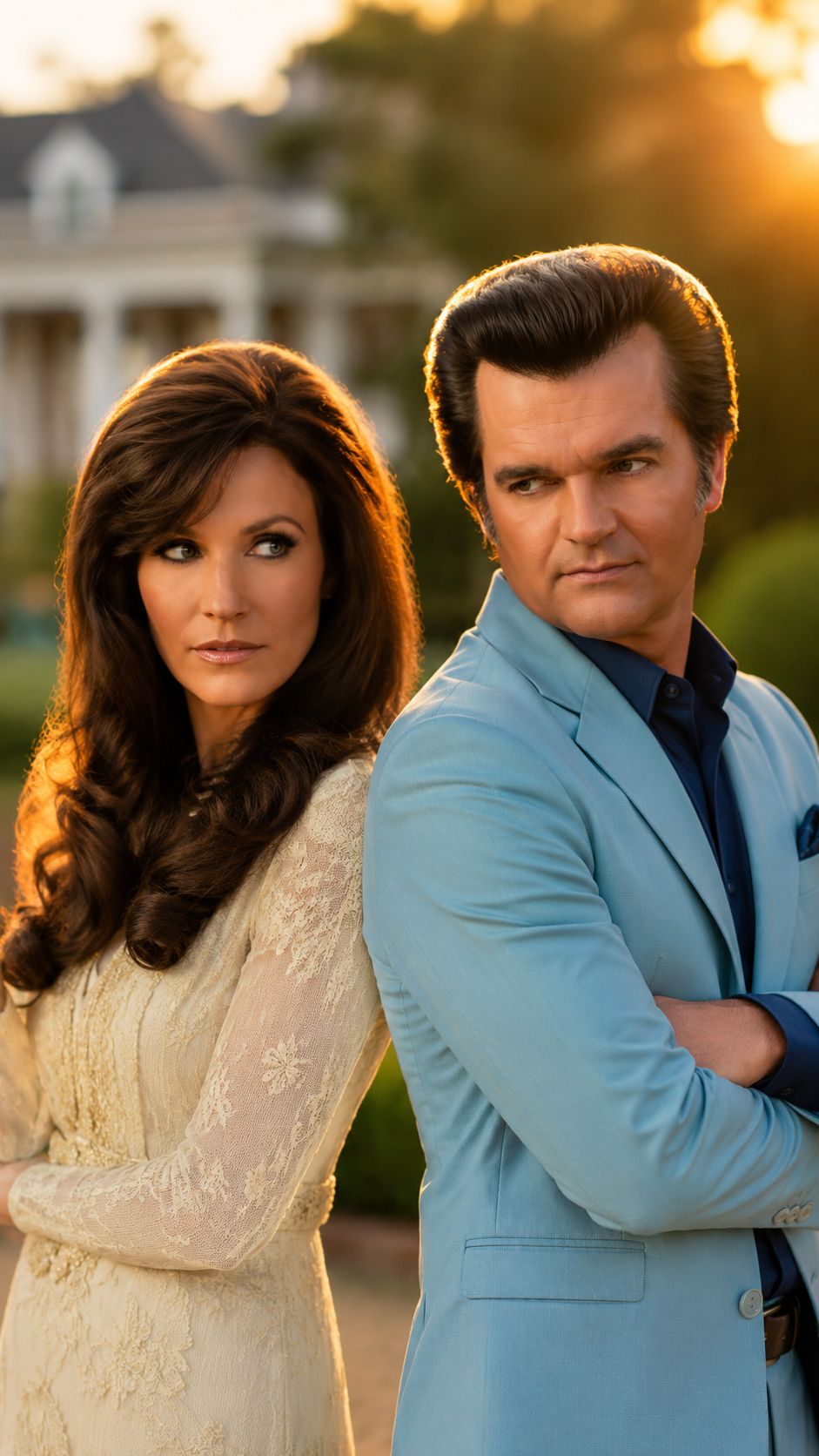
For decades, Conway Twitty and Loretta Lynn have occupied a strange, almost mythical place in country music history. They sang about forbidden love, secret meetings, broken marriages, jealousy, temptation and heartbreak with such astonishing realism that millions of listeners eventually asked the same question:
Was there something more between them—or was Conway using Loretta to build his career?
The rumor has survived for generations because the performances were almost too convincing. When Conway looked across the stage at Loretta, his voice softened. When Loretta answered him, she could sound vulnerable one moment and fiercely defiant the next. Their chemistry seemed effortless.
But the real story is far more complicated—and, in some ways, more touching.
The evidence available today does not support the idea that Conway secretly manipulated Loretta or used her romantically. In fact, Loretta herself repeatedly rejected the notion that they were lovers. She described Conway as a friend, while Conway publicly characterized their relationship in much the same way.
So why did the rumor become so powerful?
The answer begins with the music.
THE PARTNERSHIP THAT LOOKED TOO REAL
When Conway Twitty and Loretta Lynn began singing together, both were already established stars.
Loretta had built her reputation as one of country music’s most fearless women, writing and singing songs about marriage, motherhood, betrayal and the realities of women’s lives. Conway, meanwhile, had traveled an unusual road from rock ‘n’ roll success into country superstardom.
Their collaboration was almost an accident of timing.
Loretta later recalled that she and Conway began singing together in dressing rooms while they were overseas with a touring group. They decided to try their voices together for producer Owen Bradley when they returned home. Bradley loved what he heard and encouraged them to record.
That simple beginning produced something neither artist could have completely predicted.
Their first major breakthrough came with “After the Fire Is Gone,” a song about two people trapped in unhappy marriages who seek comfort elsewhere. The song went to No. 1 and immediately helped create the illusion that Conway and Loretta weren’t simply acting out a story—they were living one.
They weren’t.
Loretta was adamant about that.
“Me and Conway were friends. We wasn’t lovers.”
That statement matters because it came directly from Loretta herself when discussing the rumors years later.
Yet the rumors continued.
And perhaps that says more about the power of their performances than about their private lives.
DID CONWAY NEED LORETTA MORE THAN SHE NEEDED HIM?
This is where the mystery becomes genuinely interesting.
It is fair to ask whether the partnership benefited Conway enormously.
By the time he became Loretta’s duet partner, Conway was already enjoying a major resurgence in country music. His career had moved from his early rock-and-roll success into the country format, where he became one of the genre’s dominant male vocalists. His partnership with Loretta added another dimension to that image.
But Loretta wasn’t a supporting character.
She was already a superstar.
That distinction is critical.
Their collaboration was not a case of an unknown male artist discovering an established woman and exploiting her fame. Both artists brought enormous commercial value to the partnership. Contemporary accounts note that they were already successful individually when they joined forces.
And Loretta’s solo career continued to flourish while she recorded with Conway.
She wasn’t disappearing behind him.
She was becoming even more powerful.
Between 1971 and 1988, the pair released 11 studio albums together and charted 12 singles, including five No. 1 country hits. They also won the CMA’s Vocal Duo of the Year award four consecutive times from 1972 through 1975.
If Conway was “using” Loretta, the historical record suggests something much more mutual was happening.
They were using the magic of the partnership.
And both benefited.
THE SONGS THAT CREATED THE SCANDAL
The real culprit may have been the songwriting.
Consider the subjects of their biggest recordings.
“After the Fire Is Gone” portrayed infidelity.
“Louisiana Woman, Mississippi Man” turned separation itself into romantic tension.
“As Soon as I Hang Up the Phone” transformed a telephone conversation into an emotional miniature drama.
The songs weren’t merely sung.
They were performed.
Conway and Loretta understood something crucial about country music: sometimes the most believable heartbreak comes from pretending.
Their voices frequently sounded like two people who knew each other’s secrets.
That was enough to make audiences wonder whether the chemistry was real.
And the more people wondered, the more powerful the performances became.
LORETTA’S HUSBAND KNEW THE TRUTH
One of the most overlooked details in the story is Oliver “Doolittle” Lynn, Loretta’s husband.
If there had truly been some secret romantic relationship between Conway and Loretta, the circumstances surrounding their friendship would have been remarkably difficult to explain.
Instead, Loretta repeatedly described how much her husband liked Conway.
In a later interview, she recalled that when Doolittle was hospitalized, Conway came to see him. Loretta remembered Conway as someone her husband genuinely cared about, saying he was essentially the only artist in the business her husband paid much attention to.
That detail changes the emotional temperature of the entire story.
Behind the glamorous stage performances was not necessarily a secret affair.
There was a friendship involving two performers and a family that knew each other.
Loretta also spoke warmly about Conway as a person, describing him as a good man.
THEN WHY DID EVERYONE BELIEVE THE RUMORS?
Because Conway and Loretta were that good.
Their partnership blurred the line between character and performer.
When Conway sang about desire, regret or temptation, audiences believed him.
When Loretta responded, audiences believed her.
And because both had strong personalities outside the stage, their contrast made the performances even more compelling.
Conway was polished, controlled and famously private about his personal life. Loretta was outspoken, emotionally direct and willing to sing about subjects other artists avoided.
Together, they created a musical world that felt intimate.
It was almost like listening to a private conversation through a half-open door.
But Conway’s own philosophy about his public image helps explain the mystery. He deliberately maintained privacy around his personal life, believing that the separation between his real identity and romantic persona created a certain mystique.
In other words, mystery wasn’t necessarily an accident.
Mystery was part of the brand.
THE SHOCKING TRUTH: THERE MAY NEVER HAVE BEEN A “SECRET”
The most sensational version of the Conway-Loretta story is that Conway secretly used Loretta to increase his popularity.
But the historical evidence points toward a more nuanced conclusion.
There is no strong evidence that Conway manipulated Loretta into the partnership or secretly exploited her.
Instead, the two artists appear to have discovered that their voices, personalities and stage chemistry created something extraordinary.
And they protected that illusion.
Loretta’s own words are perhaps the strongest evidence of all.
She didn’t describe Conway as a manipulator.
She described him as her friend.
And Conway likewise publicly insisted that there was never a romantic relationship between them. Historical accounts preserve his description of Loretta as one of his best friends in the music business.
That doesn’t mean there were never tensions, disagreements or complicated business decisions. Any partnership lasting more than a decade would inevitably contain those things.
But turning every mystery into betrayal risks missing what made their story special.
THE REAL LOSS CAME TOO SOON
Perhaps the saddest part of the Conway and Loretta story is not what happened between them.
It is what never had the chance to happen.
They eventually stopped touring together full-time in 1981.
Conway died in 1993.
Loretta continued performing and recording for decades, carrying memories of their partnership with her.
The possibility of another chapter disappeared with him.
Even decades later, their families have continued telling the story. Tre Twitty, Conway’s grandson, and Tayla Lynn, Loretta’s granddaughter, eventually formed Twitty & Lynn, performing the songs and recreating the atmosphere of their grandparents’ legendary partnership. Their official project describes the show as a way of carrying Conway and Loretta’s musical history forward.
And perhaps that is the greatest proof that something genuine existed between Conway and Loretta—not a secret romance, but an artistic connection strong enough to survive generations.
THE FINAL VERDICT
So, was Conway Twitty using Loretta Lynn all along?
The evidence doesn’t support that dramatic conclusion.
If anything, the story appears to be the opposite.
Two already successful country stars discovered that they could create something neither could quite reproduce alone.
Loretta didn’t need Conway to become Loretta Lynn.
Conway didn’t need Loretta to become Conway Twitty.
But together, they created Conway & Loretta—a musical identity that became larger than either individual.
Their songs made listeners believe in forbidden love.
Their performances made audiences believe they were secretly in love.
Their chemistry made people suspicious.
And their refusal to feed the rumors only made the mystery stronger.
The greatest illusion wasn’t that Conway and Loretta were secretly lovers. It was that they could make millions of people believe they were.
That may ultimately be the real secret behind their enduring legacy.
They weren’t necessarily hiding a love affair.
They were hiding something even more difficult to explain:
how two people could stand beside each other, sing about impossible love, and make an entire generation feel every word—without actually being in love with each other.
That was the magic.
And nearly half a century later, country music still hasn’t completely figured out how they did it.
VIDEO: