 By admin
 INTRODUCTION:
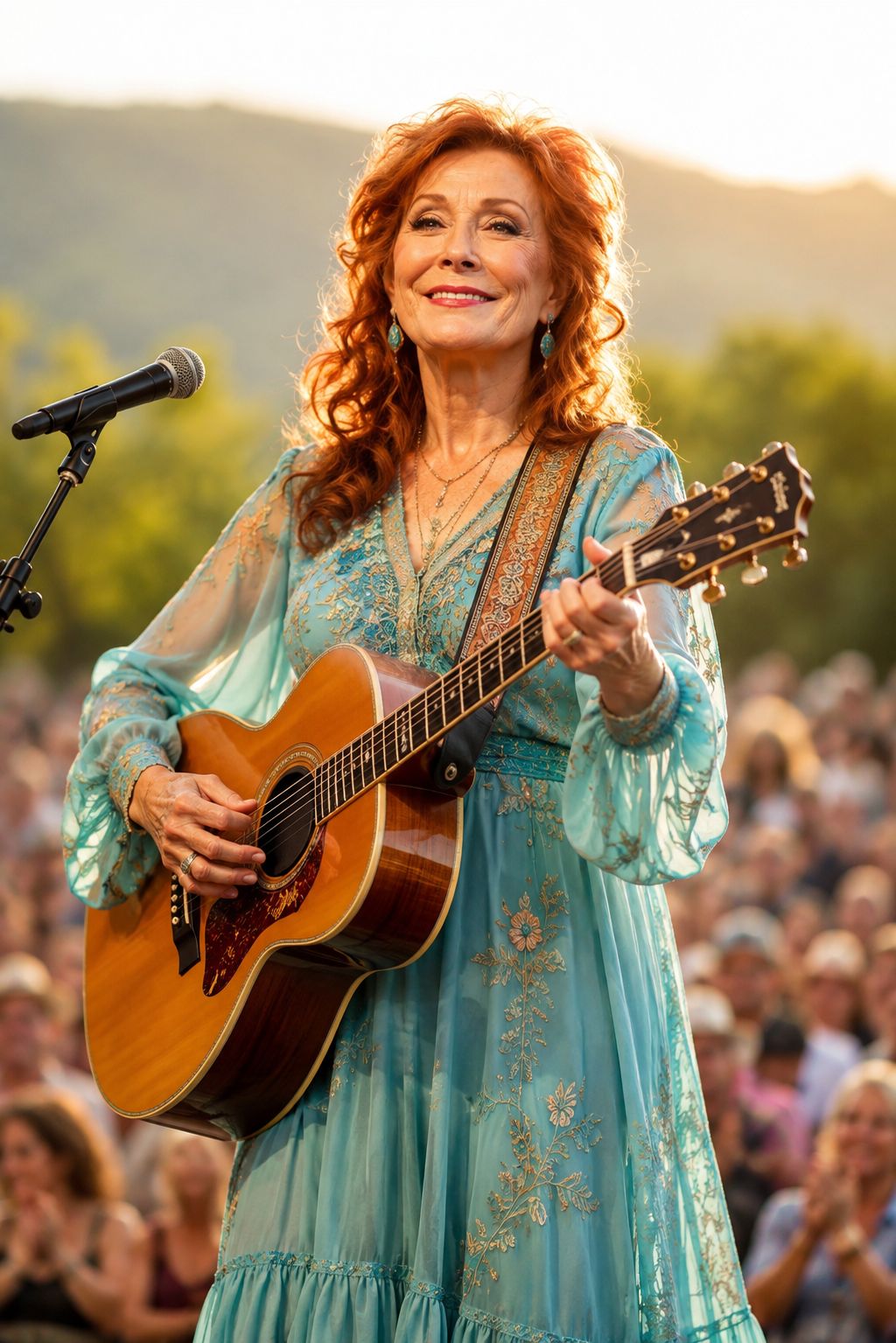
There are moments in country music when a song becomes bigger than the singer who recorded it. And then there are moments when a song becomes a kind of cultural lightning bolt—striking at exactly the right place, at exactly the wrong time.
For Loretta Lynn, that moment came with “The Pill.”
In 1975, country music was still deeply rooted in tradition, family values, religion, and the idea that certain subjects simply did not belong in a country song. Women could sing about heartbreak. They could sing about husbands who drank too much. They could sing about being left behind.
But talking openly about birth control and a woman’s freedom to decide when—or whether—she wanted another child?
That was different.
Lynn did it anyway.
And the story behind “The Pill” reveals something much bigger than a controversial country hit. It shows why Loretta Lynn became one of the most fearless storytellers in American music: she did not write about women from a distance. She wrote from inside their kitchens, bedrooms, marriages, disappointments, sacrifices, and dreams.
Loretta Lynn understood something Nashville sometimes forgot: the most powerful country songs are not always comfortable. They are truthful.
A Song Nashville Wasn’t Ready For
“The Pill” was recorded in 1972 but was held by Lynn’s label for several years before finally being released in 1975 on her album Back to the Country. The song had been written by T.D. Bayless, Don McHan, Lorene Allen, and Loretta Lynn, with Lynn’s own life experience making the subject especially personal to her.
The premise was startlingly simple.
A wife has spent years having child after child while her husband continues living his life. Suddenly, she has access to birth control—and everything changes.
The narrator is not asking permission.
She is celebrating the possibility of having control over her own future.
That was revolutionary precisely because it sounded so ordinary.
There were no political speeches. No academic language. No grand manifesto.
Just a woman saying, in the plainspoken language of country music, that she had finally found a way to make a decision about her own life.
And that was enough to make radio nervous.
Loretta Knew What Women Were Living
To understand why the song carried such emotional force, you have to understand Lynn’s background.
She married very young and became a mother while still a teenager. By adulthood, she had experienced the realities of motherhood, marriage, poverty, work, and the enormous expectations placed upon women in her generation.
Lynn eventually became a mother of six.
That experience shaped the way she approached songwriting.
She wasn’t writing about some abstract social issue. She understood what it meant for a woman to spend years carrying children, raising children, managing a household, and watching her husband have freedoms that were not always equally available to her.
American Songwriter has noted that Lynn herself later explained that, had birth control been available to her earlier, she would have used it—and that she loved her children but might have chosen to have fewer and space them differently.
That distinction is crucial.
“The Pill” wasn’t an attack on motherhood.
It was an argument for choice.
And Lynn knew exactly how controversial that distinction could be.
When Radio Said No
Country radio in the 1970s was not an easy place for a song like this.
Some stations refused to play “The Pill,” fearing its frank discussion of contraception and female sexual freedom. Reports have placed the number of stations that rejected it at more than 60, although the exact scope of the original resistance is difficult to establish.
The controversy only made the record more fascinating.
Suddenly, people weren’t simply asking:
“Do you like Loretta Lynn’s new song?”
They were asking:
“Should a country singer be allowed to sing this?”
That question was almost tailor-made for Lynn.
Because she had spent her career proving that women did not need permission to tell the truth.
She had already challenged expectations with songs dealing with drinking, infidelity, divorce, female anger, double standards, and complicated marriages. “Rated X,” for example, addressed the stigma placed on divorced women, while other Lynn songs pushed against conventional ideas about female behavior.
“The Pill” simply pushed the door farther open.
The Nashville Old Guard Couldn’t Stop the Audience
Here is where the story becomes almost poetic.
Radio could refuse to play the record.
But it couldn’t stop people from wanting to hear it.
“The Pill” climbed to No. 5 on the Billboard country chart and became Lynn’s highest-charting solo single on the Billboard Hot 100, reaching No. 70. It also reached No. 1 in Canada.
The very controversy that made some gatekeepers uncomfortable helped turn the song into an event.
That is one of the oldest truths in popular music:
You can silence a microphone. You cannot easily silence curiosity.
Women wanted to hear what Lynn was saying.
Men wanted to know what all the fuss was about.
Radio programmers who had rejected it suddenly had to watch it become a hit.
And Loretta?
She didn’t apologize.
Her philosophy was remarkably direct: she wrote about what she felt and what was happening in her own life.
That attitude became central to her legacy.
The Humor Was Part of the Revolution
One reason “The Pill” remains so memorable is that Lynn did not deliver her message like a lecture.
She delivered it like a country song.
There is humor in it. Mischief. Defiance.
That mattered.
A serious political statement might have been rejected immediately by some listeners. But Lynn wrapped the subject in the familiar storytelling language of country music: a husband, a wife, children, frustration, domestic life—and finally, liberation.
The result was something deceptively powerful.
You could laugh at it.
You could sing along with it.
And then, perhaps without realizing it, you could start thinking about what the woman in the song was actually saying.
She didn’t need to sound like a revolutionary to make a revolutionary point.
That may have been Lynn’s greatest weapon.
She sounded like someone’s neighbor.
And that made her impossible to dismiss.
The Women Heard Themselves in Her Songs
The deeper legacy of “The Pill” isn’t simply that Loretta Lynn recorded a controversial song.
It is that she made women visible.
Country music has always been strongest when it tells the stories of people who rarely get to tell their own stories. Lynn understood this instinctively.
Her songs could sound like conversations overheard across a kitchen table.
They were about the things people whispered about but rarely admitted publicly.
And that honesty helped transform Lynn from a successful country singer into something more enduring: a cultural storyteller.
The Washington Post described “The Pill” as a history-making song about birth control and women’s bodily autonomy, placing it within the broader story of Lynn’s remarkable journey from a poor Kentucky upbringing to country superstardom.
That journey makes the song even more remarkable.
This wasn’t a Nashville insider speaking from a position of academic privilege.
This was a woman who had lived the consequences of the social rules she was challenging.
She Wasn’t Trying to Shock Nashville
Perhaps the biggest misconception about Loretta Lynn is that she deliberately chased controversy.
She didn’t need to.
The controversy followed her because she refused to pretend that ordinary women’s lives were clean, simple, or politically convenient.
Lynn’s songwriting philosophy was fundamentally personal.
She wasn’t waking up every morning asking, “What can I do today to upset Nashville?”
She was asking a much more dangerous question:
“What is true?”
And sometimes the truth happened to make Nashville uncomfortable.
That was the case with “The Pill.”
It was the case with “Rated X.”
And it was the case with many of the songs that made Lynn such a singular voice in country music.
A Complicated Legacy Worth Getting Right
There is one important historical nuance worth remembering.
Modern descriptions sometimes portray “The Pill” as though it was subject to a permanent industry-wide ban. That is too simplistic.
Some radio stations absolutely refused to play the song when it was released, and the controversy was real. But contemporary and later accounts disagree about the exact extent and duration of the restrictions. Some stations eventually played it as its popularity became impossible to ignore.
That nuance doesn’t diminish the story.
If anything, it makes it more interesting.
The real story isn’t that one enormous Nashville machine flipped a single switch and tried to erase Loretta Lynn.
The real story is that parts of the country-music establishment were uncomfortable with a woman singing openly about reproductive control—and the audience proved more willing to listen than some gatekeepers expected.
That is a much more revealing story.
The Song Outlived the Argument
More than five decades later, “The Pill” still attracts attention because the basic question at its heart hasn’t disappeared:
Who gets to decide what a woman does with her own life?
The cultural conversation around reproductive freedom has continued to evolve, but Lynn’s song remains frozen in a particular moment—a moment when a country singer looked at a subject many people considered too private and decided it belonged in a song.
That is why younger generations continue to discover her.
Not because every listener agrees with every word.
Not because the country music world has remained unchanged.
But because truthful songwriting ages differently from fashionable songwriting.
A fashionable song belongs to its moment.
A truthful song can keep finding new listeners.
Loretta Lynn’s Real Victory
Loretta Lynn died in 2022 at the age of 90, but her voice continues to occupy a special place in country music history.
Her legacy isn’t simply the number of hits she recorded.
It isn’t only the awards, albums, television appearances, or honors.
It is the permission she gave other women to tell the truth.
Before the modern wave of female country artists openly sang about independence, relationships, sexuality, motherhood, divorce, and personal freedom, Lynn was already walking into those subjects with a microphone in her hand.
Sometimes she was criticized.
Sometimes radio pushed back.
Sometimes Nashville didn’t know what to do with her.
But she kept singing.
And “The Pill” remains perhaps the clearest symbol of that fearlessness.
It wasn’t perfect.
It wasn’t subtle.
It wasn’t designed to make everybody comfortable.
It was country music doing what country music has always done at its best: taking a complicated human experience and turning it into a story people can sing.
Loretta Lynn didn’t wait for Nashville to decide whether her truth was acceptable. She sang it first—and let Nashville catch up later.
That is why “The Pill” matters.
Because beneath the controversy, beneath the chart numbers, beneath the radio resistance, there was simply a woman telling another woman’s story.
And sometimes, that is the most powerful form of rebellion a songwriter can offer.
Loretta Lynn didn’t just sing about freedom. She made freedom sound like a country song.
VIDEO: